Artwork
Vaison-la-Romaine
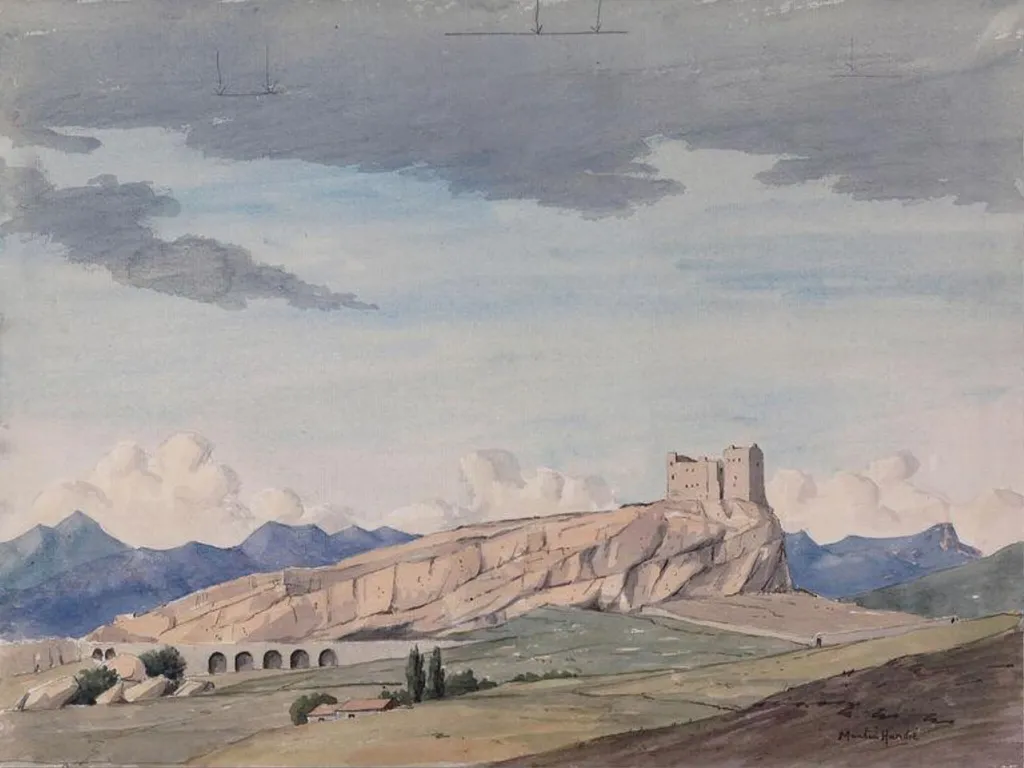
Vaison-la-Romaine is a watercolor work on paper by the Post-Impressionist artist Martin Hardie. It dates from 1933 and is held in the collection of the Victoria and Albert Museum.
About this work
Overview
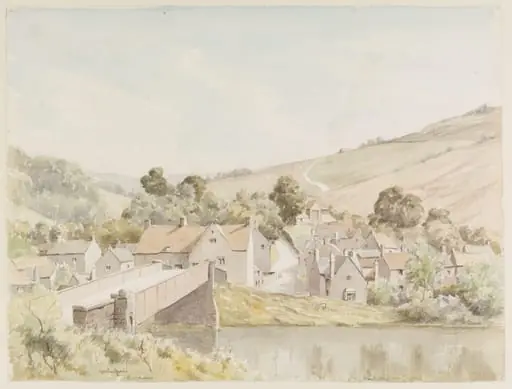
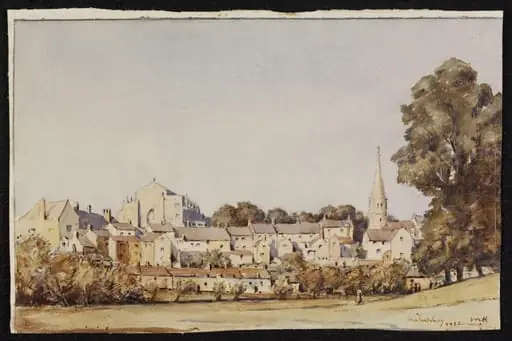
Vaison-la-Romaine is a 1933 watercolour painting by Martin Hardie, bearing the artist's signature, date, and title inscription. It depicts a landscape dominated by a hilltop stone structure with a tower and aqueduct-like feature, set against a mountainous backdrop.
Subject & Meaning
The painting's subject is a specific French landscape, likely inspired by the artist's encounter with the Roman ruins in Vaison-la-Romaine. The composition emphasizes the integration of ancient architecture within a natural setting.
Technique & Style
Executed in watercolour, the work features gentle, soft colours that impart a dreamy quality. Hardie's technique conveys a sense of serenity, blending the structural detail of the ancient site with the subtlety of the surrounding landscape.
History & Provenance
Created in 1933, the painting's provenance is not detailed here, though it is known to be part of a collection (possibly the Victoria and Albert Museum, based on contextual suggestion).
Context
The work reflects early 20th-century British watercolour traditions, while its subject matter aligns with the era's interest in European historical sites and landscapes.
Legacy
The painting's legacy is tied to its representation of Vaison-la-Romaine's ruins and its place within Martin Hardie's oeuvre, contributing to the broader canon of 20th-century watercolour landscape art.
Artist & collection

Artist
Martin Hardie (1875–1952) was a painter in watercolour, printmaker, art historian and museum curator.

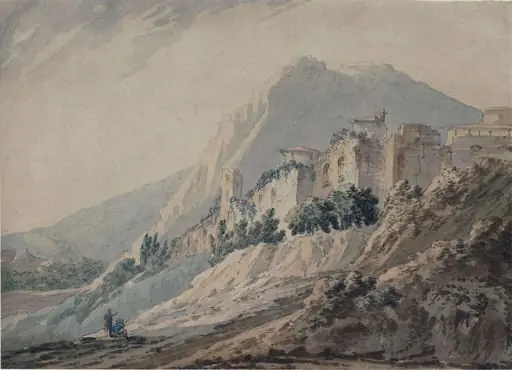 Mountainous landscape with ruined building
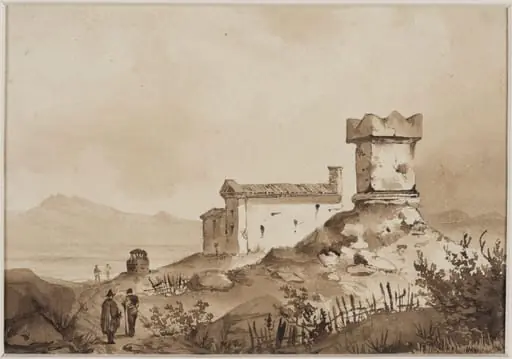 Italian landscape, with an ancient Roman sarcophagus
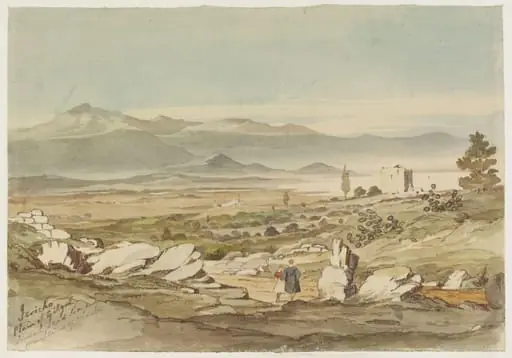 Jericho Plain of Gilgal, Jordan, Dead Sea, and Mountains of Moab
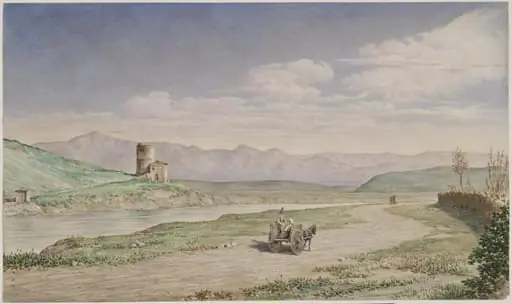 Parti ved Ponte Molle i Roms Campagne
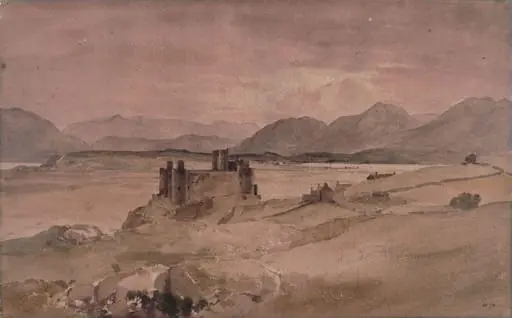 Harlech Castle, North Wales
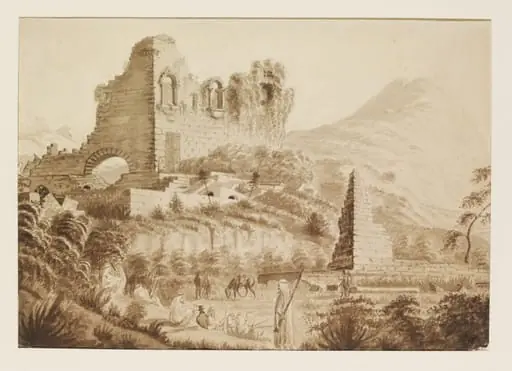 Villa Sevillana on the Road from Bona to Constantine
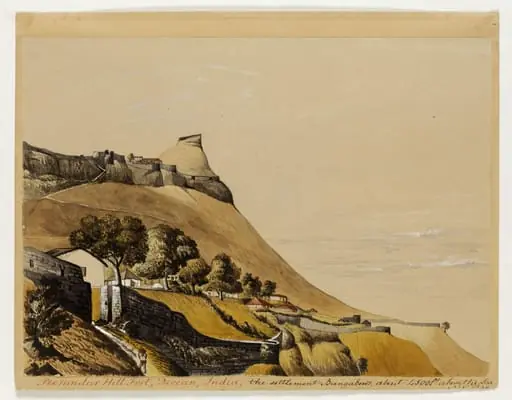 Poorundur Hill Fort
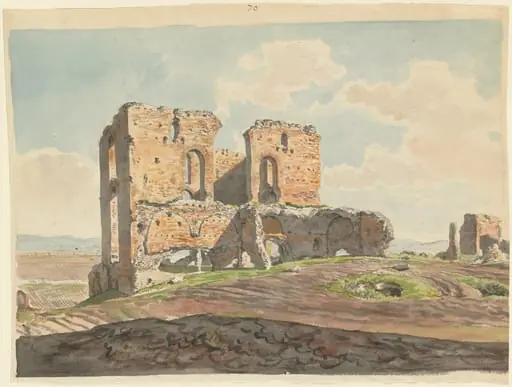 The Great Villa of the Quintilii on the Appian Way
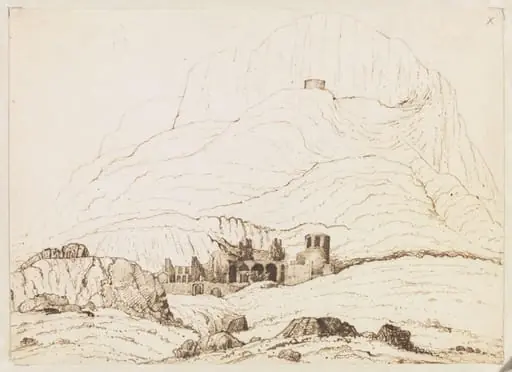 St. Sophia - near Djulfa - Ispahan
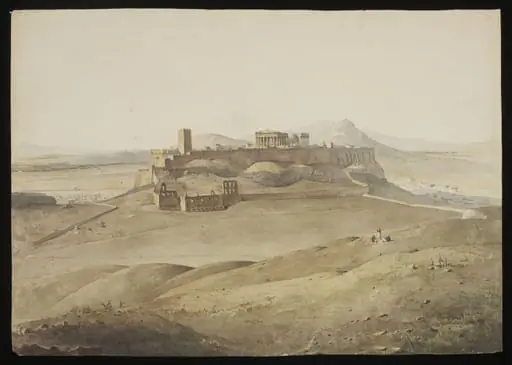 Untitled
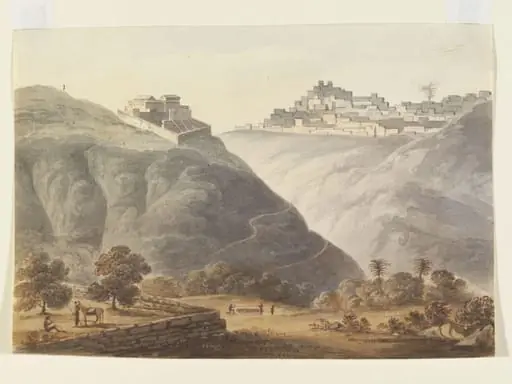 Bethlehem
 Ancient Ruins in the land of Edom above the bed of a valley and Arab Date gardens