Artwork
Industrial Cleveland: Baltimore and Ohio Railroad Lift Bridge
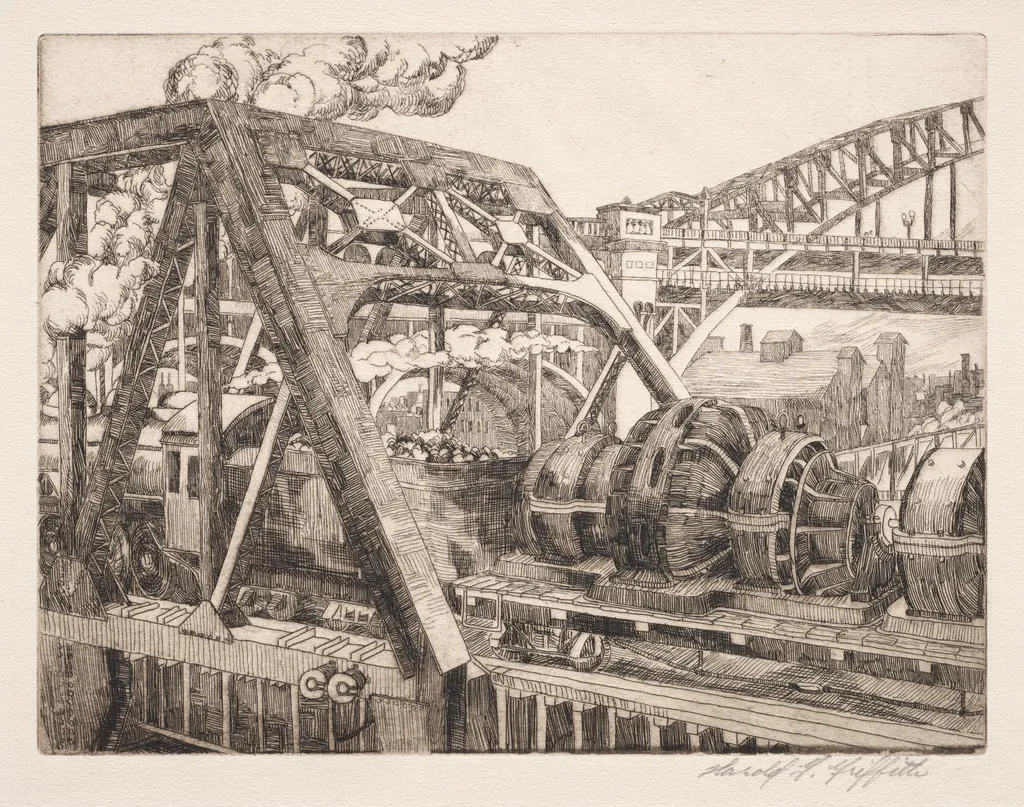
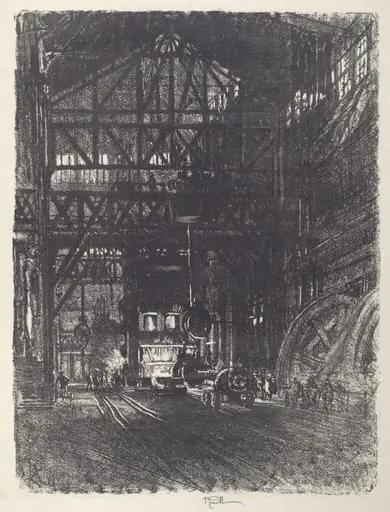
Industrial Cleveland: Baltimore and Ohio Railroad Lift Bridge is a print by Harold G. Griffith. It dates from 1930 and is held in the collection of the Cleveland Museum of Art. Created in 1930 by Harold G.
About this work
Overview
The composition emphasizes structural weight and mechanical precision, reflecting the city’s industrial character during the early 20th century.
Created in 1930 by Harold G. Griffith, this print depicts a lift bridge over the Cuyahoga River in Cleveland, operated by the Baltimore and Ohio Railroad. Rendered in ink or graphite, the work captures the bridge mid-operation, with its central span raised to allow river traffic to pass. The composition emphasizes structural weight and mechanical precision, reflecting the city’s industrial character during the early 20th century.
Subject & Meaning
The bridge serves as both a functional infrastructure and a symbol of urban industry. Boats beneath the raised span suggest the ongoing interplay between rail and river transport, vital to Cleveland’s economy. The absence of human figures directs focus to the machinery itself, portraying industry as an autonomous, dominant force in the landscape. The scene conveys order and efficiency rather than human activity.
Technique & Style
Griffith employs sharp, angular lines and high-contrast shading to convey the bridge’s steel framework and tension cables. The heavy use of dark tones defines the structural elements, while the background buildings and hills are rendered with minimal detail, receding into the composition. This reductionist approach highlights form over atmosphere, aligning with early modernist tendencies in American industrial art.
History & Provenance
The print entered the collection of The Cleveland Museum of Art shortly after its creation, likely acquired as part of the museum’s early efforts to document regional industrial development. It remains one of few known works by Griffith, whose career centered on architectural and engineering subjects. The piece has been exhibited intermittently in shows focused on American industrial imagery.
Context
In the 1930s, Cleveland was a major hub for rail and shipping, with its riverfront lined by factories and transit infrastructure. Griffith’s print reflects a broader cultural interest in documenting industrial progress during the interwar period. Similar subjects appeared in works by other regional artists, often commissioned by civic or corporate entities to celebrate technological advancement.
Legacy
Though Griffith is not widely known today, this print endures as a precise record of Cleveland’s industrial infrastructure. It contributes to the visual archive of American engineering and urban development, offering insight into how mid-century artists interpreted the aesthetics of machinery. The work continues to be referenced in studies of regional industrial art and transportation history.
Artist & collection

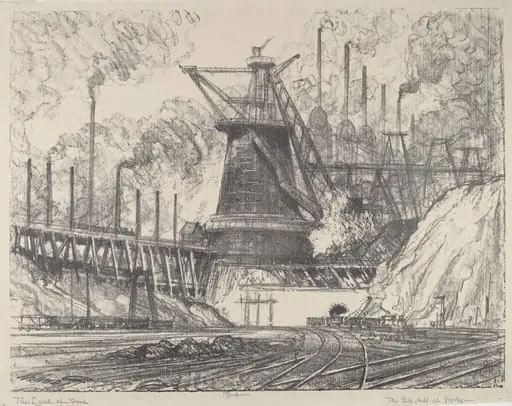 The Big Mill, Gary, Indiana
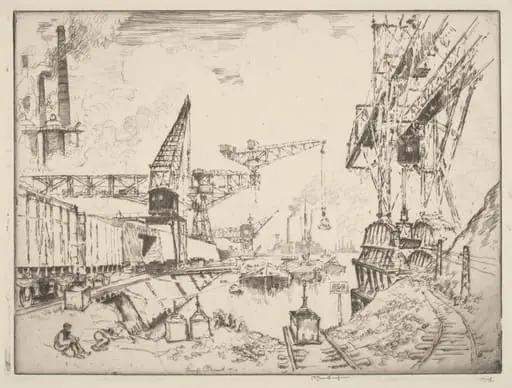 Cranes at Duisburg
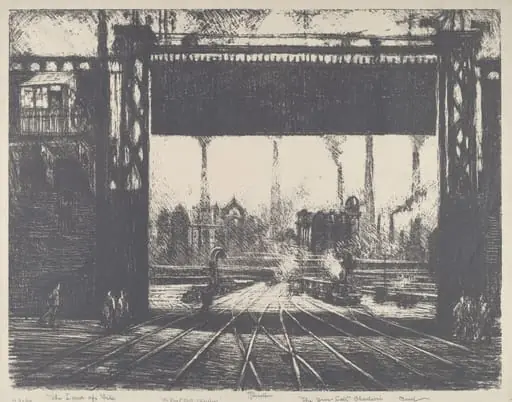 The Iron Gate, Charleroi
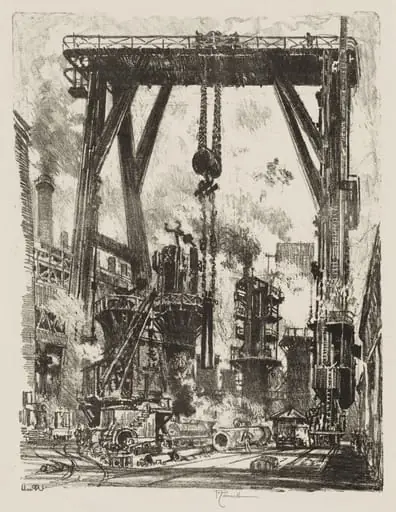 English War Work: The Old Gun Pit
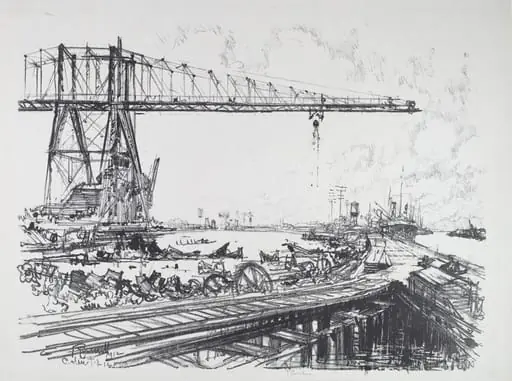 French Canal and American Cranes
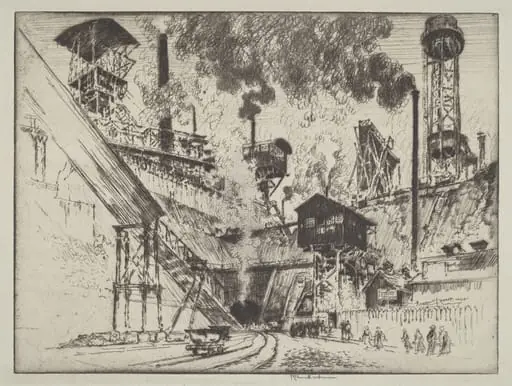 Mouth of the Mine, Ruhrort near Oberhausen
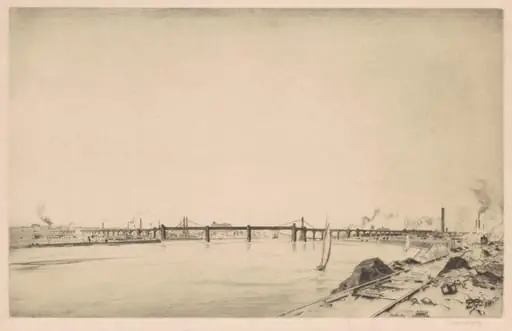 Runcorn Bridge
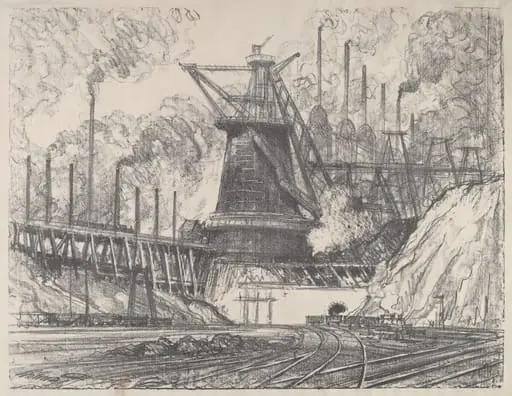 The Big Mill, Gary, Indiana
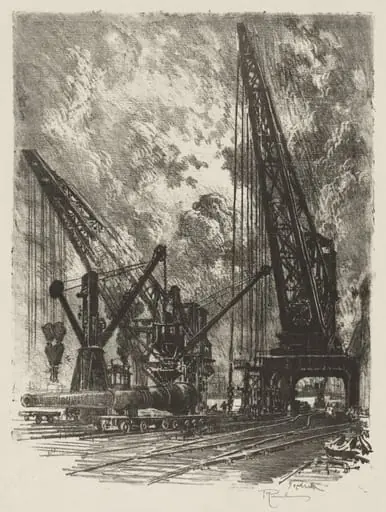 English War Work: Taking the Big Gun Away
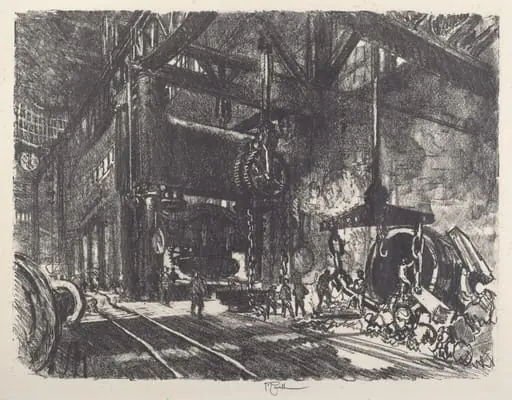 In the Land of Brobdingnag, the Armour Plate Bending Press
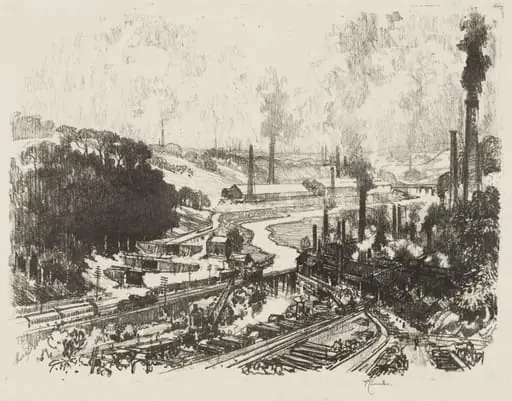 English War Work: Munition Works
 The Armour Plate Press