Artwork
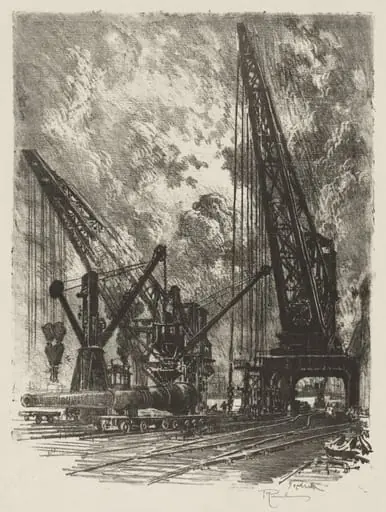
Cranes at Duisburg
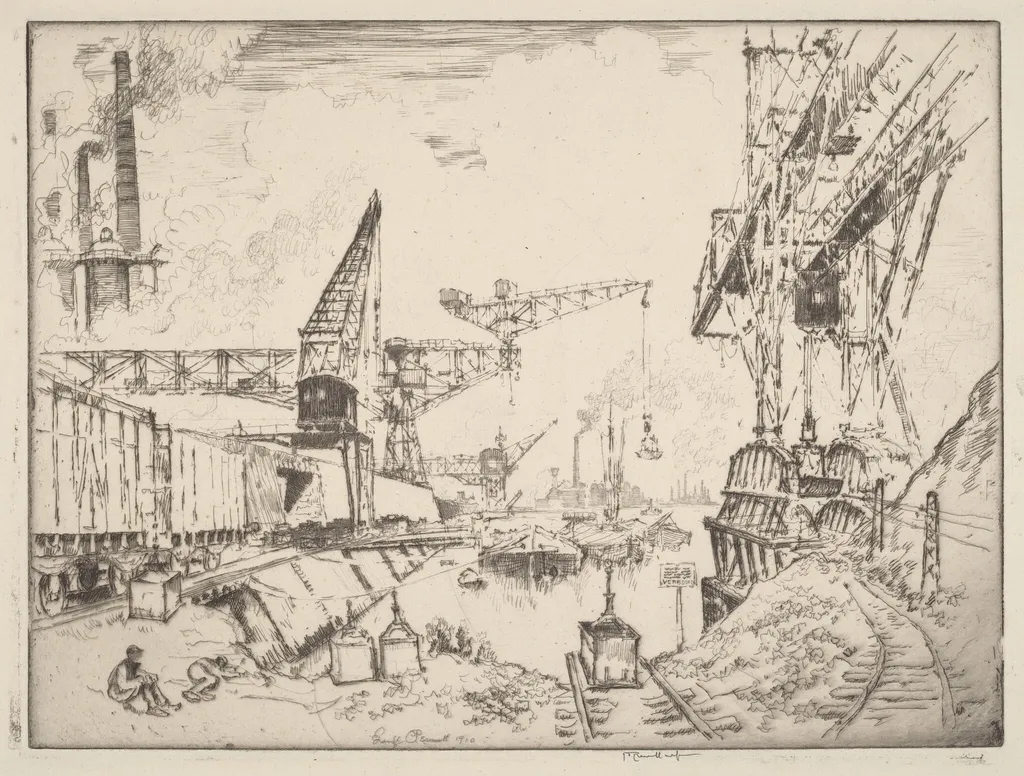
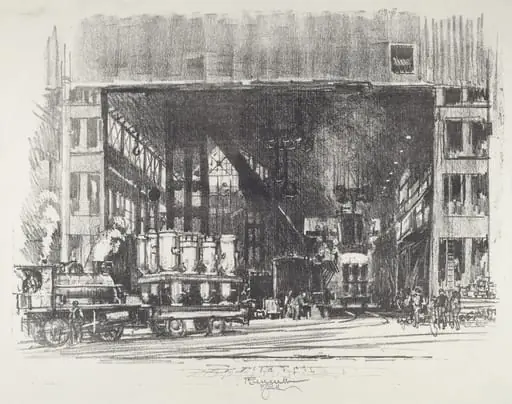
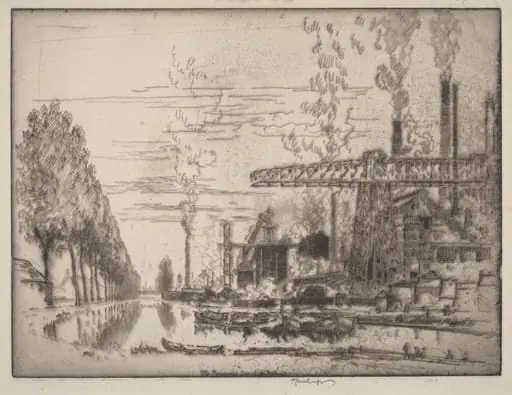
Cranes at Duisburg is an ink print by Joseph Pennell. It dates from 1910 and is held in the collection of the National Gallery of Art.
About this work
Overview
Created in 1910, the etching *Cranes at Duisburg* portrays a bustling river port on the Rhine. The composition centers on towering construction cranes and the surrounding industrial architecture, emphasizing the scale of machinery against a muted sky.
Subject & Meaning
The work captures a moment of early‑twentieth‑century industrial activity, juxtaposing massive metal structures with the diminutive presence of two figures on the riverbank. This contrast highlights the dominance of technology within the urban landscape.
Technique & Style
Pennell employed the etching process, using acid‑etched plates to render the tangled steel frames and smoky atmosphere with quick, uneven lines. The resulting texture conveys a rough, energetic feel, favoring expressive strokes over polished detail.
History & Provenance
American artist Joseph Pennell produced the print while residing in Europe, a period during which he frequently documented industrial scenes. His training under James Lambdin and Thomas Eakins, and later influence from James McNeill Whistler, informed his approach to printmaking.
Context
The image reflects the broader fascination with modern industry that characterized early twentieth‑century art. Pennell’s focus on European ports aligns with his contemporaries’ interest in the transformative impact of mechanization on urban environments.
Own this work as a print
Artist & collection
Artist
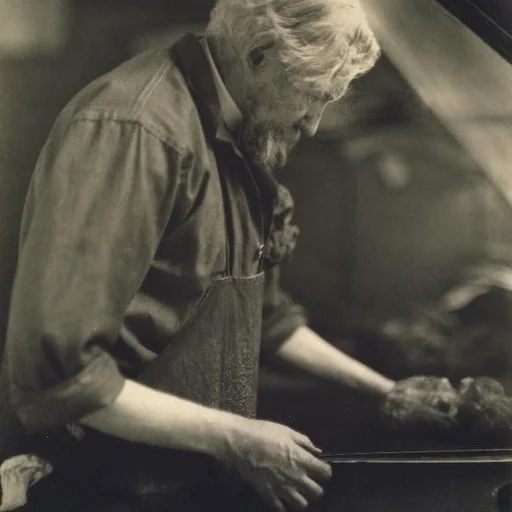
Joseph Pennell (July 4, 1857 – April 23, 1926) was an American draftsman, etcher, lithographer, and illustrator for books and magazines.