Artwork
Still-life
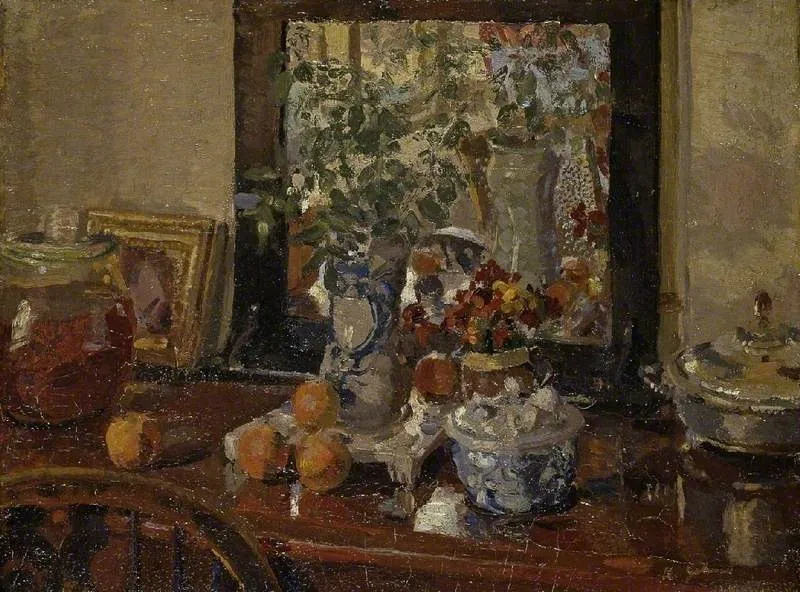
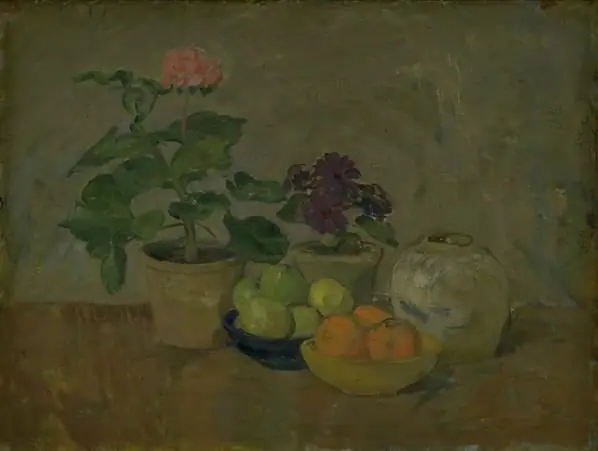
Still-life is an oil painting by the Post-Impressionist artist Harold Gilman. It dates from 1909 and is held in the collection of the Fitzwilliam Museum.
About this work
Overview
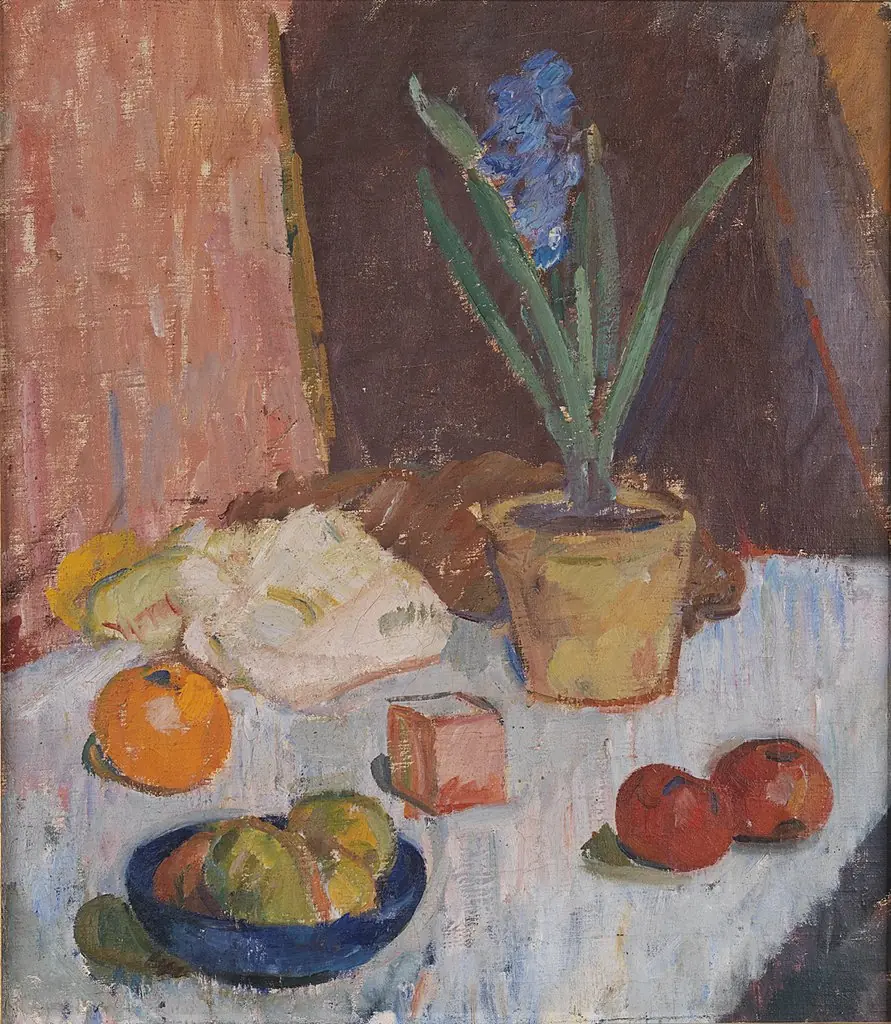
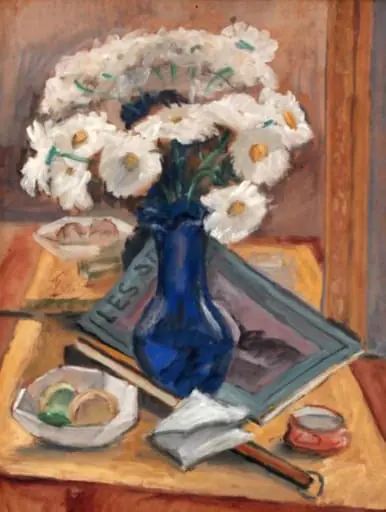
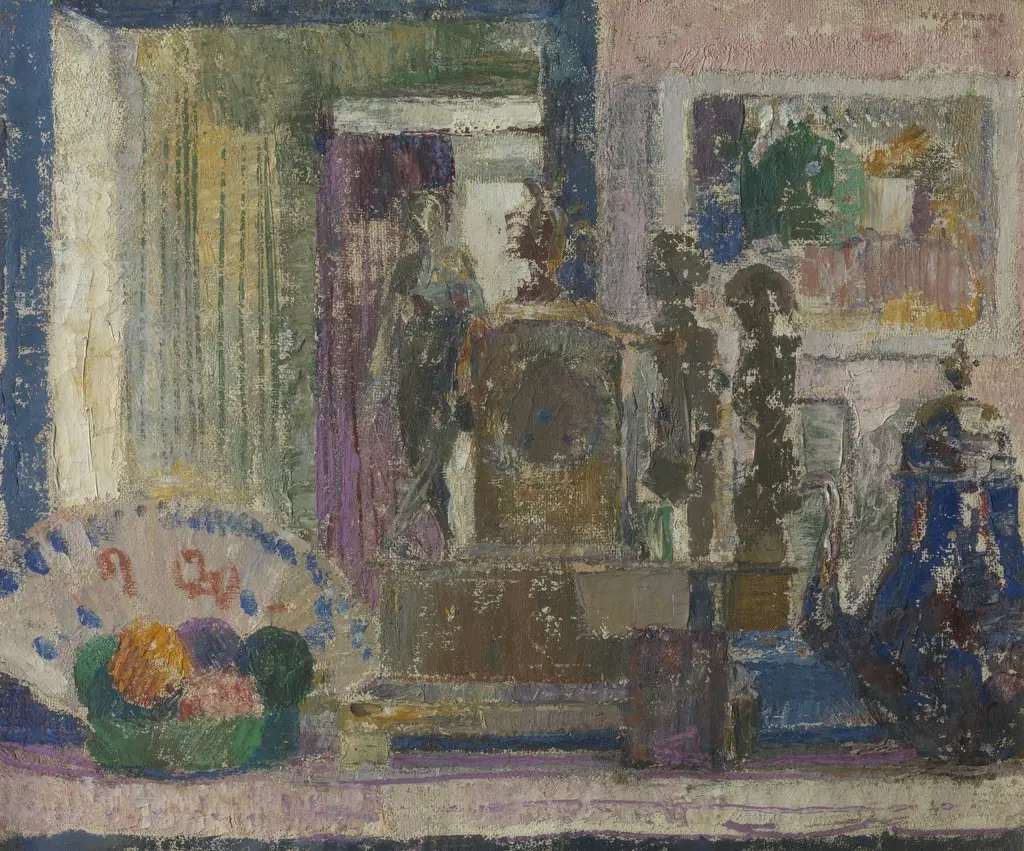
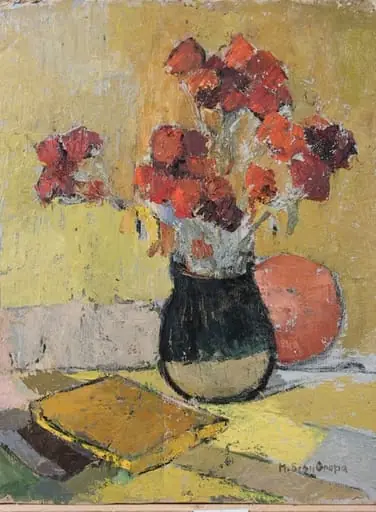
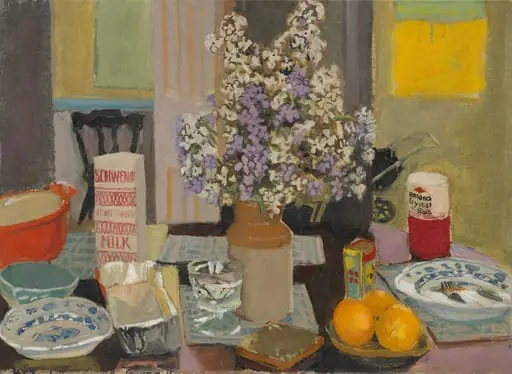
Harold Gilman's 1909 oil painting titled Still-life presents a modest tabletop composition. A vase of flowers and a fruit bowl dominate the foreground, accompanied by additional objects that recede subtly into space. The work is characterized by a restrained, muted palette of browns and beiges, creating a calm, contemplative atmosphere. It is part of the collection of the Fitzwilliam Museum.
Subject & Meaning
The arrangement depicts everyday objects—a vase, flowers, fruit—assembled to explore form and quiet observation rather than narrative. By emphasizing the simple presence of these items, the painting invites viewers to consider the quiet beauty of ordinary domestic scenes and the subtle interplay of light, shadow, and material texture.
Technique & Style
The overall approach reflects an early 20th‑century British still‑life tradition that favors understatement over vivid coloration.
Executed in oil on canvas, Gilman employs a limited tonal range to model volume and depth. Soft brushwork and careful modulation of muted hues give the surfaces a tactile quality, while the composition’s gradual recession of elements creates a sense of spatial layering. The overall approach reflects an early 20th‑century British still‑life tradition that favors understatement over vivid coloration.
History & Provenance
Created in 1909, the painting entered the holdings of the Fitzwilliam Museum, where it remains on display. Its acquisition reflects the museum’s interest in early modern British art and in representing Gilman's contribution to the development of domestic subject matter in the period.
Artist & collection
Artist
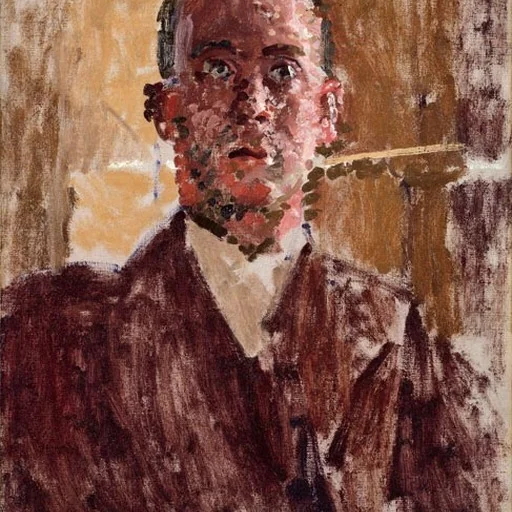
Harold John Wilde Gilman was a British painter of interiors, portraits and landscapes, and a founder-member of the Camden Town Group.