Artwork
Aqueduct, Spoleto
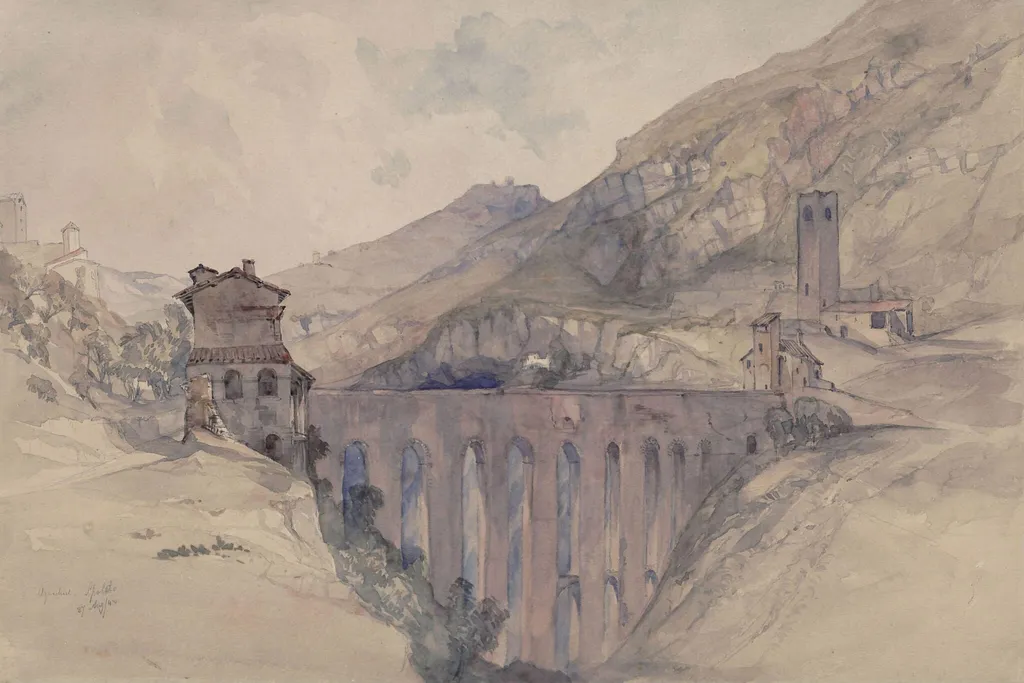
Aqueduct, Spoleto is a watercolor work on paper by the British Romanticist artist John Harper. It dates from 1842 and is held in the collection of the Victoria and Albert Museum.
About this work
Overview
John Harper’s watercolor, dated 27 August 1842, depicts an ancient stone aqueduct spanning a valley near Spoleto. The composition centers on the arched structure, flanked by weathered buildings clinging to the surrounding cliffs and a solitary tower rising against distant mountains. The work is signed with its title, confirming its subject and location.
Subject & Meaning
The scene captures a functional yet picturesque piece of engineering, illustrating how water was conveyed across rugged terrain. By juxtaposing the sturdy arches with decaying architecture and natural rock, Harper emphasizes the interplay between human construction and the enduring landscape, a theme common in 19th‑century depictions of rural Italy.
Technique & Style
Executed in watercolor, the piece employs a limited palette of muted blues, grays, and earth tones. Harper’s brushwork is rapid and gestural, suggesting a plein‑air study; light is rendered with delicate washes that highlight the texture of stone and the atmospheric haze of distant hills. The approach balances observational accuracy with a lyrical quality.
History & Provenance
Created in 1842, the work bears Harper’s inscription of title and date, indicating a deliberate record of the location. It entered the collection of the Victoria and Albert Museum, where it is catalogued among other 19th‑century European watercolors, reflecting the period’s interest in documenting architectural landmarks abroad.
Context
During the early Victorian era, British artists frequently traveled to Italy, producing sketches of historic sites for both scholarly and aesthetic purposes. Harper’s aqueduct study aligns with this tradition, serving both as a visual record of engineering heritage and as an example of the Romantic fascination with the sublime qualities of the Italian countryside.
Artist & collection
Artist
John Harper painted quiet lakes and old stone bridges with watercolour in 1842, turning travel sketches into delicate views of the Alps and Italian towns.

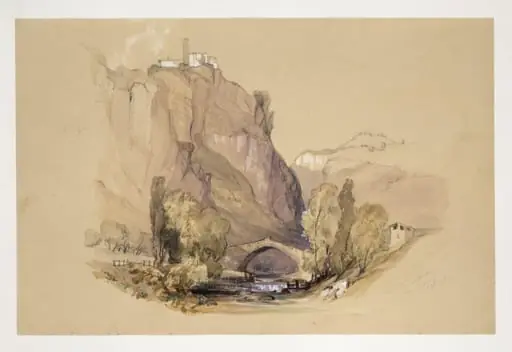
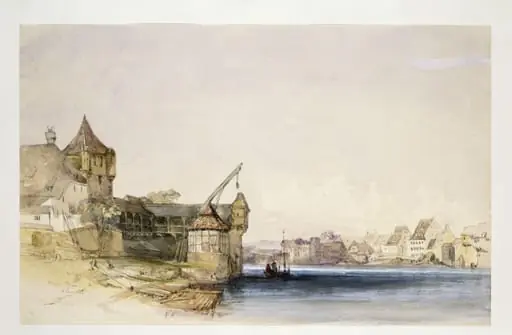
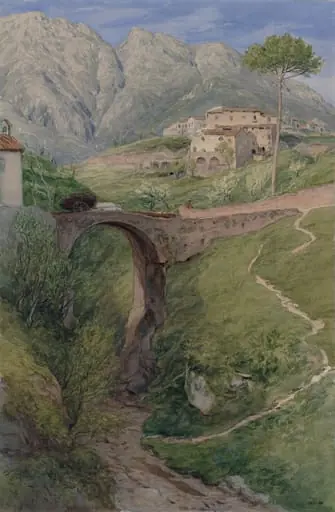 La Cava, near Solerno, Italy
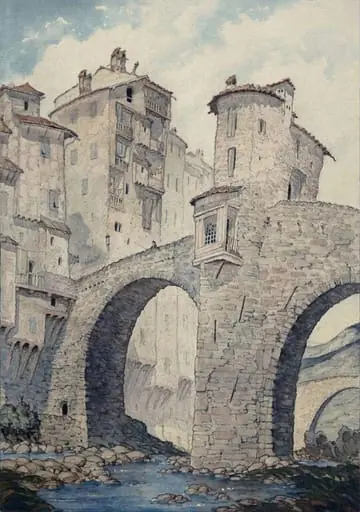 Bridge at Sospel
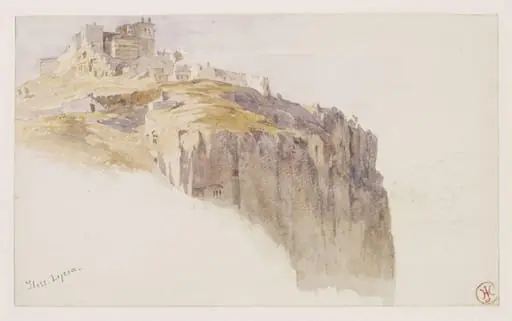 Tloss
Tloss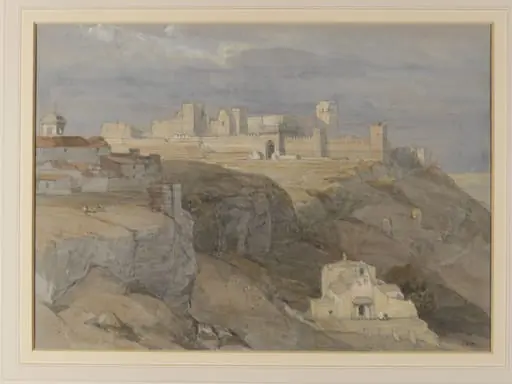 The Alcazar of Carmona, Andalusia
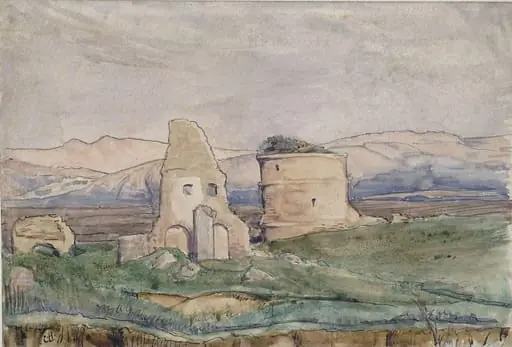 Torre dei Schiavi, Roman Campagna
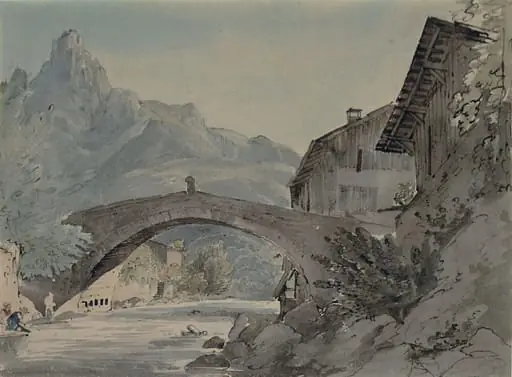 Bridge at Sallanches, and the Aiguille de Varens
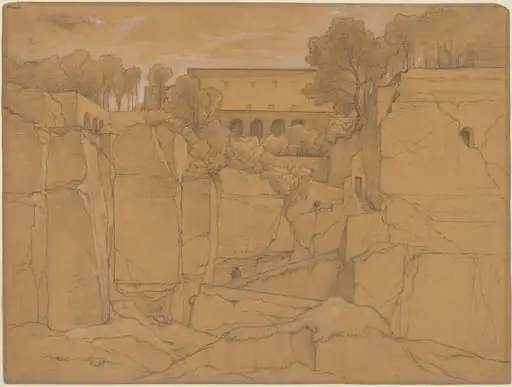 Sorrento
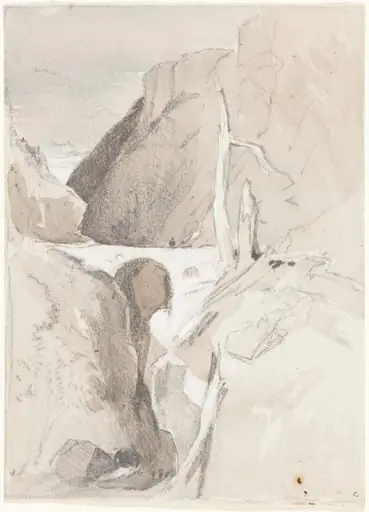 Gorge with Tree Stumps
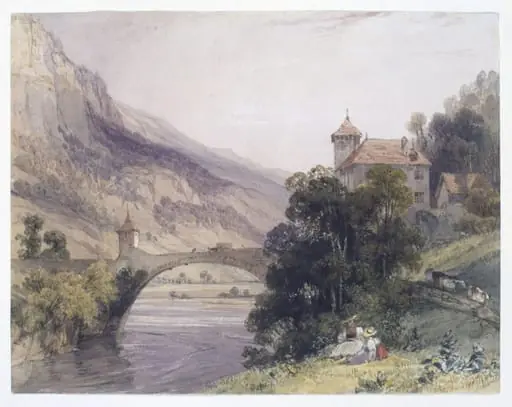 The Bridge of St. Maurice, Valais, Switzerland
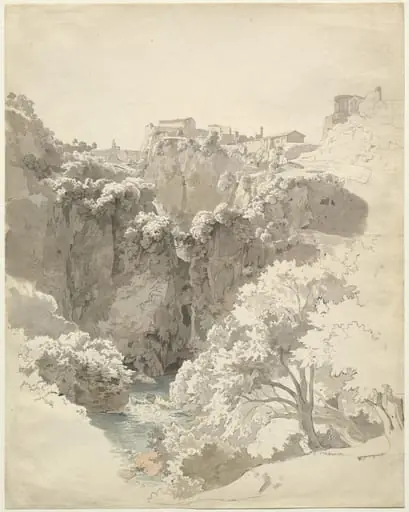 Tivoli and the Temple of the Sibyl Above the Aniene Gorge
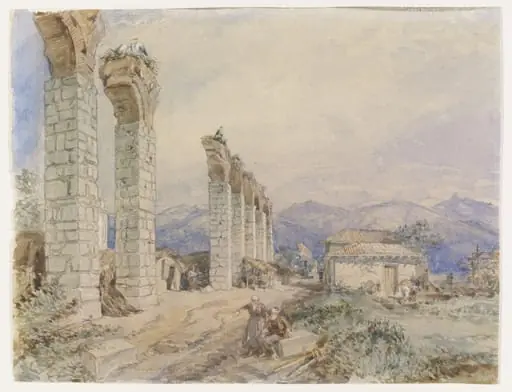 The Aqueduct - Ephesus