Artwork
Bouquet d'arbres aux rochers (Stand of Trees with Rocks)
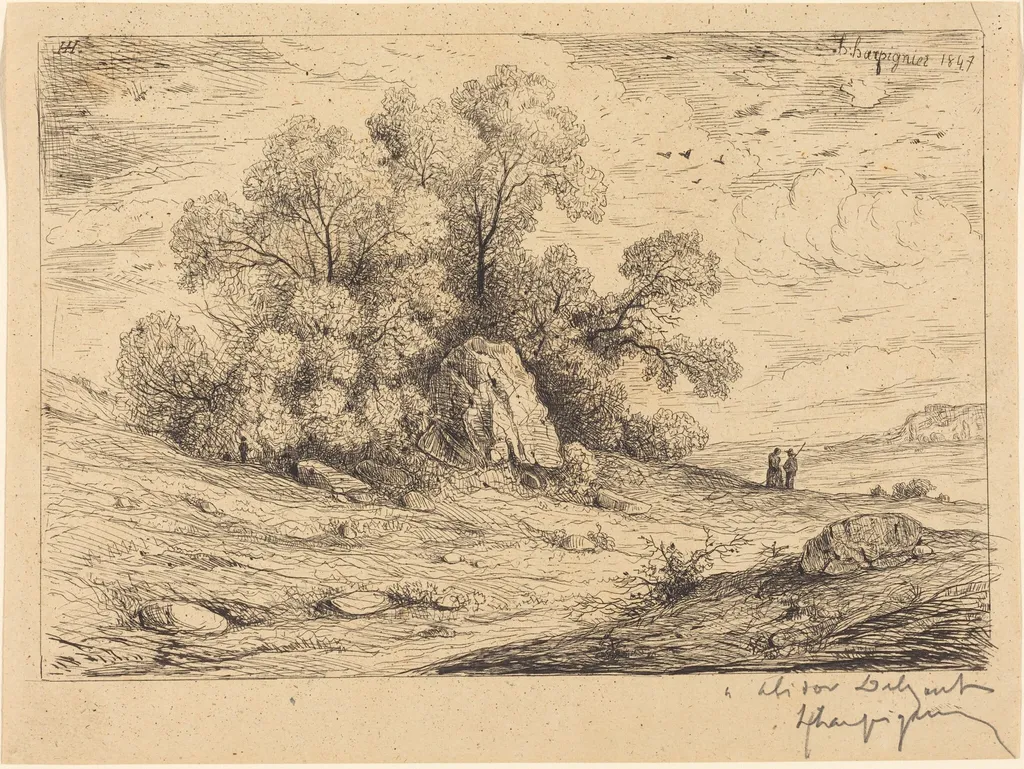
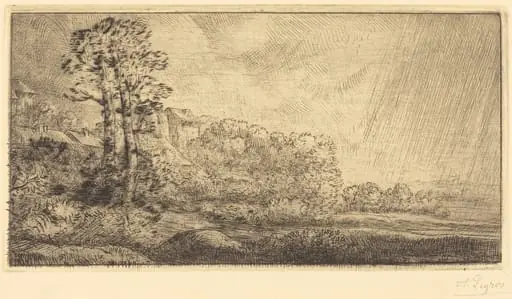
Bouquet d'arbres aux rochers (Stand of Trees with Rocks) is an ink print by the Romanticist artist Henri-Joseph Harpignies. It dates from 1847 and is held in the collection of the National Gallery of Art. Henri‑Joseph Harpignies produced the drypoint print titled *Bouquet d’arbres aux rochers* in 1847.
About this work
Overview
Henri‑Joseph Harpignies produced the drypoint print titled *Bouquet d’arbres aux rochers* in 1847. Executed on oatmeal‑colored paper, the work measures a modest size typical of intimate sketches. It presents a tranquil woodland scene, rendered in monochrome, and belongs to the artist’s early explorations of landscape printmaking.
Subject & Meaning
The image depicts a small clearing where gnarled trees rise from a rocky floor. Near the center, two diminutive figures are positioned; one appears to grasp a slender staff, suggesting a moment of pause within the natural setting. In the distance, faint, undulating lines evoke water or mist, while a solitary boat drifts on the right, adding a subtle narrative of travel or passage.
Technique & Style
Harpignies employed the drypoint method, incising lines directly into the paper’s surface with a sharp needle. This approach yields a characteristic burr that produces soft, velvety edges and a textured, slightly grainy quality. The artist’s handling of line is expressive yet controlled, allowing the interplay of light and shadow to convey depth without reliance on tonal washes.
History & Provenance
Created in the mid‑nineteenth century, the print reflects Harpignies’s engagement with the burgeoning interest in landscape representation among French artists. While specific ownership records are scarce, the work has appeared in several catalogues of the artist’s oeuvre and is held in public collections that specialize in 19th‑century prints.
Context
During the 1840s, drypoint was a favored technique among artists seeking immediacy before the advent of photographic reproduction. Harpignies, later associated with the Barbizon school, used this medium to experiment with atmospheric effects and compositional balance, foreshadowing his subsequent contributions to French landscape painting.
Own this work as a print
Artist & collection


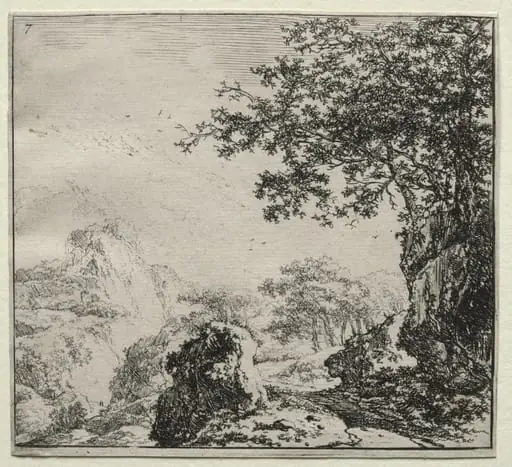 The Road near the Rocks
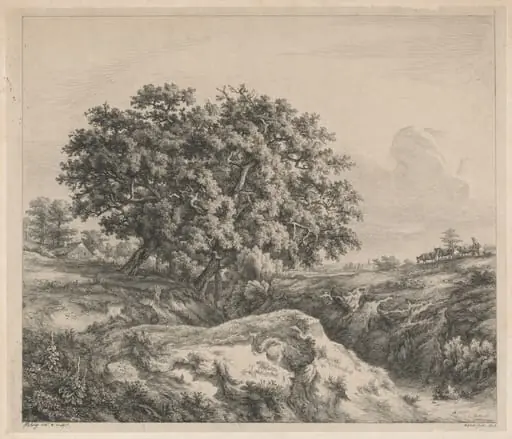 Le chêne au ravin (Oak Tree by a Ravine)
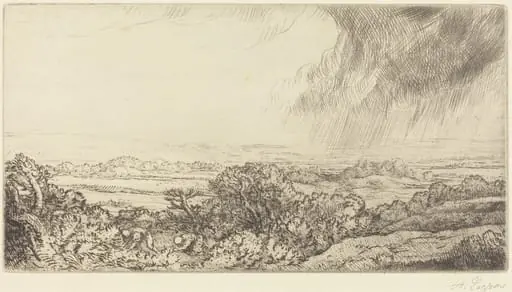 Mushroom Gatherers (Les ramasseurs de champignons)
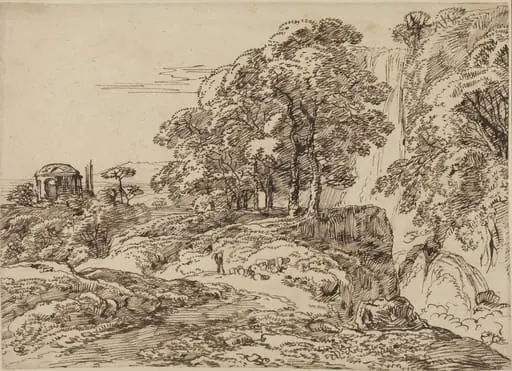 Pastoral Landscape with a Waterfall and a Temple
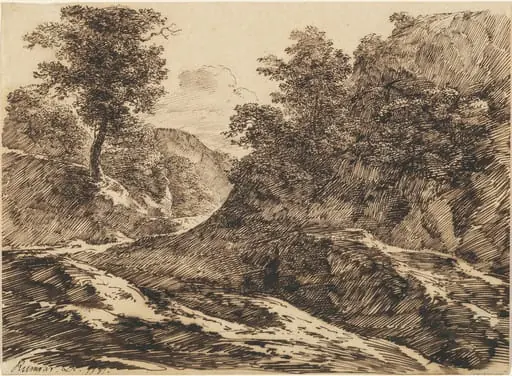 A Path through a Hilly Landscape
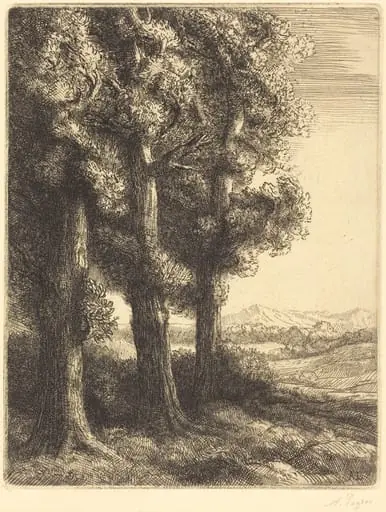 Corner of a Wood (Coin d'un bois)
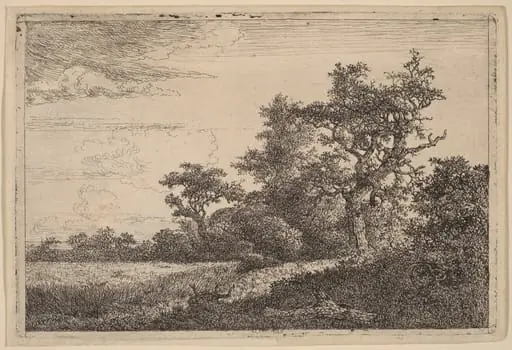 Grain Field at the Edge of a Wood (Corn Field)
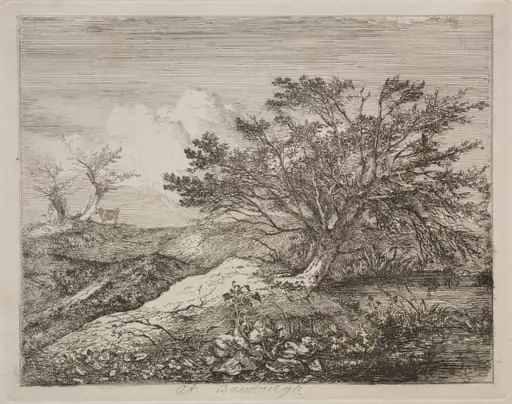 At Bawburgh
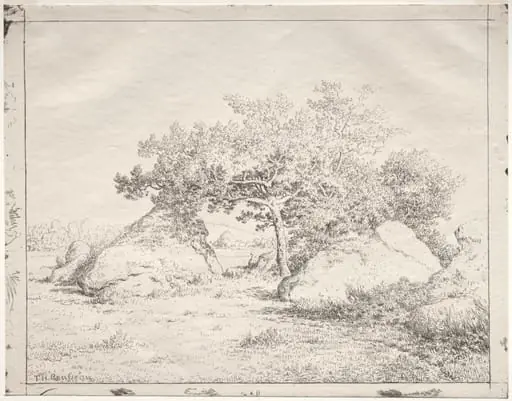 Cherry Tree at Blau
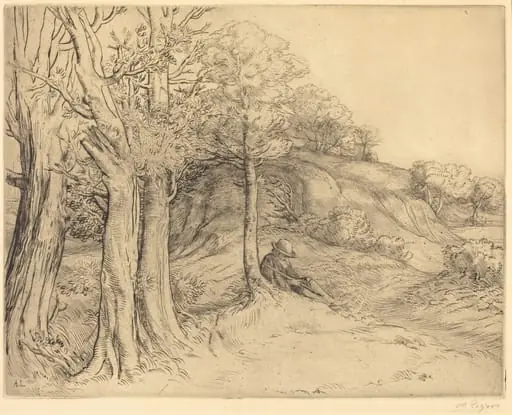 Solitude (Solitude (Paysage))
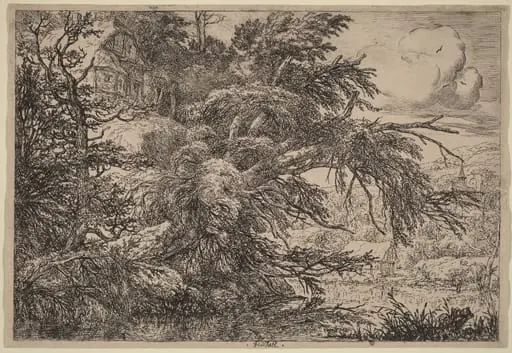 Cottage on a Hill
 Landscape with Two Trees (Paysage aux deux arbres)