Artwork
Peisaj din Hérisson
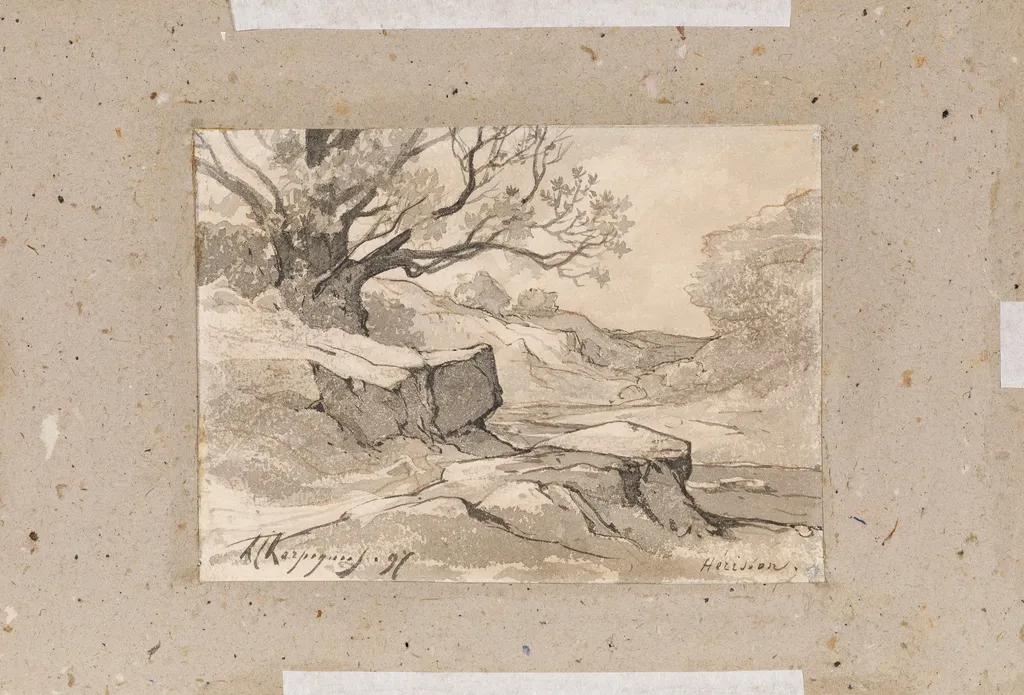
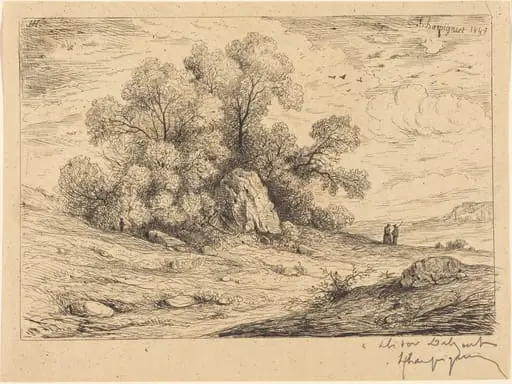
Peisaj din Hérisson is a drawing by the Impressionist artist Henri Harpignies. It dates from 1897 and is held in the collection of the National Museum of Art of Romania.
About this work
The artist signed it in the corner, and the paper looks worn, like it’s been handled a lot.
This sketch shows a quiet landscape with a bare tree on rocky ground. The branches twist against a pale sky, and the rocks are drawn with rough, uneven lines. Light and shadow separate the tree from the jagged stones below.
The artist signed it in the corner, and the paper looks worn, like it’s been handled a lot. This sketch was made in 1897 by Henri Harpignies, who focused on simple, natural scenes.
Next, look up cross-hatching to see how artists build texture with lines.
Overview
Peisaj din Hérisson, created by Henri Harpignies in 1897, is a landscape sketch characterized by a serene and natural composition.
Subject & Meaning
The sketch depicts a tranquil scene featuring a bare tree on rugged terrain, set against a pale sky. The contrast between the twisted branches and the jagged rocks emphasizes the simplicity and harmony of the natural world.
Technique & Style
The work showcases Harpignies' use of rough, uneven lines to render the rocky ground, while the tree's branches are defined by expressive, twisting marks. The interplay of light and shadow visually separates the tree from the stones, adding depth.
History & Provenance
Executed in 1897, the sketch bears the artist's signature in the corner. The worn appearance of the paper suggests it has been extensively handled over time.
Context
This piece aligns with Harpignies' artistic focus on capturing simple, natural scenes, reflecting his emphasis on observing and portraying the everyday beauty of landscapes.
Artist & collection

Artist
Henri-Joseph Harpignies was a French landscape painter of the Barbizon school.

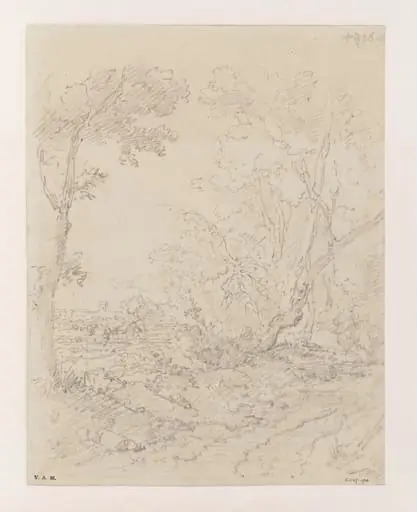 The buildings of Macau seen across fields from a tree-lined lane
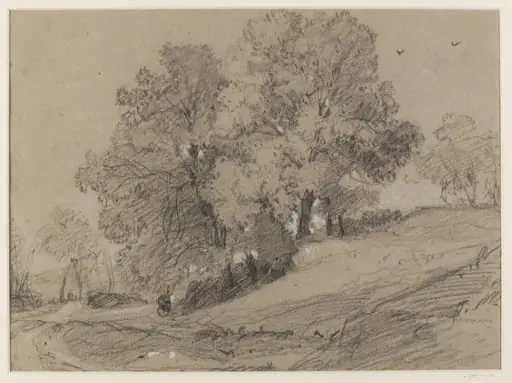 Untitled
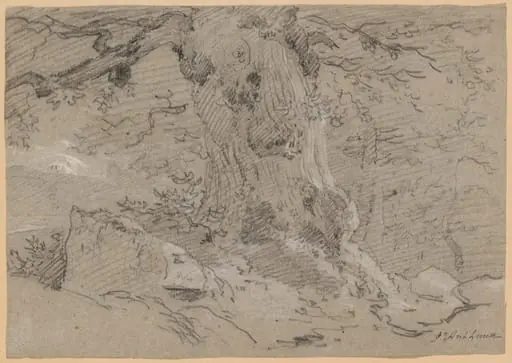 Study of Old Tree Trunk
 Sunlit Trees in a Valley near Lacoux
 Two trees in a landscape
 Trees with Tangled Roots
 Casa Garden, Macau
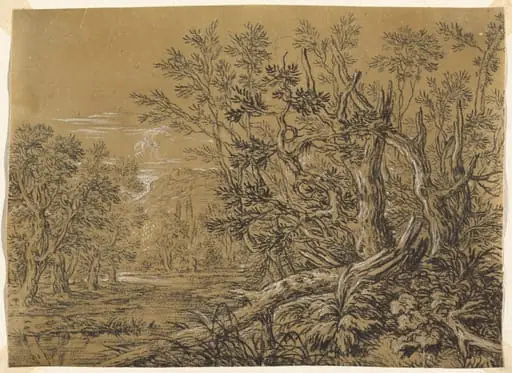 Stream through an Ancient Forest
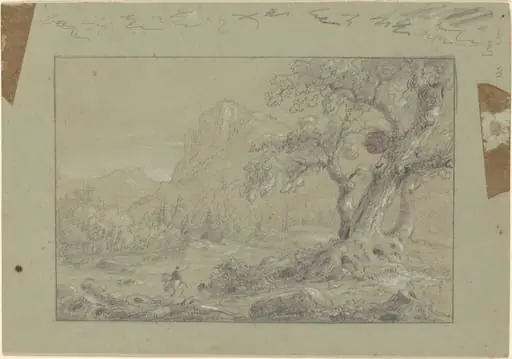 Study for "The Mountain Ford"
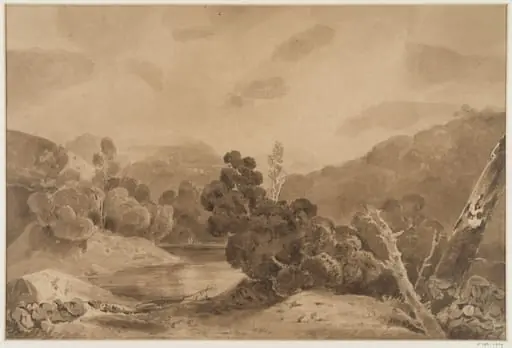 River scene with a temple or palace in the clouds
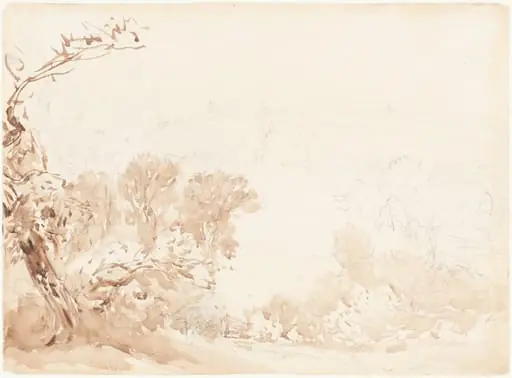 Hillside and Trees
 Bouquet d'arbres aux rochers (Stand of Trees with Rocks)