Artwork
Still Life with Fruit
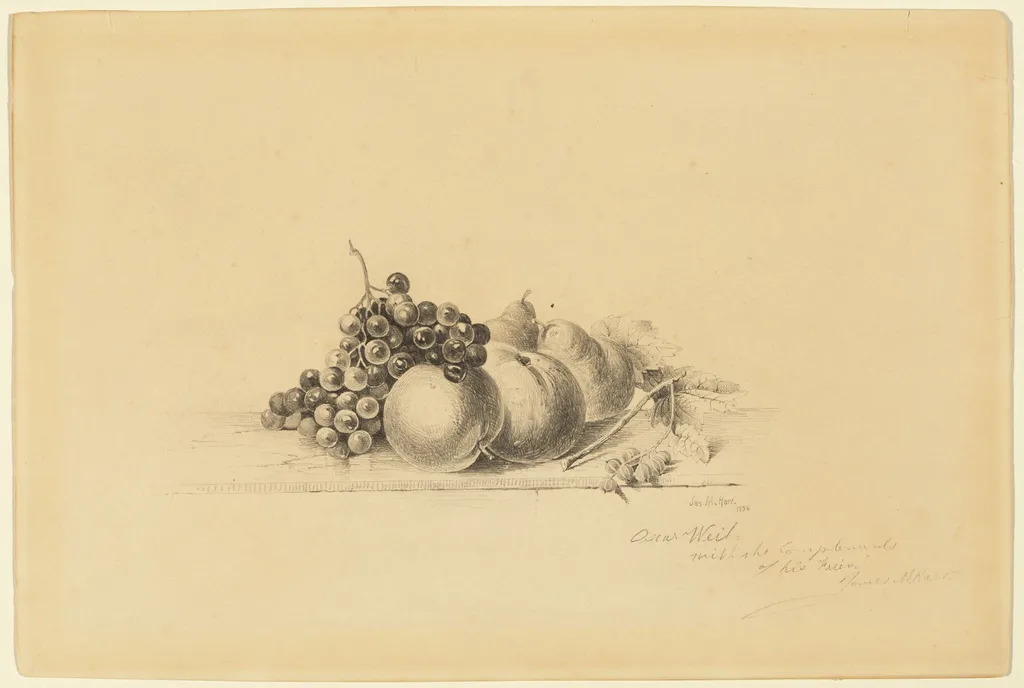
Still Life with Fruit is a graphite drawing by the Impressionist artist James McDougal Hart. It dates from 1856 and is held in the collection of the National Gallery of Art.
About this work
You see a bowl of peaches, plums, and grapes sitting on a tablecloth with deep folds.
Hart drew this in 1856—right when American artists were first trying to paint light the way it actually looks, not the way rules said it should. The shadows under the fruit aren’t black; they’re soft gray, almost shimmering.
If you like how the light feels here, look up the technique called *chiaroscuro*.
Overview
Created in 1856, this graphite drawing by James McDougal Hart depicts a simple arrangement of fruit on a draped tablecloth. Executed on wove paper, it belongs to a small group of early American drawings that prioritize direct observation over idealized composition. Its quiet focus on everyday objects reflects a shift in artistic priorities during the mid-nineteenth century.
Subject & Meaning
The composition centers on a bowl containing peaches, plums, and grapes, arranged with casual naturalism. No symbolic or allegorical intent is evident; the subject is the fruit itself, rendered with attention to texture and form. The work suggests an interest in the quiet dignity of ordinary things, a theme emerging in American art as artists turned toward secular, observable reality.
Technique & Style
Hart uses graphite to model form through subtle gradations of tone rather than harsh outlines. Shadows beneath the fruit are rendered in soft, luminous grays, avoiding the flat black typical of academic conventions. This nuanced handling of light and volume reflects an emerging sensitivity to optical realism, aligning with early experiments in chiaroscuro among American draftsmen.
History & Provenance
The drawing was completed in 1856, during Hart’s formative years as an artist before his later prominence in landscape painting. It remained in private hands for much of the twentieth century and entered a public collection in the 1980s. Its survival as a single-sheet drawing from this period is uncommon, offering rare insight into Hart’s early practice.
Context
In the 1850s, American artists began rejecting rigid European academic norms in favor of direct observation. Hart’s drawing aligns with this movement, paralleling contemporaneous efforts by painters to capture natural light and atmospheric effects. While not part of the Hudson River School’s grand vistas, this work shares their commitment to truthful representation of the physical world.
Legacy
Though Hart is better known for his landscapes, this drawing stands as an early example of American draftsmanship embracing realism. Its restrained technique and attention to tonal nuance influenced later still-life studies by American artists seeking to ground their work in sensory experience rather than inherited conventions.
Artist & collection


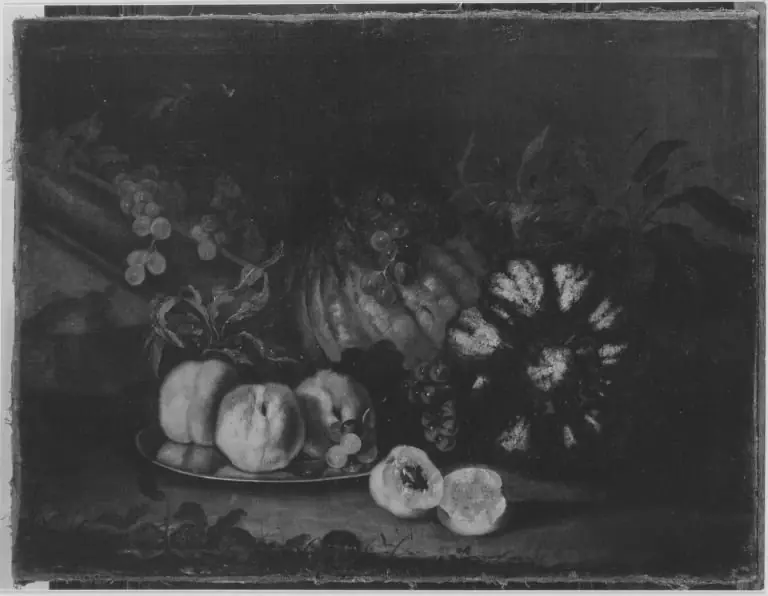 Fruit still-life
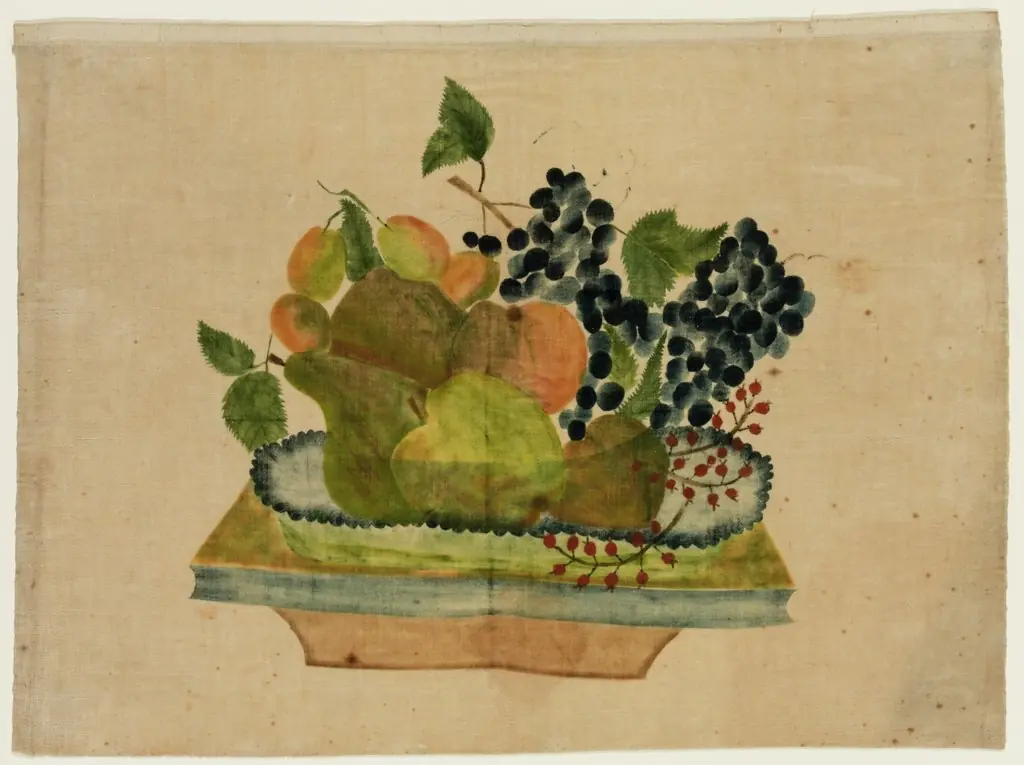 Still Life wih Fruit
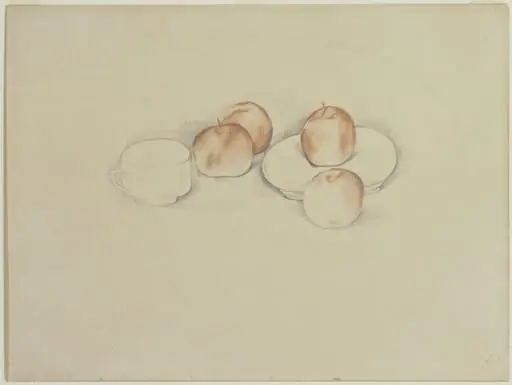 Untitled
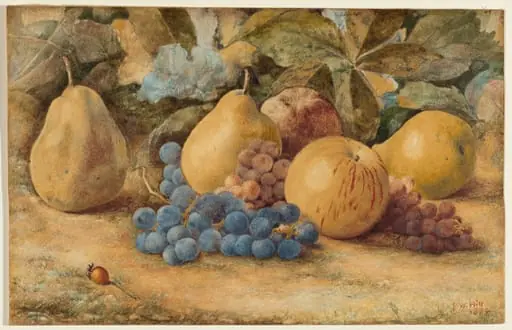 Still Life of Fruit: Apples, Pears, and Grapes on Ground
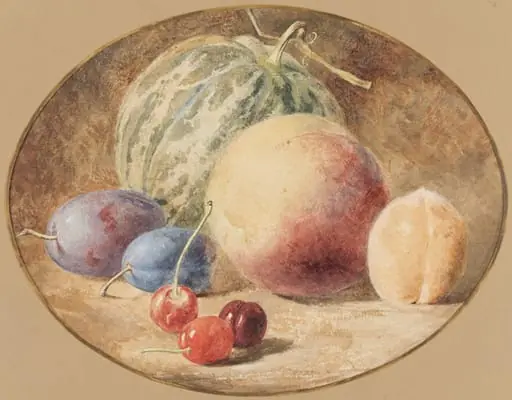 Fruit from Nature
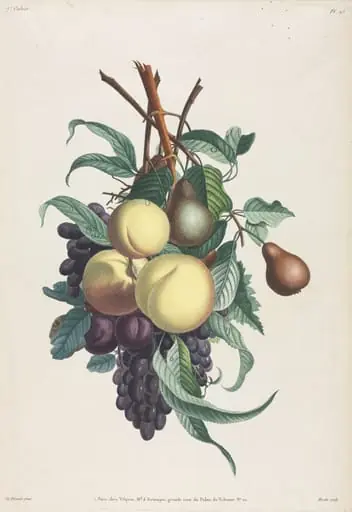 Collection des fleurs et des fruits: Branches de rousselet, pêche, prune et raisin
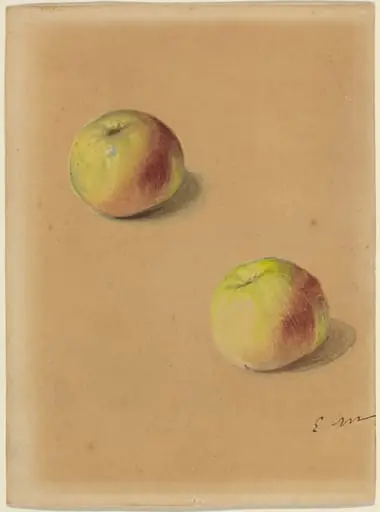 Two Apples
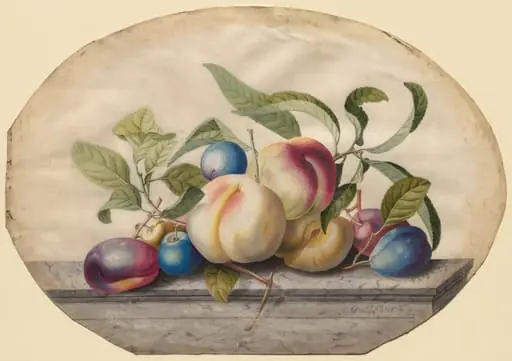 Fruit Arrangement: Peaches and Plumbs on a Slab of Marble
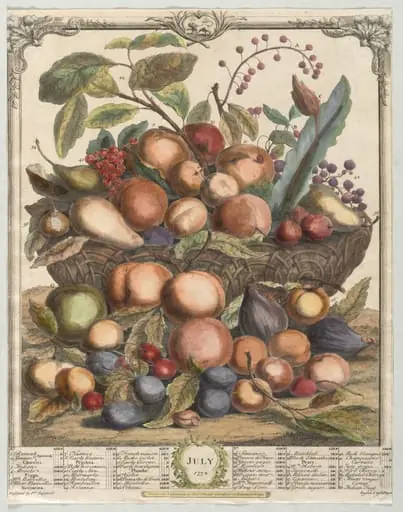 Twelve Months of Fruit: July
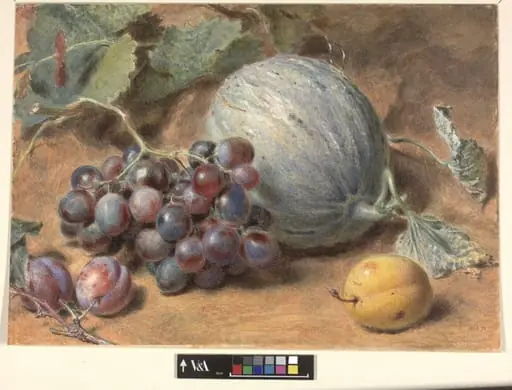 Grapes, a Melon and Plums