Artwork
A Venetian Lagoon
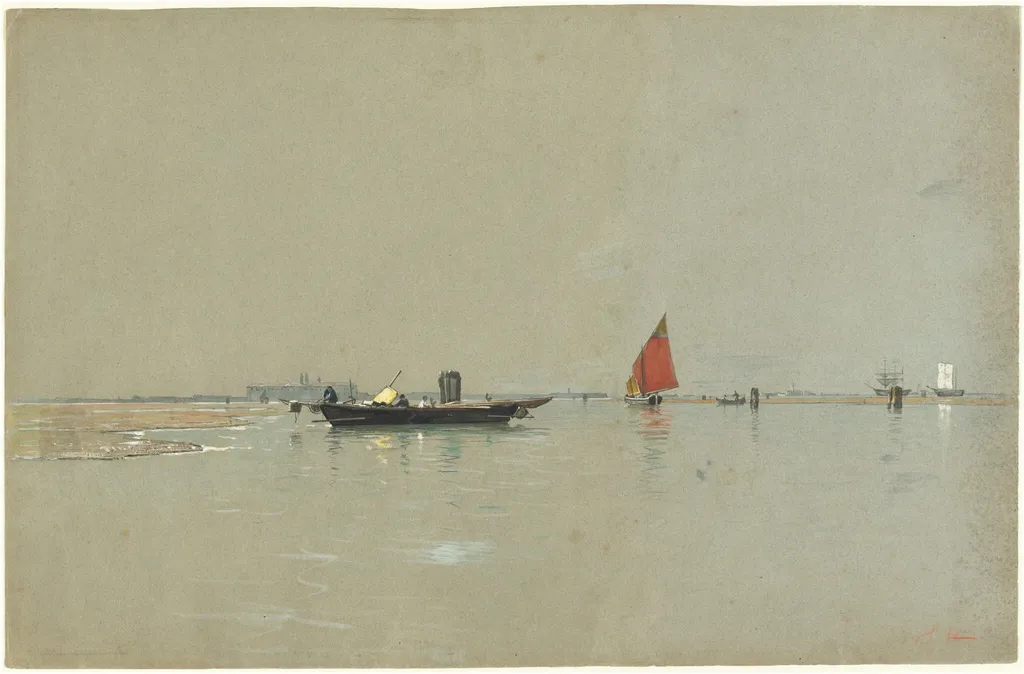
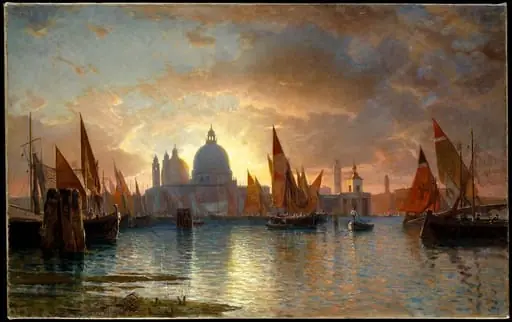
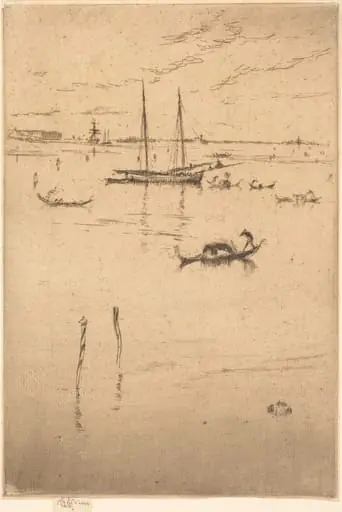
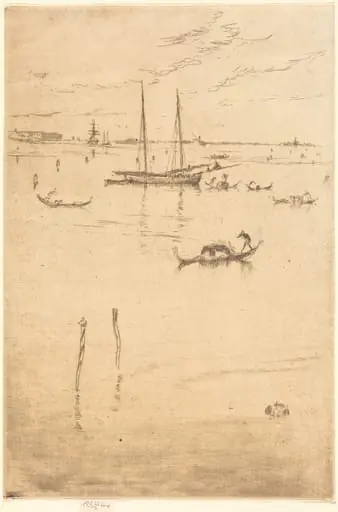
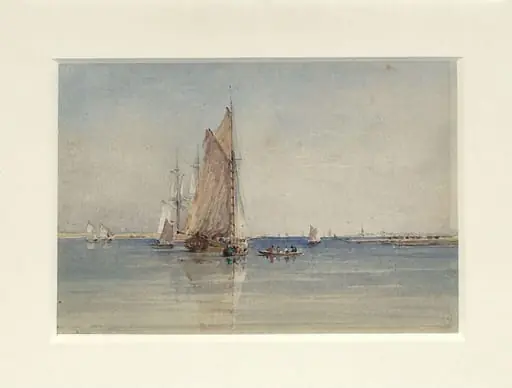
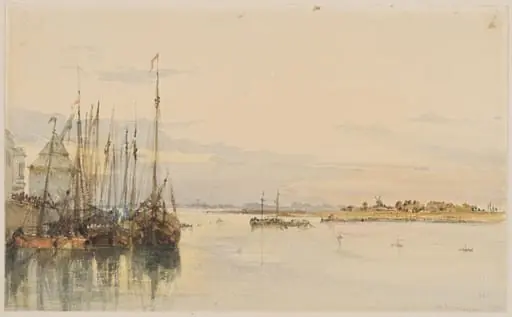
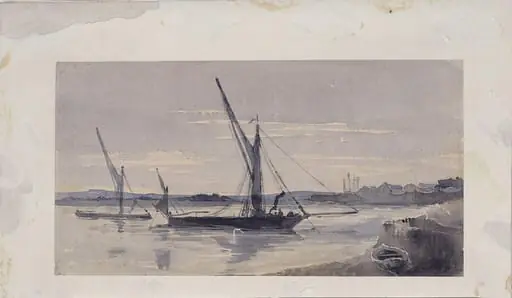
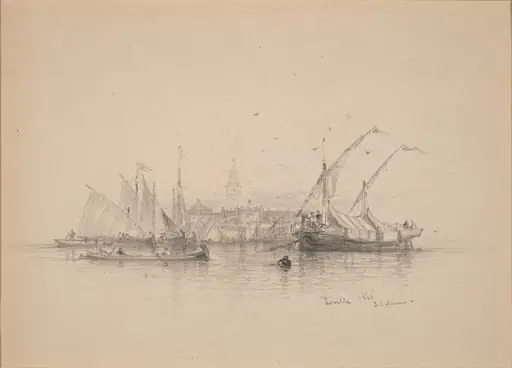
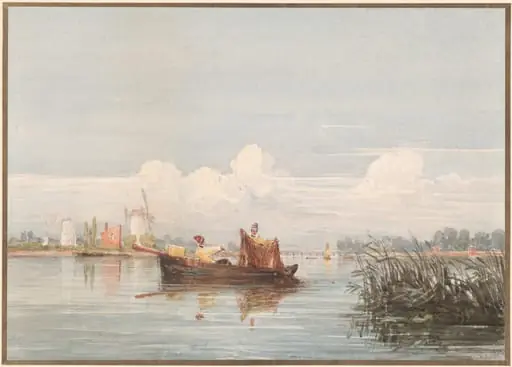
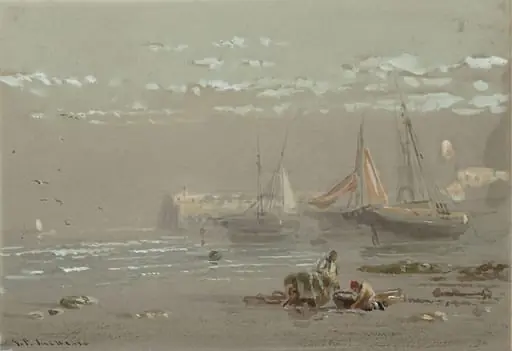
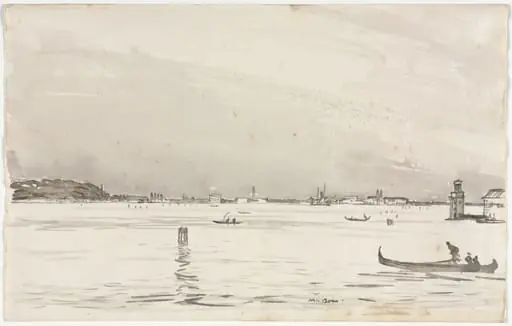
A Venetian Lagoon is an ink drawing by the Impressionist artist William Stanley Haseltine. It dates from 1872 and is held in the collection of the National Gallery of Art.
About this work
Overview
A Venetian Lagoon is a drawing by William Stanley Haseltine, executed in 1872, combining pen and brown ink, watercolor, gouache, graphite, and white heightening on distinctive blue-gray wove paper.
Subject & Meaning
The subject is a serene Venetian lagoon scene, likely capturing the artist's impression of the natural beauty and tranquility of the Venetian waterscape, though specific symbolic meanings or narratives are not overtly indicated.
Technique & Style
Haseltine employed a layered technique, starting with graphite underdrawings, then adding pen and brown ink for detail, followed by watercolor and gouache for color depth, and white heightening for luminosity, reflecting a meticulous and multi-layered approach characteristic of detailed landscape drawings of the period.
History & Provenance
Created in 1872, the drawing's early history and ownership trail are not detailed here; it is known to be part of a broader body of work by Haseltine focusing on European landscapes.
Context
This work fits within the 19th-century tradition of European artists traveling to and depicting iconic Italian landscapes, with Haseltine's piece specifically contributing to the genre of Venetian scenes popular among American and European artists of the time.
Legacy
While not individually renowned as a landmark piece, A Venetian Lagoon contributes to the broader legacy of Haseltine's contributions to American landscape drawing and the ongoing artistic fascination with Venetian landscapes in the 19th century.
Own this work as a print
Artist & collection