Artwork
A Vermont Village
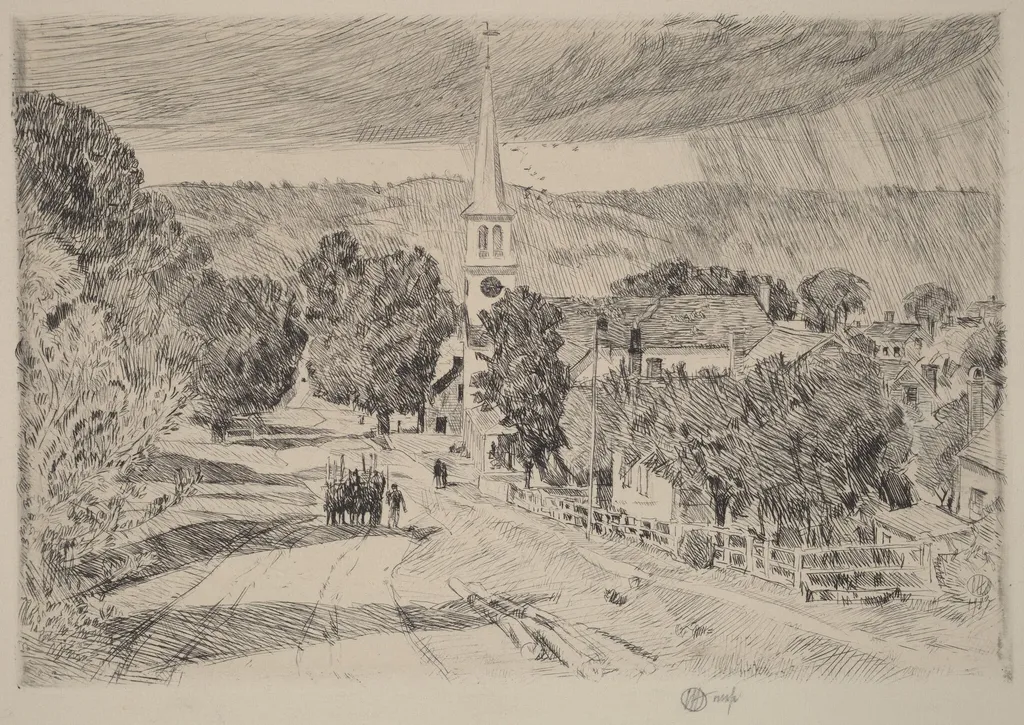
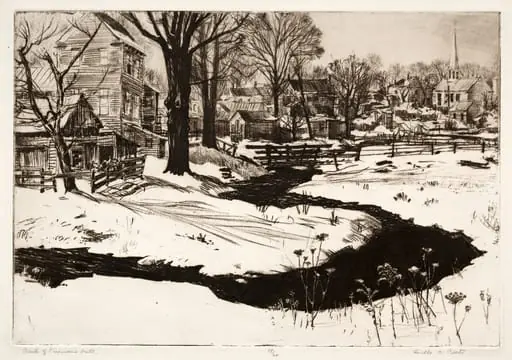
A Vermont Village is an ink print by Childe Hassam. It dates from 1923 and is held in the collection of the National Gallery of Art.
About this work
Overview
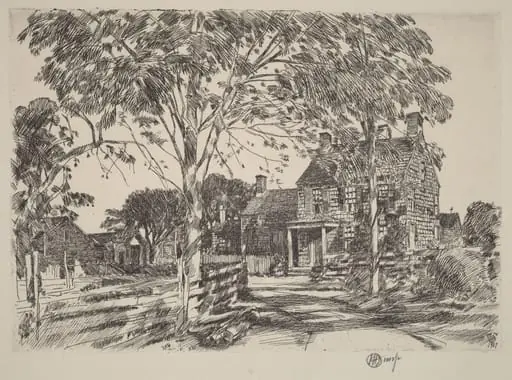
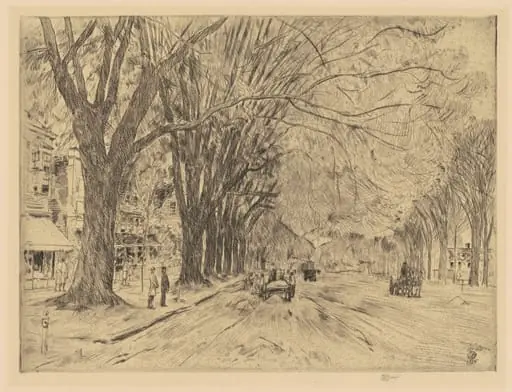
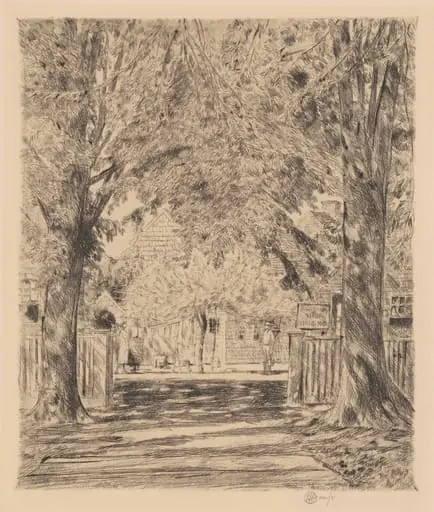
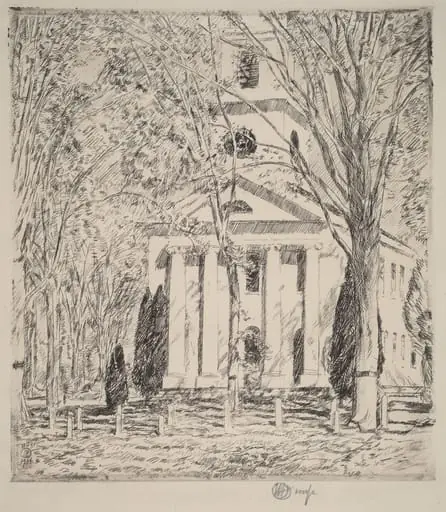
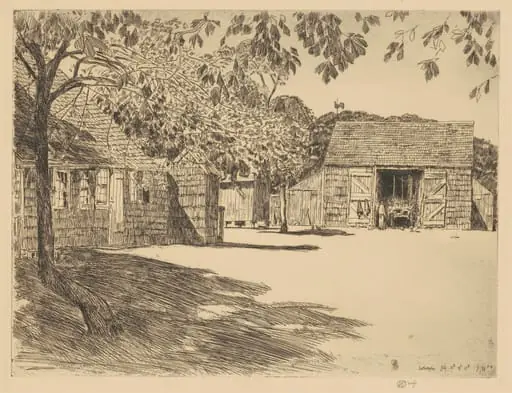
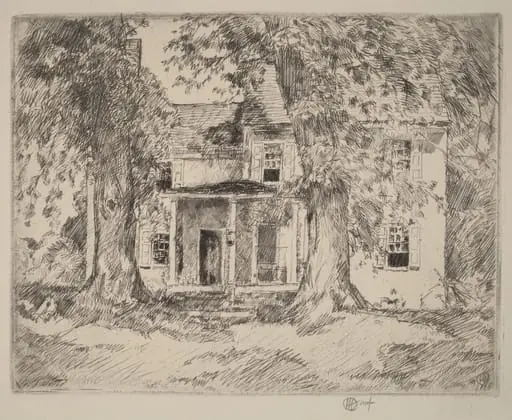
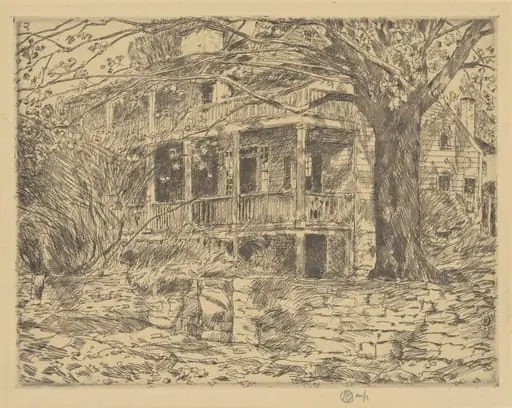
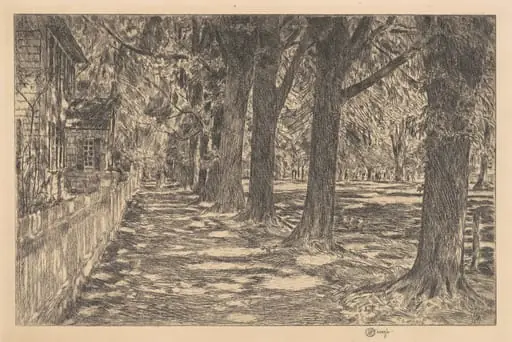
A Vermont Village is a 1923 black etching and drypoint print by Childe Hassam, an American Impressionist, depicting a rural New England scene.
Subject & Meaning
The print shows a small Vermont village with a prominent church steeple, trees, a dirt road, and figures walking in the center, capturing a serene rural moment.
Technique & Style
Hassam employed loose, scratchy lines and drypoint to achieve deep, jagged marks, contrasting with the lighter background, and imparting a rough, textured appearance.
History & Provenance
Created in 1923, this work is part of Hassam's prolific output of over 3,000 pieces across mediums, though specific provenance details for this print are not provided.
Context
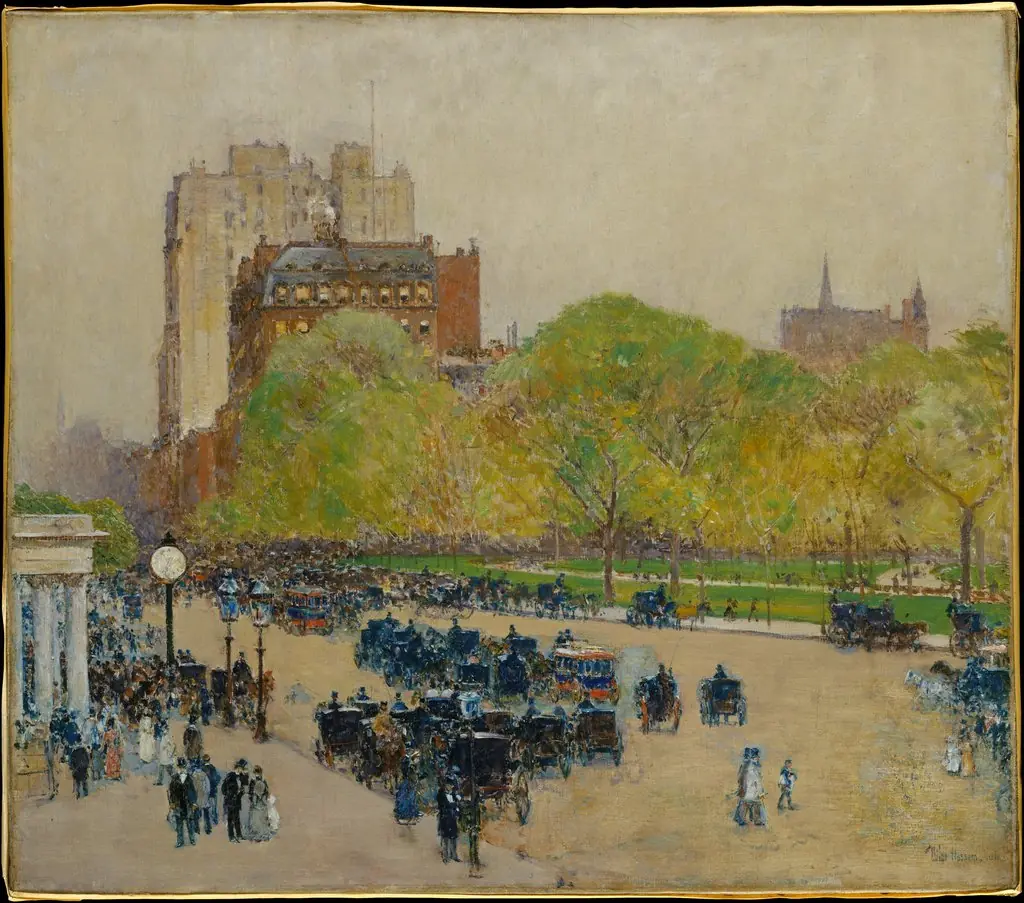
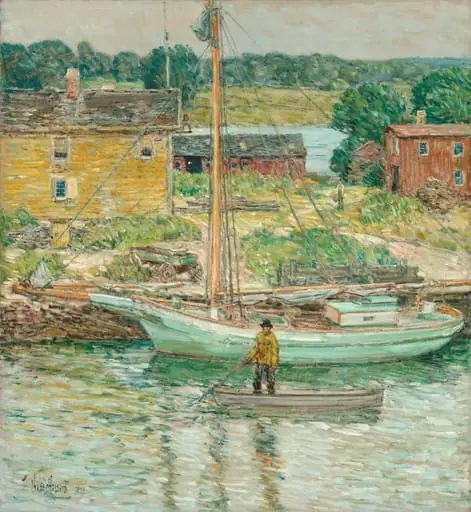
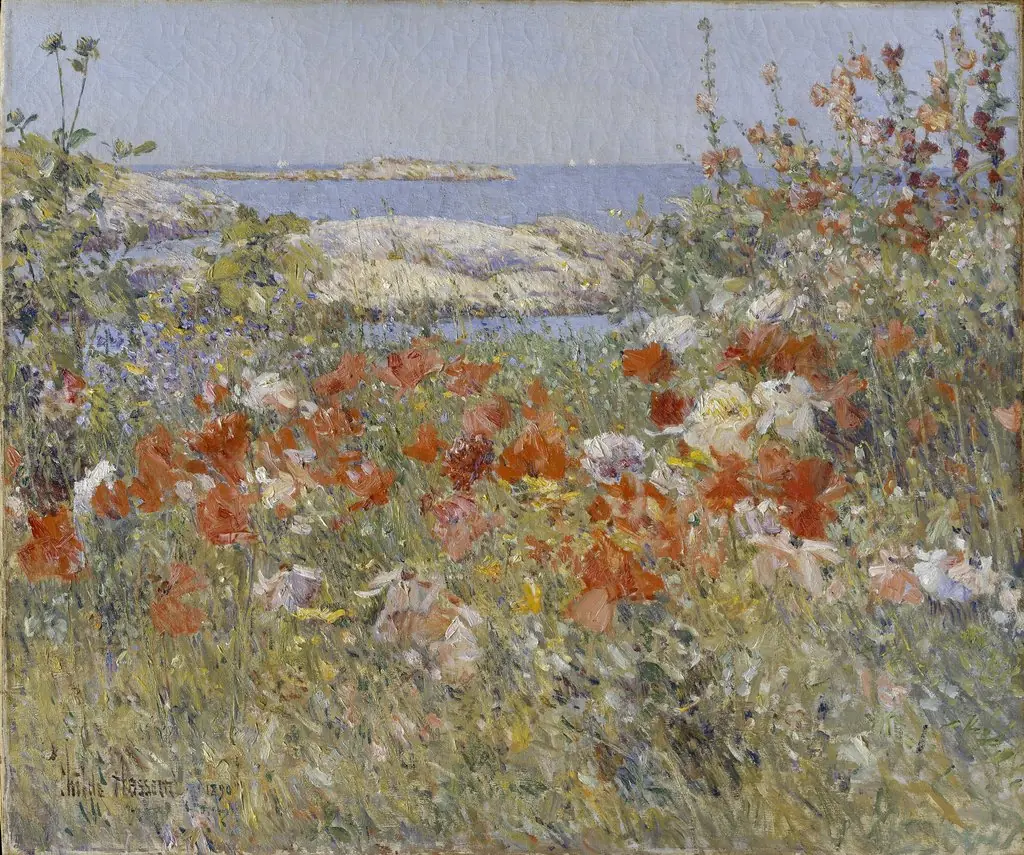
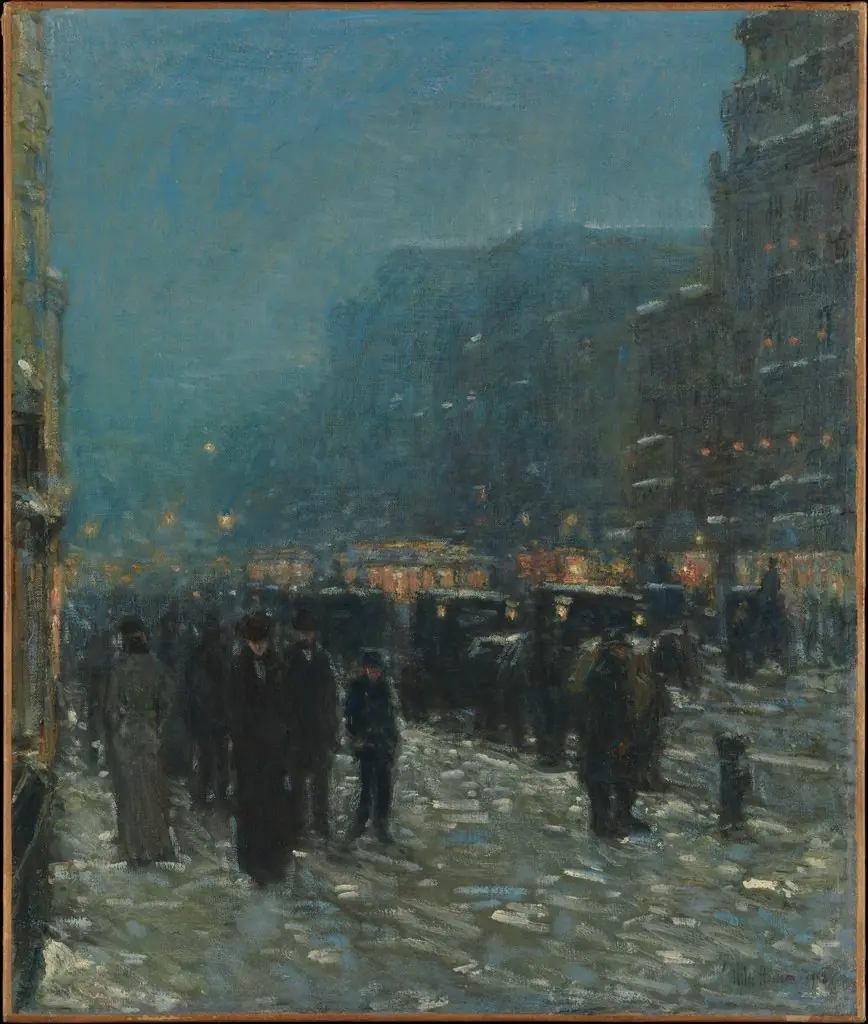
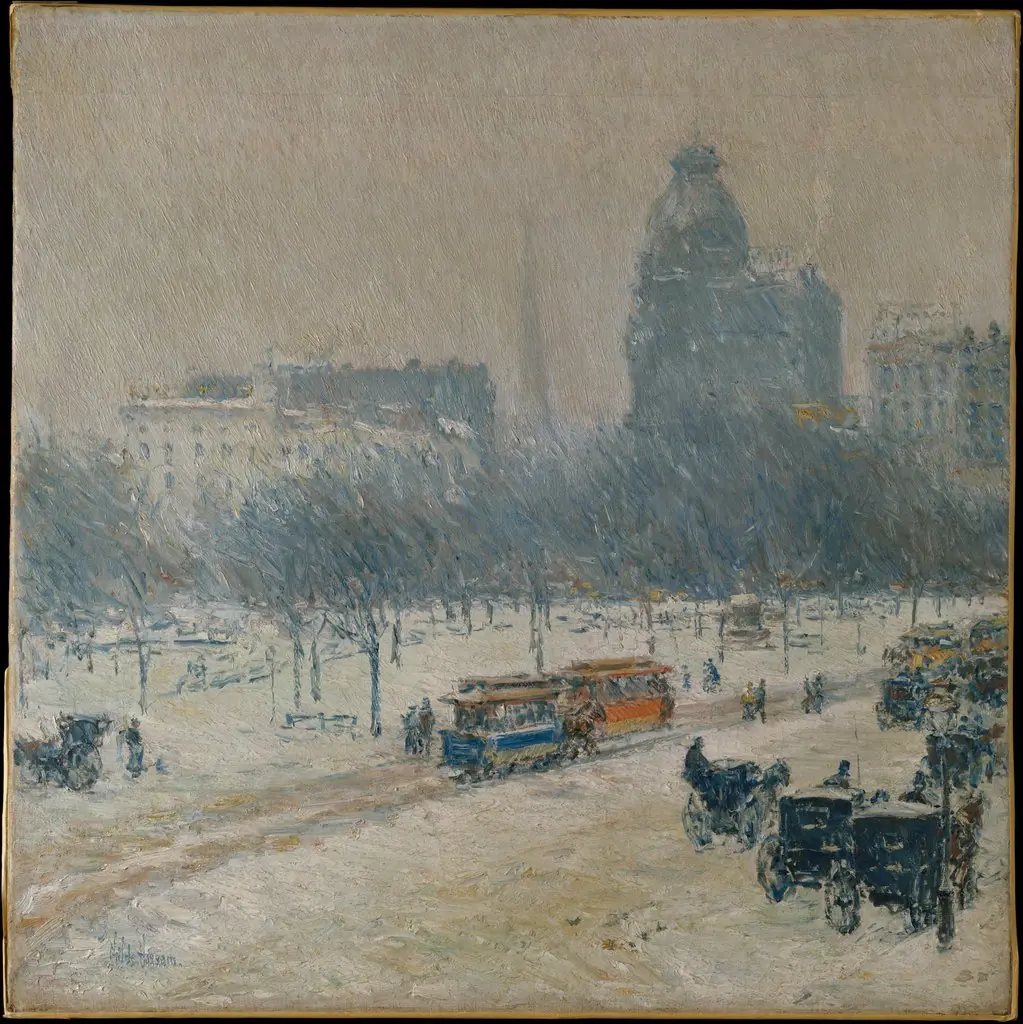
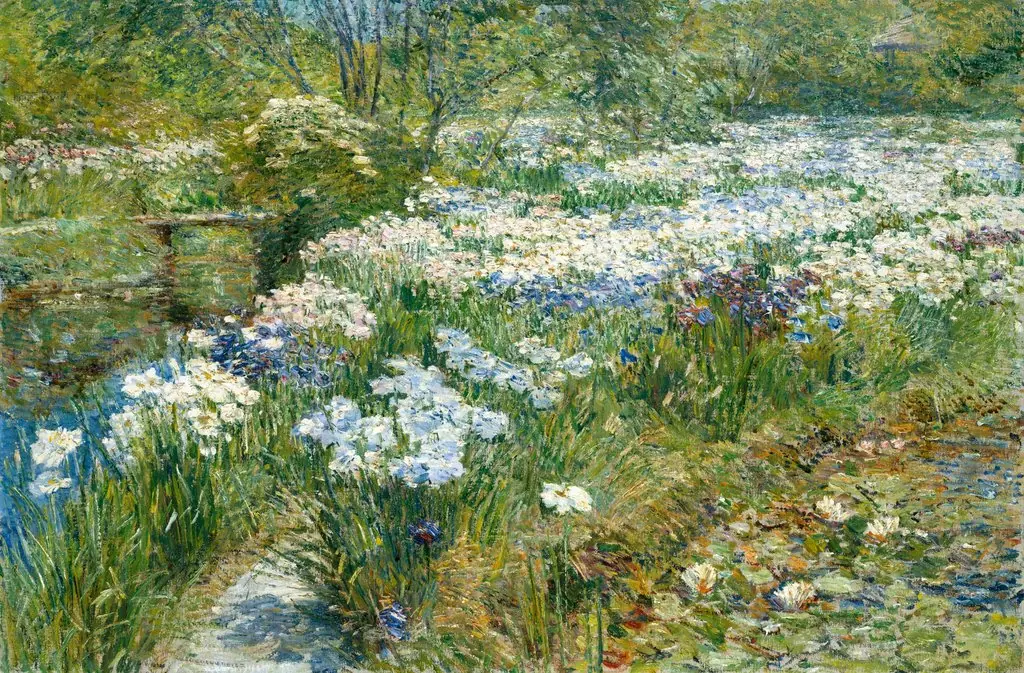
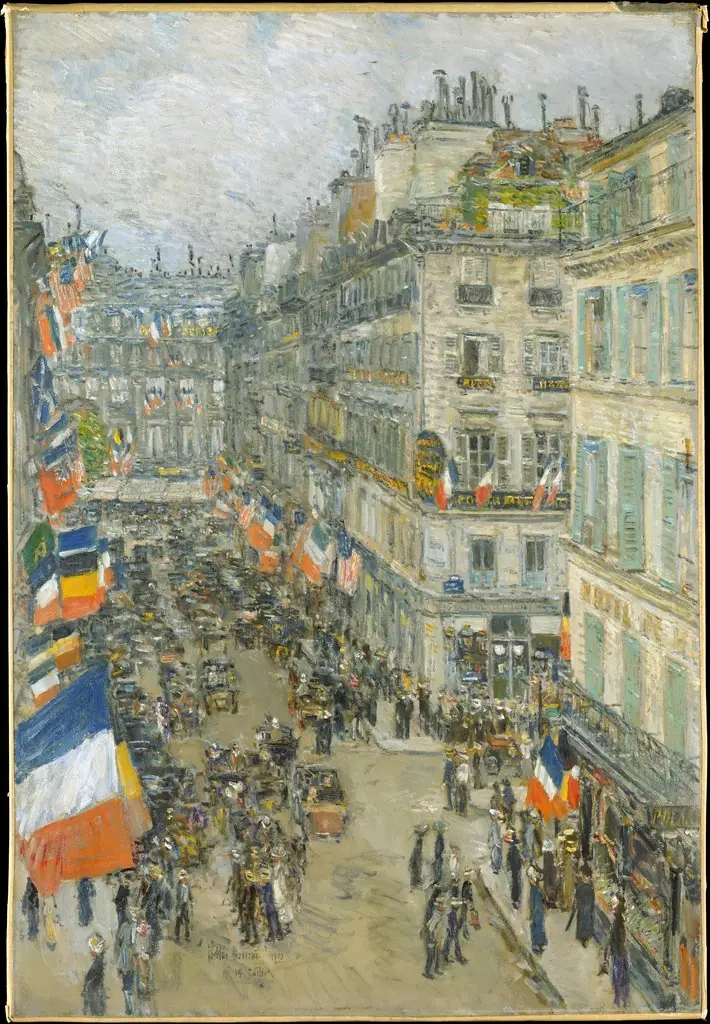
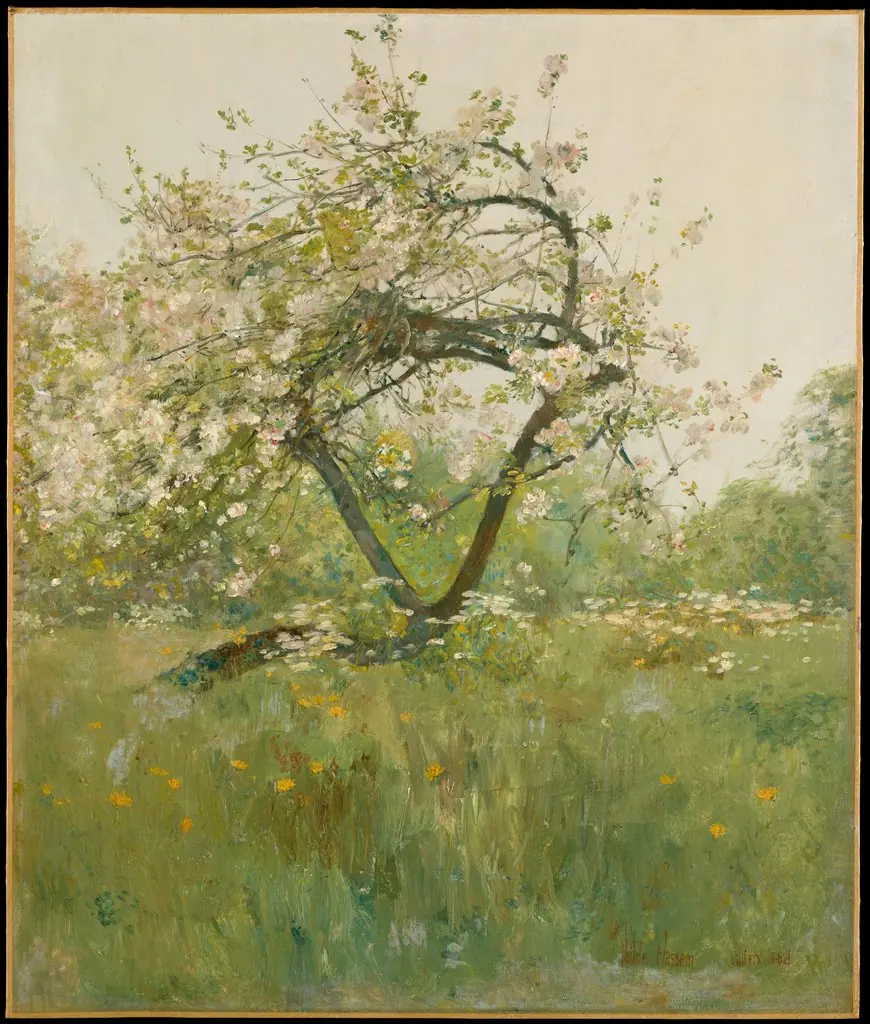
While known for urban and coastal themes, this piece reflects Hassam's occasional exploration of rural subjects, aligning with his role in popularizing Impressionism in early 20th-century America.
Legacy
As one of Hassam's numerous works, A Vermont Village contributes to his legacy as a leading American Impressionist, though its individual impact within his extensive oeuvre is not distinctly highlighted.
Own this work as a print
Artist & collection
Artist
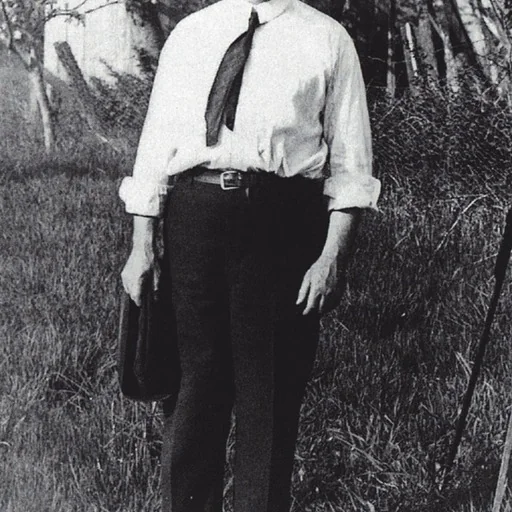
Frederick Childe Hassam was an American Impressionist painter, noted for his urban and coastal scenes.