Artwork
Heavy Surf, High Tide, Easthampton
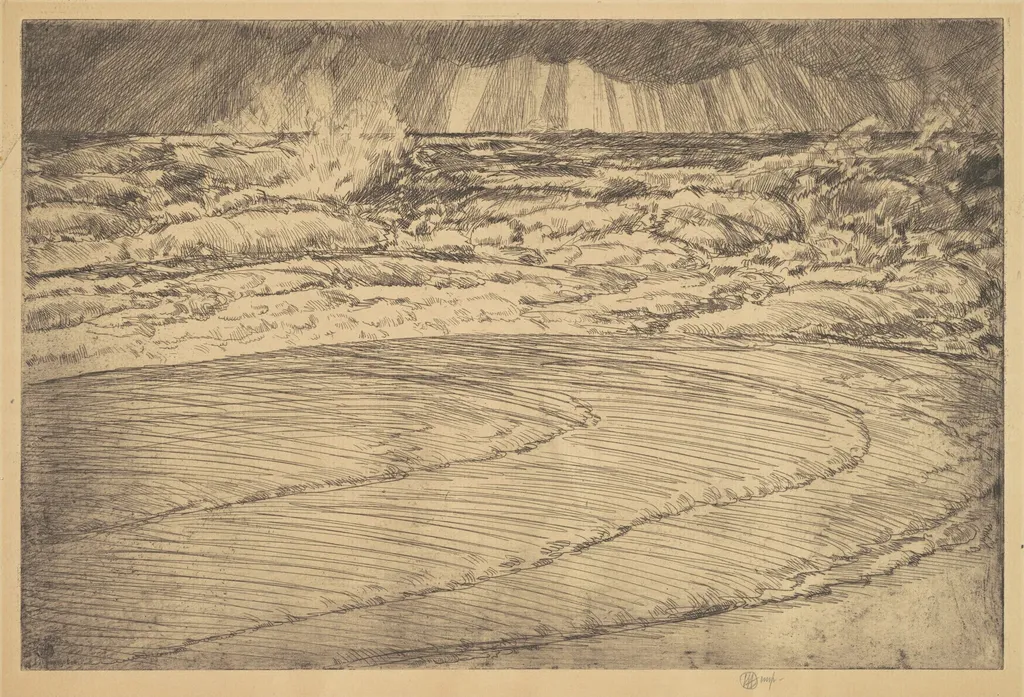
Heavy Surf, High Tide, Easthampton is an ink print by Childe Hassam. It dates from 1920 and is held in the collection of the National Gallery of Art.
About this work
This etching shows tall waves crashing against a rocky shore. The dark ink makes the water look thick and rough. Thin lines near the foam show how the waves move.
Hassam made this in 1920 during a visit to Easthampton, New York. He often drew the ocean’s power in black-and-white prints. This one stands out for its bold lines and deep contrasts.
If you like strong seascapes, look up Winslow Homer.
Overview
Childe Hassam created this 1920 etching during a stay in Easthampton, New York, capturing the raw energy of the Atlantic coast. Rendered in black ink on laid paper, the work presents a close view of waves colliding with a rugged shoreline. The composition emphasizes motion and force, with minimal detail beyond the sea and shore, focusing attention on the interplay of light and shadow.
Subject & Meaning
The scene portrays the ocean at its most volatile—towering waves breaking against rocks, foam dissolving into spray. There is no human presence, no vessel, no horizon line to offer respite. The subject is the sea’s autonomy: a force indifferent to observation, governed by tide and wind. Hassam conveys not beauty, but the physical reality of water in motion.
Technique & Style
Hassam employed etching to achieve sharp contrasts and textured surfaces. Thick, angular lines define the crashing waves, while finer, erratic strokes suggest foam and spray. The paper’s natural tone serves as the only highlight, allowing the ink to dominate with weight and density. His brushwork in the plate mimics the turbulence of the water, translating movement into linear rhythm.
History & Provenance
Made in 1920, this print belongs to Hassam’s later period, when he increasingly turned to monochrome prints of coastal subjects. He produced numerous etchings of New England shores during this time, drawn to their dramatic topography. The work entered public collections shortly after its creation, reflecting its recognition among printmakers and collectors of American graphic art.
Context
Hassam’s seascapes of this era reflect a broader interest among American artists in capturing natural forces through direct observation. Unlike romanticized marine paintings, his etchings reject idealization, favoring immediacy and physical presence. His approach aligns with contemporaries like Winslow Homer, who also explored the sea’s indifference through stark, unembellished imagery.
Legacy
This etching exemplifies Hassam’s shift from Impressionist color to a more structural, tonal language in his later years. It remains a key example of early 20th-century American printmaking, valued for its restraint and emotional gravity. While not widely exhibited, it is frequently cited in studies of Hassam’s graphic work and the evolution of American landscape printmaking.
Own this work as a print
Artist & collection
Artist
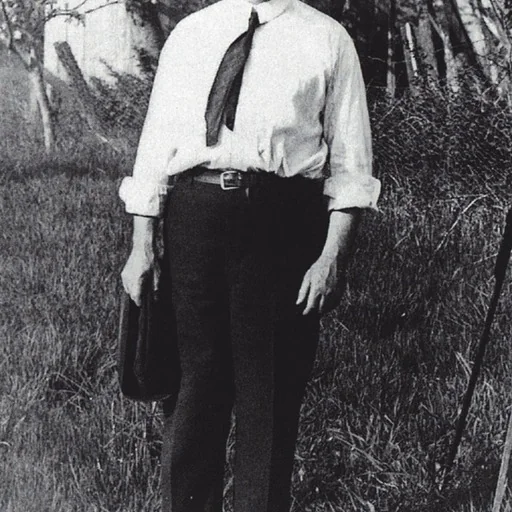
Frederick Childe Hassam was an American Impressionist painter, noted for his urban and coastal scenes.

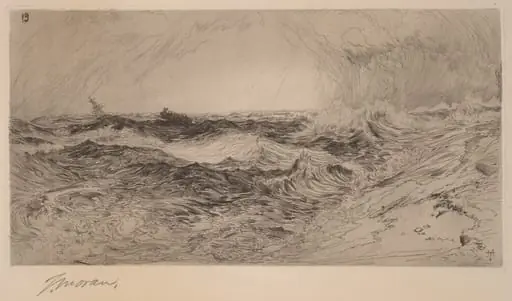 The Resounding Sea
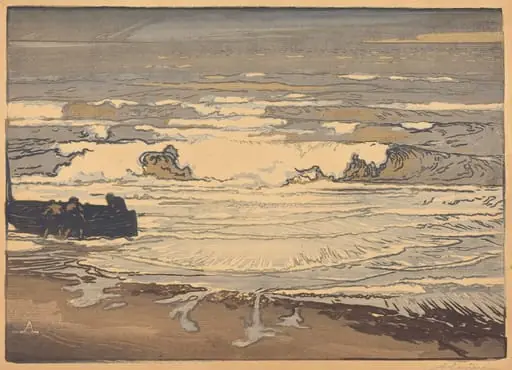 Unfurled Waves, Flood of September 1901 (Les lames deferlent,maree de Septembre 1901)
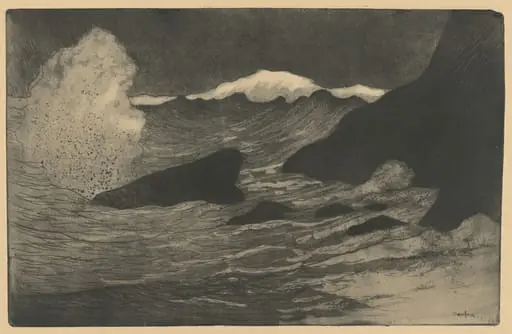 The Wave (La Vague)
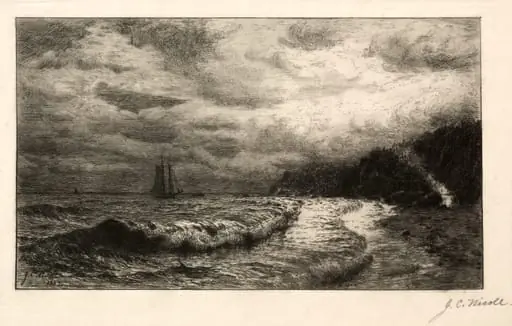 The Smuggler's Landing Place
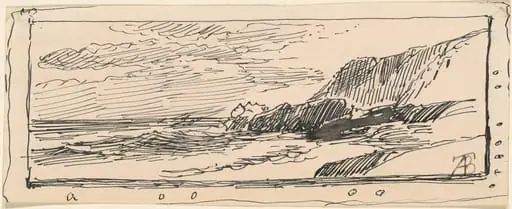 Rocky Coast
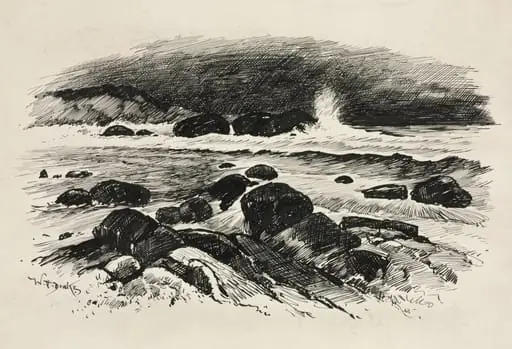 Tail Piece for Chapter XII from "Lorna Doone"
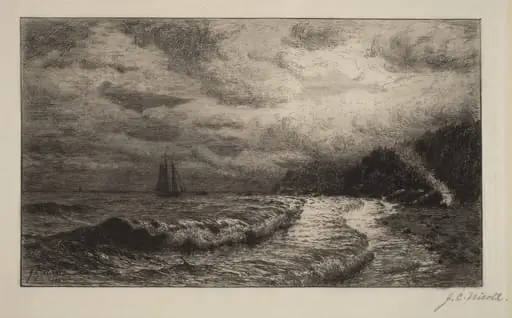 A Smuggler's Landing Place
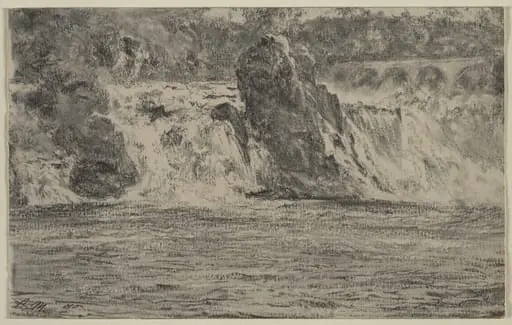 Falls of the Rhine at Schaffhausen (Rheinfall von Schaffhausen)
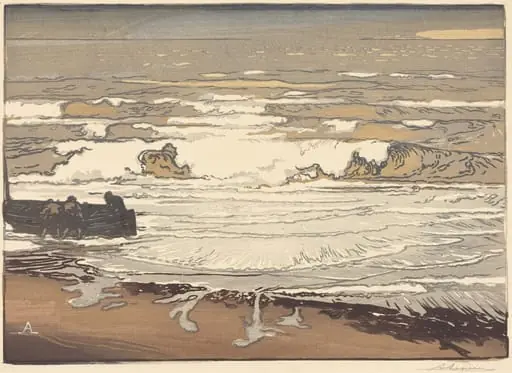 Unfurled Waves, Flood of September, 1901 (Les Vagues deferlent)
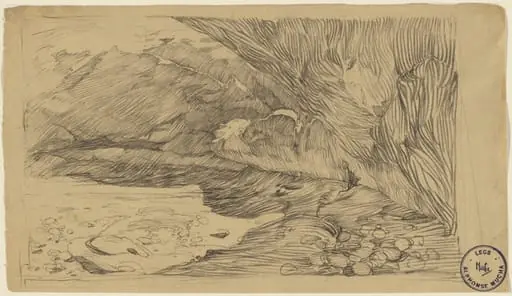 Untitled