Artwork
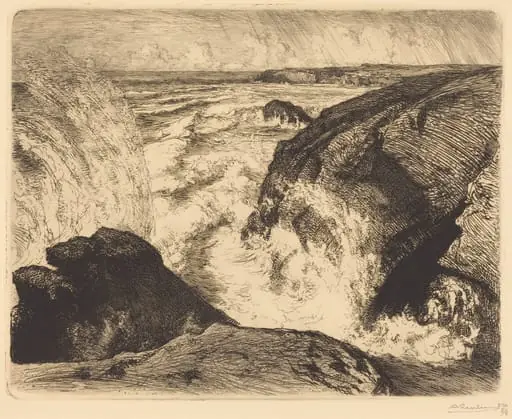
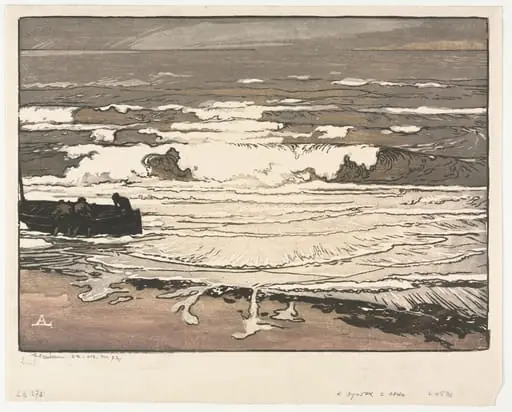
Unfurled Waves, Flood of September 1901 (Les lames deferlent,maree de Septembre 1901)
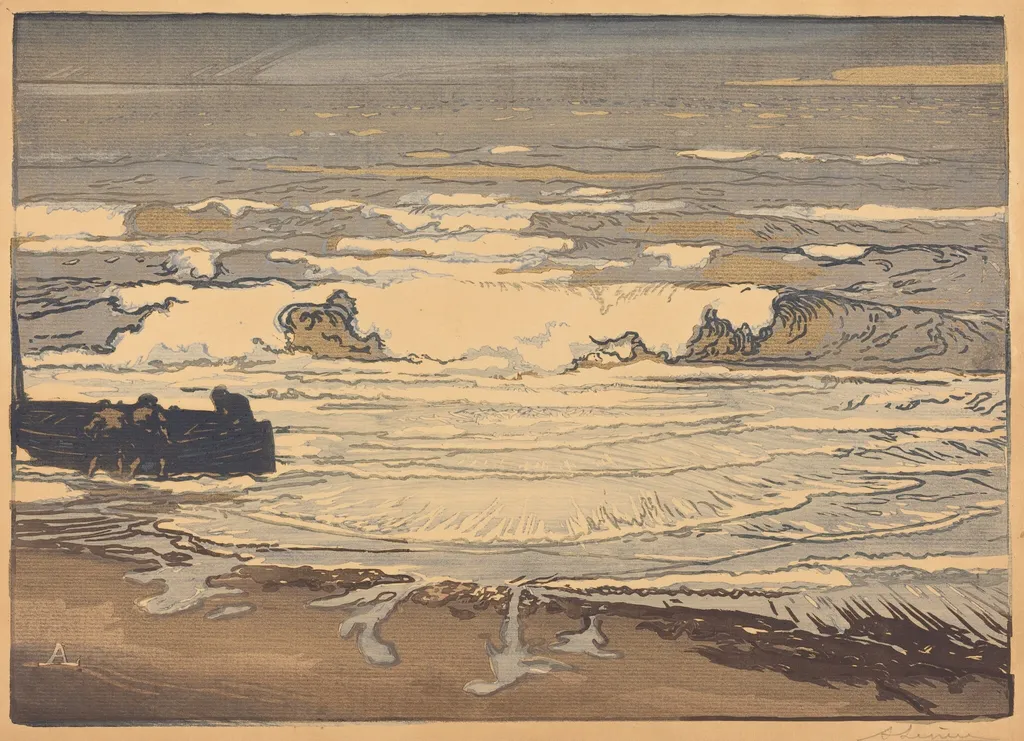
Unfurled Waves, Flood of September 1901 (Les lames deferlent,maree de Septembre 1901) is an ink print by Auguste Lepère. It dates from 1901 and is held in the collection of the National Gallery of Art.
About this work
Overview
The print captures a moment of violent ocean motion, rendered through layered blocks and careful ink application.
Created in 1901, *Unfurled Waves, Flood of September 1901* is a color woodcut by Auguste Lepère, a French artist instrumental in the revival of wood engraving as a fine art medium. The print captures a moment of violent ocean motion, rendered through layered blocks and careful ink application. Unlike traditional paintings, its graphic clarity and tonal contrasts stem from the physical process of carving and printing wood, emphasizing structure over atmospheric illusion.
Subject & Meaning
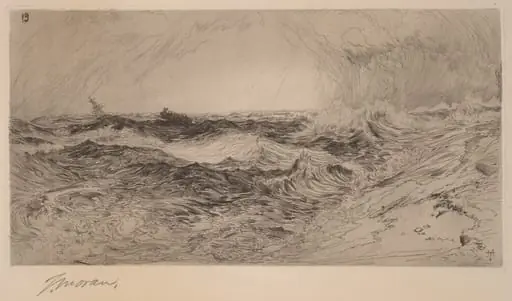
The scene portrays a storm-lashed coastline, where towering waves crash with force against the shore. A small, dark boat, nearly swallowed by the surge, suggests human vulnerability amid nature’s power. The absence of figures or landmarks focuses attention on elemental forces—water, wind, and sky—conveying a quiet narrative of nature’s indifference rather than drama or rescue. The title anchors the image in a specific historical flood, lending it documentary weight.
Technique & Style
Lepère employed multiple woodblocks, each carved for a distinct tone—dark grays for foreground waves, lighter grays and pale blues for sky and distance. The linear, angular carving enhances the sense of motion, with sharp edges defining breaking crests and foam. Color is restrained but deliberate: the faint blue in the clouds and the deep shadow of the boat create depth without realism. The print’s flat planes and bold contours reflect both Japanese ukiyo-e influences and European printmaking traditions.
History & Provenance
The work emerged during Lepère’s most active period in woodcut production, when he collaborated with printers to refine multi-block color techniques. It was likely printed in a small edition, typical of the artist-run workshops of the time. While its early ownership is undocumented, it entered public collections in the mid-20th century, valued for its technical innovation and as an example of the revival of hand-printed color woodcuts in France.
Context
Lepère’s work coincided with a broader European interest in printmaking as an autonomous art form, separate from reproduction. The late 19th century saw renewed attention to woodcut in France, partly inspired by Japanese prints and the Arts and Crafts movement. This piece reflects a shift toward expressive, non-narrative imagery—prioritizing texture and movement over storytelling—aligning with emerging modernist sensibilities in graphic art.
Legacy
Though not widely exhibited today, *Unfurled Waves* remains a significant example of early 20th-century color woodcut practice. Lepère’s method influenced later French printmakers who sought to elevate hand-carved prints beyond illustration. The work’s emphasis on material process and natural force contributed to a broader reevaluation of printmaking’s capacity for emotional and formal expression in modern art.
Own this work as a print
Artist & collection
Artist
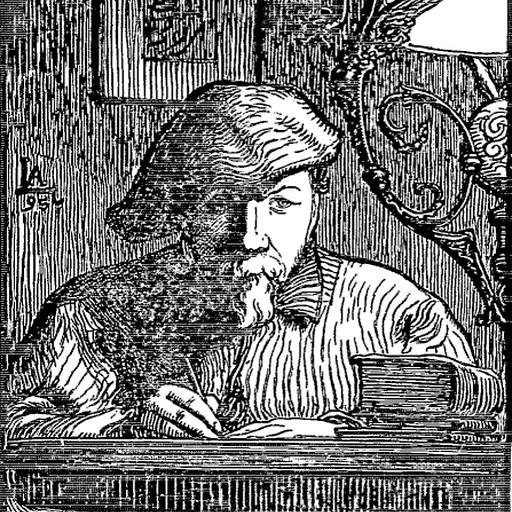
Louis-Auguste Lepère (30 November 1849 – 20 November 1918) was a French painter and etcher. Lepère is also considered a leader in the creative revival of wood engraving in Europe.