Artwork
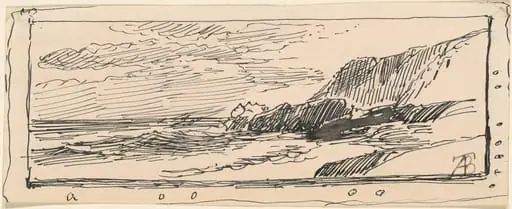
Tail Piece for Chapter XII from "Lorna Doone"
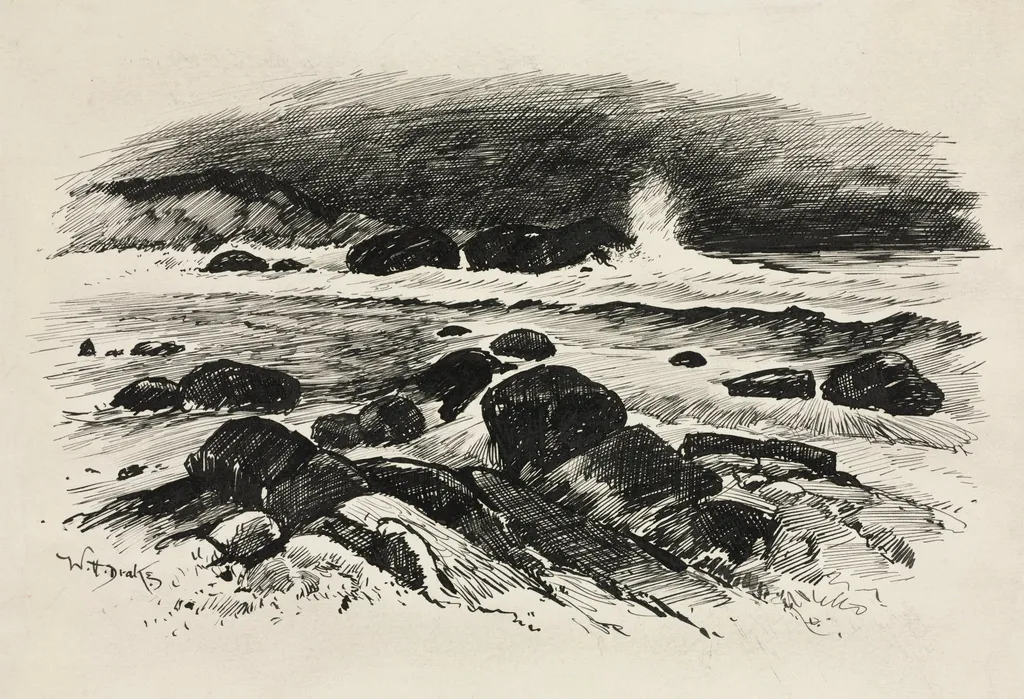
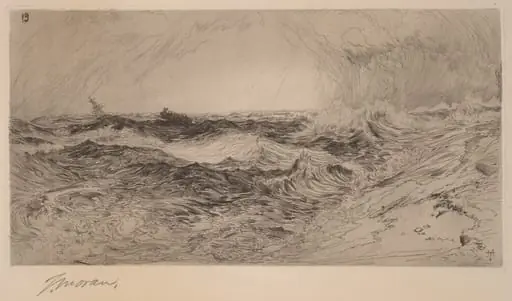
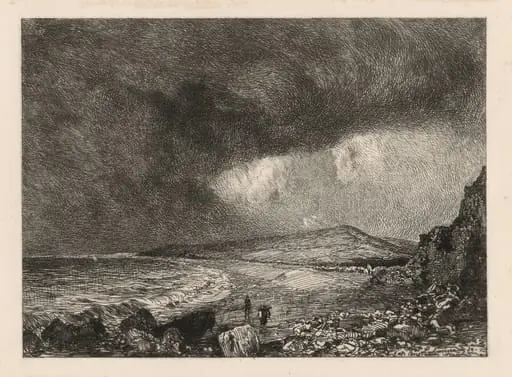
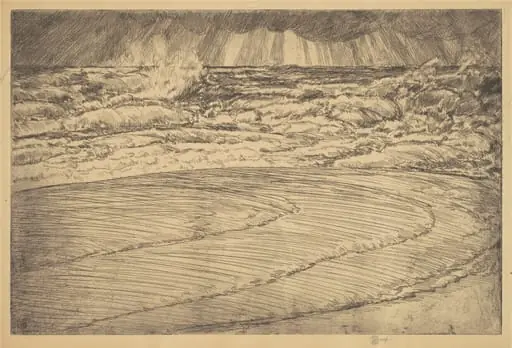
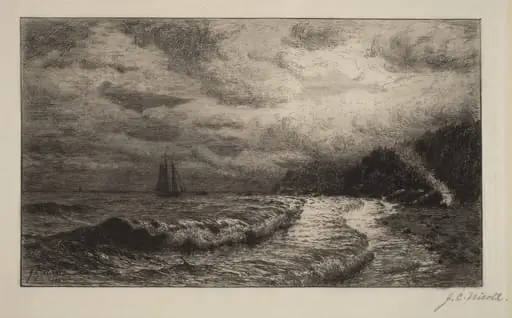
Tail Piece for Chapter XII from "Lorna Doone" is a drawing by the Impressionist artist William Henry Drake. It dates from 1889 and is held in the collection of the Cleveland Museum of Art.
About this work
Overview
Created around 1889 by William Henry Drake, this ink drawing served as a tail piece for Chapter XII of the novel Lorna Doone.
Created around 1889 by William Henry Drake, this ink drawing served as a tail piece for Chapter XII of the novel Lorna Doone. Executed with rapid, expressive strokes, it was intended to conclude a narrative section visually. The work is part of the collection at The Cleveland Museum of Art, where it represents the illustrator’s engagement with literary illustration during the late nineteenth century.
Subject & Meaning
The scene depicts a rugged, uninhabited landscape dominated by scattered boulders and uneven terrain. No figures or architectural elements appear, emphasizing isolation and natural wildness. The absence of human presence aligns with the novel’s romanticized depiction of the Exmoor moors, reinforcing themes of solitude and the untamed frontier that frame the story’s emotional landscape.
Technique & Style
Drake employed loose, energetic linework to convey texture and movement, using scratchy, irregular strokes to suggest rock surfaces and uneven ground. The sky is minimally indicated with faint, hurried marks, directing attention to the earthbound forms. This approach reflects a spontaneous, on-site sensibility, prioritizing immediacy over detail, characteristic of illustrators working under tight editorial deadlines.
History & Provenance
The drawing was produced as part of a series of illustrations for the 1889 edition of Lorna Doone, a popular Victorian novel. It was likely created in Drake’s studio, though its sketchlike quality suggests possible on-location studies. Acquired by The Cleveland Museum of Art, it remains one of the few surviving original illustrations from this project, offering insight into the production of illustrated books of the period.
Context
Drake’s work emerged during a time when literary illustration was a major component of book publishing, with artists like him commissioned to visually interpret novels for mass audiences. His style aligns with the Realist movement’s emphasis on naturalism, though adapted for the demands of print media. The roughness of his lines reflects both artistic preference and the technical constraints of wood engraving reproduction.
Legacy
Though not widely exhibited, this drawing exemplifies the quiet, functional artistry behind Victorian book illustration. It preserves the hand of the illustrator in an era increasingly dominated by mechanical reproduction. Today, it serves as a tangible link to the collaborative process between writers, illustrators, and publishers that shaped the visual culture of 19th-century literature.
Artist & collection

Artist
Sir William Henry Drake,, was a British public servant and Colonial Treasurer of Western Australia.

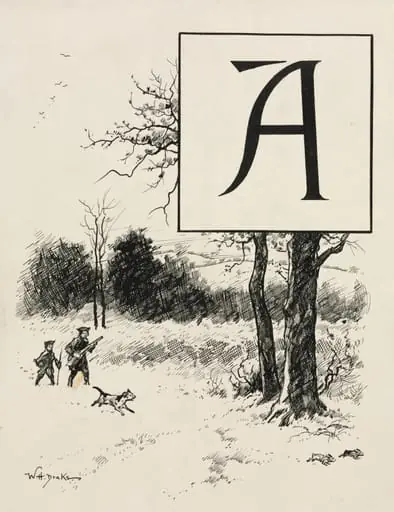 Inital A for Chapter VI from "Lorna Doone"
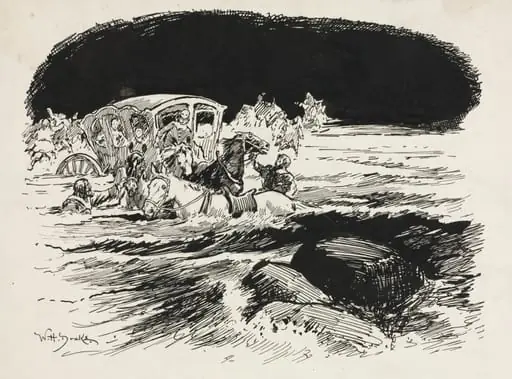 Tail Piece for Chapter LIII from "Lorna Doone"
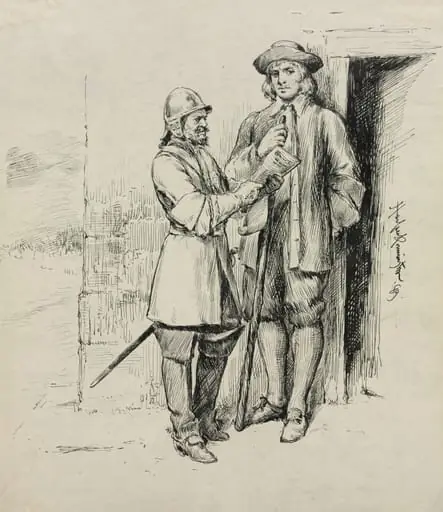 Illustration for Chapter XXIII from "Lorna Doone"
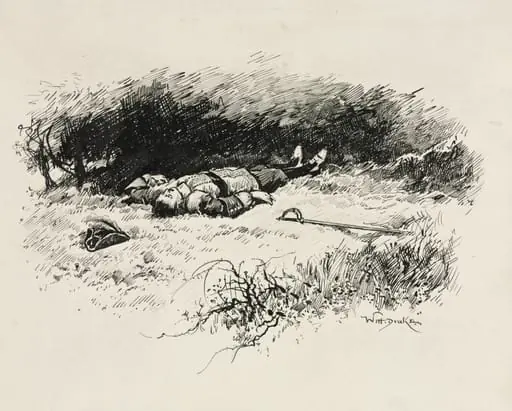 Tail Piece for Chapter XXI from "Lorna Doone"
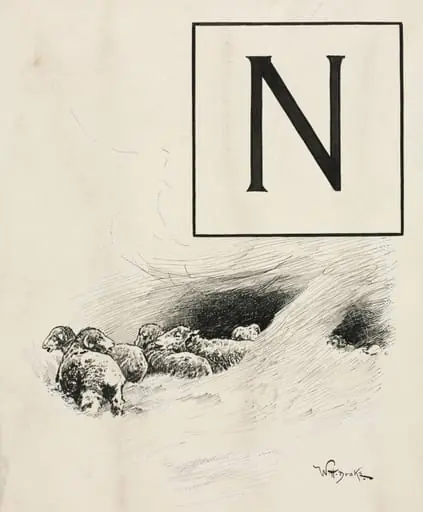 Inital N for Chapter L from "Lorna Doone"
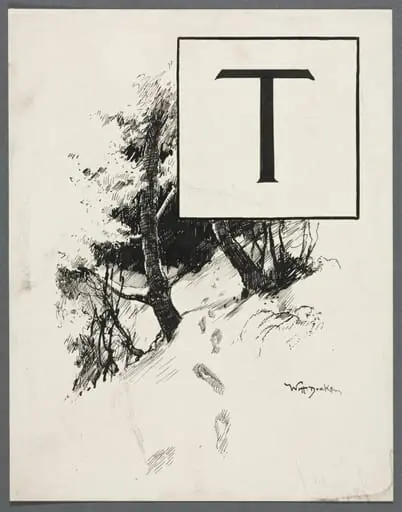 Inital T for Chapter XLIV from "Lorna Doone"
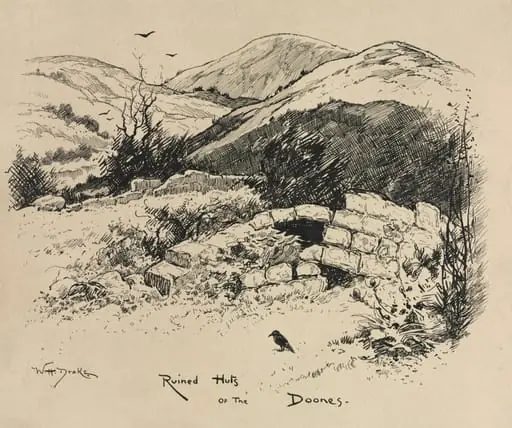 Tail Piece for Chapter LXXI from "Lorna Doone"
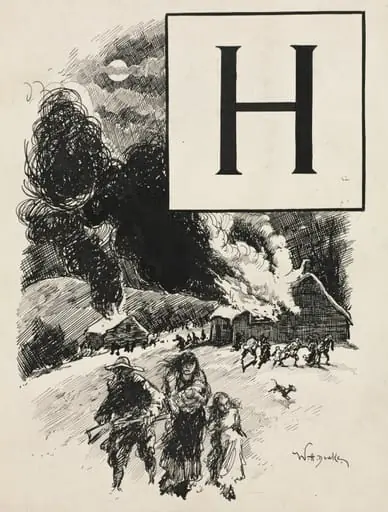 Inital H for Chapter LXXI from "Lorna Doone"