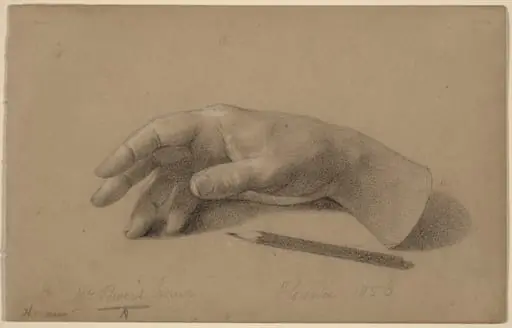
Artwork
Study of Hands (recto); Study of a Woman's Hand (verso)
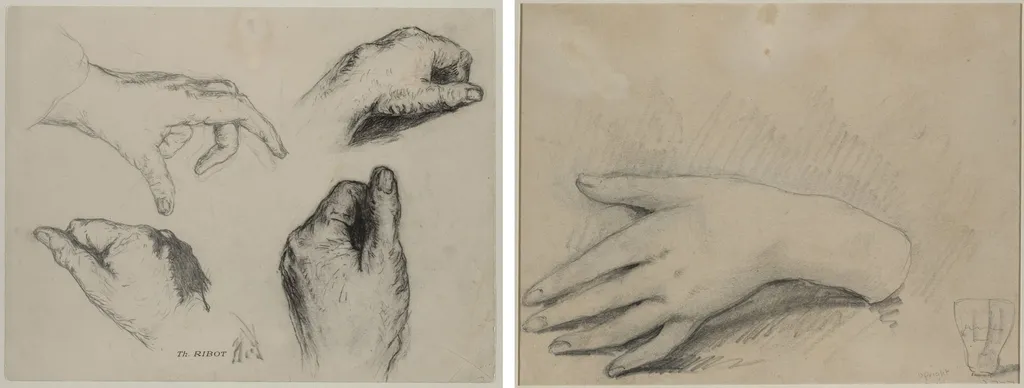
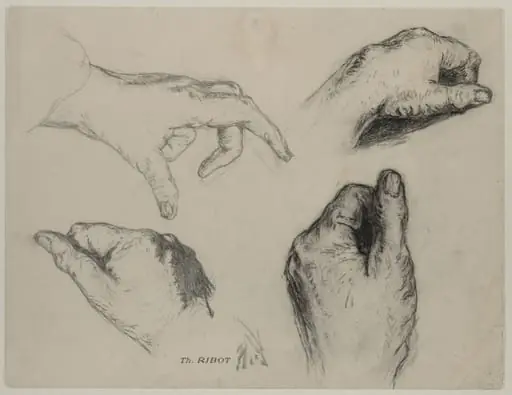
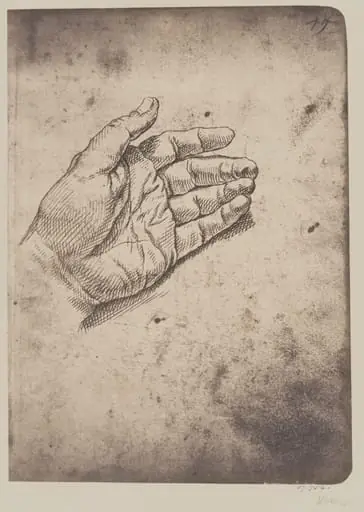
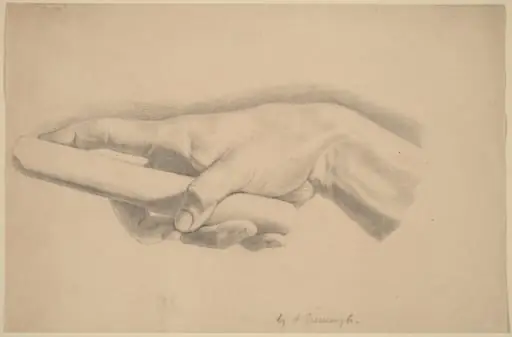
Study of Hands (recto); Study of a Woman's Hand (verso) is a drawing by the Romanticist artist Augustin Théodule Ribot. It dates from 1804 and is held in the collection of the Cleveland Museum of Art. This double-sided drawing by Théodule Ribot, dated around 1804, presents two studies of hands on a single sheet.
About this work
Overview
The recto features five gestural sketches of hands in varied positions, while the verso focuses on a single female hand.
This double-sided drawing by Théodule Ribot, dated around 1804, presents two studies of hands on a single sheet. The recto features five gestural sketches of hands in varied positions, while the verso focuses on a single female hand. Executed in light, rapid pencil strokes, the work captures motion and posture rather than idealized form. The paper bears faint smudges, suggesting direct, on-the-spot observation.
Subject & Meaning
The drawings explore the natural articulation of the human hand—fingers curled, extended, or gripping a small object resembling a glass vessel. These are not posed portraits but fleeting observations of anatomy in motion. Ribot’s interest lies in the unguarded, everyday gestures of the hand, revealing his focus on lived experience over formal representation.
Technique & Style
Ribot employed a loose, economical pencil line to suggest form through subtle shading and contour. Shadows under knuckles and between fingers imply volume without heavy modeling. The sketchiness, including accidental smudges, reflects a working method rooted in direct observation. The absence of fine detail emphasizes movement and spontaneity over finish.
History & Provenance
The drawing is held in the collection of The Cleveland Museum of Art. While its early ownership history is not fully documented, its presence in the museum’s holdings suggests it was acquired as part of a broader collection of 19th-century French drawings. It remains a representative example of Ribot’s preparatory studies.
Context
Created during the early 19th century, this work aligns with a growing interest in anatomical observation among artists, influenced by Enlightenment empiricism and academic training. Ribot, though less known than contemporaries, contributed to a tradition of sketching from life to understand human form, particularly in its transient, unidealized states.
Legacy
This drawing exemplifies the value of preparatory studies in artistic practice, preserving the immediacy of observation often lost in finished works. Though not widely exhibited, it contributes to understanding Ribot’s process and the broader French academic tradition of studying the body through direct, unembellished sketching.
Artist & collection
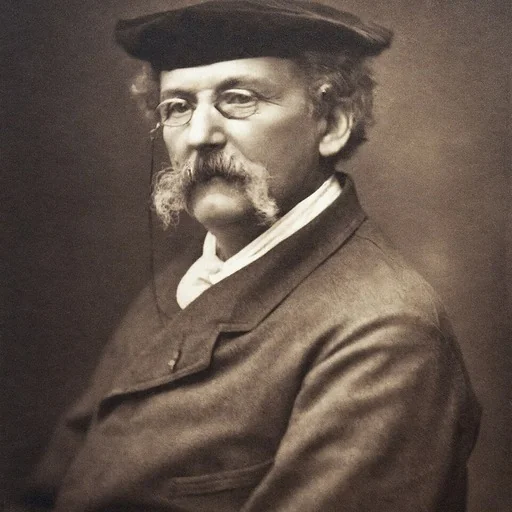
Artist
Théodule-Augustin Ribot (French: ; August 8, 1823 – September 11, 1891) was a French realist painter and printmaker.

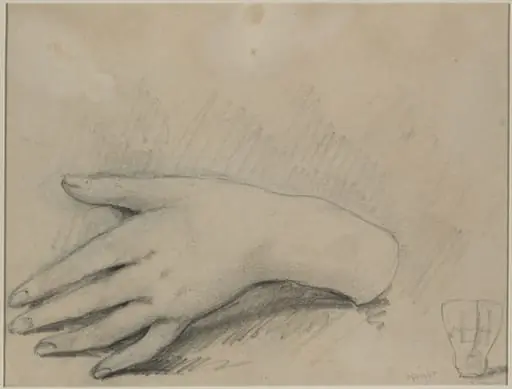
![Studies of Hands [recto], by Perry, Enoch Wood, Jr.](https://artifactworldgallery.com/img/perry-enoch-wood-jr--studies-of-hands-recto--594d36f72822a9f4-w320.webp)
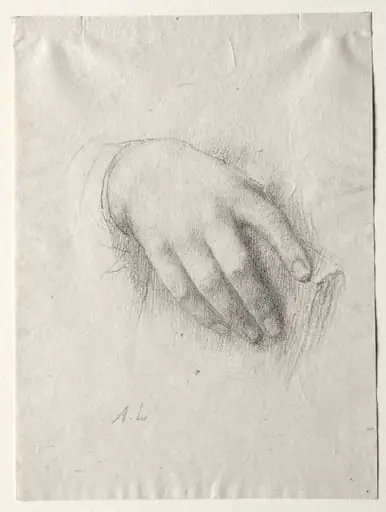
![Study of a Right Hand [recto], by Benjamin Haydon](https://artifactworldgallery.com/img/benjamin-haydon--study-of-a-right-hand-recto--88b544f65d3eb1a7-w320.webp)
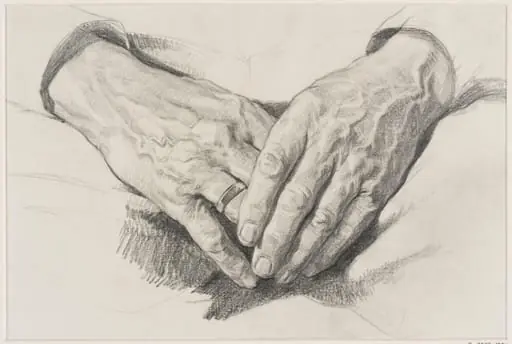
![Study of a Hand [recto], by Benjamin Haydon](https://artifactworldgallery.com/img/benjamin-haydon--study-of-a-hand-recto--a1c8376edca59300-w320.webp)
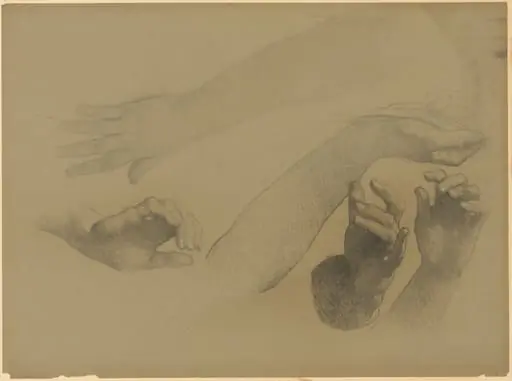
![Hand Studies [verso], by Allan Ramsay](https://artifactworldgallery.com/img/allan-ramsay--hand-studies-verso--f6c634d33f170fe2-w320.webp)