Artwork
The Wounded Leg
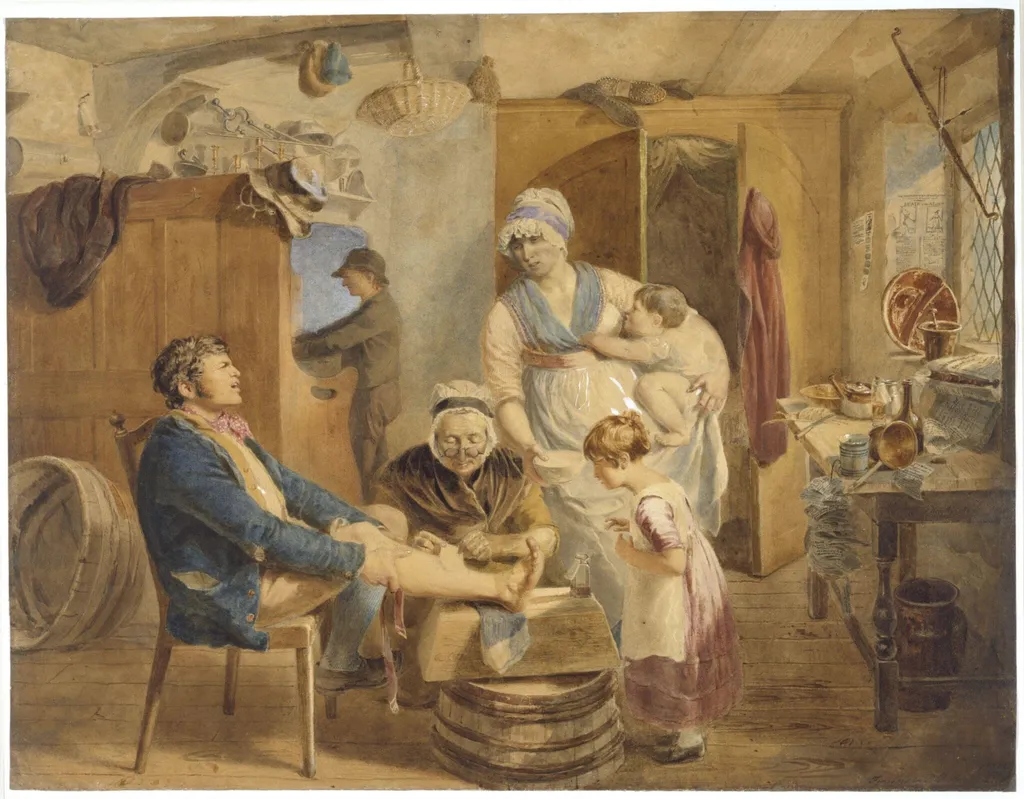
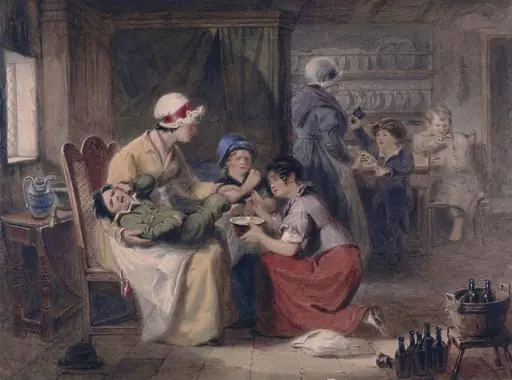
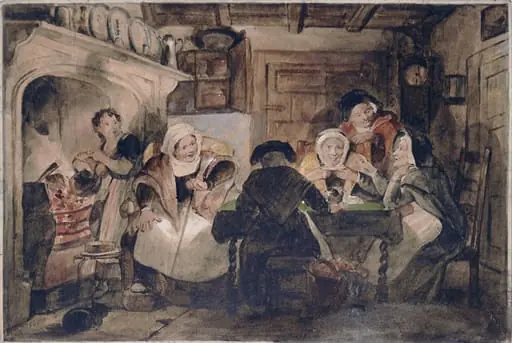
The Wounded Leg is a watercolor work on paper by the British Romanticist artist Heaphy. It dates from 1809 and is held in the collection of the Victoria and Albert Museum.
About this work
Heaphy’s early career started with tiny portraits before he switched to bigger watercolours.
Heaphy painted *The Wounded Leg* in 1809 using watercolour.
It shows the fine details he was known for, like a worn Bible near a window.
Look for the Bible’s worn pages—it’s a quiet but telling touch.
This work fits Romanticism, a movement about feeling and detail.
Heaphy’s early career started with tiny portraits before he switched to bigger watercolours.
Check out the faded tones—later artists tried to fix them.
See more works by Heaphy next.
Overview
Thomas Heaphy’s watercolour *The Wounded Leg* (1809) exemplifies his transition from miniature portraiture to larger, narrative subjects. Executed in delicate washes, the composition centers on a domestic interior where a worn Bible rests on a windowsill, drawing attention to the work’s meticulous observation of everyday objects.
Subject & Meaning
The painting captures a quiet moment of injury, suggested by the title, within a modest interior. The Bible, its pages yellowed and edges frayed, serves as a visual metaphor for endurance and the passage of time, reinforcing the Romantic interest in personal feeling and moral contemplation.
Technique & Style
Heaphy employs fine, precise brushwork to render textures—the cracked spine of the Bible, the translucency of the window glass, and the subtle play of light across the floor. The palette, originally muted, has since faded; later restorers attempted retouching, yet the original handling of watercolour remains evident.
History & Provenance
After exhibiting miniature portraits at the Royal Academy from 1797, Heaphy began showing large subject watercolours at the Society of Painters in Water Colours in 1807. *The Wounded Leg* was presented two years later, receiving favorable notices from both the public and contemporary critics.
Context
The work aligns with early‑19th‑century Romanticism, a movement that emphasized emotional resonance and detailed representation of ordinary life. Heaphy’s shift to larger watercolours reflects broader trends among British artists seeking to explore narrative content beyond portraiture.
Legacy
Although later attempts to restore its original hues have altered the surface, the painting continues to be cited for its careful rendering of domestic objects and its role in illustrating Heaphy’s development from miniature painter to a practitioner of Romantic watercolour narrative.
Artist & collection
Artist
They painted the early 1800s watercolour scene that made a splash in 1809: “The Wounded Leg,” a delicate sheet of paper showing a soldier’s injured limb propped up against a camp stool.

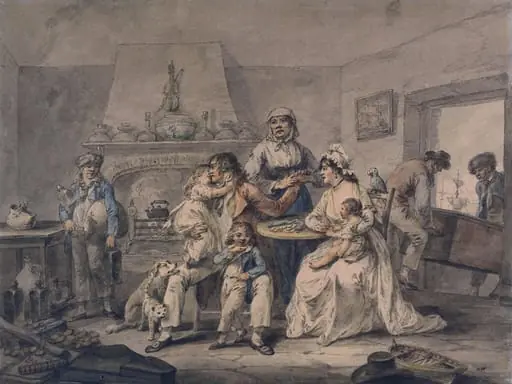 The Sailor's Return Home
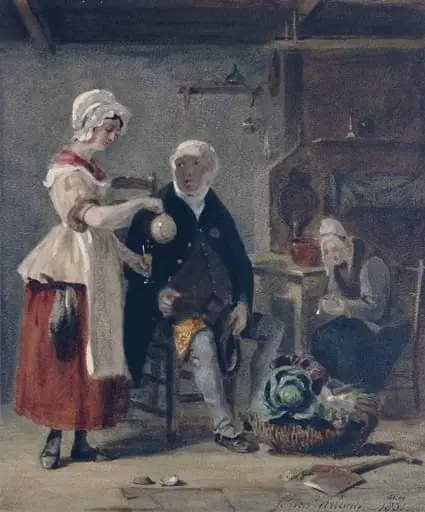 Rustic interior: figures of an old man and woman and a girl
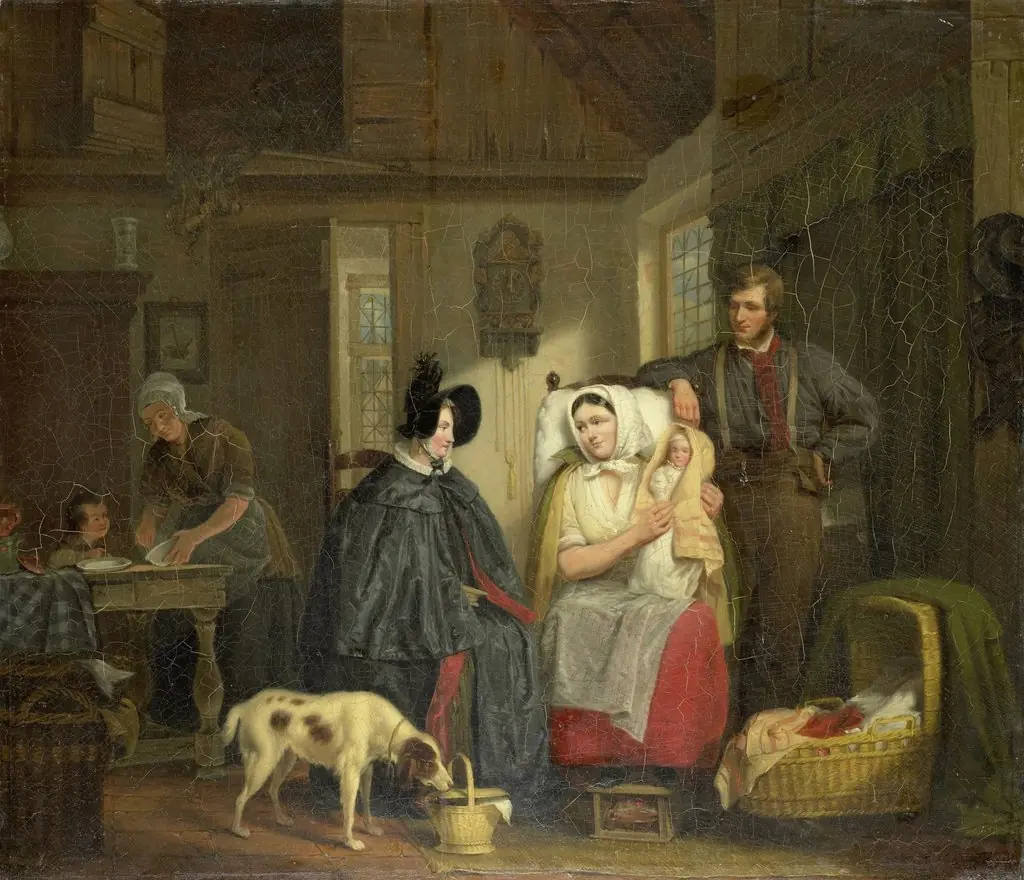 Visit to a New Mother
 The Cut Foot
 H Beard Print Collection
 The Pedlar
 Cardplayers Quarreling
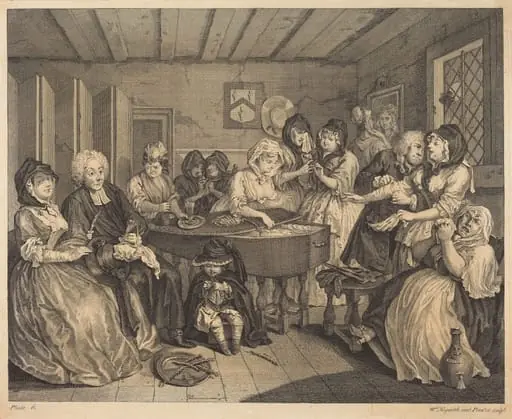 A Harlot's Progress: pl.6
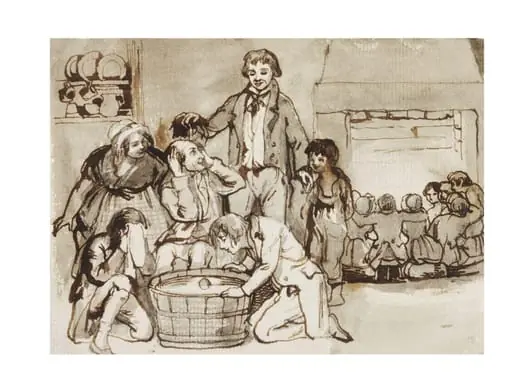 Snapp Apple Night
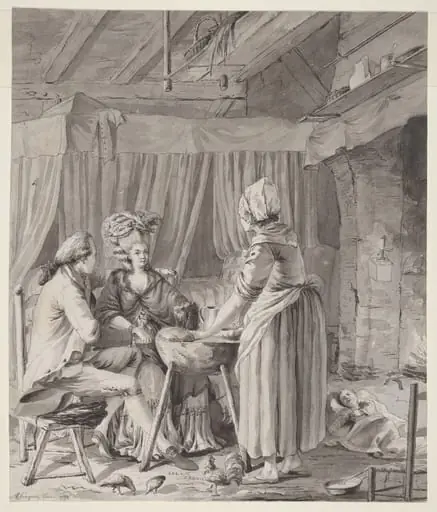 Elegant Couple Lunching in a Country Cottage
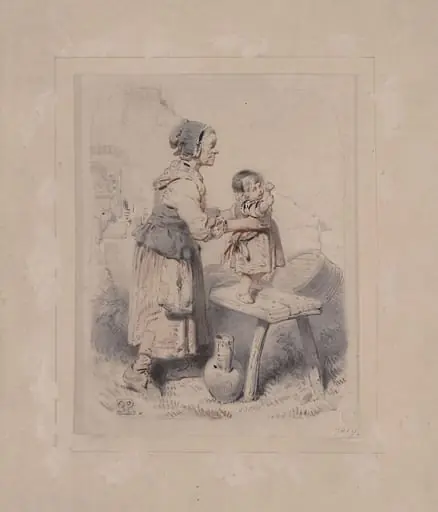 Old Woman and Child
 A cottage interior with a group of old women drinking tea and conversing