Artwork
The Sailor's Return Home
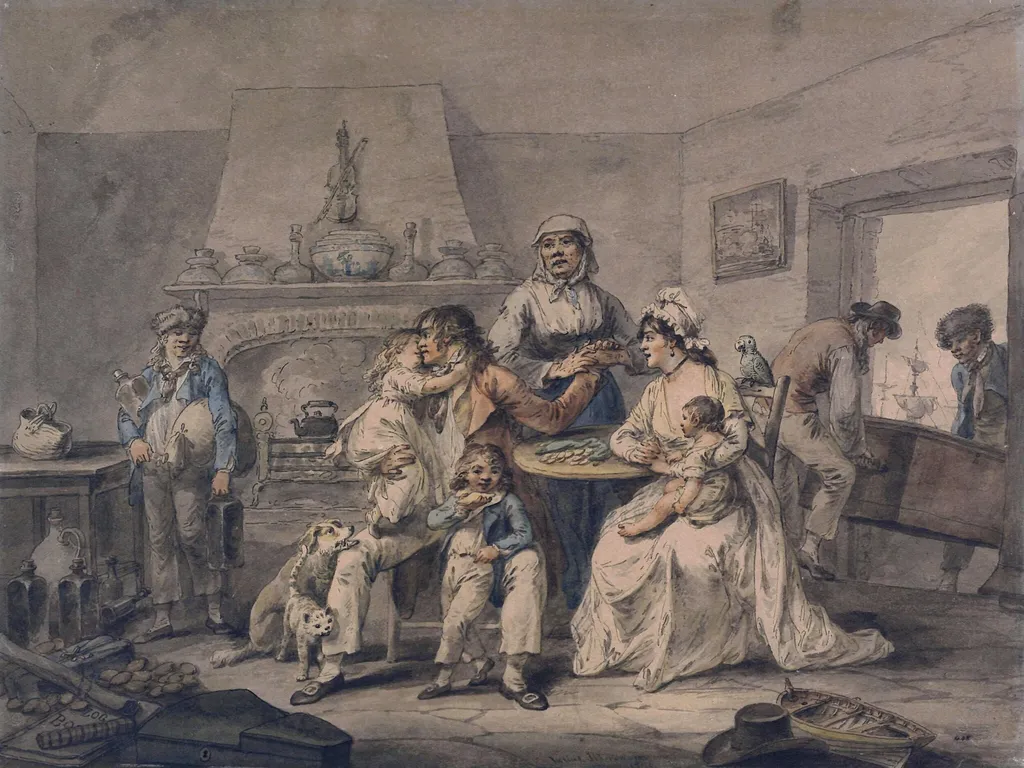
The Sailor's Return Home is a watercolor work on paper by the Romanticist artist Julius Caesar Ibbetson. It dates from 1795 and is held in the collection of the Victoria and Albert Museum. Painted in 1795 in watercolour, this work captures a domestic moment of reunion between a returning sailor and his family.
About this work
Overview
The artist’s signature and date confirm its origin, anchoring it in the late eighteenth-century British tradition of genre painting focused on ordinary life.
Painted in 1795 in watercolour, this work captures a domestic moment of reunion between a returning sailor and his family. The scene unfolds in a modest, cluttered interior, rendered with careful attention to everyday objects and quiet interactions. The artist’s signature and date confirm its origin, anchoring it in the late eighteenth-century British tradition of genre painting focused on ordinary life.
Subject & Meaning
The painting portrays a sailor’s return not as a grand spectacle but as an intimate, unscripted moment. Family members engage in routine activities—feeding a child, carrying a tray, tending to pets—while the sailor stands quietly, his work-worn clothes contrasting with the domestic warmth. The presence of a parrot and a framed ship image subtly reinforces his identity, suggesting themes of absence, return, and the persistence of home.
Technique & Style
The artist employs delicate watercolour washes to build soft, layered tones that evoke the glow of hearth light. Details like the texture of fabric, the glint on ceramic vessels, and the fur of a dog are rendered with precision without overwhelming the composition. The muted palette and gentle lighting unify the scene, enhancing its sense of quiet realism and lived-in authenticity.
History & Provenance
Signed and dated 1795, the painting originates from a period when British artists increasingly turned to domestic subjects. Its survival with the artist’s signature suggests it was likely kept within private collections rather than exhibited publicly. No documented exhibition history exists, but its preservation indicates it was valued as a personal record of familial life during a time of naval expansion.
Context
In the late 1700s, Britain’s maritime empire brought prolonged separations between sailors and their families. Art of the period began to reflect these emotional realities, shifting from heroic narratives to tender, everyday scenes. This painting aligns with a growing interest in domesticity, where the home became a site of moral and emotional significance, especially amid the uncertainties of sea travel.
Legacy
Though not widely known today, the work exemplifies a quiet shift in British art toward intimate realism. Its attention to detail and emotional restraint anticipates later Victorian genre painting. It remains a quiet testament to the uncelebrated moments that defined ordinary lives during an era defined by global conflict and domestic resilience.
Artist & collection
Artist
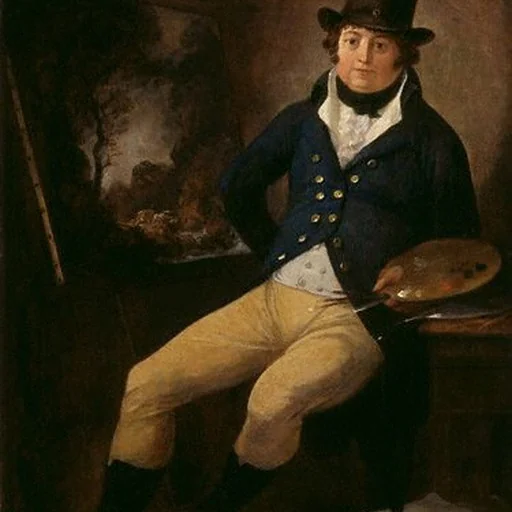
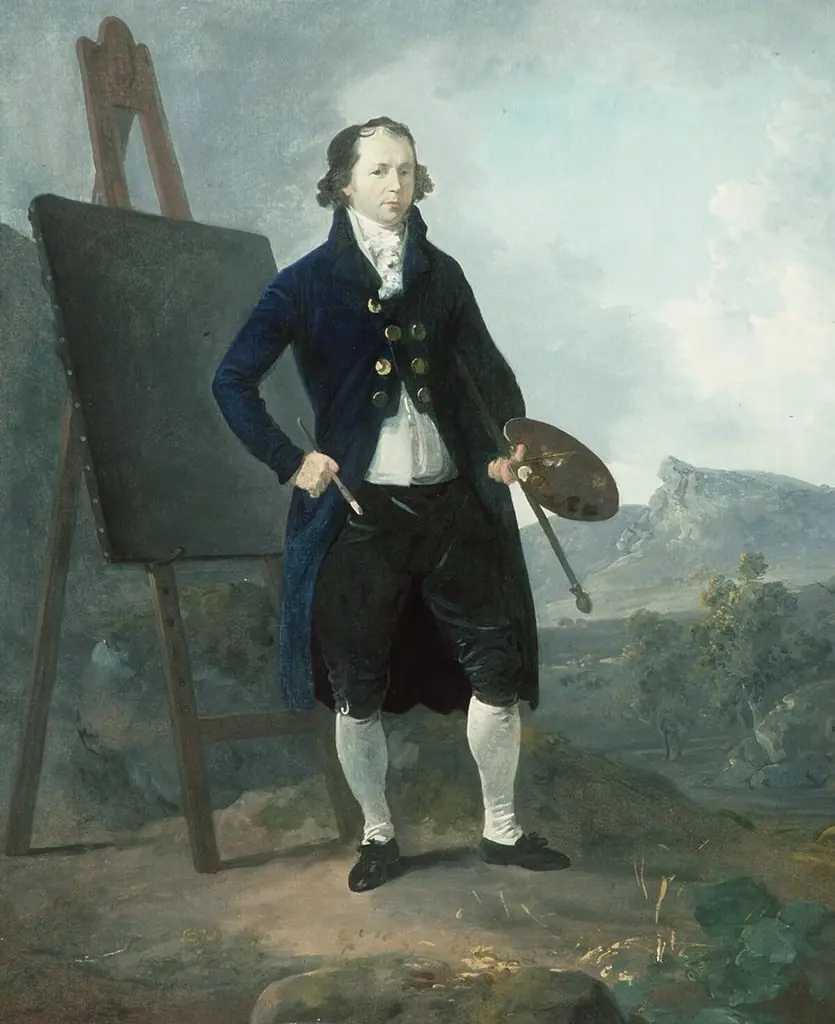
Julius Caesar Ibbetson (29 December 1759 – 13 October 1817) was a British 18th-century landscape and watercolour painter.

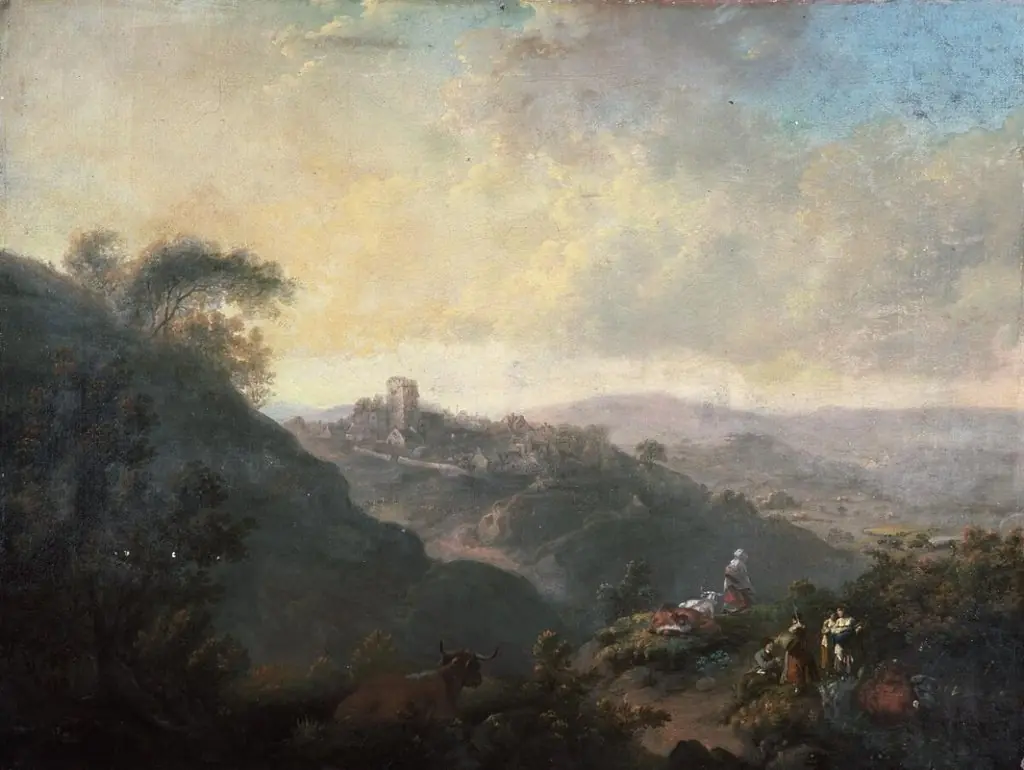
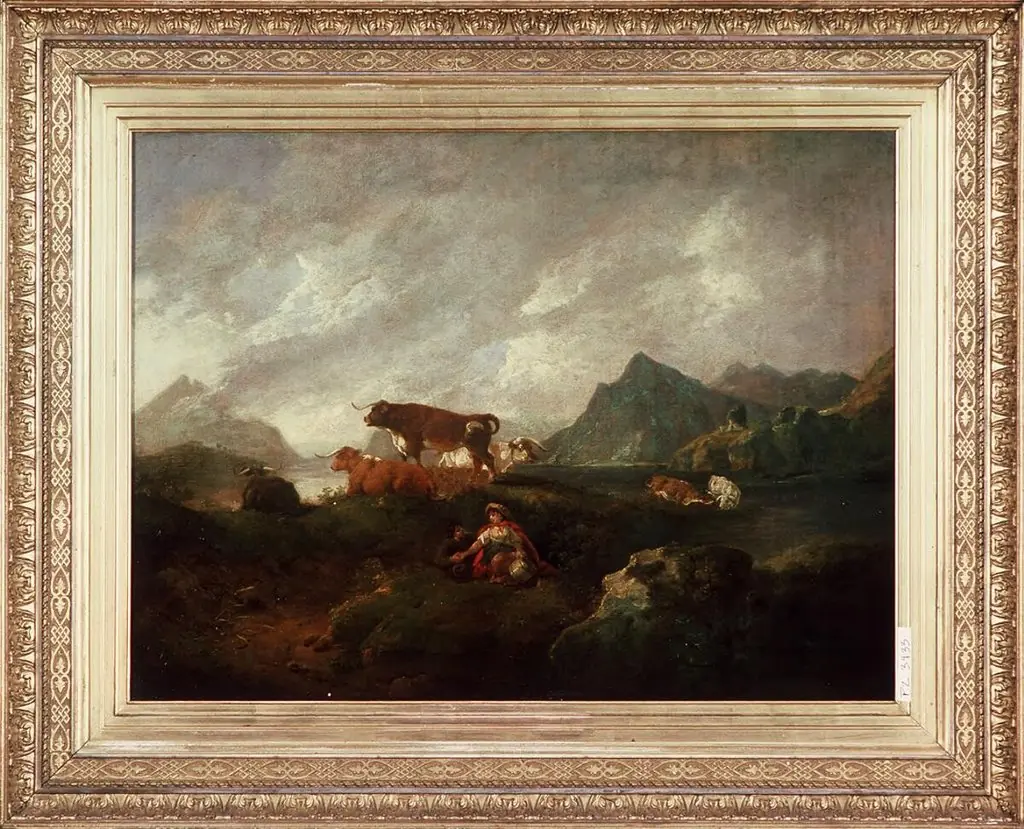
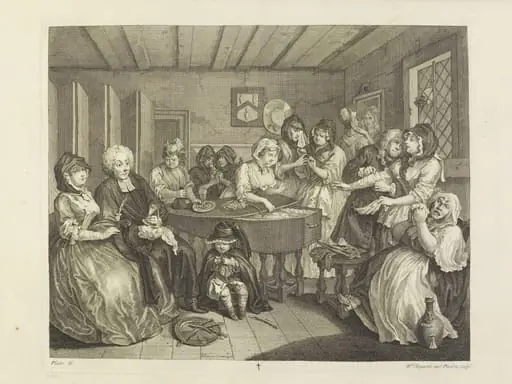 The Harlot's Progress
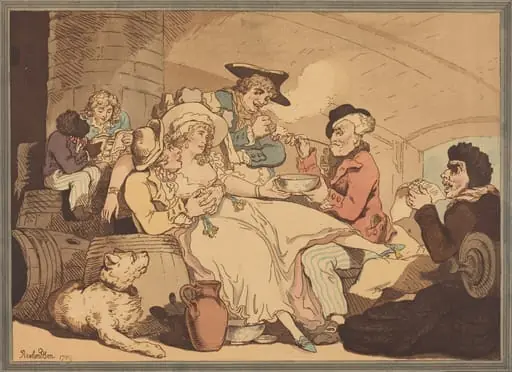 Grog on Board
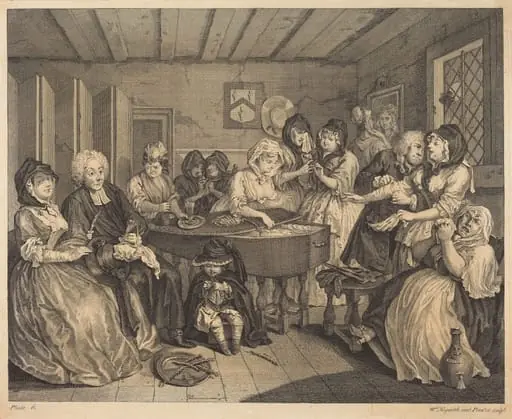 A Harlot's Progress: pl.6
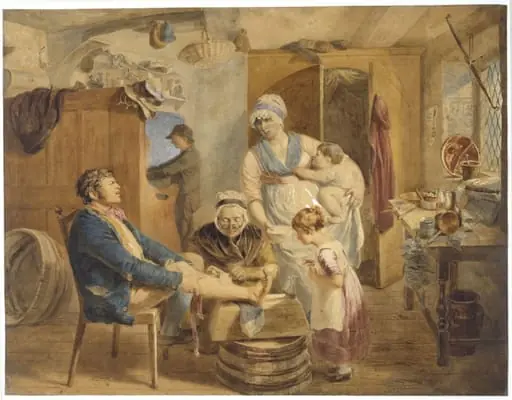 The Wounded Leg
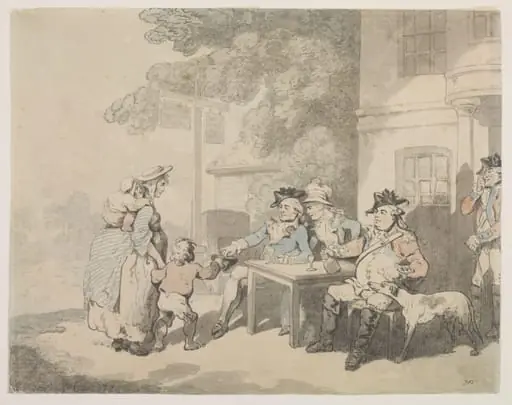 Untitled
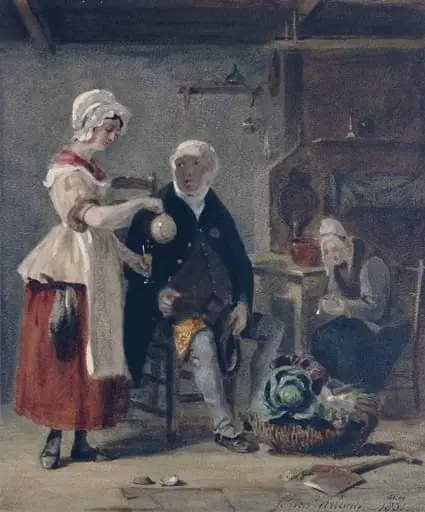 Rustic interior: figures of an old man and woman and a girl
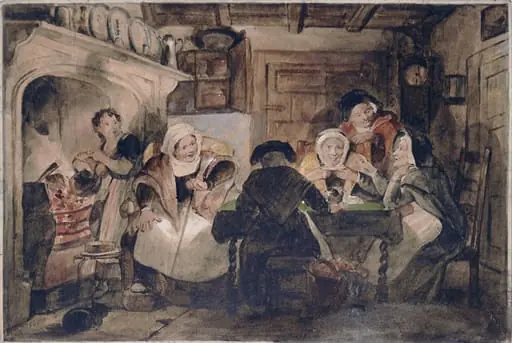 A cottage interior with a group of old women drinking tea and conversing
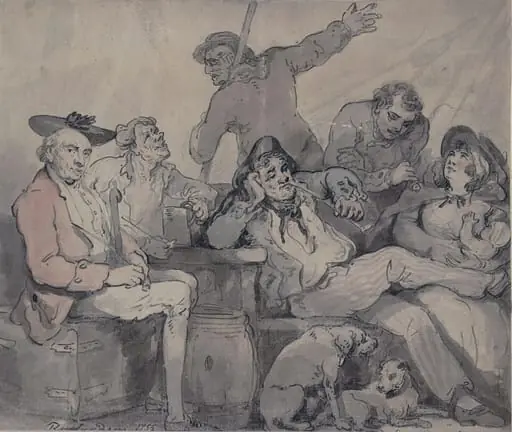 Group sketched on board 'The Europa'
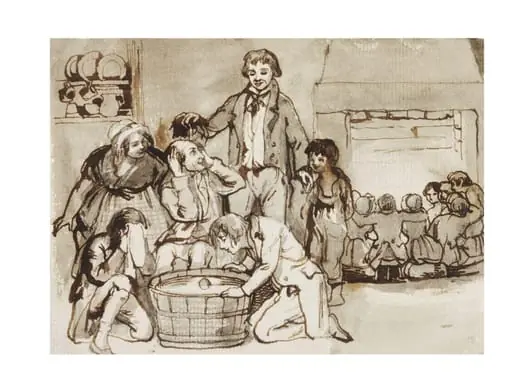 Snapp Apple Night
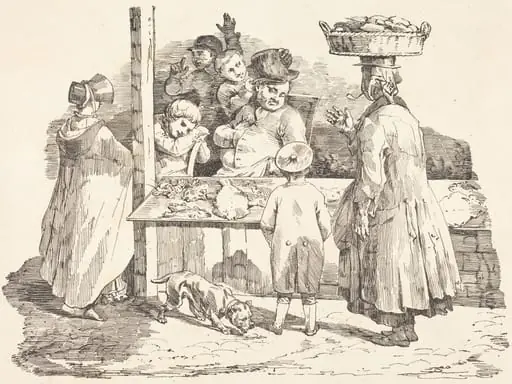 The Dozing Fishmonger (Le marchand de poissons endormie)
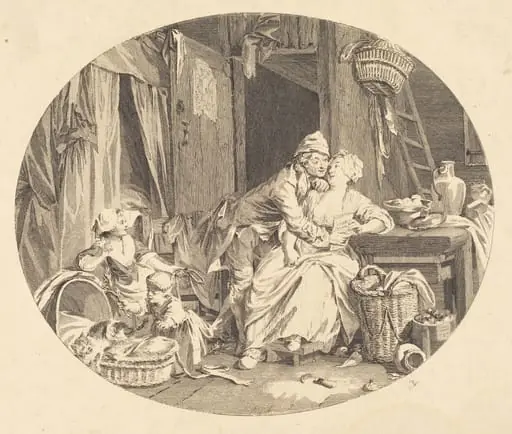 La Félicité villageoise
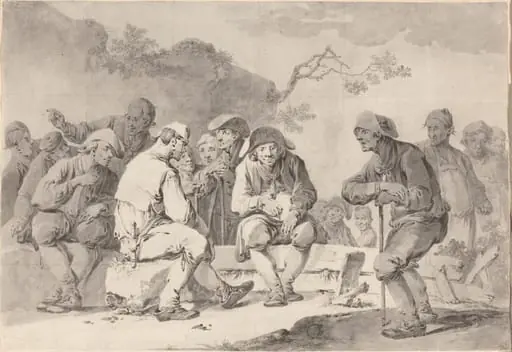 Self-Portrait with Country Folk from Appenzell