Artwork
A Harlot's Progress: pl.6
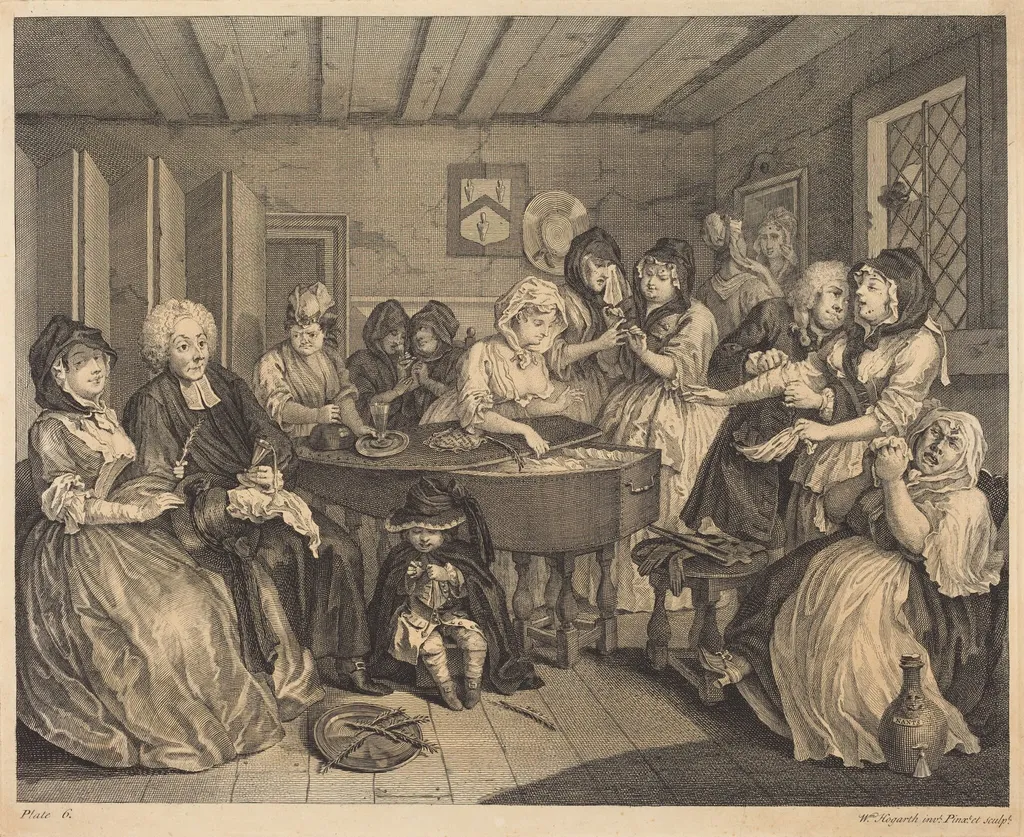
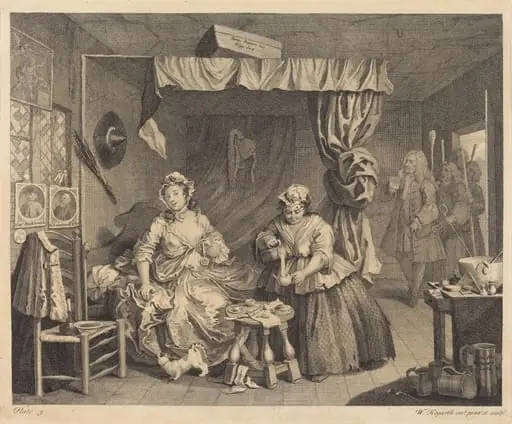
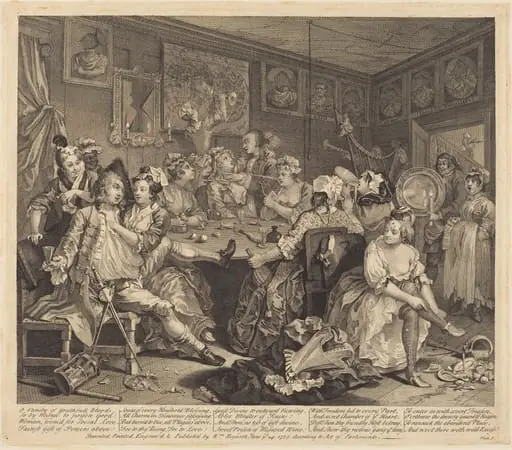
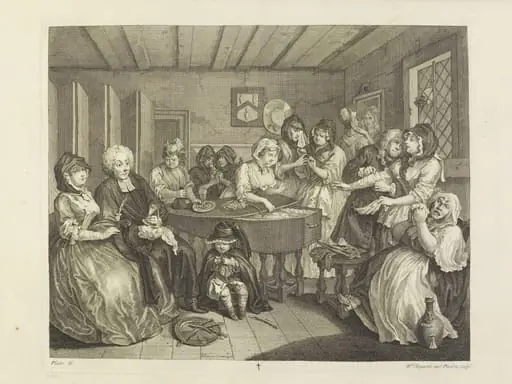
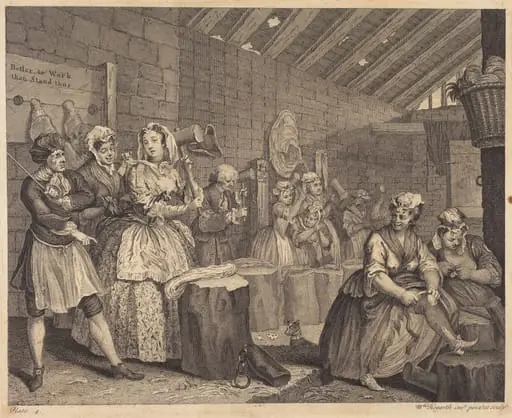
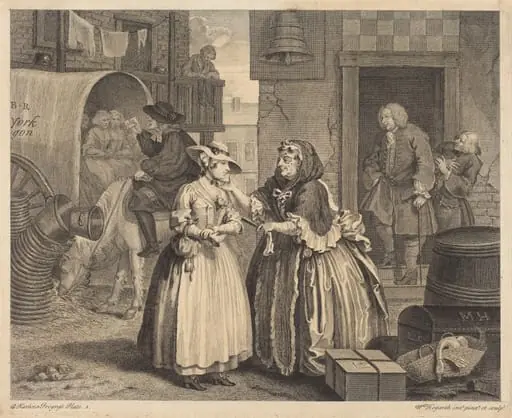
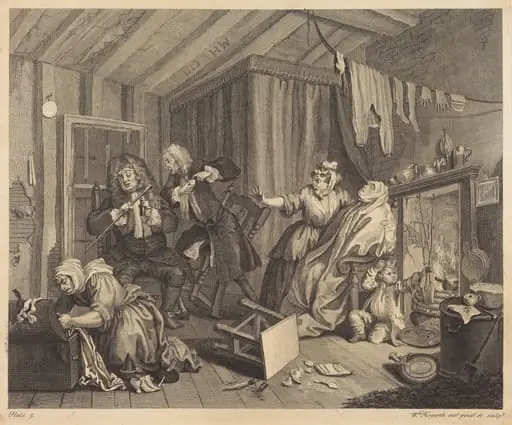
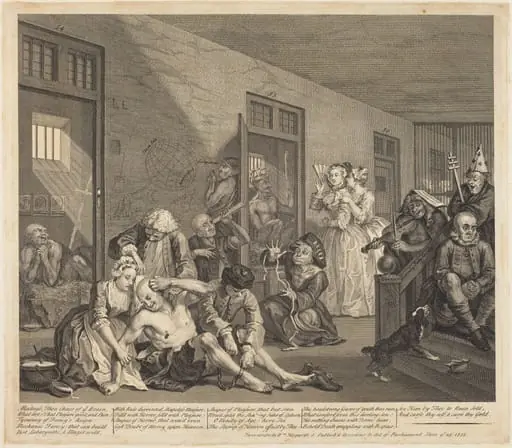
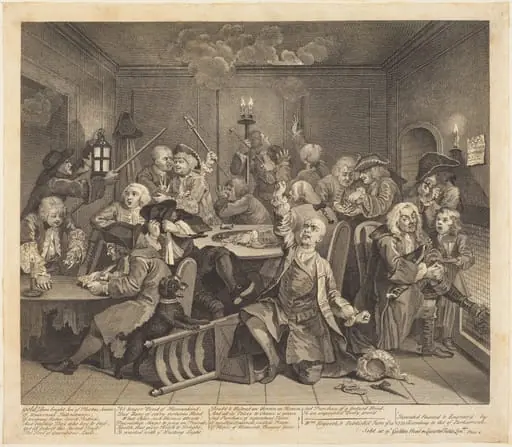
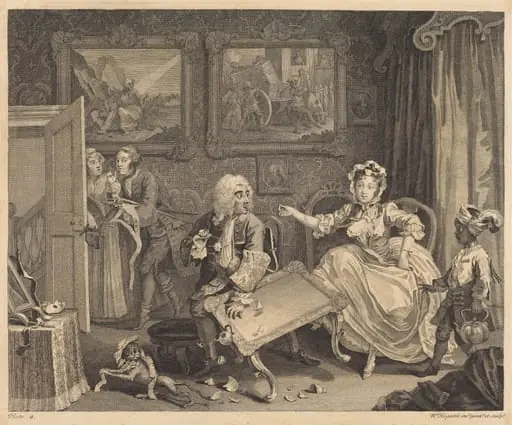
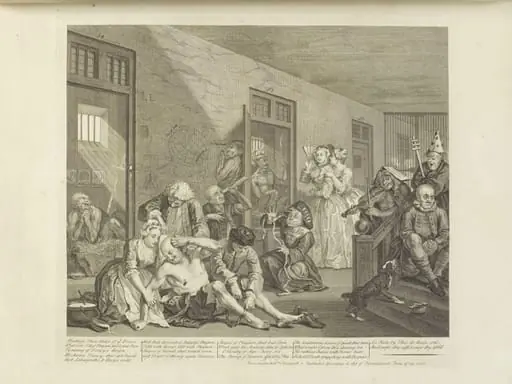
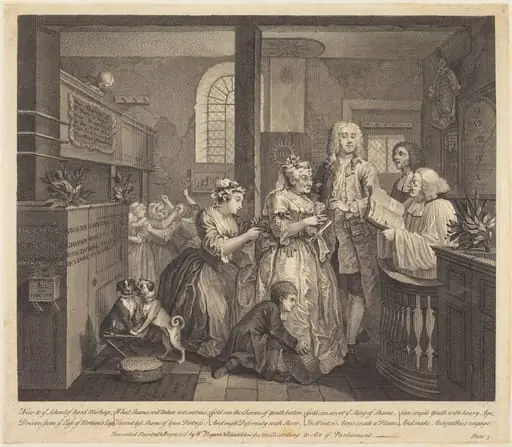
A Harlot's Progress: pl.6 is an ink print by the Baroque artist William Hogarth. It dates from 1732 and is held in the collection of the National Gallery of Art.
About this work
Overview
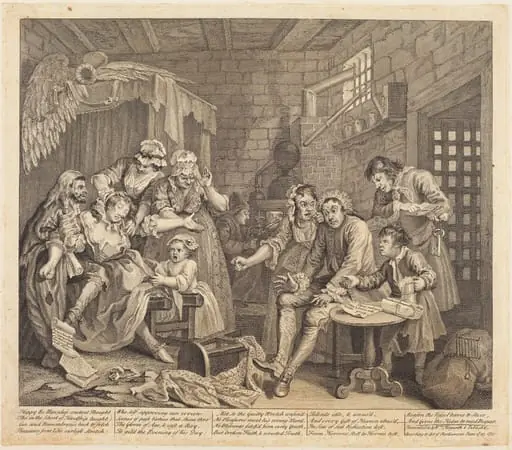
The sixth and final plate of William Hogarth’s *A Harlot’s Progress* (1732) concludes his serialized critique of moral decay in 18th-century London.
The sixth and final plate of William Hogarth’s *A Harlot’s Progress* (1732) concludes his serialized critique of moral decay in 18th-century London. Executed in etching and engraving, this print depicts the aftermath of a young woman’s descent into prostitution, ending in her death and the indifferent response of those around her. As the culmination of a six-part narrative, it underscores Hogarth’s commitment to visual storytelling as a tool for social observation.
Subject & Meaning
The scene portrays the deceased protagonist lying on a bed while mourners—mostly women—go through the motions of grief, yet display detachment or self-interest. Objects scattered around the room, including discarded clothing and household tools, suggest neglect and moral collapse. The figures’ hollow expressions and disjointed actions convey a society more concerned with material gain than human loss, reinforcing Hogarth’s condemnation of urban moral corruption.
Technique & Style
Hogarth combined etching and engraving to achieve fine detail and tonal contrast, enhancing the emotional gravity of the scene. His precise linework defines textures—from the roughness of woolen garments to the sheen of metal objects—while the crowded composition amplifies the sense of disorder. Unlike idealized historical scenes, his figures are rendered with unflinching realism, grounding the narrative in the everyday realities of London’s underclass.
History & Provenance
Published in 1732, the series was immediately popular and widely circulated as prints, making Hogarth’s moral critique accessible beyond elite audiences. The sixth plate, like the others, was sold individually and in sets, contributing to his financial independence. Its distribution helped establish the print as a legitimate medium for social commentary, distinguishing Hogarth from traditional academic artists of his time.
Context
In early 18th-century London, rapid urbanization and shifting class structures heightened anxieties about vice and virtue. Hogarth’s series responded to public debates on prostitution, poverty, and the erosion of moral standards. By documenting a single life’s unraveling, he mirrored contemporary pamphlets and sermons that warned of societal decline, translating moral panic into a visual chronicle accessible to the literate middle class.
Legacy
Hogarth’s sequential narrative approach influenced later developments in graphic storytelling and social realism. *A Harlot’s Progress* set a precedent for using print media to expose systemic issues, inspiring artists and reformers alike. Its unembellished portrayal of consequence over spectacle challenged prevailing artistic norms and laid groundwork for the 19th-century rise of narrative art focused on everyday life and social justice.
Artist & collection
Artist
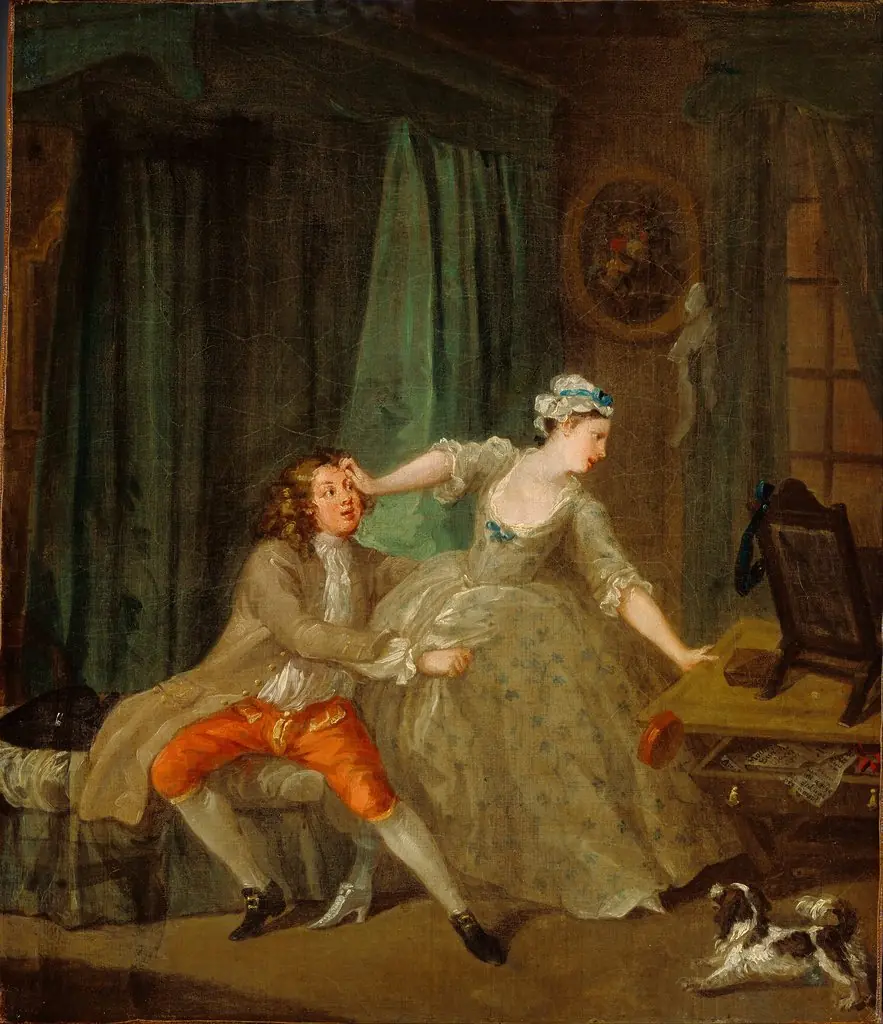
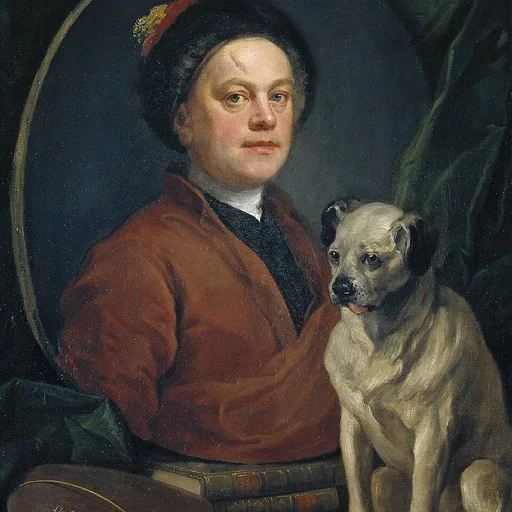
William Hogarth (; 10 November 1697 – 26 October 1764) was an English painter, engraver, satirist, cartoonist and writer.