Artwork
Old Woman and Child
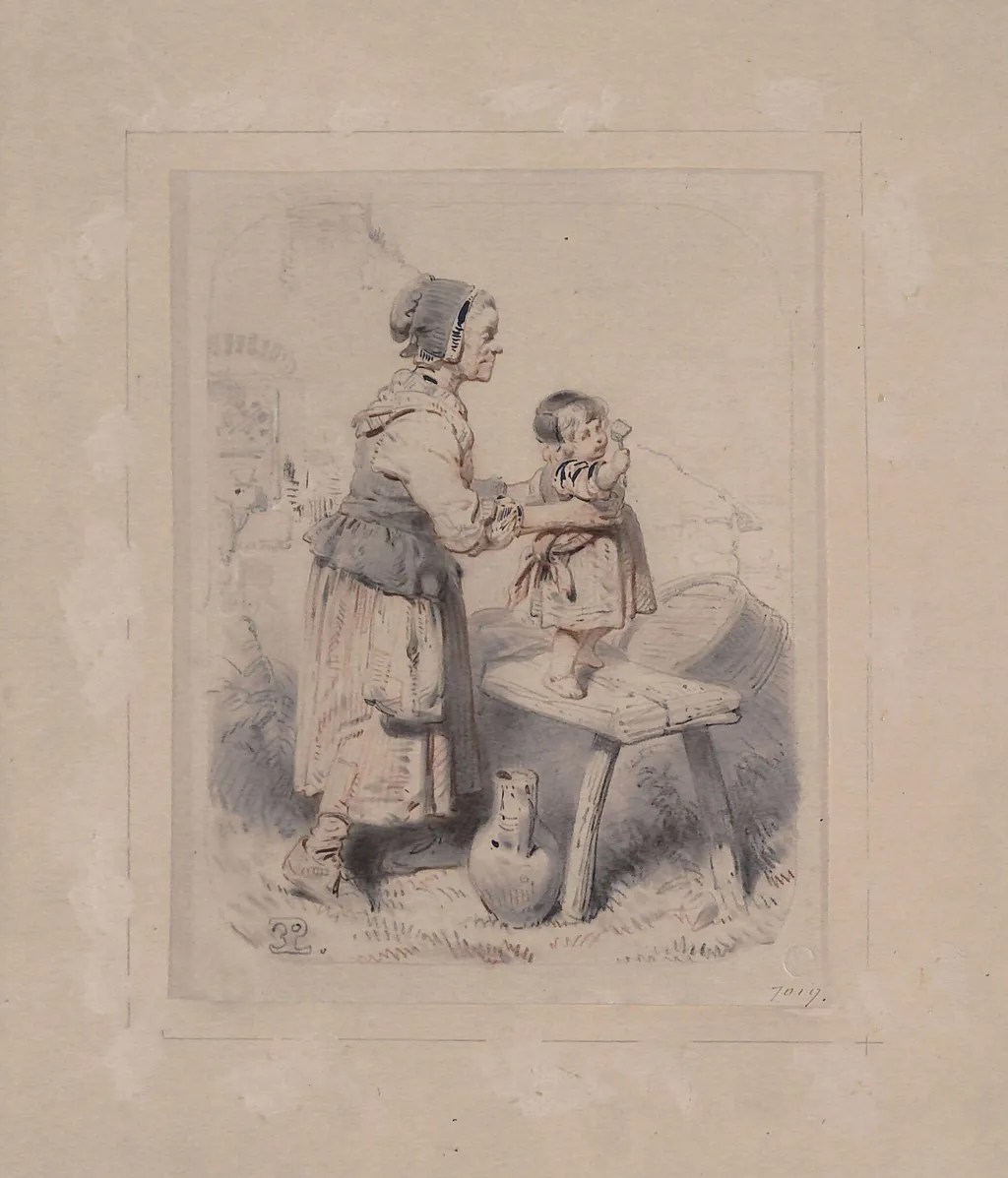
Old Woman and Child is a watercolor work on paper by the Romanticist artist Eugène Modeste Edmond Lepoittevin. It dates from 1825 and is held in the collection of the Victoria and Albert Museum.
About this work
Overview
This watercolour by Eugène Modeste Edmond Lepoittevin captures a quiet domestic moment between an elderly woman and a young child. Executed in delicate washes and light pencil, the work conveys intimacy without narrative flourish. Signed by the artist, it reflects his interest in ordinary life, rendered with restraint and attention to subtle gestures rather than dramatic emphasis.
Subject & Meaning
The scene depicts an older woman leaning toward a child standing on a low stool, both engaged in a quiet, repetitive action. The child holds a hammer, mimicking the woman’s motion, suggesting an act of learning or shared labor. The absence of overt emotion or setting implies a focus on the quiet transmission of routine, perhaps domestic or craft-based, between generations.
Technique & Style
The background is barely suggested—a jug on the floor, a faint architectural outline—creating depth without distraction.
Lepoittevin employed light watercolour washes to define forms, with minimal detail and soft edges. Pencil lines suggest fabric folds and the child’s small hands, adding texture without overdefinition. The background is barely suggested—a jug on the floor, a faint architectural outline—creating depth without distraction. The technique prioritizes atmosphere over precision, enhancing the sense of a fleeting, unposed moment.
History & Provenance
The work is attributed to Eugène Modeste Edmond Lepoittevin, a 19th-century French artist known for genre scenes and illustrations. Signed and dated, it likely originated as a study or personal sketch rather than a commissioned piece. Its current location is held by the Victoria and Albert Museum, where it remains part of their collection of 19th-century watercolours.
Context
In mid-19th century France, artists increasingly turned to everyday life as subject matter, moving away from grand historical themes. Lepoittevin’s work aligns with this trend, capturing unidealized moments of domestic routine. Such sketches were often made for personal reflection or as preparatory studies, reflecting a broader cultural interest in the quiet dignity of ordinary existence.
Legacy
Though not widely exhibited, this watercolour exemplifies Lepoittevin’s sensitivity to quiet human interaction. It contributes to a broader body of 19th-century genre works that valued observation over spectacle. Its preservation in a major museum underscores its role as a representative example of intimate, non-heroic art from the period.
Artist & collection
Artist
Eugène Modeste Edmond Lepoittevin
Eugène Modeste Edmond Lepoittevin brought the sea and quiet human moments to paper in watercolour, working in the first half of the 19th century.

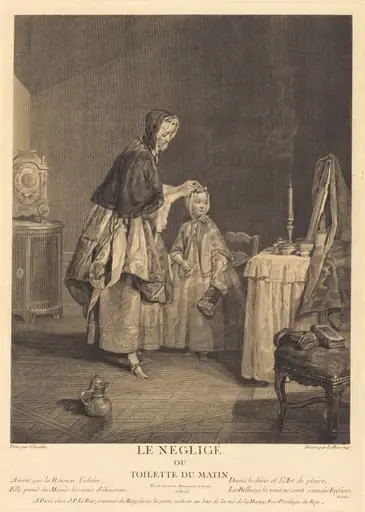 Le neglige, ou la toilette du matin
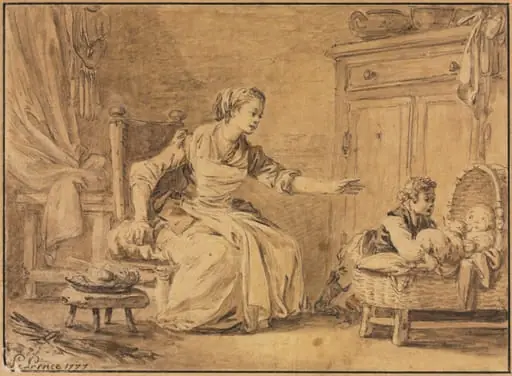 Maternal Solicitude
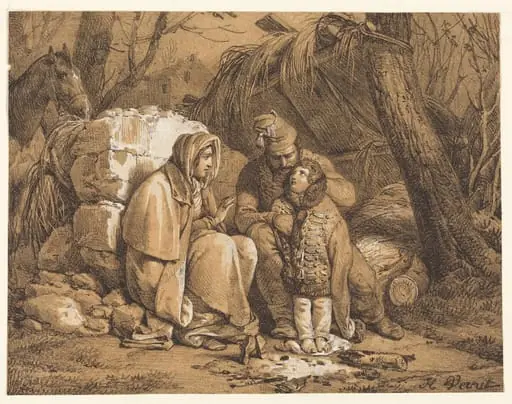 Soldier's Family Encamped
 Egyptian Mother
 Sketch for the oil painting 'Vaulting Ambitions'
 Interior of a House
 Soldier's Family Encamped
 End of a Romance
 Pastries, Talmouses, All Hot
 La Mère de famille (The Mother of the Family)
 Mother and Child, No. 1
 Woman and Child