Artwork
Durham Cathedral, from the opposite bank of the Wear
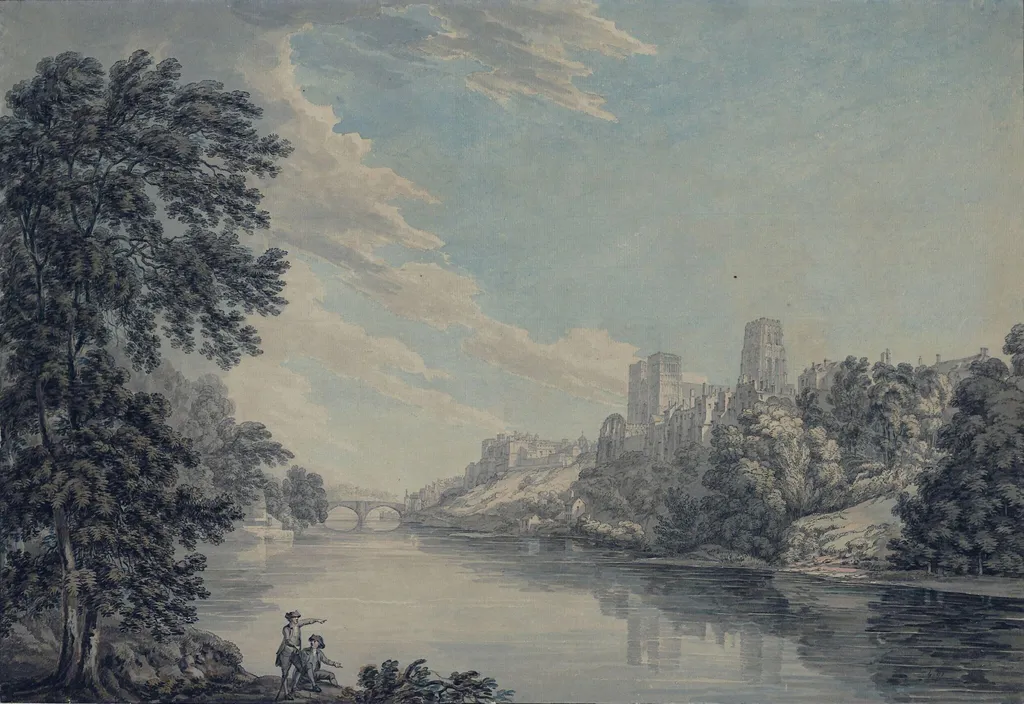
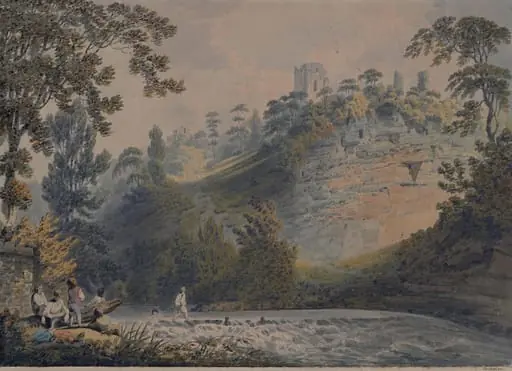
Durham Cathedral, from the opposite bank of the Wear is a watercolor work on paper by the Neoclassicist artist Thomas Hearne. It dates from 1783 and is held in the collection of the Victoria and Albert Museum.
About this work
Overview
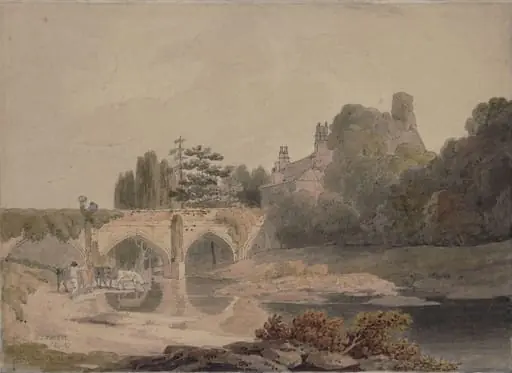
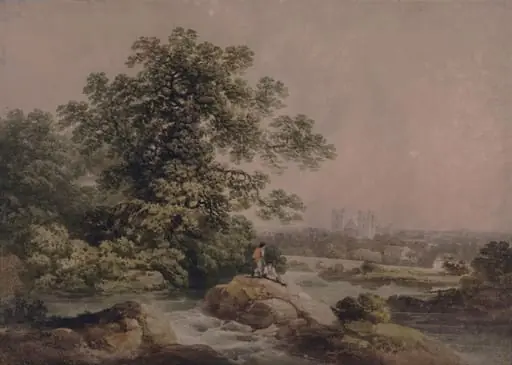
The composition captures the cathedral rising above clustered buildings and a stone bridge, with the River Wear mirroring the sky and surrounding trees.
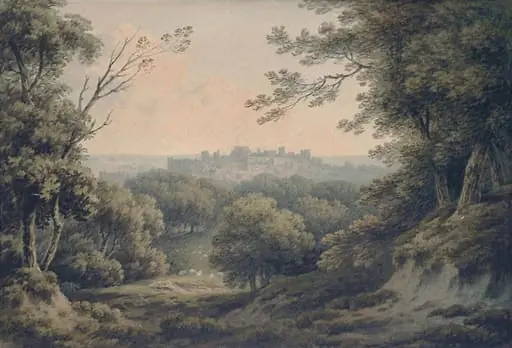
This watercolour, dated 1783 and signed by Thomas Hearne, presents a quiet riverside view of Durham Cathedral from its western bank. The composition captures the cathedral rising above clustered buildings and a stone bridge, with the River Wear mirroring the sky and surrounding trees. Two figures near the water’s edge draw the viewer’s gaze toward the structure, anchoring the scene in human scale.
Subject & Meaning
The cathedral, as both religious and civic landmark, dominates the landscape, its presence reinforced by its elevated position and architectural detail. The small human figures, one gesturing toward the building, suggest contemplation or reverence. The calm river and natural setting frame the structure not as a monument of power, but as an integrated element within a tranquil, lived-in environment.
Technique & Style
Hearne employed delicate washes of pale pigment to render the cathedral’s stonework against a luminous sky, allowing light to define form rather than heavy outline. The river’s reflective surface is suggested with soft horizontal strokes, while the dense foliage is rendered in muted greens and browns. The restrained palette and attention to atmospheric effects reflect a topographical precision tempered by quiet emotional tone.
History & Provenance
Created during Hearne’s extensive travels across northern England, this work belongs to a series of topographical watercolours commissioned for private patrons and antiquarian study. It was likely made during a visit to Durham in the early 1780s, a period when such views were valued for their documentary clarity as well as aesthetic harmony. The signed date confirms its place in Hearne’s mature period.
Context
In the late 18th century, interest in historic architecture grew alongside a rising appreciation for natural scenery. Hearne’s work aligns with this trend, blending topographical accuracy with a sensitivity to light and mood that foreshadows Romantic sensibilities. Though not overtly emotional, the scene invites quiet reflection, resonating with contemporary shifts in how landscape and heritage were perceived.
Legacy
Hearne’s watercolours of Durham and other ecclesiastical sites contributed to the visual record of Britain’s medieval architecture before widespread restoration. His restrained, observational style influenced later topographical artists and helped establish watercolour as a legitimate medium for architectural documentation, bridging survey and art in the pre-photographic era.
Artist & collection