Artwork
Corfe Castle, Dorset
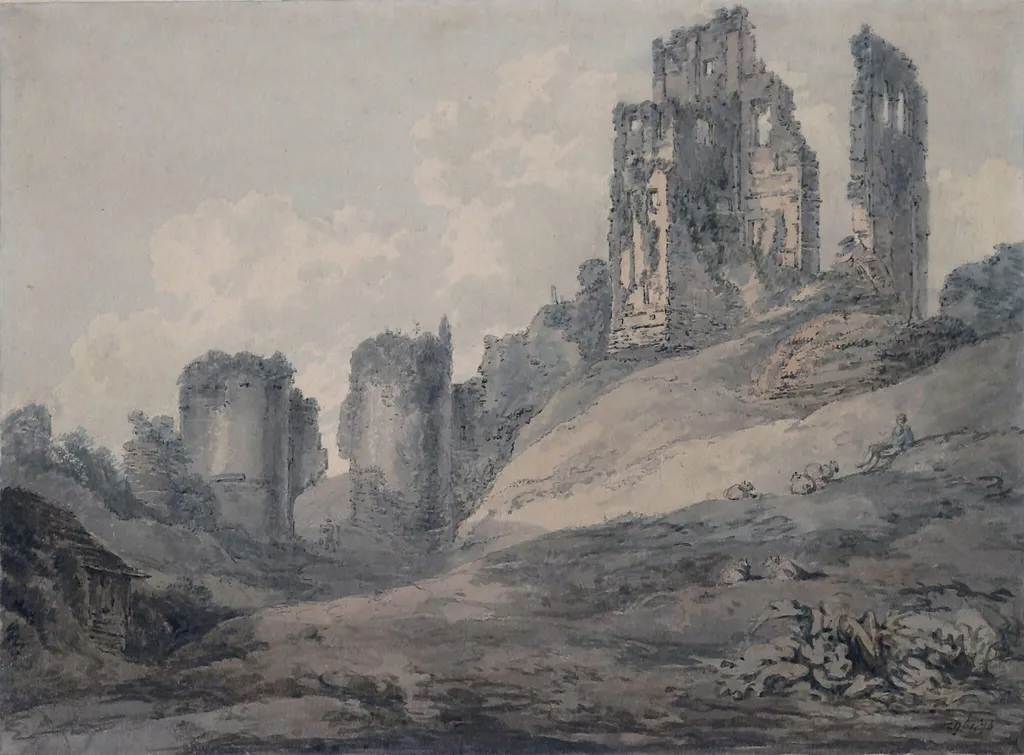
Corfe Castle, Dorset is a watercolor work on paper by the Romanticist artist Joseph Mallord William Turner. It dates from 1793 and is held in the collection of the Victoria and Albert Museum. Turner created this watercolour at age eighteen, capturing the ruins of Corfe Castle in Dorset.
About this work
Overview
Turner created this watercolour at age eighteen, capturing the ruins of Corfe Castle in Dorset. The scene is not a precise topographical record but a poetic interpretation, where the castle emerges from the landscape as a silhouette against a dynamic sky. His focus was not on architectural accuracy but on atmospheric effect, using watercolour’s fluidity to evoke mood over detail.
Subject & Meaning
The castle, already in decay by Turner’s time, symbolizes the passage of time and the erosion of power. Its fragmented stones rise from a gentle hill, dwarfed by the vastness of sky and cloud. The ruins are not mourned but absorbed into nature, suggesting a quiet harmony between human remnants and the elements that reclaim them.
Technique & Style
Turner employed loose washes and layered transparency to suggest light rather than define form. Edges blur between stone and sky, creating a hazy, luminous atmosphere. The effect resembles sfumato—soft transitions without sharp lines—transforming the ruins into an ethereal presence, where light seems to emanate from within the composition itself.
History & Provenance
Painted in 1792, this work belongs to Turner’s early period, made during his formative years of sketching across southern England. It was likely produced on-site, as part of his practice of observing landscapes directly. The piece remained in his personal collection until his death, later entering the Turner Bequest to the nation.
Context
In the late 18th century, romantic interest in ruins was growing, tied to philosophical reflections on impermanence. Turner’s approach diverged from topographical traditions; he prioritized emotional resonance over documentary precision. His watercolours of castles like Corfe helped shift landscape art toward subjective experience.
Legacy
This early work foreshadows Turner’s lifelong preoccupation with light and atmosphere. Though modest in scale, it reveals his instinct to dissolve structure into sensation. Later artists and critics recognized it as a foundational step in his evolution from observer to interpreter of nature’s transient qualities.
Artist & collection
Artist
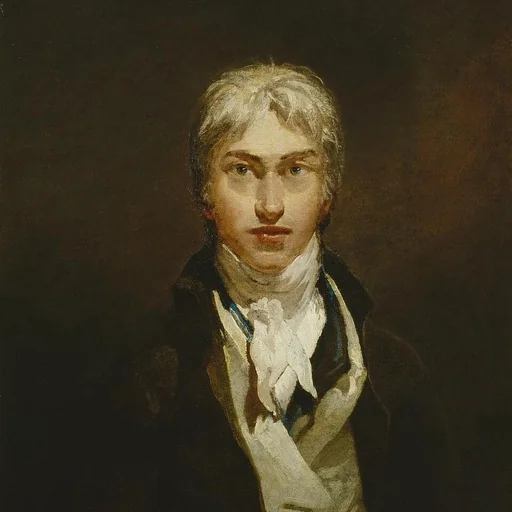
Joseph Mallord William Turner was born in 1775 at Maiden Lane, Covent Garden, where his father kept a barber and wig-making shop.

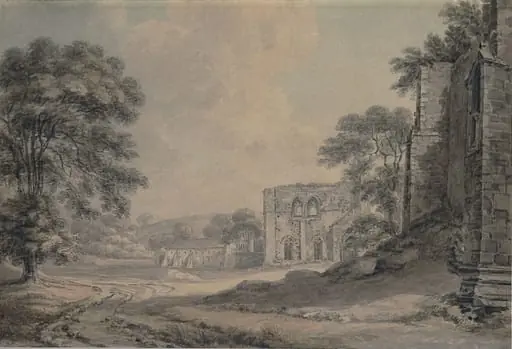 Landscape with ecclesiastical ruins
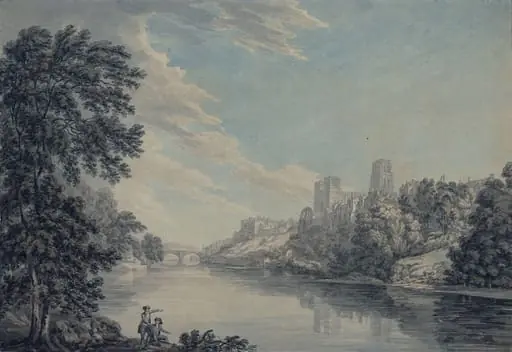 Durham Cathedral, from the opposite bank of the Wear
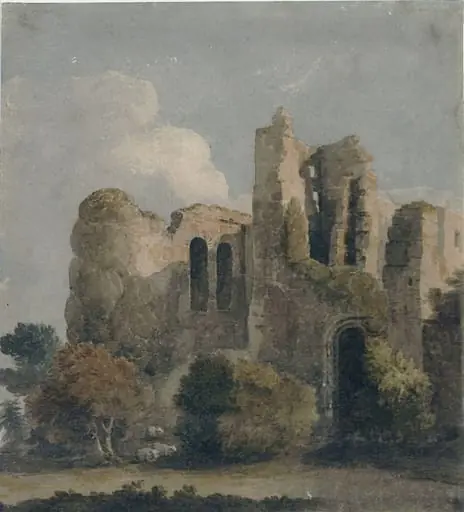 A Ruined Castle
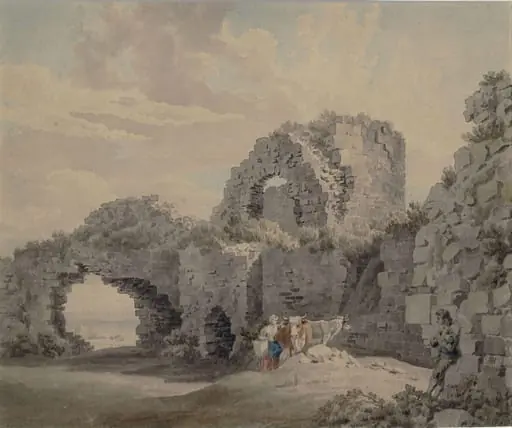 Ruins of Pevensey Castle
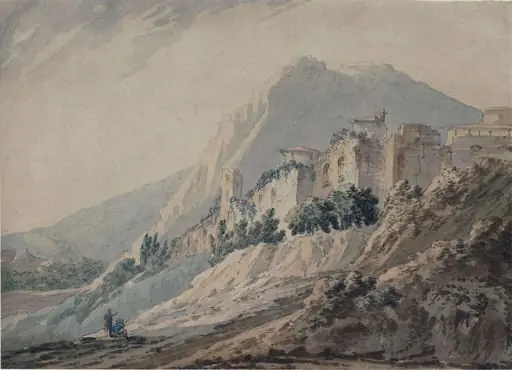 Mountainous landscape with ruined building
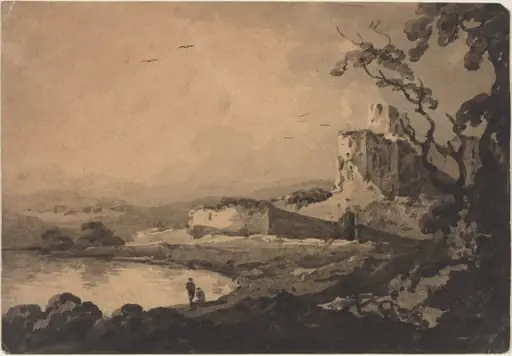 Landscape
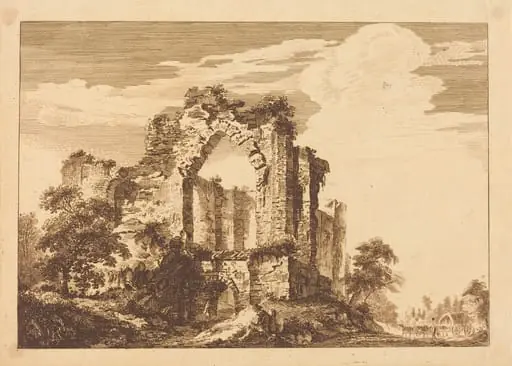 Ruins with a Seated Man, and a Covered Wagon in the Distance
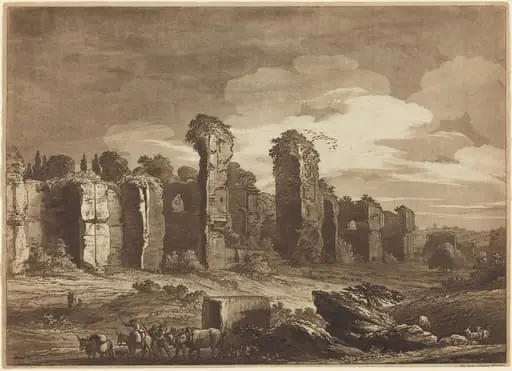 View of the Remains of Caracalla's Baths, Taken from the Jesuits Gardens at Rome
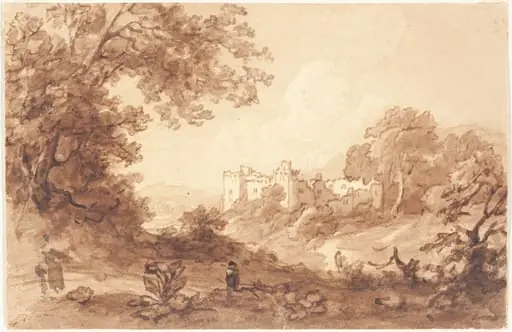 Carew Castle, Pembrokeshire
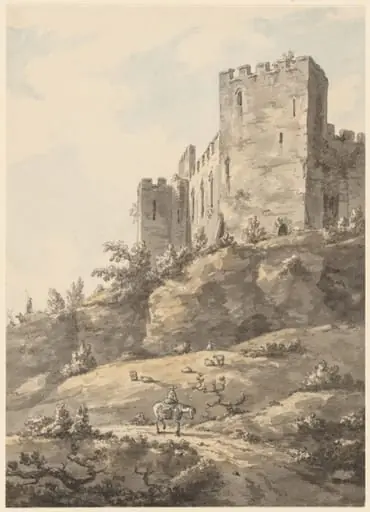 Ludlow Castle, Shropshire