Artwork
Furness Abbey
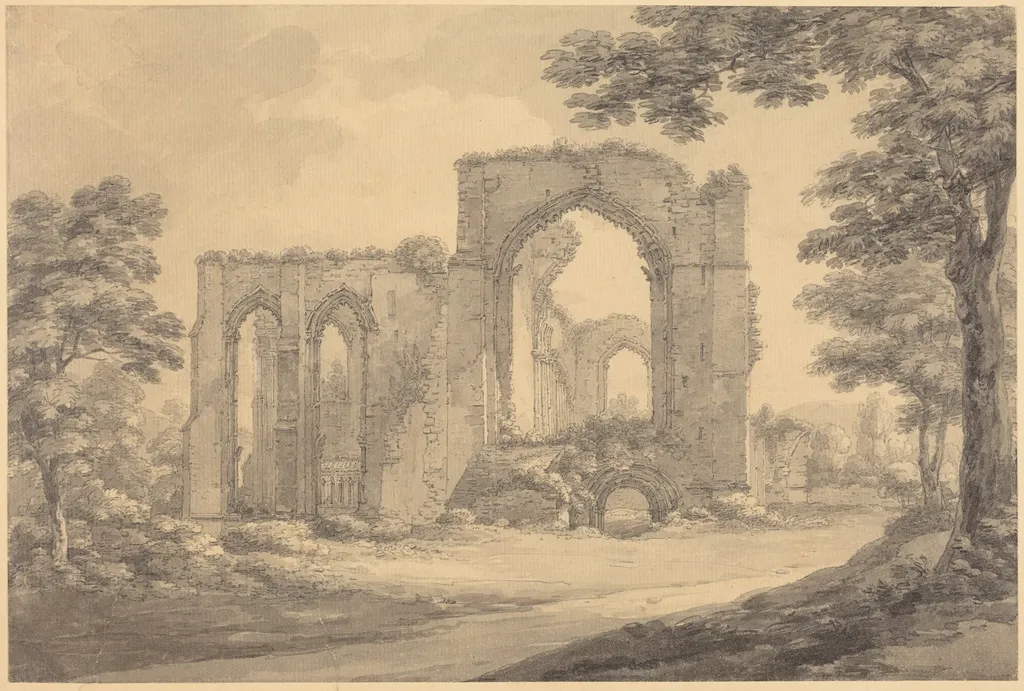
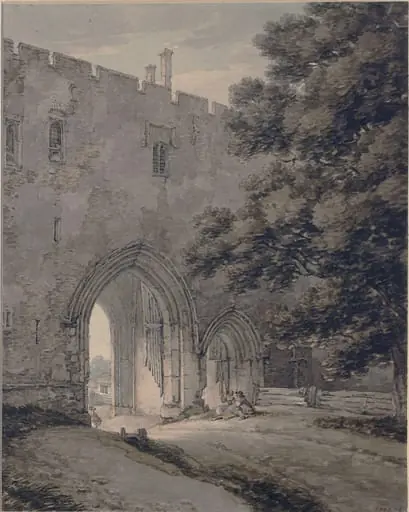
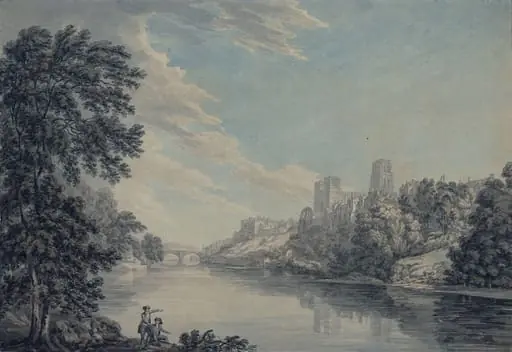
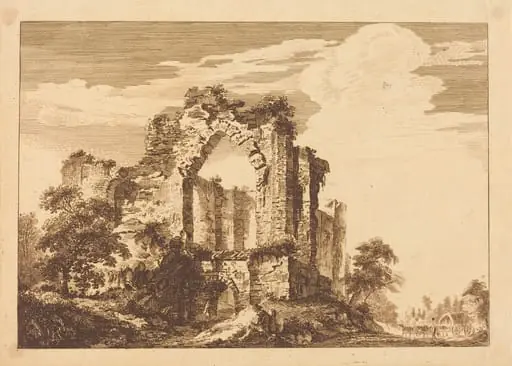
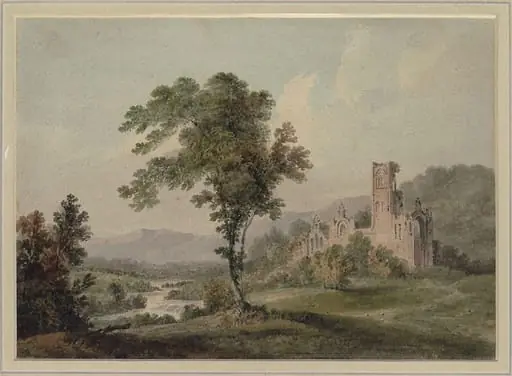
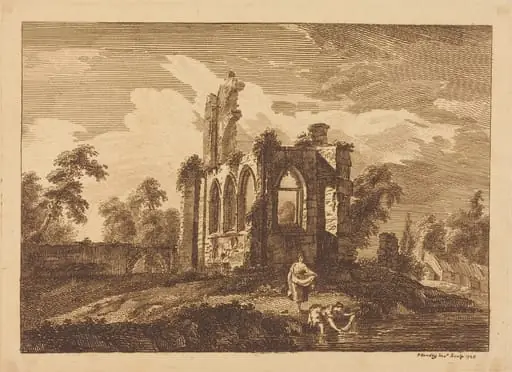
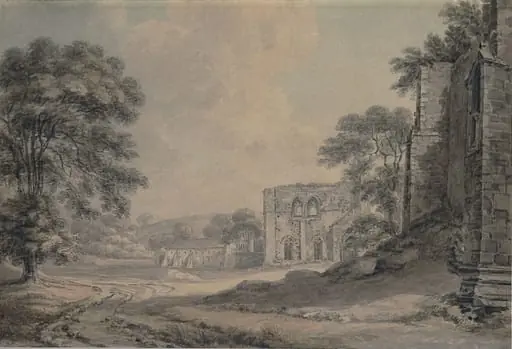
Furness Abbey is a graphite drawing by the Romanticist artist Thomas Hearne. It dates from 1777 and is held in the collection of the National Gallery of Art.
About this work
Overview
Thomas Hearne’s 1777 drawing of Furness Abbey presents a measured representation of the ruined monastic complex. Executed on light‑tan laid paper, the work combines graphite, pen, and gray ink with a subtle wash, producing a restrained palette that emphasizes the structure’s silhouette and massing.
Subject & Meaning
The image captures the architectural remnants of Furness Abbey, focusing on its surviving arches, walls, and towers. By rendering the site with careful attention to proportion and detail, Hearne conveys both the historic gravitas of the medieval building and the atmospheric quality of its ruinous state.
Technique & Style
Hearne employs a cross‑hatching approach, layering graphite and ink strokes to model form and suggest depth. The gray wash adds tonal variation, while the pen lines delineate architectural edges. This combination of media creates a nuanced texture that balances line work with tonal shading.
History & Provenance
Created in 1777, the drawing belongs to the period when antiquarian interest in Britain’s medieval heritage was rising. Hearne, known for his topographical sketches, produced the piece likely for a patron or as part of a collection documenting historic sites, though specific ownership records remain limited.
Artist & collection