Artwork
Leith
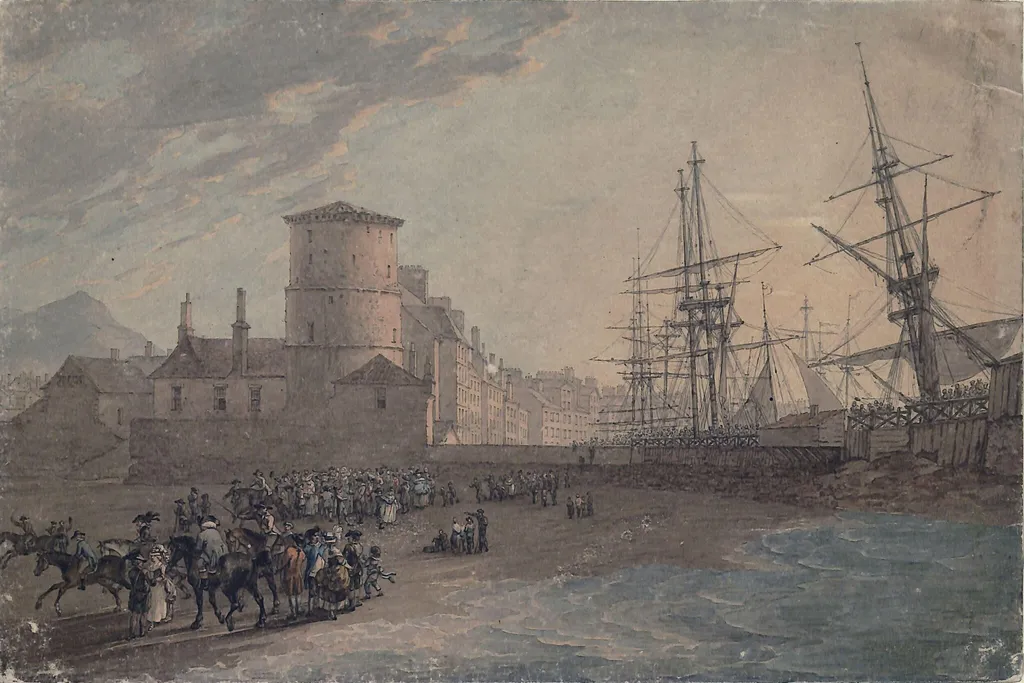
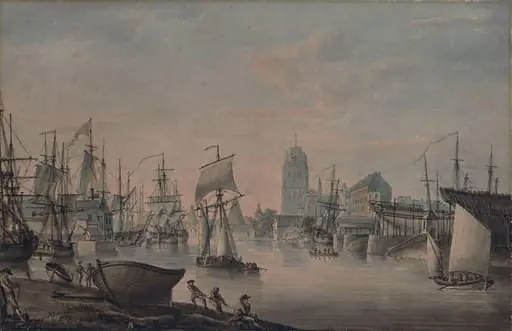
Leith is a watercolor work on paper by the Rococo painting artist Thomas Hearne. It dates from 1750 and is held in the collection of the Victoria and Albert Museum.
About this work
Overview
The work is part of the Victoria and Albert Museum’s collection, where it stands as an example of 18th-century British topographical watercolour.
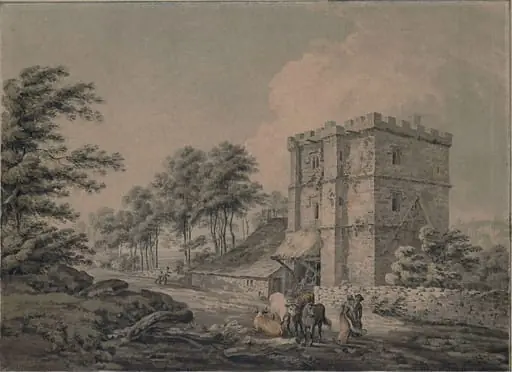
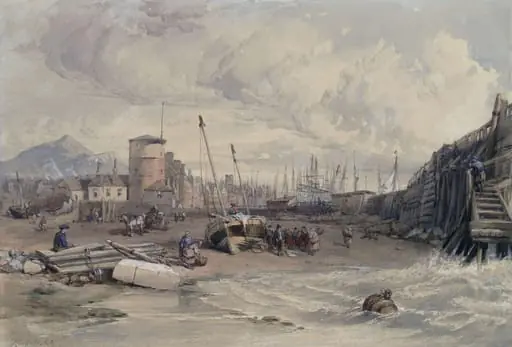
Leith is a watercolour painting by Thomas Hearne, dated around 1750. It depicts a coastal scene in the Scottish port town of Leith, capturing daily maritime activity with quiet precision. The work is part of the Victoria and Albert Museum’s collection, where it stands as an example of 18th-century British topographical watercolour. Its modest scale and detailed observation reflect the period’s interest in recording real places with accuracy.
Subject & Meaning
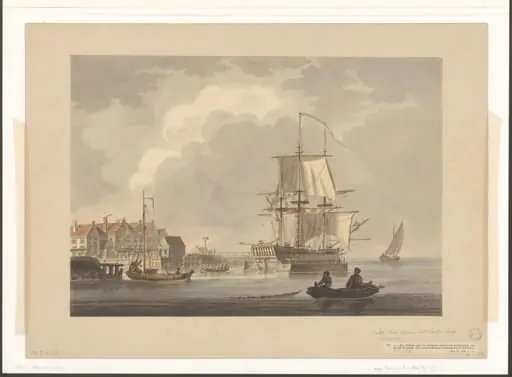
The painting portrays a bustling harbor with a large, fully rigged ship anchored near a weathered stone tower. Figures move along a muddy path—pedestrians and riders—while buildings cluster along the waterfront. The tower, likely a remnant of earlier defenses, anchors the scene in history. The ship, ready for departure, suggests commerce or travel, while the crowd implies local life centered on the sea. No dramatic event is shown; instead, the quiet rhythm of port activity is the focus.
Technique & Style
Hearne employed transparent watercolour washes to build subtle tonal gradations, particularly in the sky and water. Fine linework defines the ship’s rigging and architectural details, while loose, soft brushstrokes suggest clouds and atmospheric haze. The muddy path and textured ground are rendered with deliberate, dry brushwork. The composition avoids theatricality, favoring observational clarity and restrained colour—hallmarks of topographical watercolour in mid-18th-century Britain.
History & Provenance
Created around 1750, the painting entered the Victoria and Albert Museum’s collection as part of its broader acquisition of British watercolours and topographical works. Its provenance before museum acquisition is not well documented, but it aligns with the growing 18th-century market for accurate depictions of British towns and ports. The work has remained in institutional care since at least the 19th century, preserved as a record of regional maritime life.
Context
In the mid-1700s, British artists increasingly turned to watercolour to document landscapes and urban scenes for both private collectors and public institutions. Leith reflects this trend, capturing a working port during a period of expanding trade. Similar works by Hearne and contemporaries served as visual records before photography, often commissioned by local elites or used in travel literature. The painting’s lack of idealization marks it as part of a documentary tradition rather than romantic landscape painting.
Legacy
Leith contributes to the understanding of how British watercolour evolved from a sketching medium into a respected art form. Hearne’s attention to architectural and nautical detail influenced later topographical artists. Though not widely exhibited today, the painting remains a reference point for scholars studying 18th-century British coastal life and the technical development of watercolour as a medium for recording place rather than expressing emotion.
Artist & collection