Artwork
Passengers for Rhine Steamer (verso)
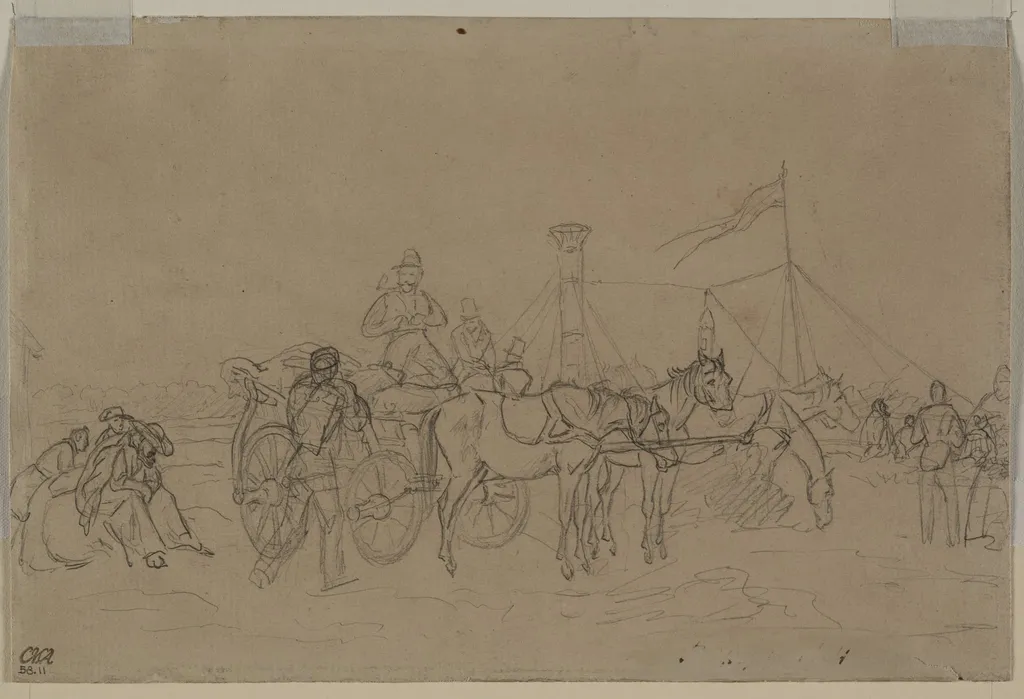
Passengers for Rhine Steamer (verso) is a drawing by the Romanticist artist Heinrich von Mayr. It dates from 1804 and is held in the collection of the Cleveland Museum of Art.
About this work
Overview
Created around 1804 by Heinrich von Mayr, this ink drawing captures a moment of transit along the Rhine River. Executed on the reverse side of another sheet, it reflects the artist’s habit of reusing paper. The work is part of the Cleveland Museum of Art’s collection, preserved as a study of everyday movement rather than a finished composition.
Subject & Meaning
It conveys a sense of transition, aligning with early 19th-century fascination with modern transport and the passage of time.
The scene depicts travelers preparing to board a steam-powered vessel, with horses hauling a cart, pedestrians moving along the bank, and the boat’s smokestack rising prominently. The focus is on the rhythm of departure—the mingling of human and animal effort, the anticipation of journeying. It conveys a sense of transition, aligning with early 19th-century fascination with modern transport and the passage of time.
Technique & Style
Mayr employed swift, fluid ink lines to suggest motion rather than define form. Details are implied, not rendered precisely; figures are simplified, and the boat’s structure is sketched with minimal contour. The energy of the scene emerges through overlapping gestures and dynamic brushwork, characteristic of preparatory sketches that prioritize immediacy over finish.
History & Provenance
The drawing was likely made during Mayr’s travels along the Rhine, a region popular with artists for its dramatic landscapes and commercial traffic. It remained in private hands until acquired by the Cleveland Museum of Art, where it is preserved as part of a broader collection of German Romantic-era drawings. Its verso placement suggests it was not intended for public display.
Context
Created during the rise of Romanticism, the work reflects a cultural shift toward valuing transient experiences and the sublime in ordinary life. While industrialization introduced steam travel, artists like Mayr responded not with technical precision but with emotional resonance—capturing the urgency and unpredictability of modern movement amid natural settings.
Legacy
Though not widely exhibited, the drawing contributes to understanding how German artists engaged with emerging technologies and public transit in the early 1800s. It stands as an example of how sketching served as a tool for observing social change, preserving the fleeting rhythms of daily life before photography made such documentation routine.
Artist & collection

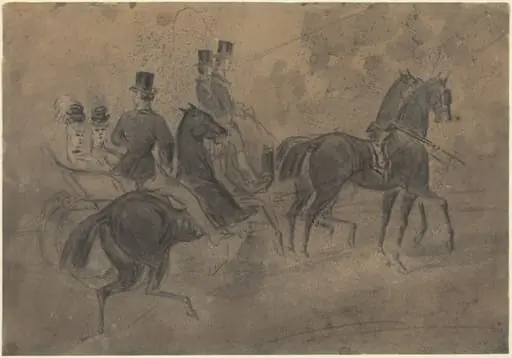 An Open Carriage
![Caravan with Covered Wagons Resting [recto], by Winslow Homer](https://artifactworldgallery.com/img/winslow-homer--caravan-with-covered-wagons-resting-recto--5a827c4a7f560cf2-w320.webp) Caravan with Covered Wagons Resting [recto]
Caravan with Covered Wagons Resting [recto]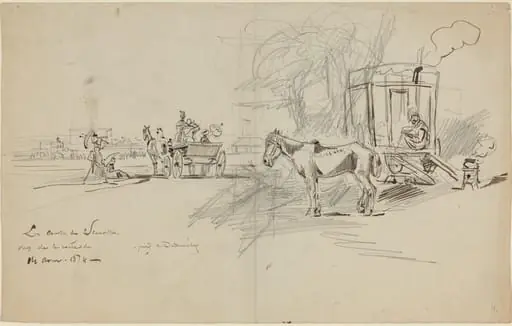 Les Courses de Deauville
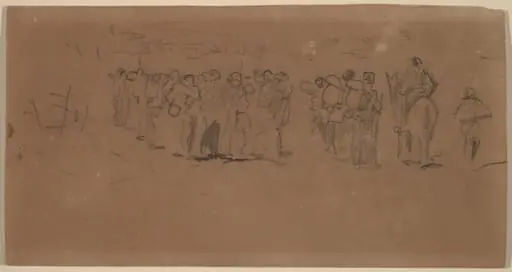 Preparing for the March
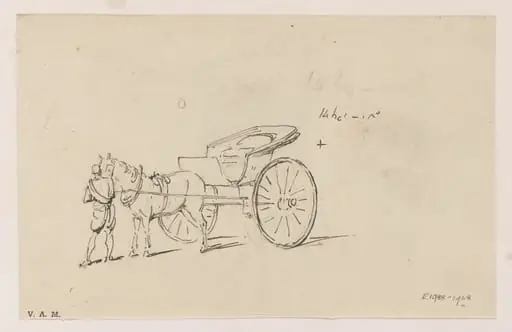 An Indian figure with a horse and carriage
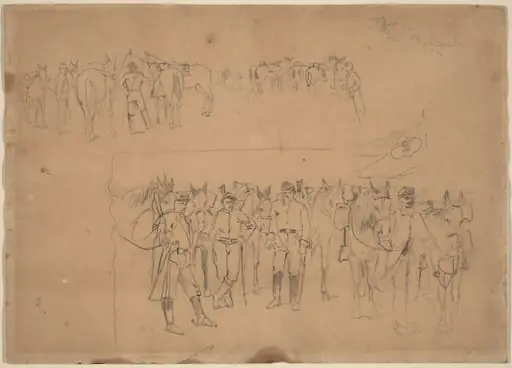 Officers and Horses at Rest
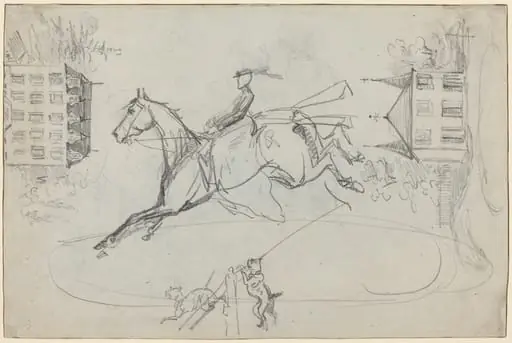 Sheet of Sketches
![Skirmish Involving a Wagon Train [verso], by Winslow Homer](https://artifactworldgallery.com/img/winslow-homer--skirmish-involving-a-wagon-train-verso--6ee57b18fcbda7d4-w320.webp) Skirmish Involving a Wagon Train [verso]
Skirmish Involving a Wagon Train [verso]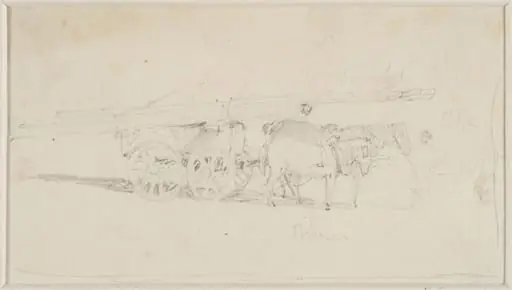 Study of two horses drawing a cart laden with timber
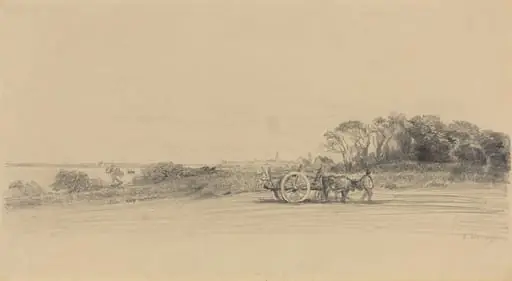 L'Ile aux Moines with Figure and Cart