Artwork
Passengers for Rhine Steamer (recto) Passengers for Rhine Steamer (verso)
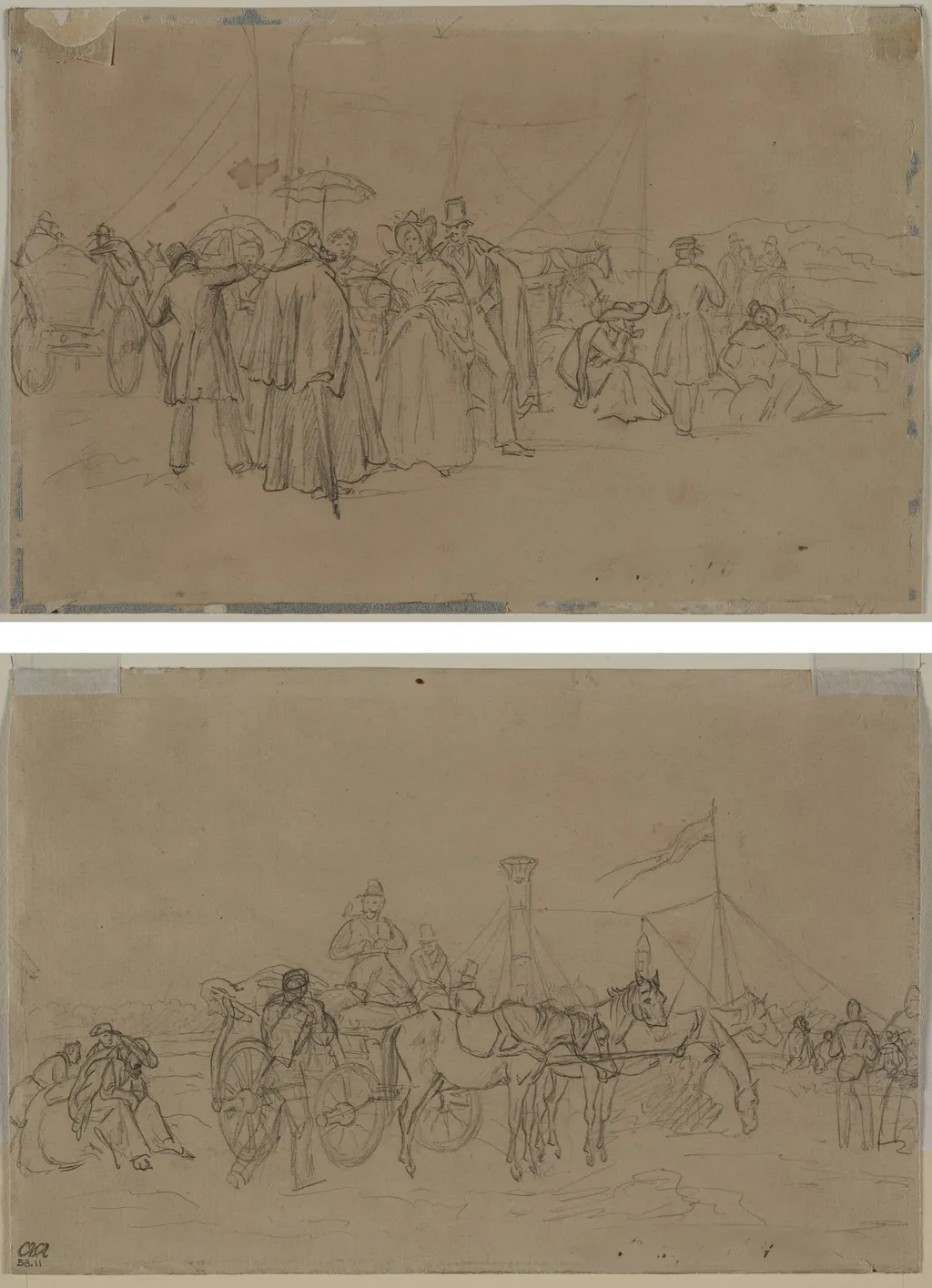
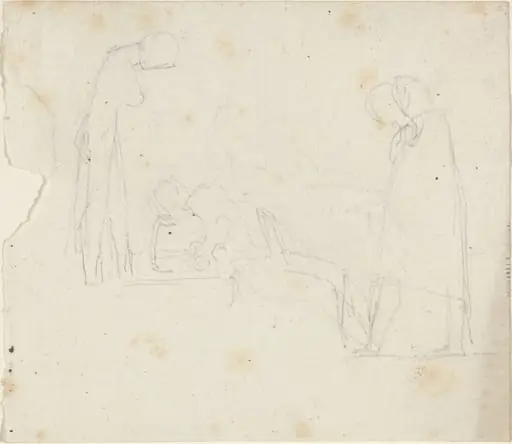
Passengers for Rhine Steamer (recto) Passengers for Rhine Steamer (verso) is a drawing by the Romanticist artist Heinrich von Mayr. It dates from 1804 and is held in the collection of the Cleveland Museum of Art.
About this work
Overview
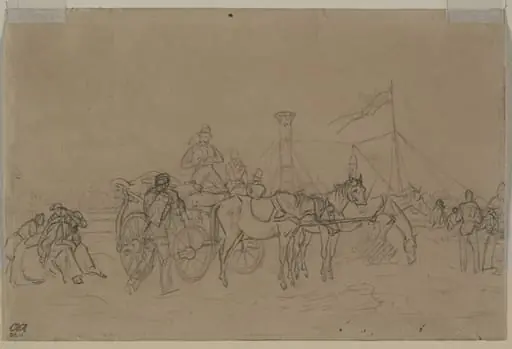
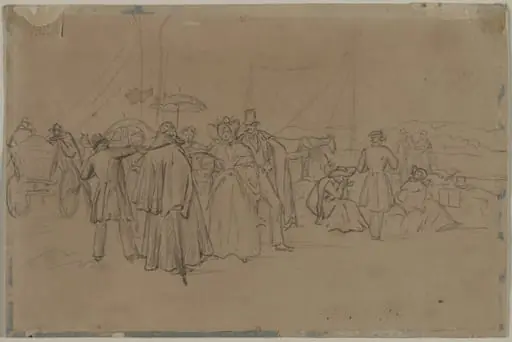
One side depicts pedestrians walking with umbrellas and luggage; the reverse shows a horse-drawn carriage surrounded by riders and foot traffic.
This double-sided drawing by Heinrich von Mayr, dated around 1804, captures fleeting moments of riverbank activity along the Rhine. One side depicts pedestrians walking with umbrellas and luggage; the reverse shows a horse-drawn carriage surrounded by riders and foot traffic. Executed in rapid, fluid lines, the work functions as a preparatory study, emphasizing motion and informal observation over polished finish.
Subject & Meaning
The scenes portray ordinary travelers preparing for or arriving at a steamer landing, reflecting the growing role of river transport in early 19th-century Europe. Mayr’s focus on varied figures—men, women, horses, carriages—suggests an interest in the rhythms of daily life rather than idealized narratives. The composition conveys the bustling, unstructured nature of public transit hubs of the time.
Technique & Style
Mayr employed loose, energetic linework, suggesting quick sketches made on-site. The absence of detailed rendering or shading emphasizes spontaneity. Ink or pencil strokes are deliberately unfinished, capturing posture and movement over anatomical precision. This approach aligns with the tradition of observational drawing used by artists to record transient scenes for later development.
History & Provenance
The drawing entered the collection of The Cleveland Museum of Art, where it remains today. While its early ownership is undocumented, its condition and style suggest it was preserved as an artist’s working study rather than a finished piece. Its survival reflects a growing 19th-century appreciation for preparatory works as records of artistic process.
Context
In the early 1800s, river travel along the Rhine was expanding due to improved infrastructure and rising tourism. Artists like Mayr documented these changes, often focusing on the human element within emerging commercial landscapes. Such sketches contributed to a broader shift in European art toward realism and attention to contemporary life.
Legacy
Though not widely exhibited, this drawing exemplifies how artists used rapid studies to engage with modernity. Mayr’s work contributes to a body of 19th-century drawings that prioritize observation over finish, influencing later generations who valued the authenticity of spontaneous mark-making over academic polish.
Artist & collection

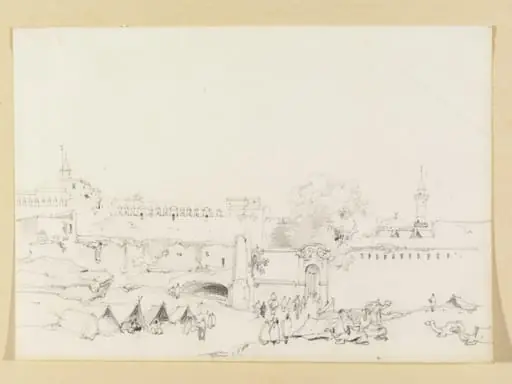 Outside the walls of Sétif, Algeria
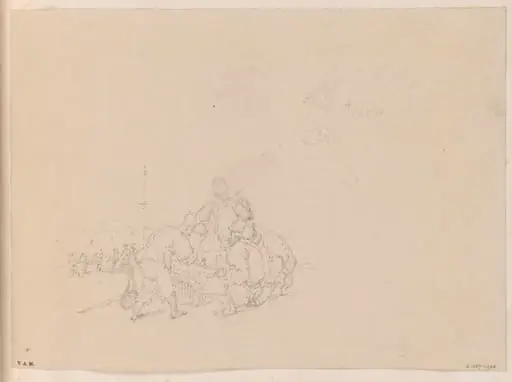 Chinese men surrounding a basket
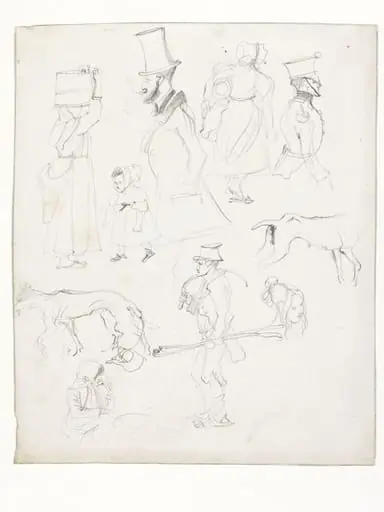 Drawing of figures
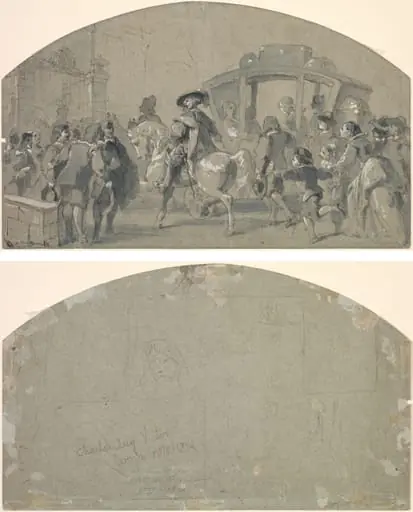 Street Scene (recto); Sketches (verso)
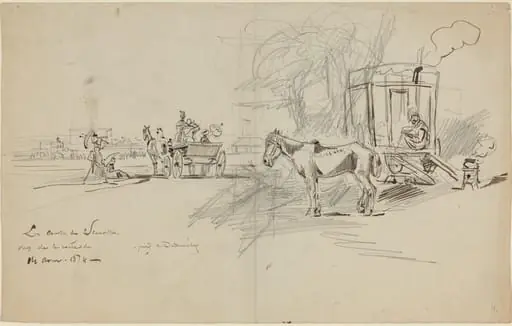 Les Courses de Deauville
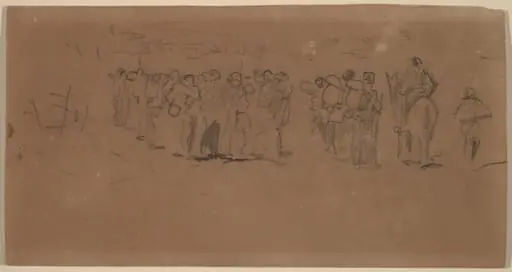 Preparing for the March
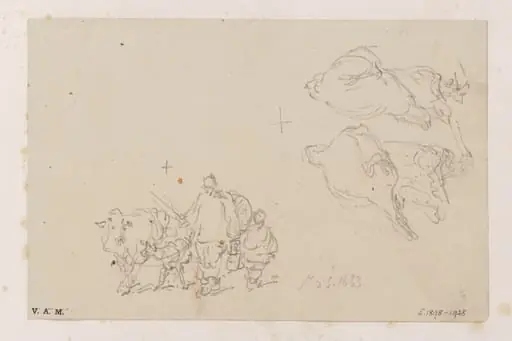 Two figures with a cow and calf; and two Macanese women
![Skirmish Involving a Wagon Train [verso], by Winslow Homer](https://artifactworldgallery.com/img/winslow-homer--skirmish-involving-a-wagon-train-verso--6ee57b18fcbda7d4-w320.webp) Skirmish Involving a Wagon Train [verso]
Skirmish Involving a Wagon Train [verso]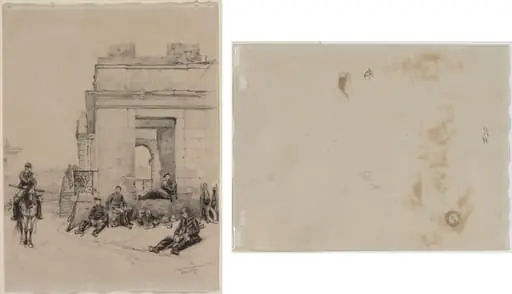 Soldiers Resting (recto); Sketch of a Man with Upraised Arm and Sketch of a Helmet (verso)
 Group of Five Figures