Artwork
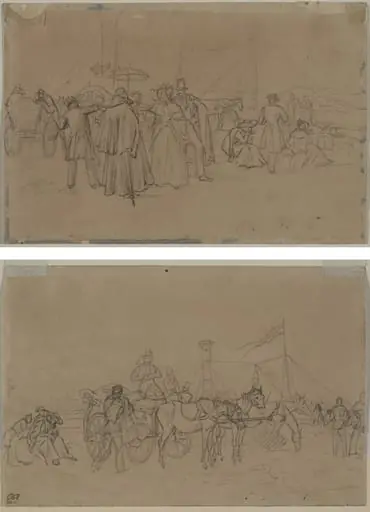
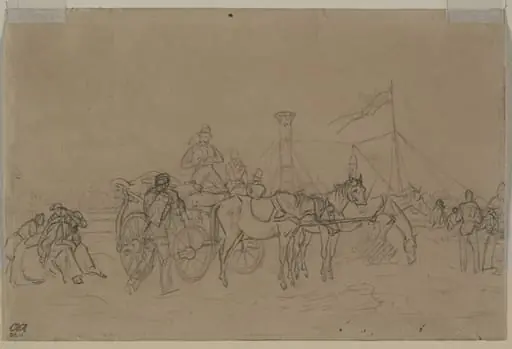
Passengers for Rhine Steamer (recto)
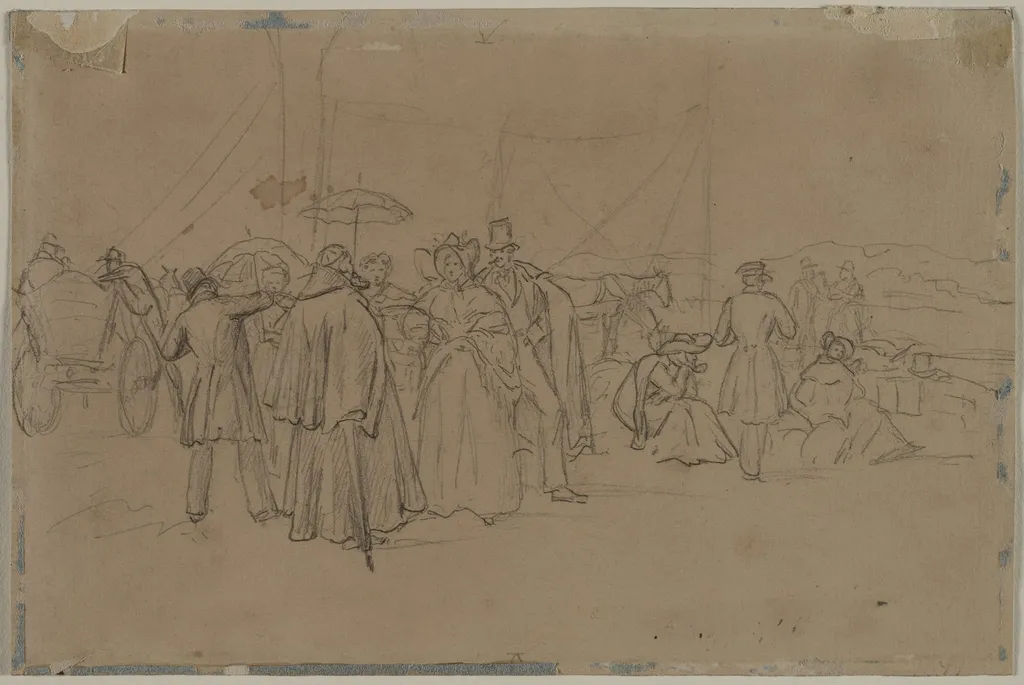
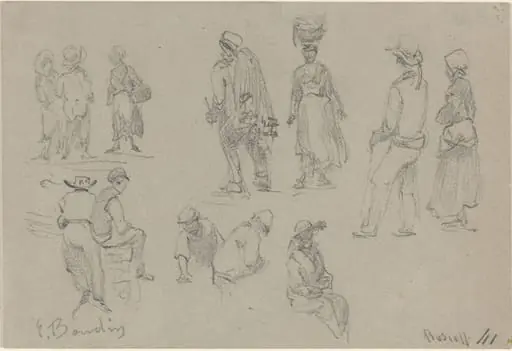
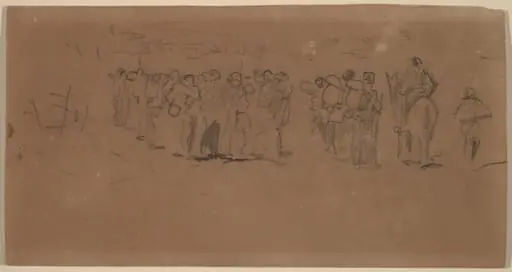
Passengers for Rhine Steamer (recto) is a drawing by the Romanticist artist Heinrich von Mayr. It dates from 1804 and is held in the collection of the Cleveland Museum of Art.
About this work
Overview
It is part of the collection at The Cleveland Museum of Art, where it is valued as a candid record of early 19th-century pedestrian activity.
Created around 1804 by Heinrich von Mayr, this pencil drawing captures a moment of daily life at a Rhine River embarkation point. Executed with swift, light strokes, the work emphasizes motion and group dynamics rather than refined detail. The paper remains partially visible, reinforcing its spontaneous character. It is part of the collection at The Cleveland Museum of Art, where it is valued as a candid record of early 19th-century pedestrian activity.
Subject & Meaning
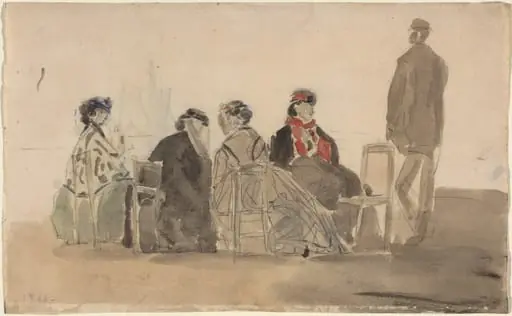
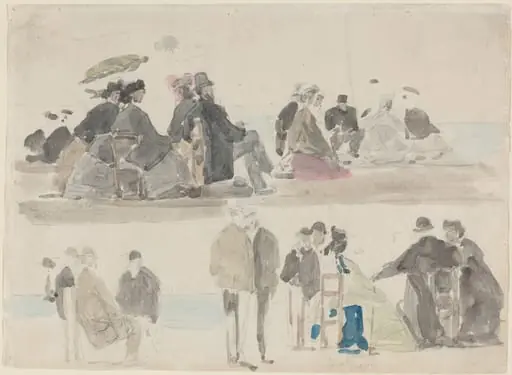
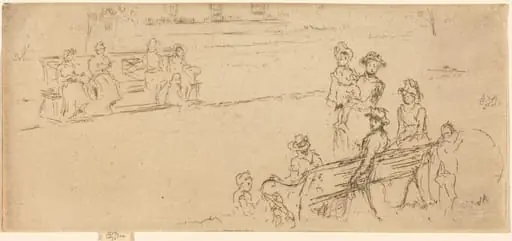
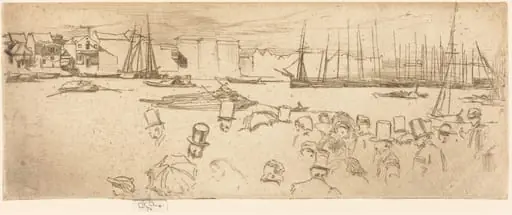
The scene depicts travelers awaiting a steamer, dressed in period attire, some carrying luggage, others seated or sheltering under umbrellas. Children play at the periphery, adding a sense of unscripted realism. The composition avoids narrative climax, instead presenting ordinary human behavior as its own subject. This focus on transient, unremarkable moments reflects a growing interest in the authenticity of everyday experience during the period.
Technique & Style
Mayr employed a loose, economical pencil technique, using minimal lines to suggest form and movement. The drawing’s openness—where paper shows through—conveys immediacy and rejects finish. Figures are rendered with suggestive gestures rather than precise anatomy, and spatial depth is implied through overlapping shapes rather than perspective. This approach aligns with sketchbook practices common among artists observing life on the move.
History & Provenance
The drawing entered the Cleveland Museum of Art’s collection as part of a broader acquisition of 19th-century German drawings. Its origin traces to Mayr’s personal sketchbooks, likely made during his travels along the Rhine. No record of public exhibition prior to the 20th century exists, suggesting it was intended as a private study rather than a finished piece for display.
Context
Created during the early Romantic era, the work reflects a cultural shift toward valuing transient moments and ordinary subjects over idealized scenes. While major Romantic painters emphasized dramatic landscapes or emotional intensity, artists like Mayr turned to quiet, unposed observations of public life. This drawing aligns with a broader trend of sketching as a tool for recording the world as it was, not as it should be.
Legacy
Though not widely known outside academic circles, the drawing exemplifies how sketching functioned as a vital practice for documenting social life in pre-industrial Europe. Its preservation highlights the increasing recognition of informal works as significant cultural artifacts. It contributes to understanding how artists of the time engaged with mobility, urbanization, and the rhythms of common existence.
Artist & collection