Artwork
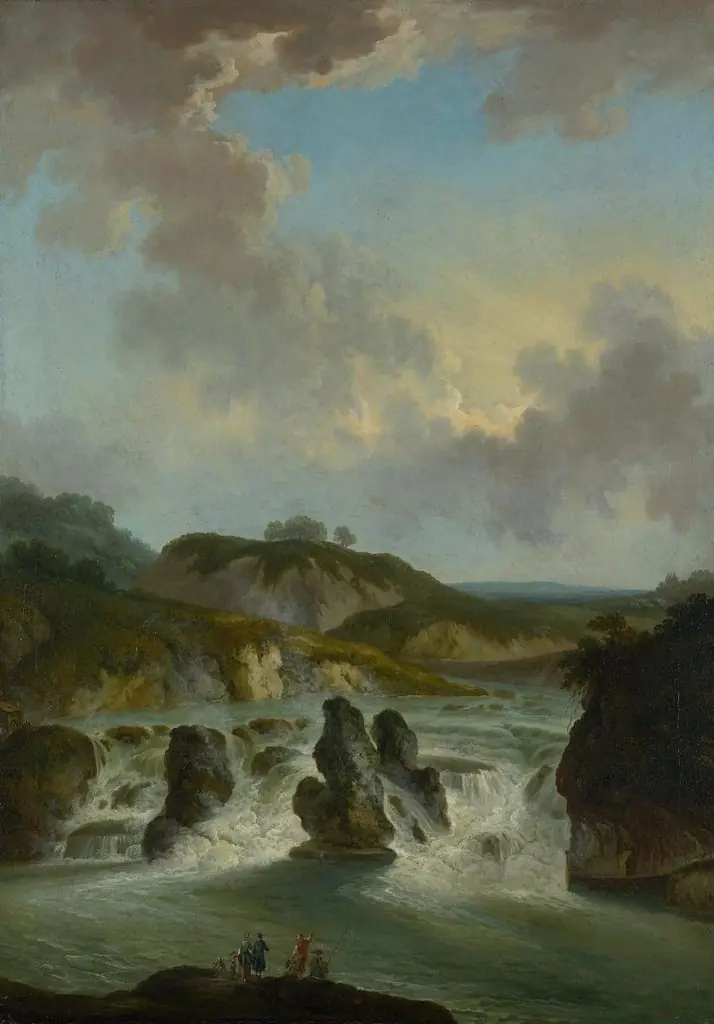
Schaffhauser Rheinfall
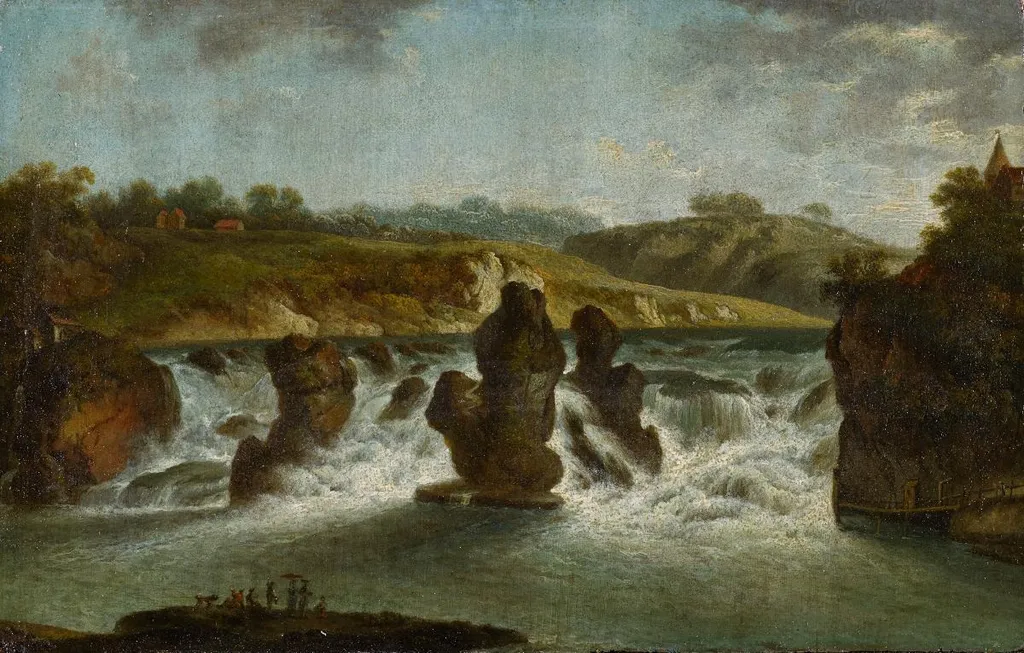
Schaffhauser Rheinfall is an unspecified painting by the Rococo painting artist Heinrich Wüest. It dates from 1772 and is held in the collection of the Kunsthaus Zürich.
About this work
Overview
Wüest rendered the scene with careful attention to topographical detail and atmospheric effects, aligning with regional traditions of topographical painting.
Painted in 1772 by Heinrich Wüest, this landscape depicts the Schaffhausen Rhine Falls, one of Europe’s largest waterfalls. The work is part of the collection at the Kunsthaus Zürich and reflects the 18th-century Swiss interest in documenting natural landmarks. Wüest rendered the scene with careful attention to topographical detail and atmospheric effects, aligning with regional traditions of topographical painting.
Subject & Meaning
The painting centers on the powerful yet tranquil cascade of the Rhine Falls, framed by dense vegetation and distant hills. Rather than emphasizing grandeur or danger, Wüest presents the falls as a harmonious element within a cultivated natural order. The composition suggests a quiet reverence for the landscape, typical of Enlightenment-era ideals that valued nature as both observable and orderly.
Technique & Style
Wüest employed subtle chiaroscuro to model the rocks and water, enhancing the illusion of volume and motion. The foliage is rendered with loose, textured brushwork, while the sky is softly graded to suggest shifting clouds. The palette favors muted greens and grays, reinforcing a restrained, observational approach. Light falls diagonally across the scene, guiding the viewer’s gaze from foreground to horizon.
History & Provenance
Created in 1772, the painting entered the Kunsthaus Zürich’s collection in the 19th century, likely through regional donations or acquisitions. Its survival reflects early Swiss institutional interest in preserving local artistic responses to natural landmarks. No significant alterations or reworkings are documented, and the work remains in its original state.
Context
Wüest worked during a period when Swiss artists increasingly turned to native landscapes as subjects, moving away from idealized Italianate views. The Rhine Falls, accessible from Schaffhausen, became a popular motif among local painters and travelers. This painting aligns with a broader trend of documenting regional geography with scientific curiosity and aesthetic restraint.
Legacy
Though not widely known outside Switzerland, Wüest’s work contributes to the foundation of Swiss landscape painting. It exemplifies a pre-Romantic sensitivity to natural detail, influencing later regional artists who sought to capture the country’s topography with fidelity rather than drama. The painting remains a reference point for studies of 18th-century Swiss visual culture.
Artist & collection

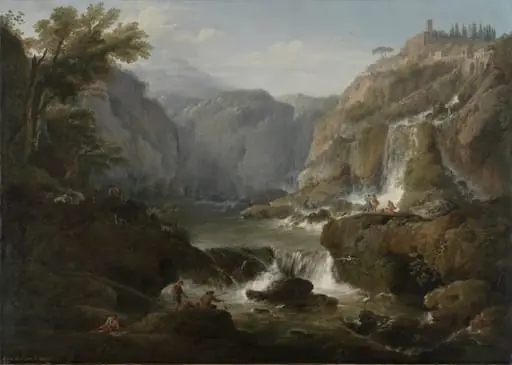 The Waterfalls at Tivoli
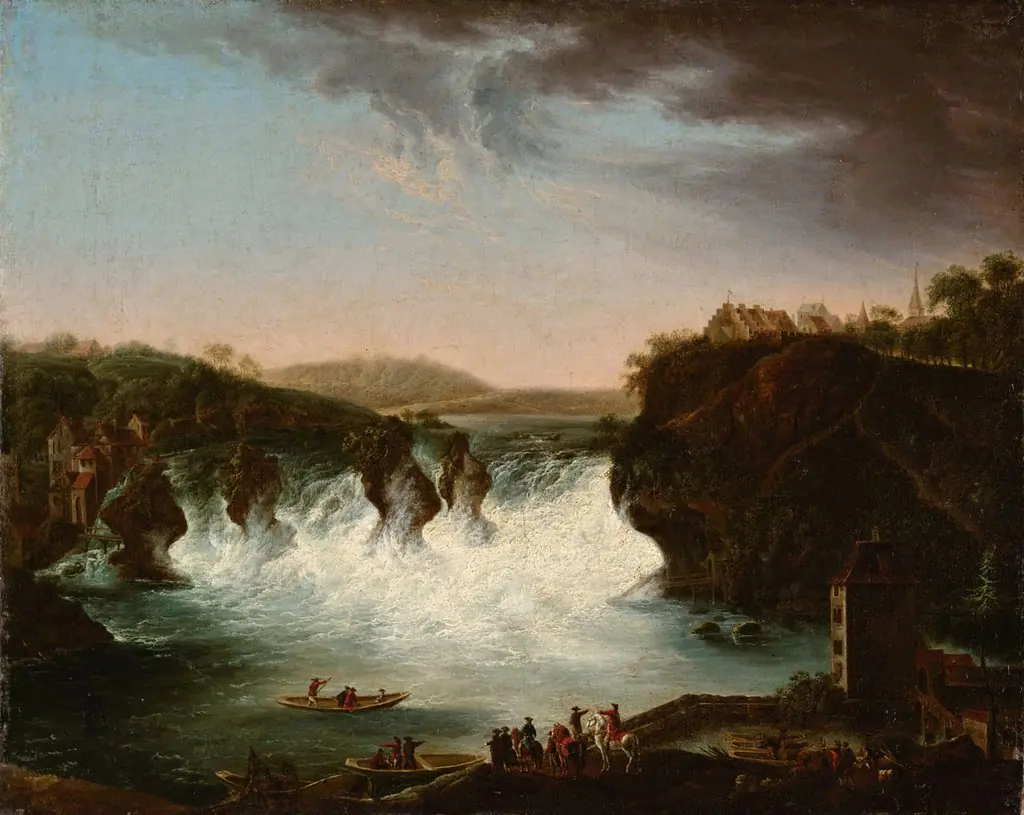 Joseph II. beim Rheinfall
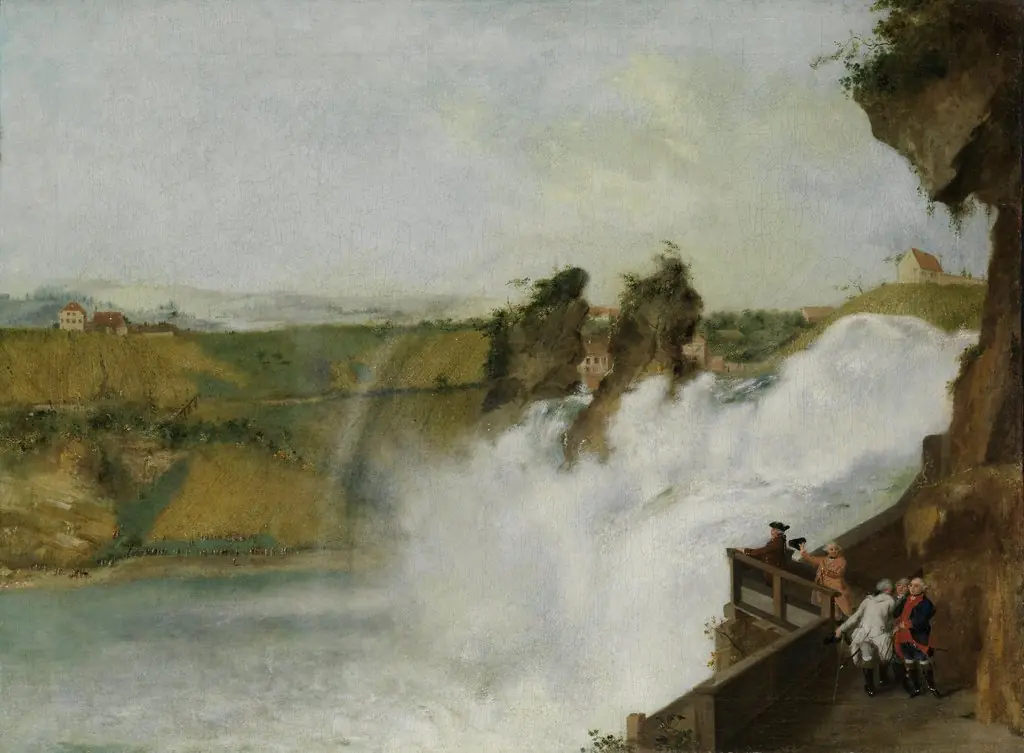 Der Rheinfall bei Schaffhausen mit Kurfürst Karl Theodor von der Pfalz und Gefolge
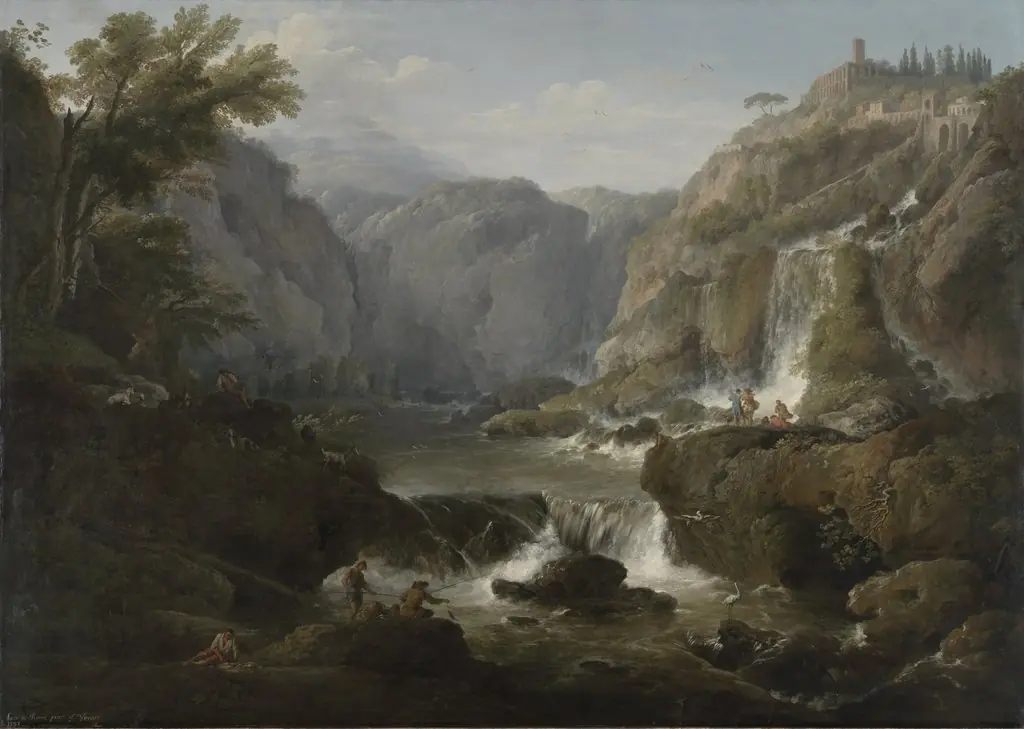 The Waterfalls at Tivoli
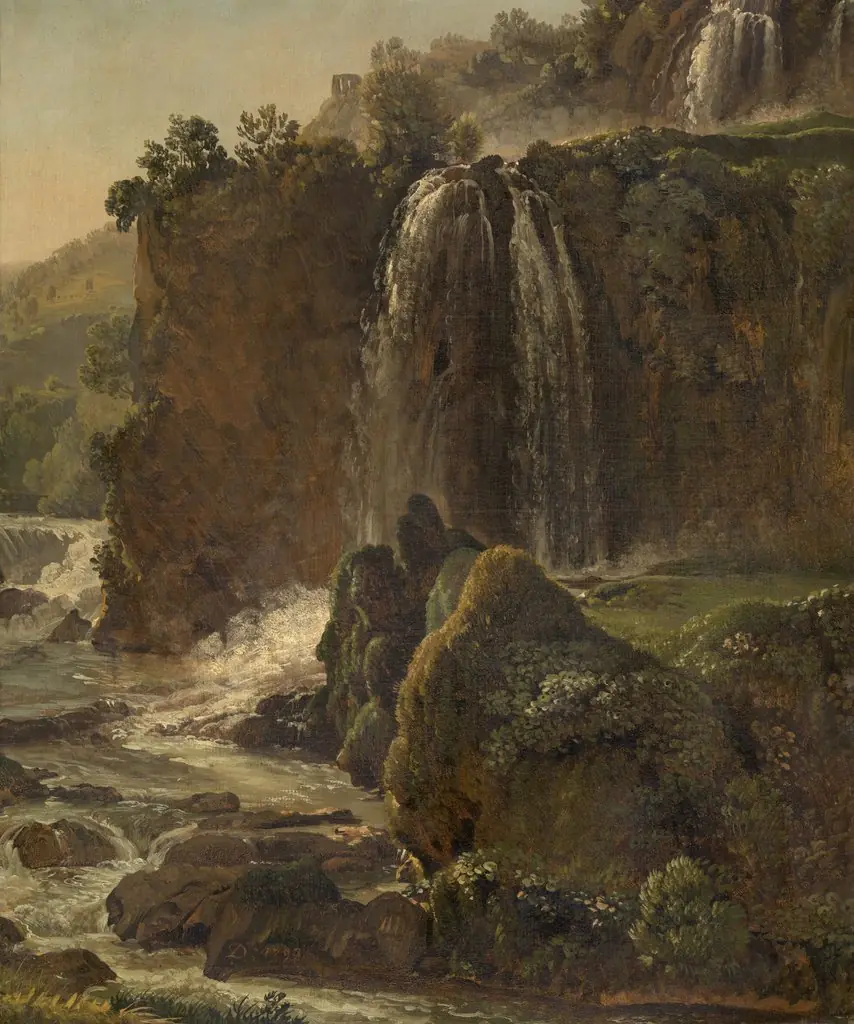 Tivoli Waterfall
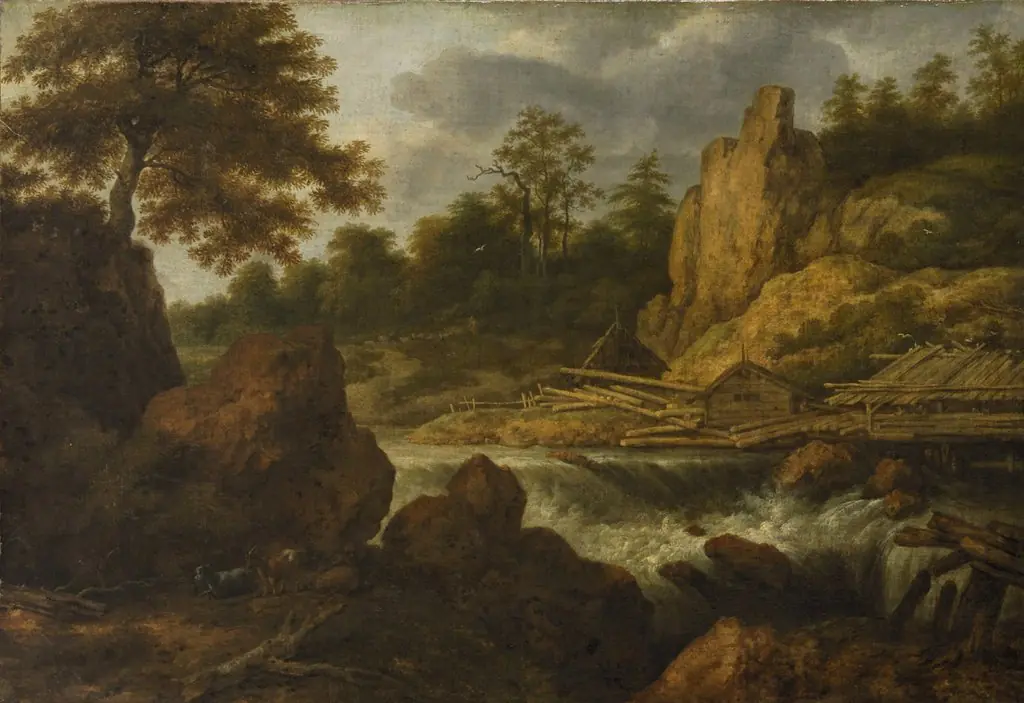 Landschaft mit Sägemühle
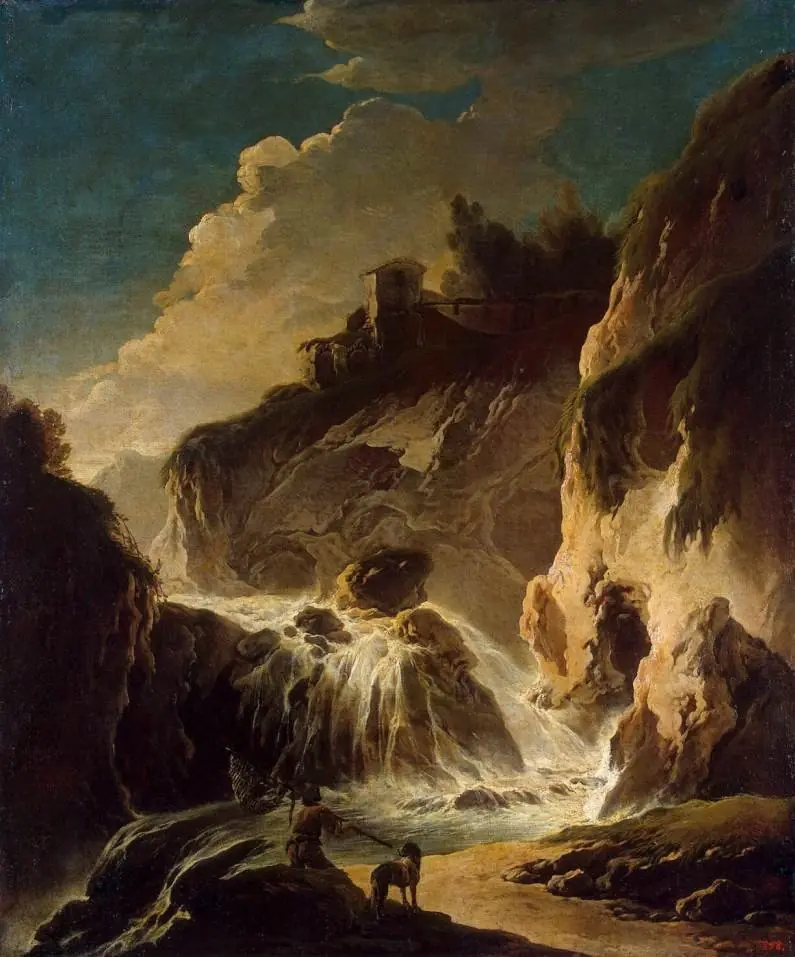 Landscape with a Waterfall
 A View near Avoca
 Great Cascades at Tivoli
 Mountain Landscape with Waterfall
 A Waterfall with village, footbridge and pine trees