Artwork
Head of a Roebuck and Two Ptarmigan
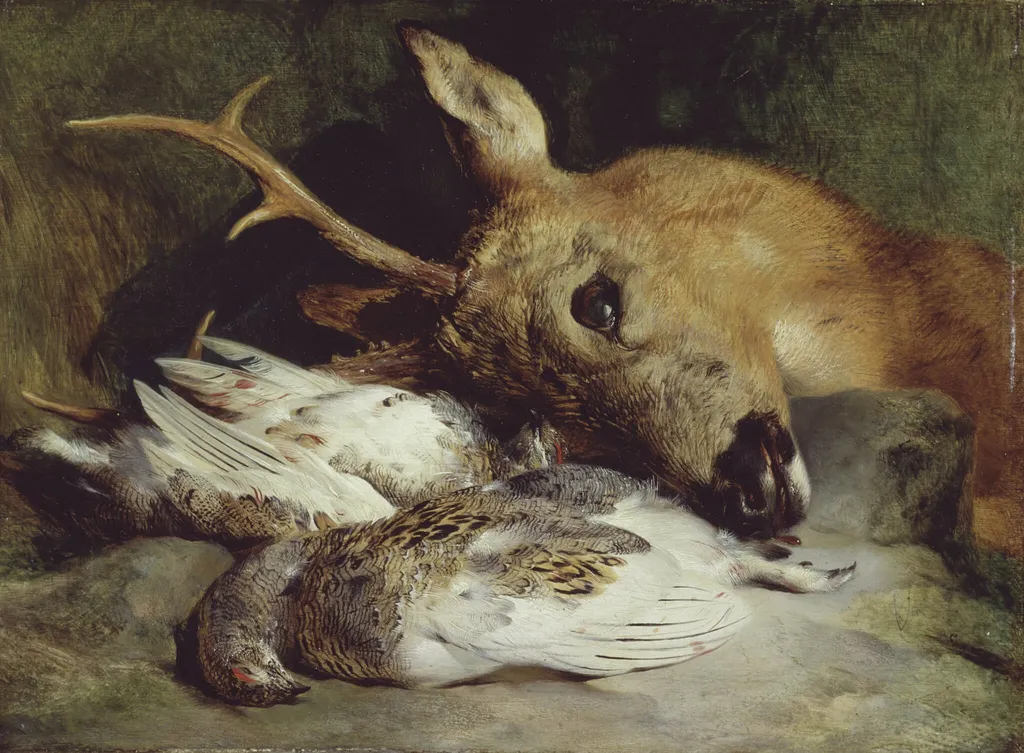
Head of a Roebuck and Two Ptarmigan is an oil painting by the British Romanticist artist Edwin Landseer. It dates from 1830 and is held in the collection of the Art Institute of Chicago.
About this work
Overview
Painted around 1830, this small oil-on-panel work by Edwin Henry Landseer depicts the severed head of a roebuck flanked by two ptarmigan birds.
Painted around 1830, this small oil-on-panel work by Edwin Henry Landseer depicts the severed head of a roebuck flanked by two ptarmigan birds. Executed with meticulous precision, the composition focuses entirely on animal forms, omitting human presence. The piece reflects Landseer’s early commitment to naturalistic animal portraiture, a subject that distinguished his work within the broader tradition of hunting-themed art.
Subject & Meaning
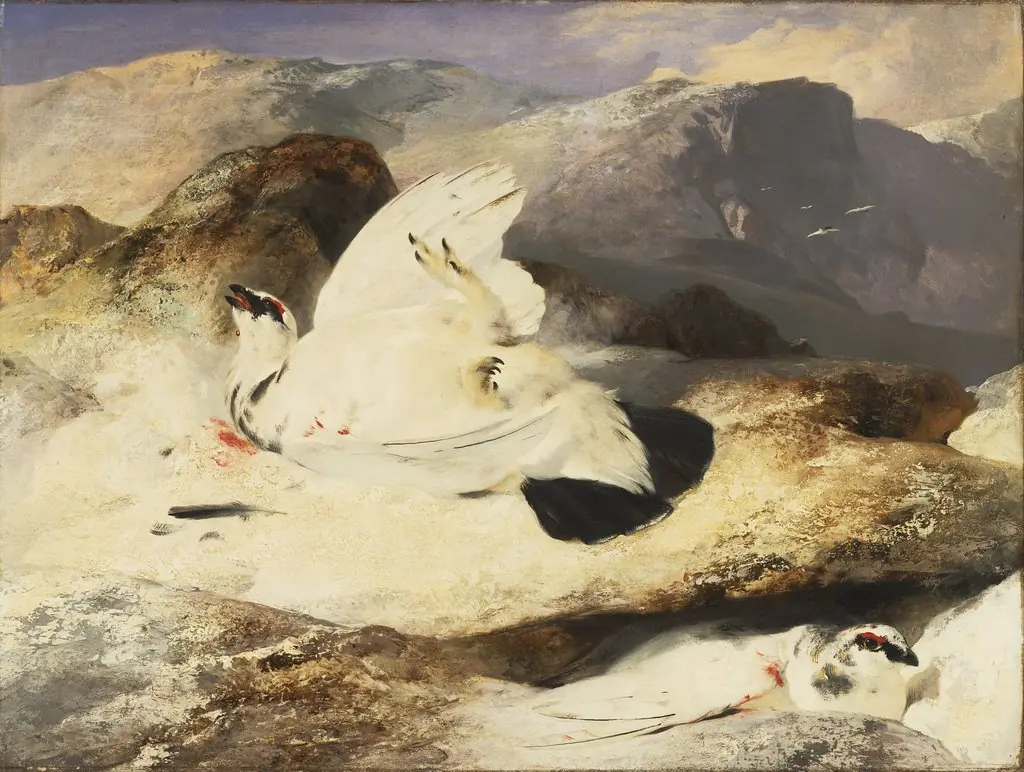
The roebuck’s head and the two ptarmigan represent hunted game, yet the painting avoids glorifying the act of the kill. Instead, it treats the animals as subjects of quiet dignity and biological detail. The ptarmigan, whose winter plumage blends with snow, suggest seasonal stillness and camouflage, reinforcing a sense of nature’s quiet endurance beyond human intervention.
Technique & Style
Landseer employed fine brushwork to render the texture of fur and feathers with extraordinary fidelity. Each hair and individual feather is carefully modeled, creating a tactile realism that invites close observation. The limited palette and subdued lighting enhance the somber tone, while the small wood panel format emphasizes intimacy and precision over grandeur.
History & Provenance
The painting entered the collection of the Art Institute of Chicago in the 20th century, though its earlier ownership history remains undocumented. It is among several early works by Landseer that demonstrate his growing reputation for animal studies before he gained wider acclaim for larger narrative scenes. Its preservation reflects its status as a significant example of his formative period.
Context
In the 1830s, British art frequently depicted hunting as a symbol of aristocratic leisure. Landseer diverged from this norm by centering the animals themselves rather than the hunters or the drama of the chase. His focus on anatomical accuracy and natural behavior aligned with emerging scientific interests in zoology and the natural world during the early Victorian era.
Legacy
This work exemplifies Landseer’s enduring contribution to the genre of animal painting, influencing later artists who prioritized biological realism over romanticized narratives. Though less celebrated than his later public commissions, early pieces like this reveal his foundational skill and quiet revolution in portraying wildlife with empathy and precision.
Own this work as a print
Artist & collection

Artist
Sir Edwin Henry Landseer was an English painter and sculptor, well known for his paintings of animals – particularly horses, dogs, and stags. His best-known work is the lion sculptures at the base of Nelson's Column in Trafalgar Square.