Artwork
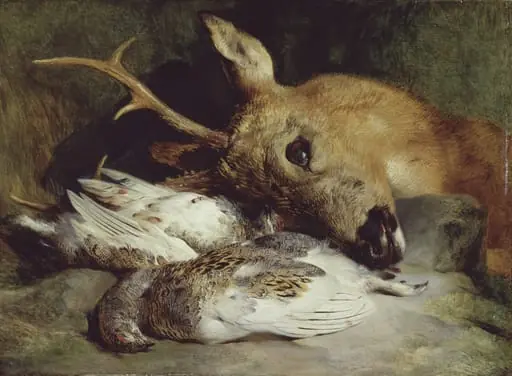
Head of a Roebuck and Two Ptarmigan
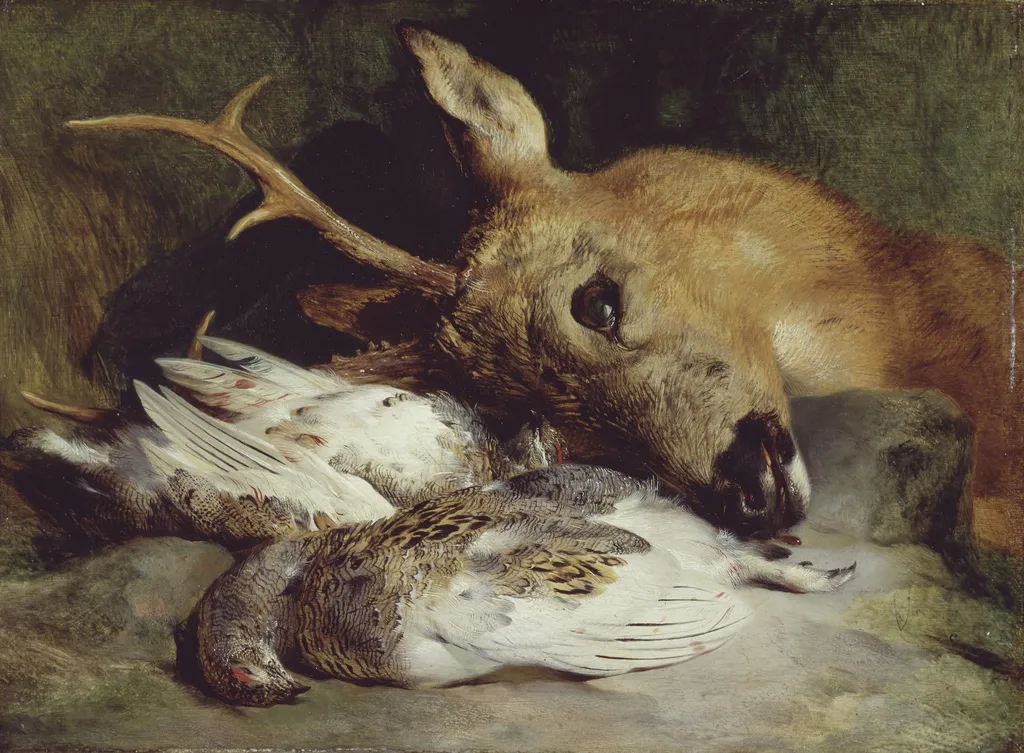
Head of a Roebuck and Two Ptarmigan is an unspecified painting by Edwin Landseer. It dates from 1830 and is held in the collection of the Art Institute of Chicago.
About this work
Overview
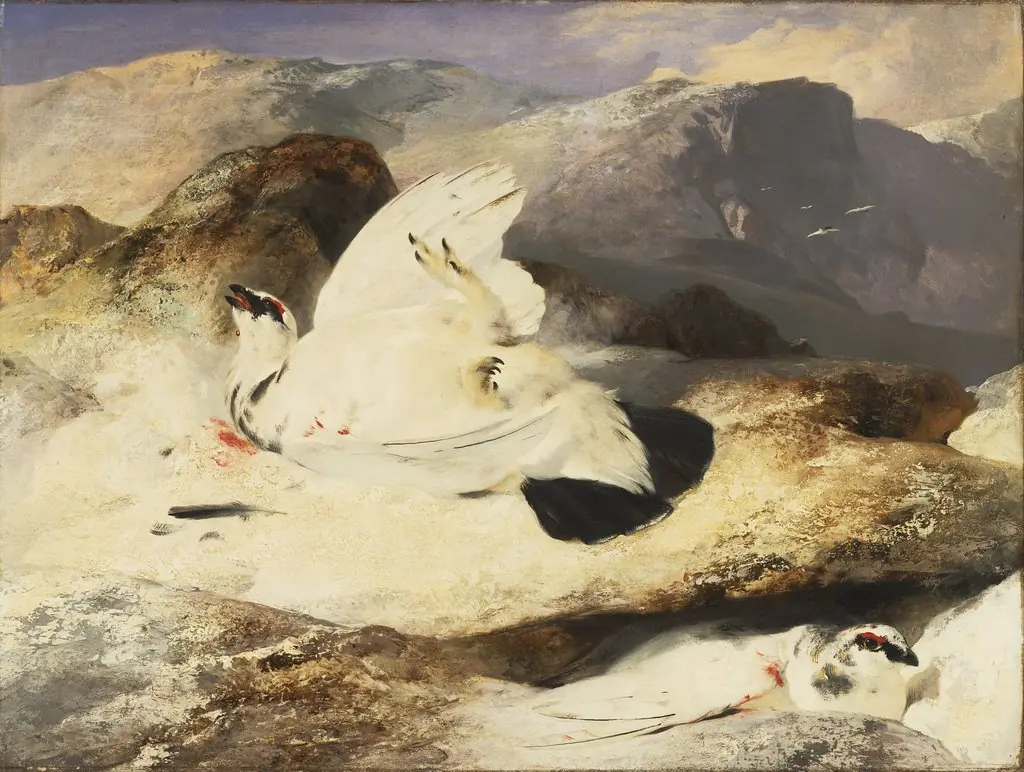
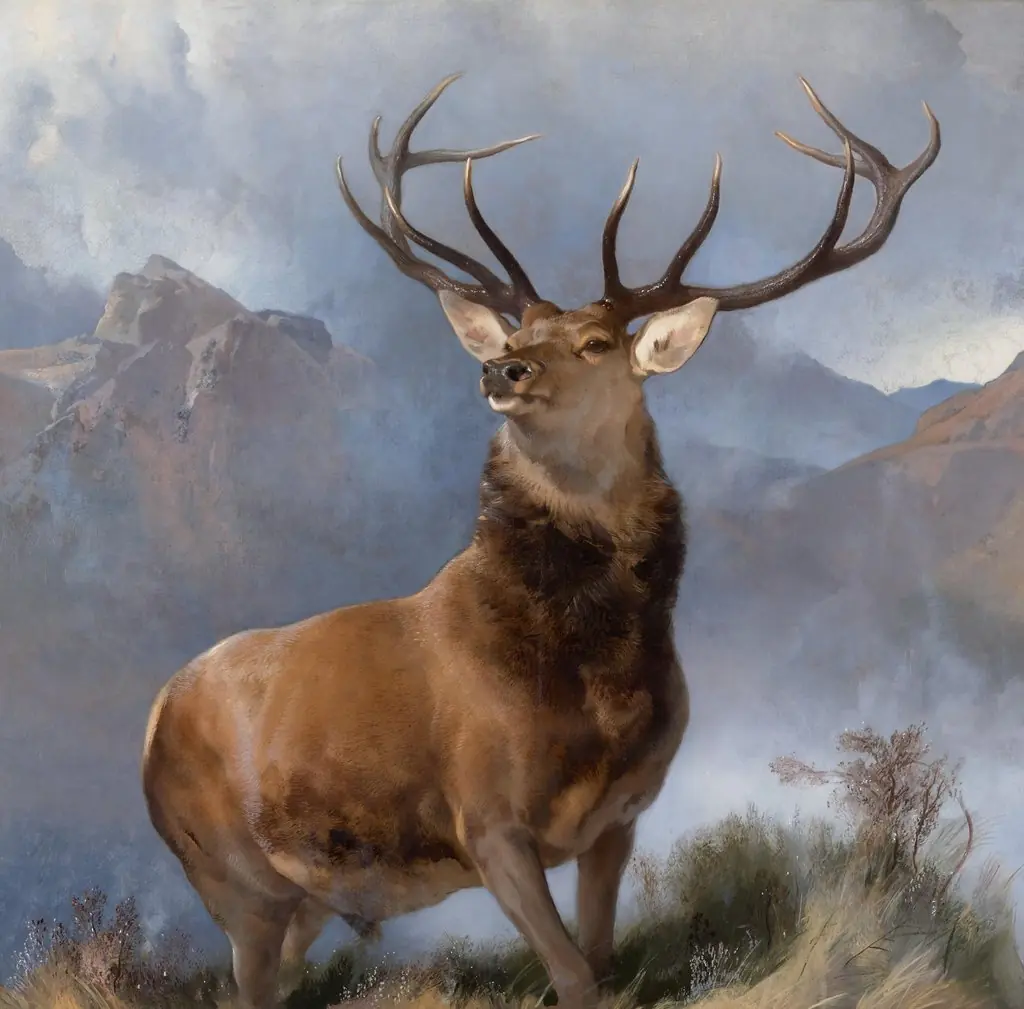
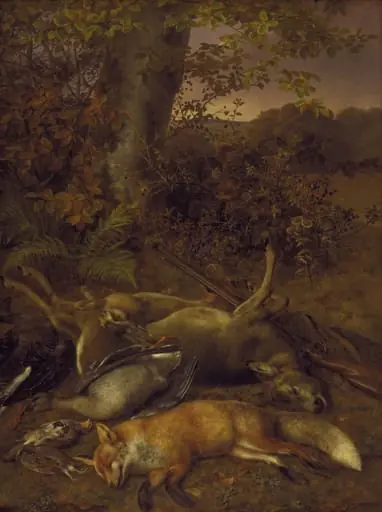
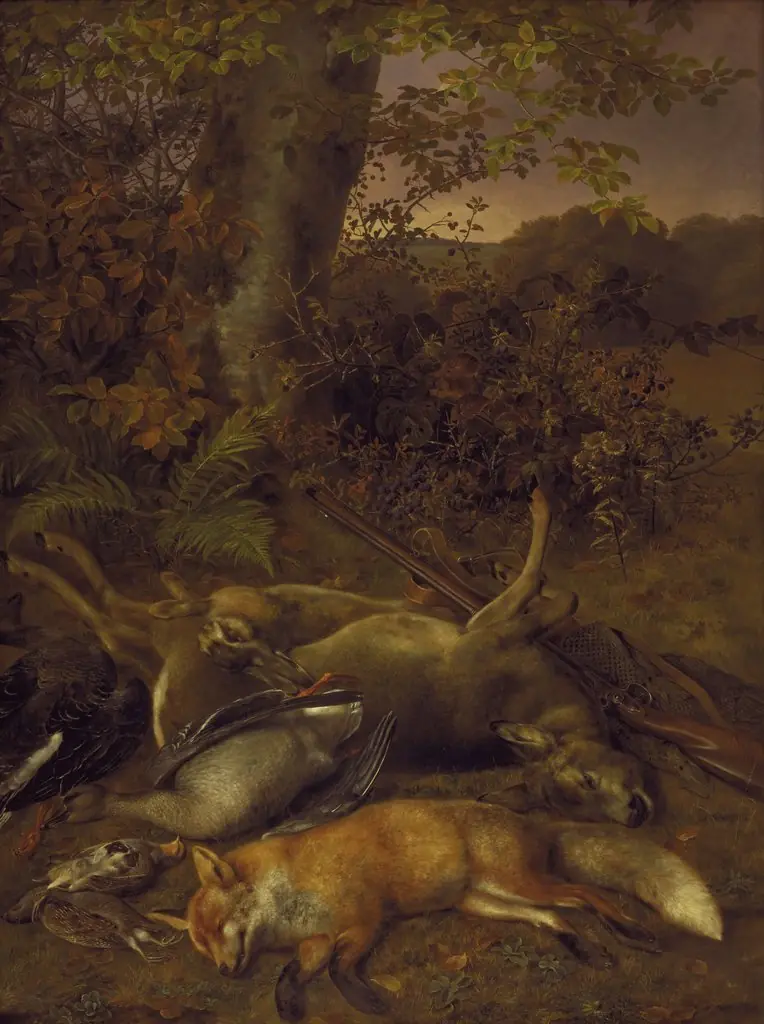
Painted in 1830 by Edwin Landseer, this work presents a close-up study of a roebuck’s head flanked by two ptarmigan. Rendered against a deep, unmodulated background, the animals are isolated to emphasize their physical presence. The composition is tightly framed, focusing attention on anatomical detail rather than landscape or narrative context.
Subject & Meaning
The subjects—roebuck and ptarmigan—are native British game animals, chosen for their association with rural hunting traditions. Their stillness and precise rendering suggest a specimen-like observation, reflecting 19th-century interests in natural history and the taxonomy of wildlife. The arrangement conveys neither action nor emotion, but rather a quiet, almost scientific contemplation of form.
Technique & Style
Landseer employed fine brushwork to differentiate textures: the roebuck’s fur is rendered in layered browns and tans, while the ptarmigan’s feathers are delicately shaded in gray and white. The dark background enhances the three-dimensionality of the forms, and subtle gradations of light model each surface with precision, demonstrating a commitment to anatomical accuracy over idealization.
History & Provenance
Created early in Landseer’s career, the painting reflects his growing reputation for animal portraiture. It entered the collection of the Art Institute of Chicago in the 20th century, likely through a donation or acquisition from a private collector with an interest in British academic art. Its provenance prior to institutional ownership remains undocumented in public records.
Context
In the 1830s, British art saw a surge in detailed depictions of wildlife, influenced by scientific illustration and rising public fascination with naturalism. Landseer, trained in the Royal Academy, aligned with this trend, blending artistic skill with observational rigor. This work stands apart from his later dramatic scenes, offering instead a restrained, intimate study of animal anatomy.
Legacy
Though less known than Landseer’s narrative paintings, this piece exemplifies his foundational skill in rendering animal form. It contributed to a broader tradition of British animal portraiture that valued precision over sentiment. The work remains a reference for understanding the transition from scientific documentation to artistic representation in 19th-century British painting.
Own this work as a print
Artist & collection

Artist
Sir Edwin Henry Landseer was an English painter and sculptor, well known for his paintings of animals – particularly horses, dogs, and stags. His best-known work is the lion sculptures at the base of Nelson's Column in Trafalgar Square.