Artwork
The Departure of Charles II (1630-1685) from Scheveningen, 2 June 1660
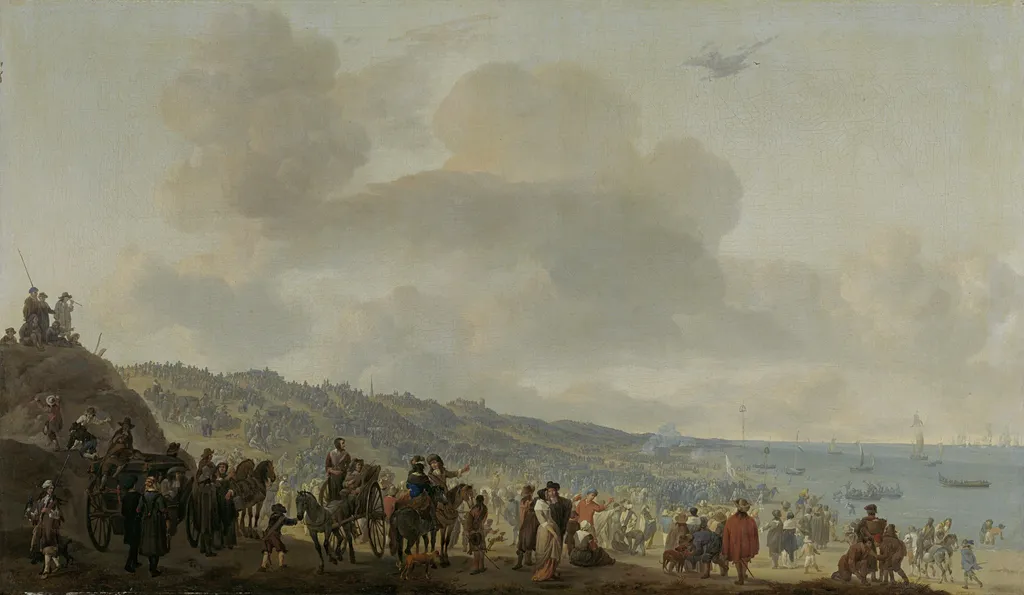
The Departure of Charles II (1630-1685) from Scheveningen, 2 June 1660 is an oil painting by the Dutch Golden Age artist Johannes Lingelbach. It dates from 1667 and is held in the collection of the Rijksmuseum.
About this work
Overview
Painted in 1667 by Johannes Lingelbach, this oil work captures the departure of Charles II from Scheveningen on June 2, 1660, as he returned to England to reclaim the throne. Executed in the Dutch Golden Age style, the scene blends historical event with genre detail, reflecting Lingelbach’s familiarity with both Dutch coastal life and the Bamboccianti tradition of lively, anecdotal compositions.
Subject & Meaning
A crowd of onlookers—nobles, soldiers, and townspeople—gather on the shore, their gestures and arrangements suggesting anticipation and ceremonial farewell.
The painting portrays the moment Charles II, exiled during the Interregnum, departs the Dutch coast aboard a ship bound for London. A crowd of onlookers—nobles, soldiers, and townspeople—gather on the shore, their gestures and arrangements suggesting anticipation and ceremonial farewell. The presence of mounted escorts and carriages underscores the political significance of the event, framing it as a pivotal transition in British history.
Technique & Style
Lingelbach employs chiaroscuro to model figures and vessels, using directional sunlight to define form and spatial depth. Brushwork is brisk yet precise, capturing movement in rearing horses and fluttering fabrics. The composition layers foreground activity with a distant fleet, creating rhythmic visual progression. The palette favors earth tones and muted blues, anchored by the warm glow of late afternoon light.
History & Provenance
Commissioned shortly after the Restoration, the painting was likely intended to commemorate Charles II’s return to power. It entered the Mauritshuis collection in the 19th century, having passed through private Dutch hands. Its survival and preservation reflect its status as a documented historical record rather than a purely decorative work.
Context
Lingelbach, trained in Amsterdam and active in Rome, synthesized Italian genre painting with Dutch topographical precision. This work aligns with a broader trend among Northern artists to depict contemporary political events with narrative clarity. The Dutch Republic’s role as a refuge for exiled royalty lent such scenes particular resonance in the Netherlands during the 1660s.
Legacy
Though not widely exhibited, the painting remains a key example of how Dutch painters engaged with international politics through intimate, observational realism. Lingelbach’s ability to merge historical gravity with everyday detail influenced later genre historians, preserving a moment of dynastic change through the lens of daily life.
Own this work as a print
Artist & collection
Artist
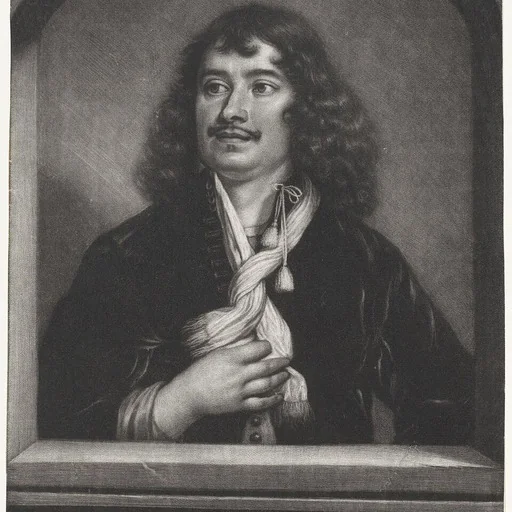
Johannes (or Johann) Lingelbach (1622 – 3 November 1674) was a Dutch Golden Age painter, associated with the second generation of Bambocciate, a group of genre painters working in Rome from 1625–1700.

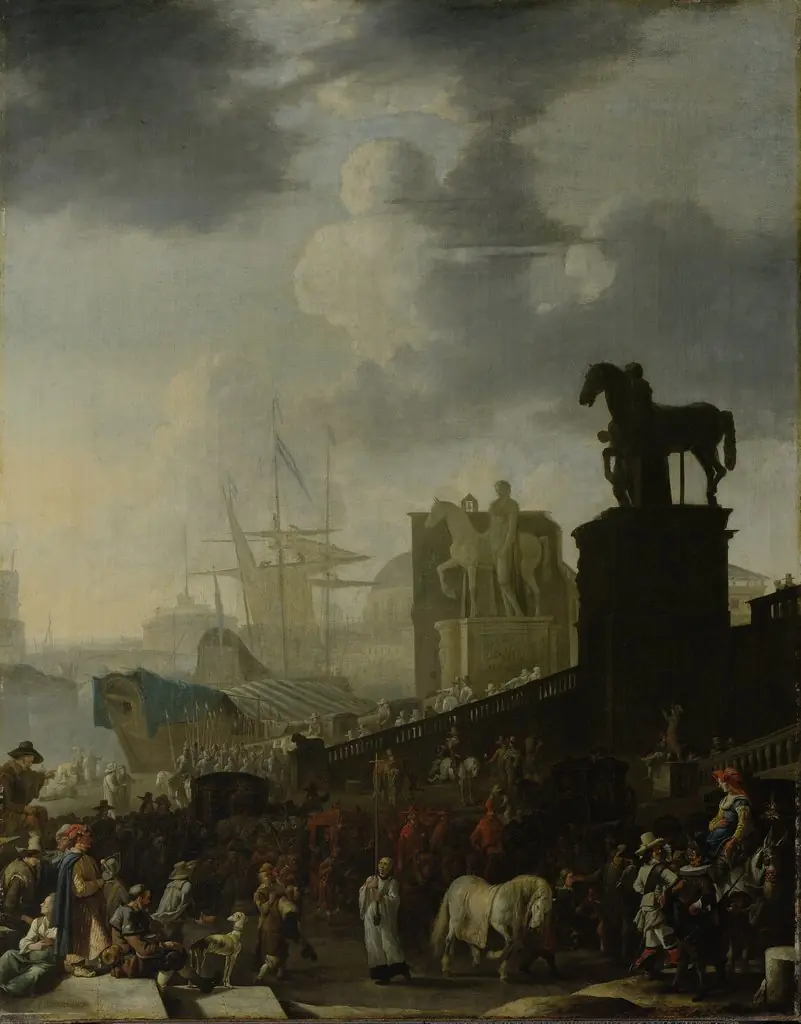
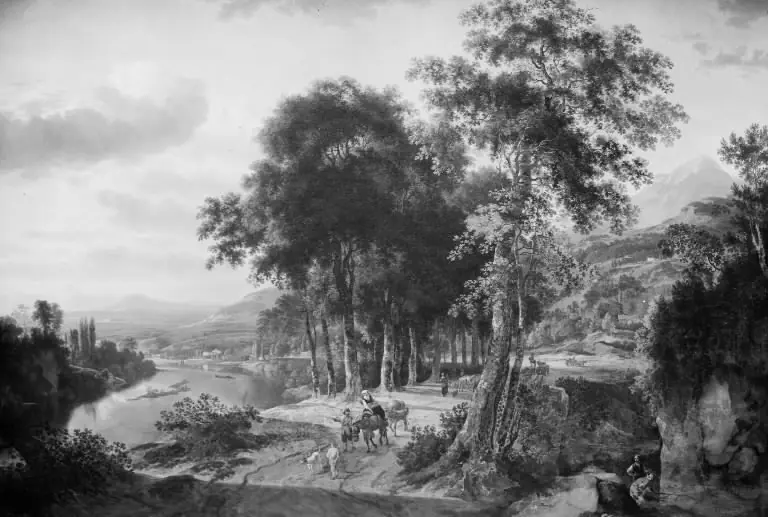
 Untitled
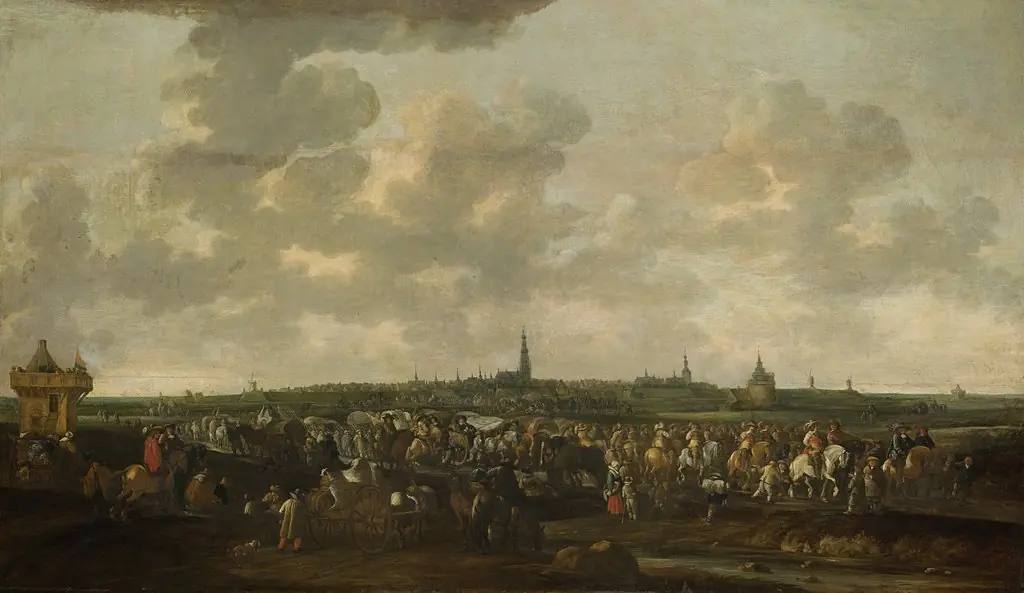 Departure of Spanish Occupation Troops from Breda, October 10, 1637
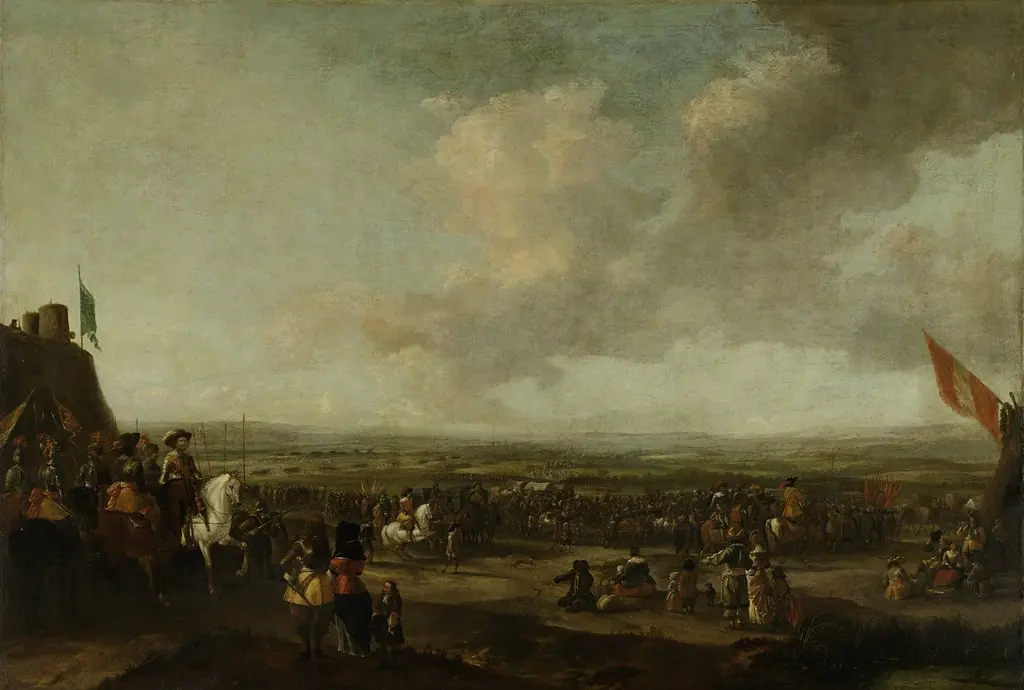 Frederik Hendrik at the surrender of Maastricht, 22 August 1632
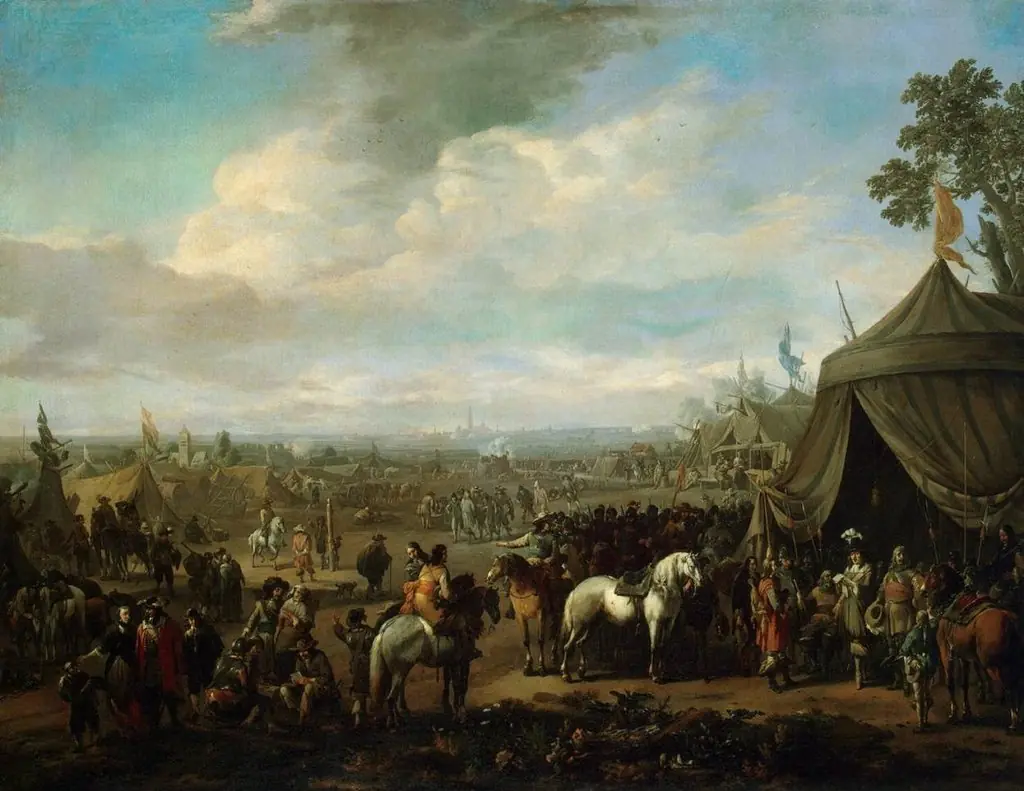 Flemish Town Sieged by the Spanish Soldiers
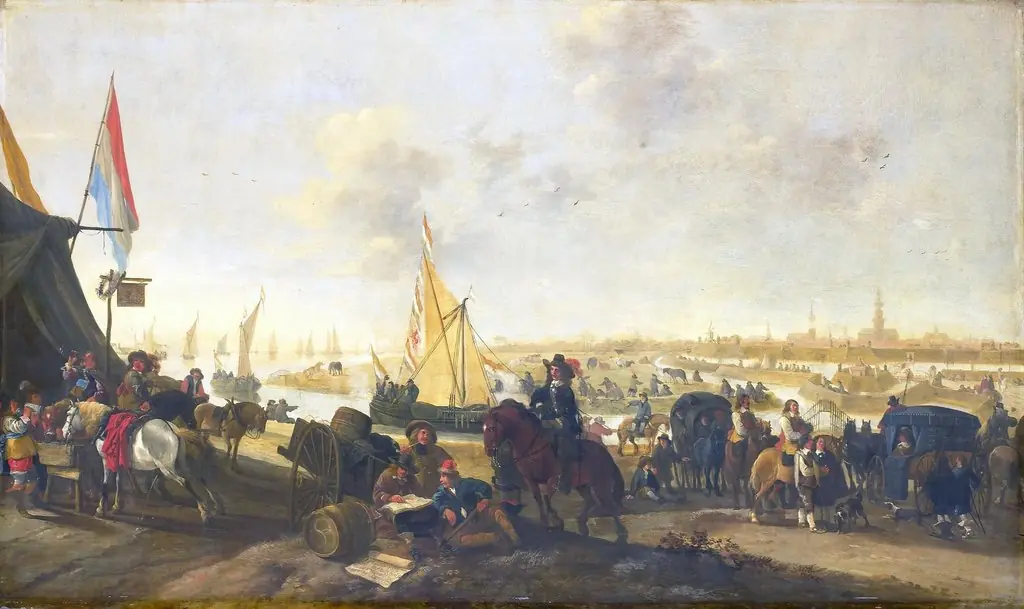 The Siege and Capture of the City of Hulst from the Spaniards, November 5, 1645
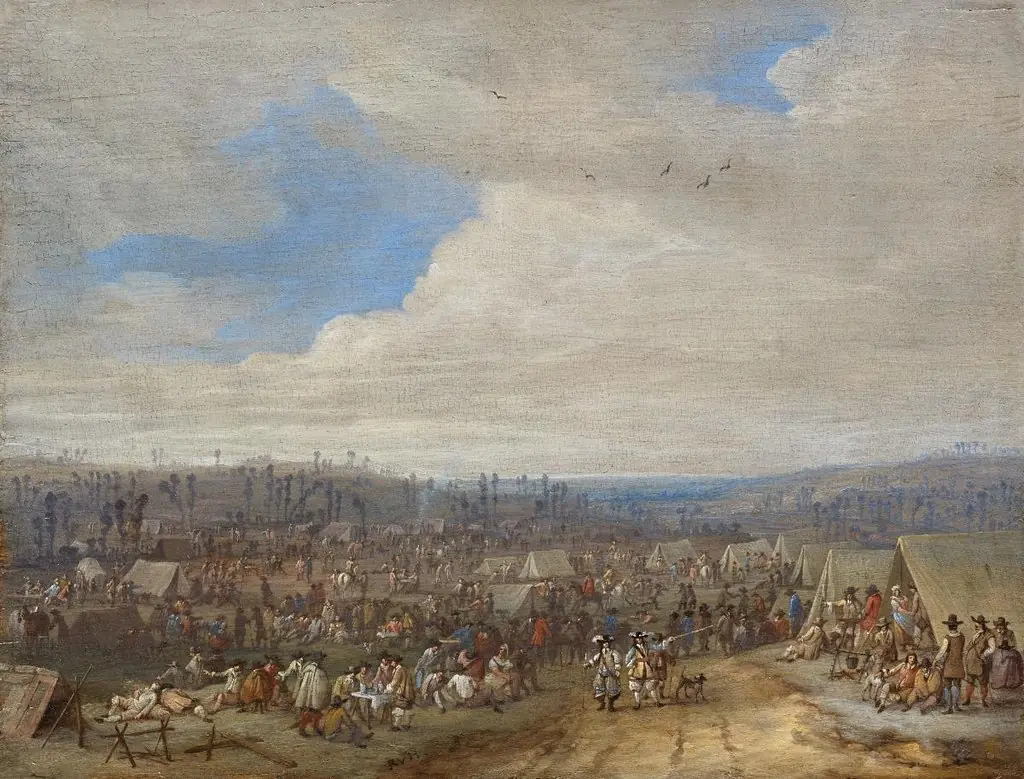 Soldaten im Lager
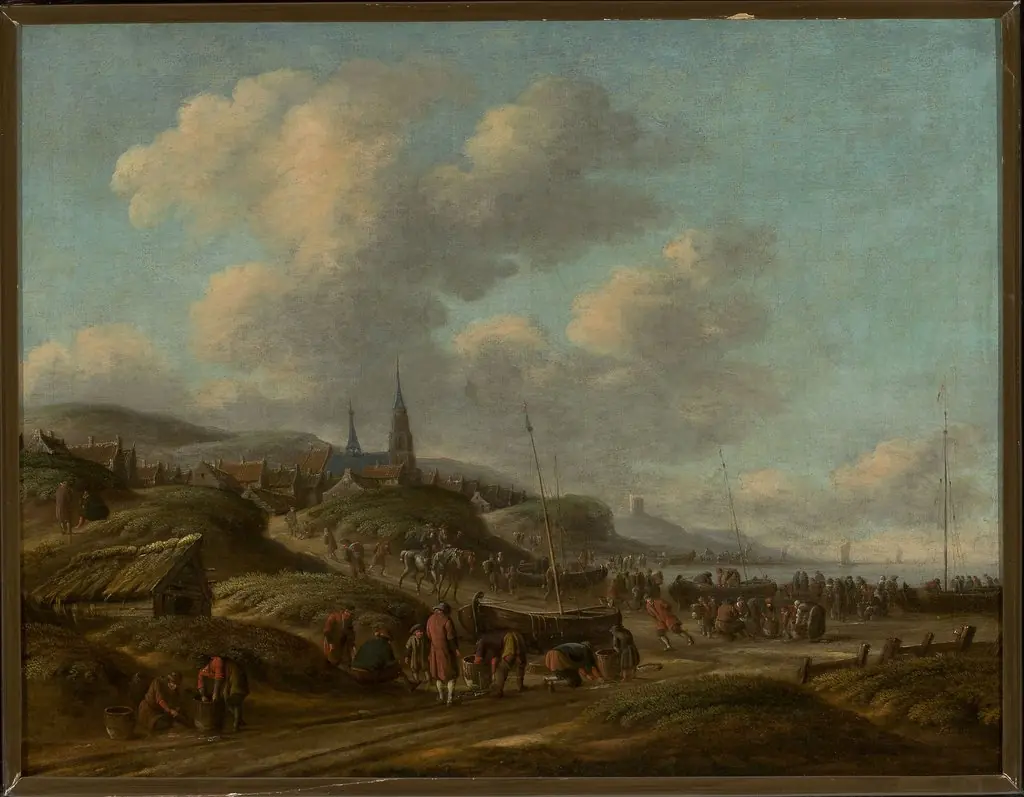 Coast in Scheveningen
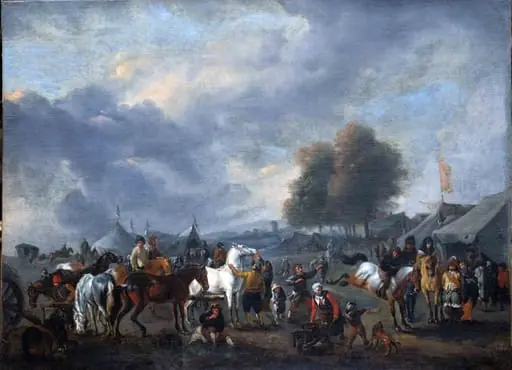 Târgul de cai
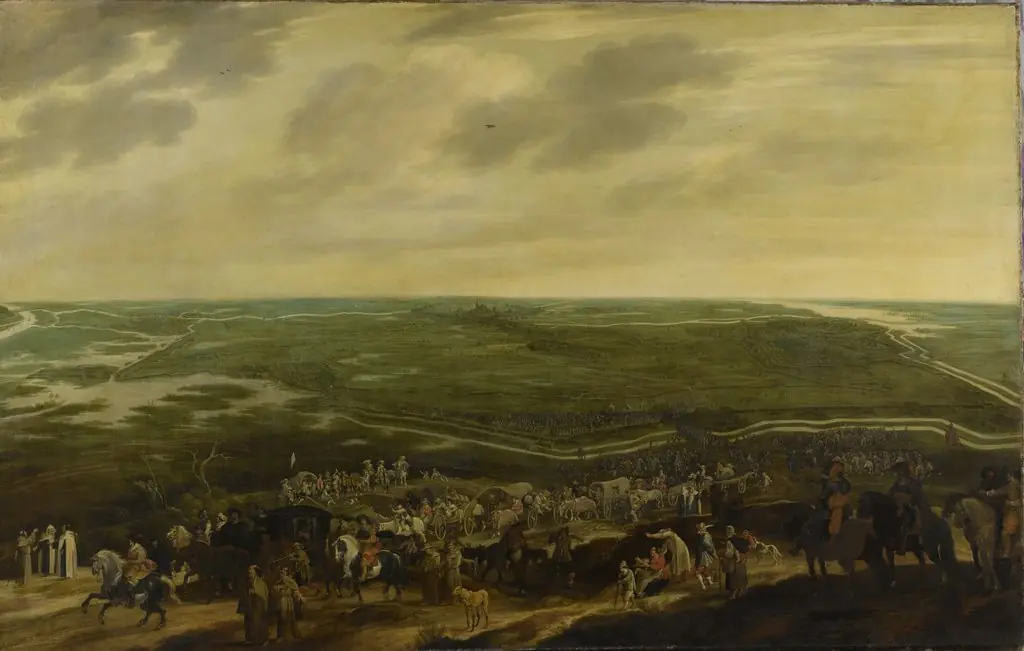 The defeated Spanish garrison leaving 's-Hertogenbosch, 17 September 1629
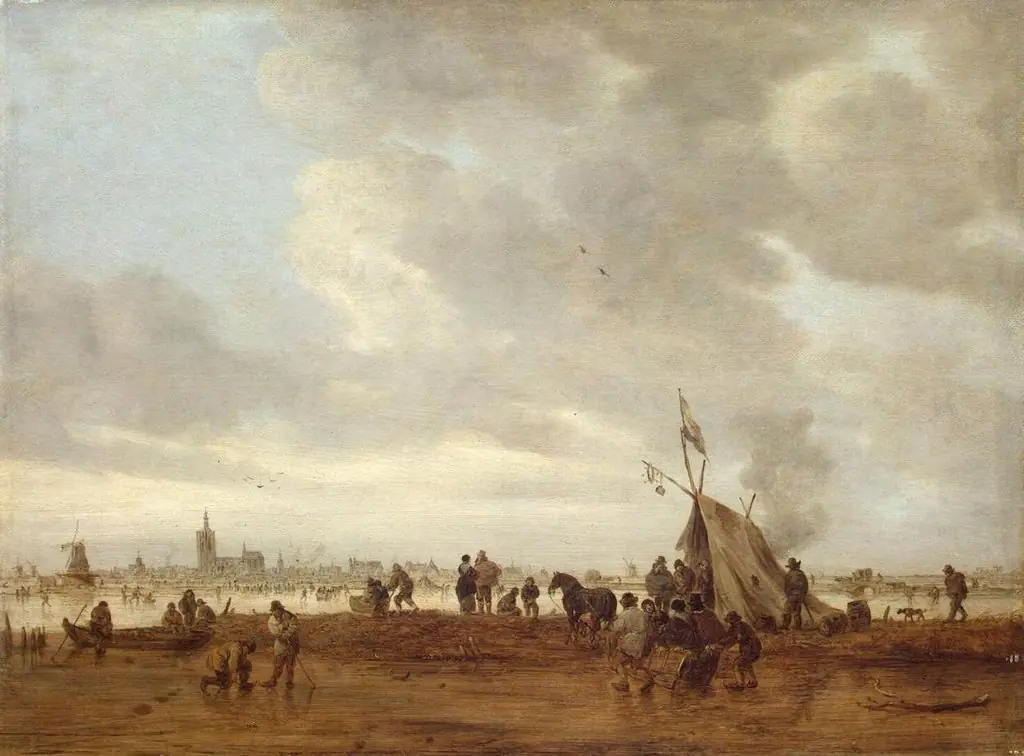 Winter Scene near The Hague