Artwork
The Passion: The Agony in the Garden
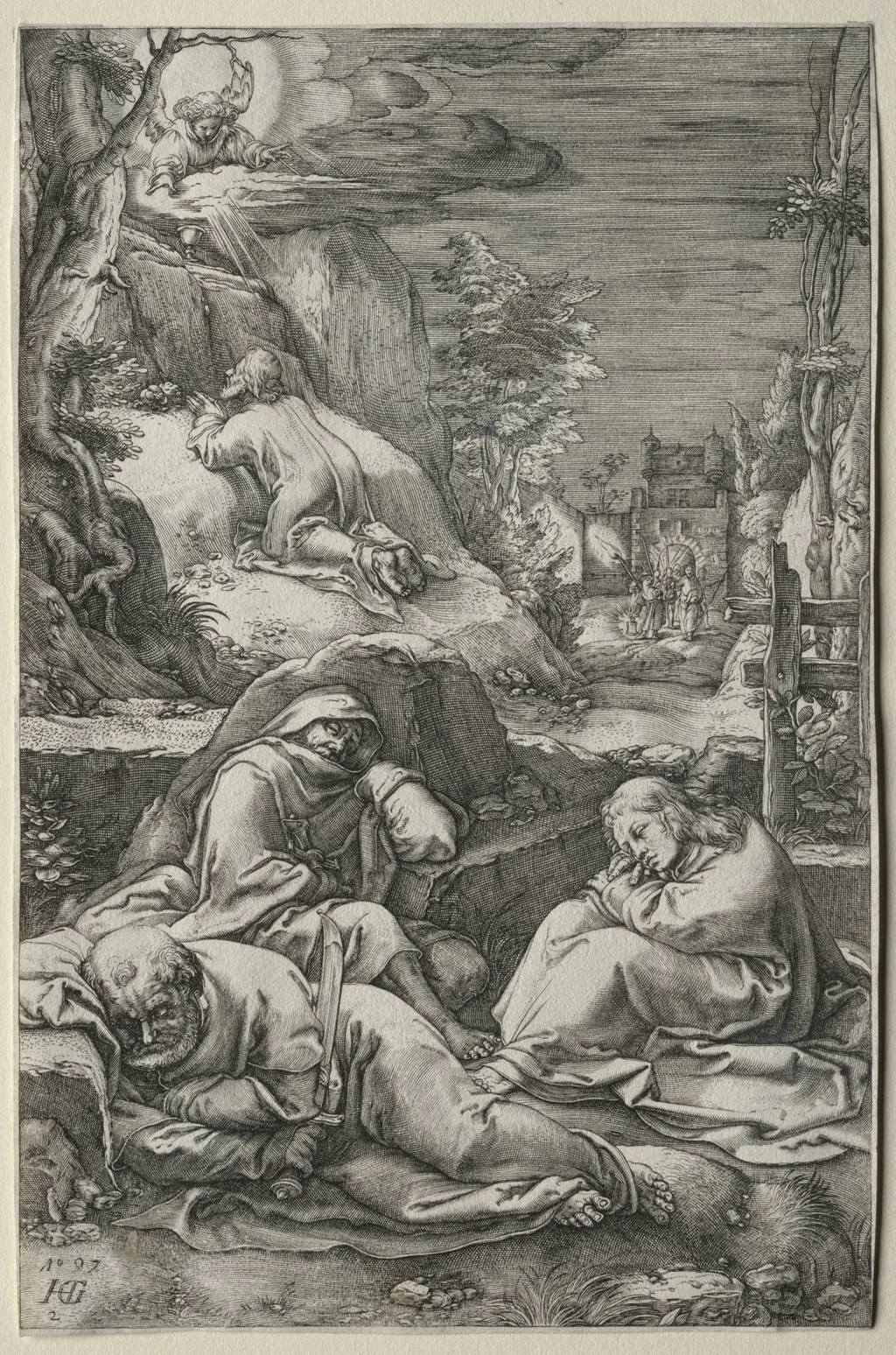
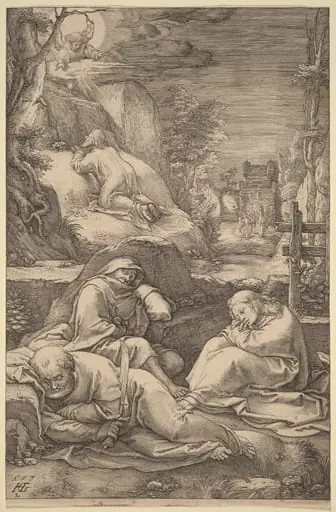
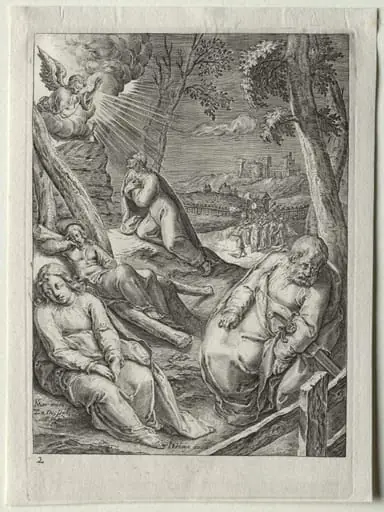
The Passion: The Agony in the Garden is a print by the Renaissance artist Hendrik Goltzius. It dates from 1597 and is held in the collection of the Cleveland Museum of Art. Created in 1597 by Hendrick Goltzius, this etching depicts a moment from the Gospel narrative of Christ’s prayer in Gethsemane.
About this work
Overview
Created in 1597 by Hendrick Goltzius, this etching depicts a moment from the Gospel narrative of Christ’s prayer in Gethsemane. The print is part of a larger series illustrating the Passion of Christ and is currently held in the collection of The Cleveland Museum of Art. Its composition emphasizes emotional tension through stark contrasts and dynamic figure placement.
Subject & Meaning
The scene captures Christ in prayer, surrounded by his sleeping disciples, who have failed to stay awake as he requested. The exhaustion of the figures underscores human frailty against divine resolve. The distant group near a building may represent approaching authorities, heightening the sense of impending betrayal and sacrifice central to the Passion story.
Technique & Style
Goltzius employed etching with bold, incised lines to achieve deep chiaroscuro, using intense shadows and sharp highlights to model the figures. The stormy sky and jagged rocks are rendered with energetic, irregular strokes, enhancing the emotional turbulence. The technique draws attention to the physicality of the bodies and the oppressive atmosphere of the night.
History & Provenance
This print was produced during Goltzius’s mature period, when he was renowned across Europe for his technical mastery in printmaking. It entered The Cleveland Museum of Art’s collection in the 20th century, following earlier ownership by European collectors. Its survival in good condition reflects its value among Renaissance print enthusiasts.
Context
In late 16th-century Northern Europe, religious imagery remained vital despite Reformation pressures. Goltzius’s series responded to a demand for devotional prints that combined theological gravity with artistic innovation. His use of dramatic lighting aligned with broader trends in Mannerist and early Baroque visual culture, emphasizing inner turmoil through external form.
Legacy
Goltzius’s etching influenced later printmakers through its expressive use of line and shadow. While not widely reproduced in popular media, it remains a key example of how religious narratives were translated into intimate, emotionally charged graphic works. Scholars continue to study its technical precision and psychological depth within the context of Dutch printmaking.
Artist & collection
Artist
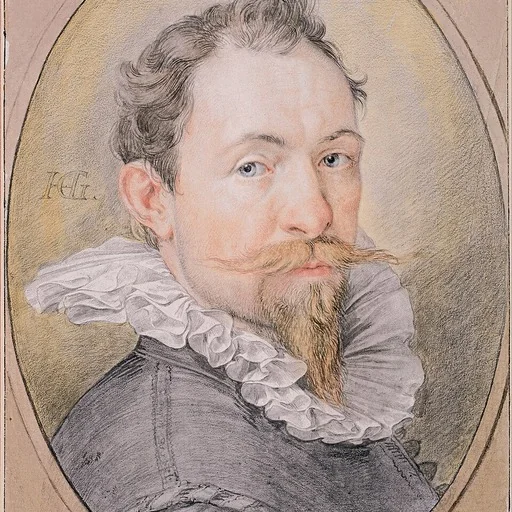
Hendrick Goltzius (German: , Dutch: ; né Goltz; January or February 1558 – 1 January 1617) was a German-born Dutch printmaker, draftsman, and painter.