Artwork
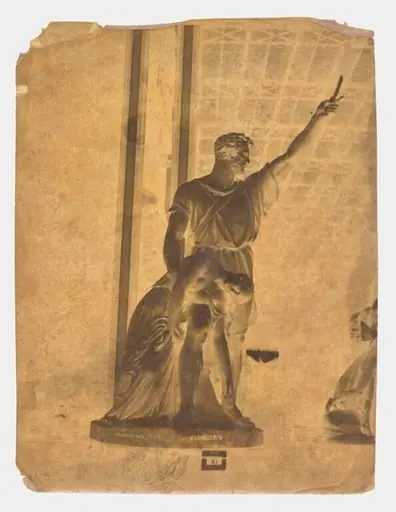
Statue of a 16th Century Man, Great Exhibition 1851
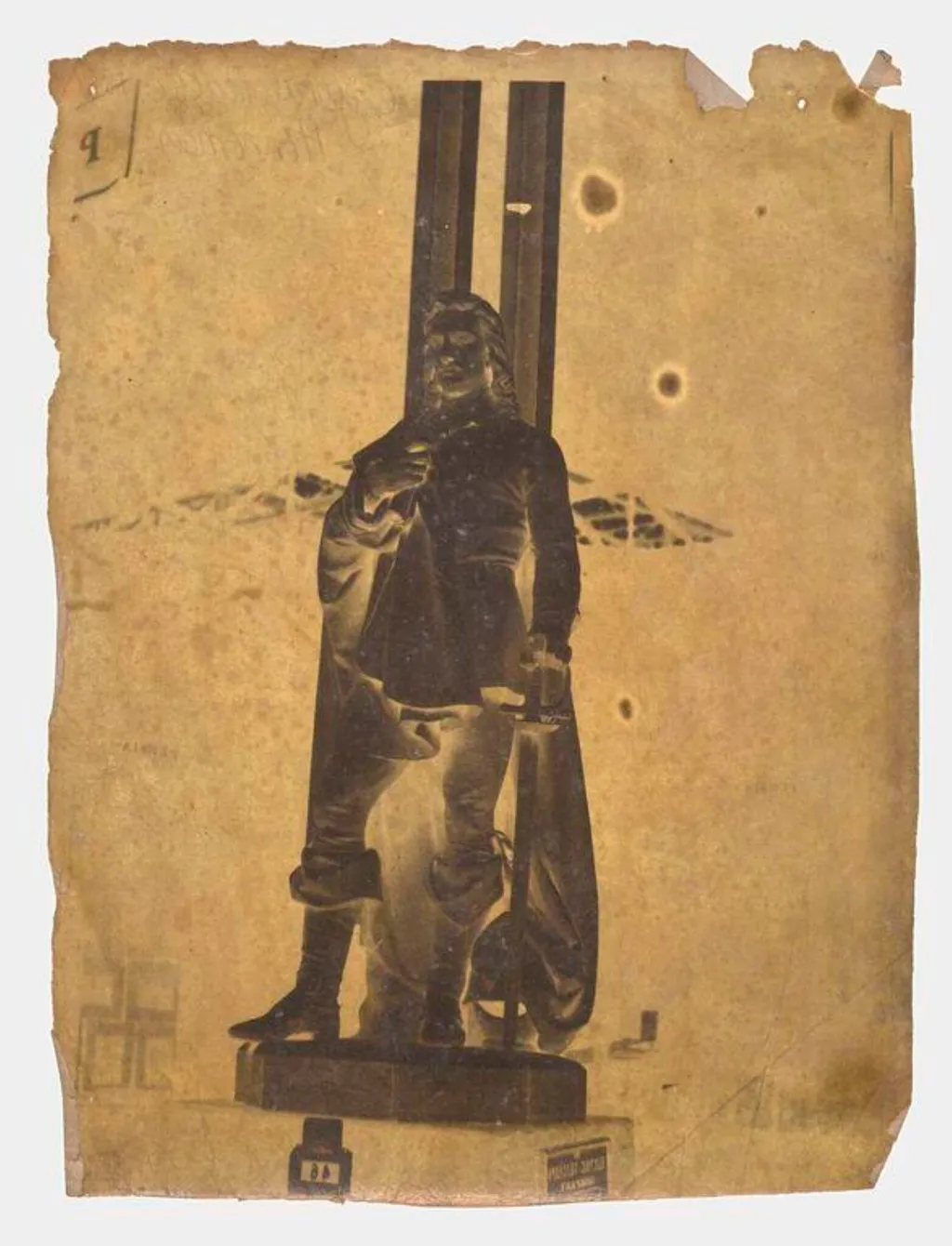
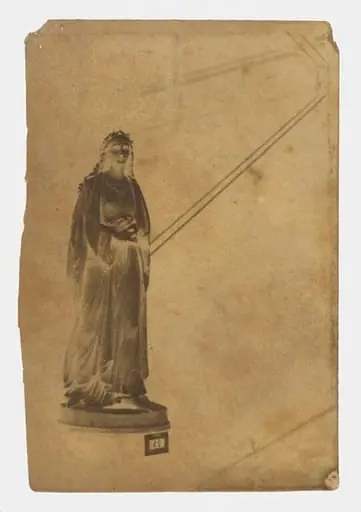
Statue of a 16th Century Man, Great Exhibition 1851 is a photographic photography by the Impressionist artist Nicolaas Henneman. It dates from 1851 and is held in the collection of the Victoria and Albert Museum. The image is an unmounted waxed‑paper negative dating from 1851, documenting a small sculpture exhibited at the Great Exhibition.
About this work
This was taken at the Great Exhibition in 1851, a big fair where new inventions and art were shown.
This is a black-and-white photo of a statue showing a man in old-fashioned clothes. He’s standing on a small pedestal, wearing a long coat, loose shirt, and boots. His right hand holds a small object, and his left arm rests on a tall post behind him. The statue looks worn, with rough edges and faded details.
The photo itself is yellowed and torn around the edges, like an old document. This was taken at the Great Exhibition in 1851, a big fair where new inventions and art were shown.
Check out the Victoria and Albert Museum to see more original objects like this.
Overview
The image is an unmounted waxed‑paper negative dating from 1851, documenting a small sculpture exhibited at the Great Exhibition. The photograph, now yellowed and frayed at the margins, captures a standing male figure rendered in a modest pedestal. The negative’s monochrome tone preserves the weathered surface and the faint inscription of an Electric Telegraph Company plaque attached to the base.
Subject & Meaning
The statue portrays a man in period attire—a long coat, loose shirt, and boots—holding a sword‑like object in his right hand while his left arm leans against a tall post behind him. The pose suggests readiness or ceremonial duty, and the presence of the telegraph company’s plaque hints at a connection between the figure and contemporary communication technology.
Technique & Style
The sculpture appears to be cast in a material that has become pitted and softened with age, giving it a rough, worn appearance. Its details are subdued, with the folds of clothing and the sword rendered in low relief, allowing the overall form to be discerned despite the faded surface.
History & Provenance
Created for display at the 1851 Great Exhibition in London, the work was photographed using a waxed‑paper negative, a common mid‑nineteenth‑century photographic process. The attached Electric Telegraph Company plaque indicates the firm’s sponsorship or endorsement, linking the piece to the era’s industrial and communicative advancements.
Context
The Great Exhibition showcased innovations and artistic productions from around the world, positioning this statue among a broader narrative of technological progress. The telegraph, a symbol of rapid information exchange, was a centerpiece of the fair, and the statue’s inclusion reflects the intertwining of artistic representation with emerging industrial identity.
Artist & collection
Artist
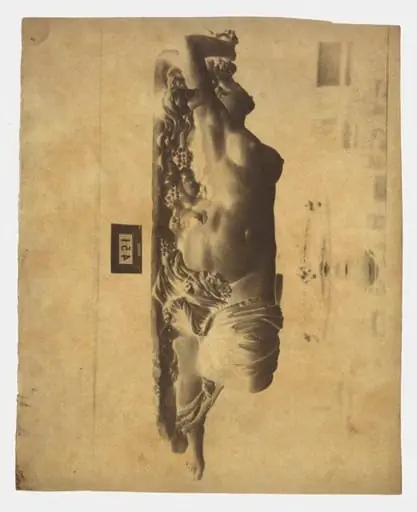
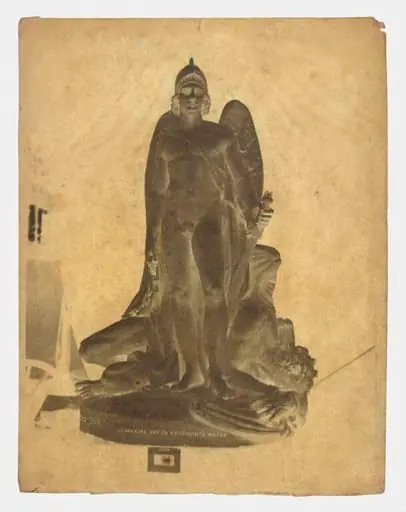
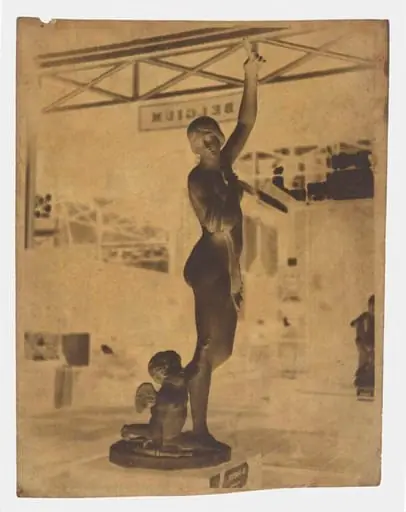
These are early photographs of statues and sculpture displayed at the 1851 Great Exhibition in London.

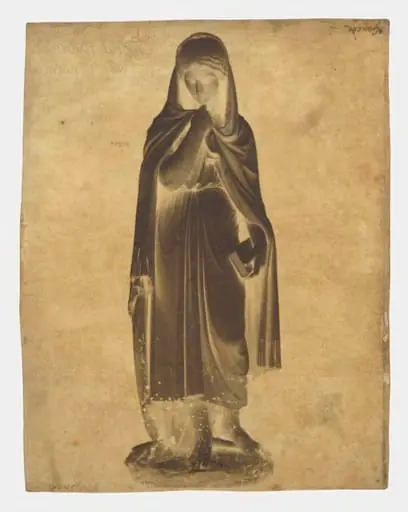 Sculpture of a Woman, Great Exhibition 1851
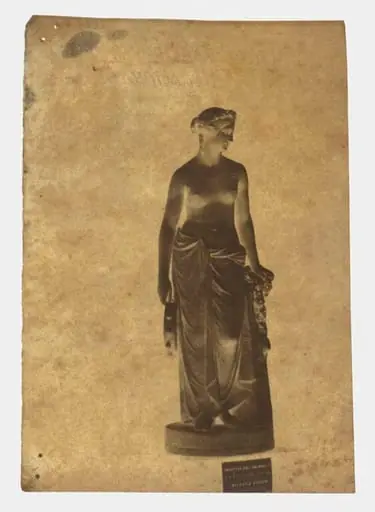 Dancing Girl Reposing, Prize Statue, Great Exhibition 1851
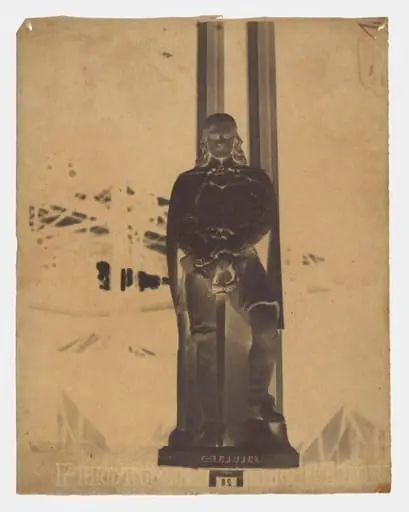 Statue titled Falkland, Great Exhibition 1851
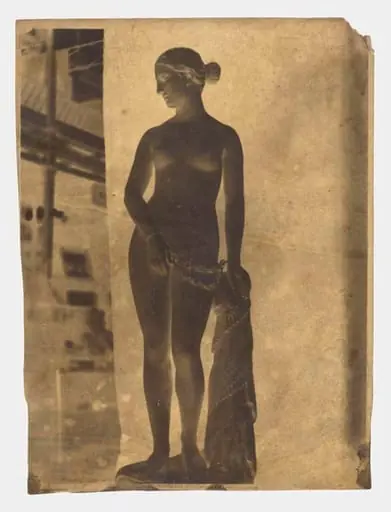 Sculpture of a Female Nude, Great Exhibition 1851
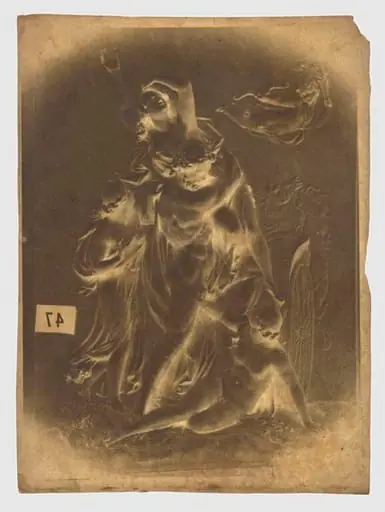 Stone Relief, Great Exhibition 1851
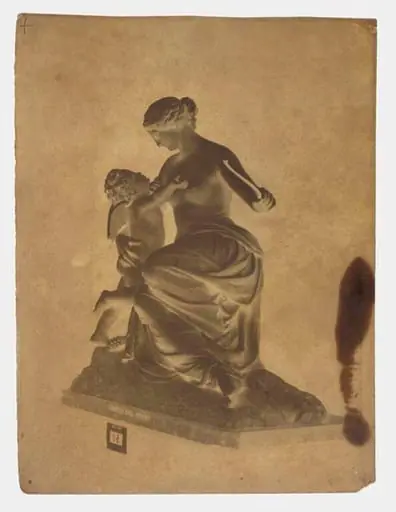 Statue of Venus and Cupid, Great Exhibition 1851
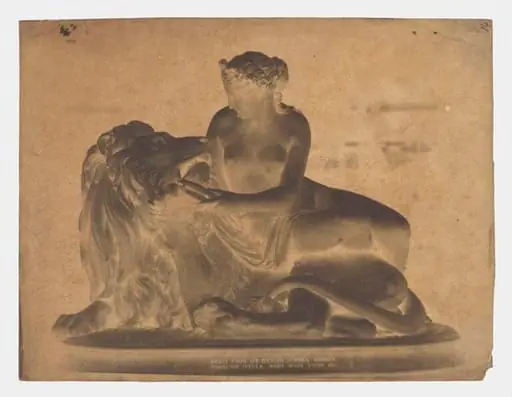 Statue of Female Nude with Lion, Great Exhibition 1851
 Statue titled Virginius, Great Exhibition 1851