Artwork
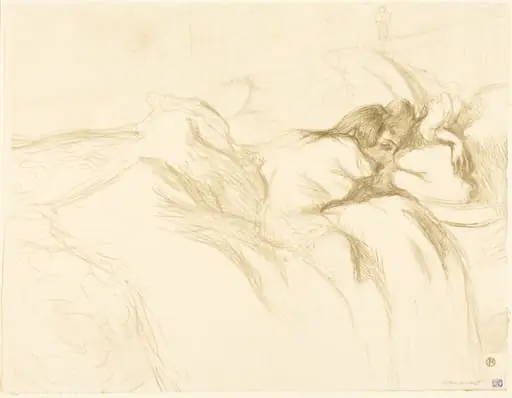
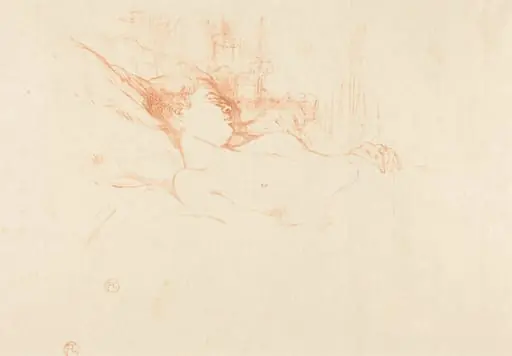
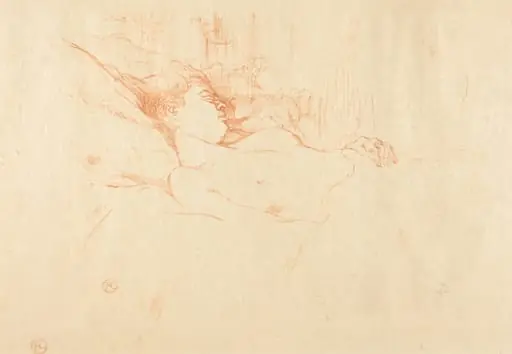
Elles: Woman Lying on Her Back
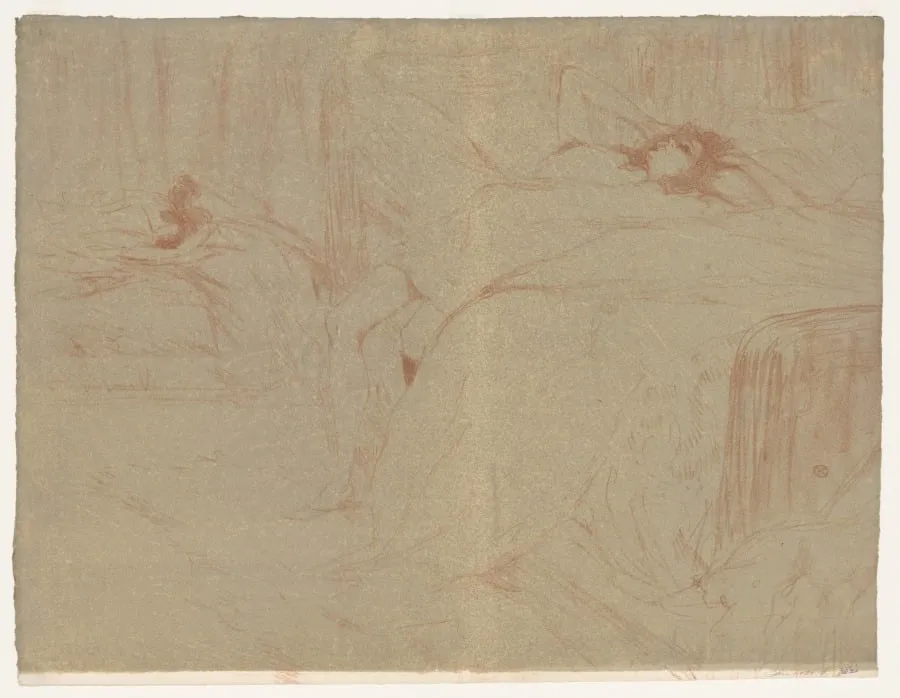
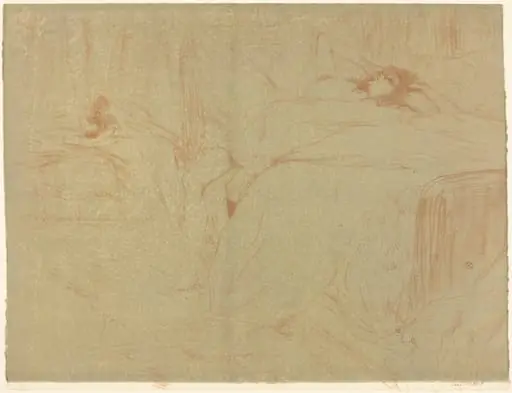
Elles: Woman Lying on Her Back is a print by the Impressionist artist Henri de Toulouse-Lautrec. It dates from 1896 and is held in the collection of the Cleveland Museum of Art. Elles is a series of ten color lithographs, plus a cover and frontispiece, commissioned by publisher Gustave Pellet in the early 1890s.
About this work
If you like this quiet realism, look up the subject *france, 19th century* for more unvarnished scenes of everyday life.
A woman lies on her back, one arm bent behind her head, staring straight at you. She’s not posing—just resting in a plain room.
Lautrec spent years in Paris brothels, not as a client but as a friend. He painted the women as they really were: tired, bored, or lost in thought. The series was meant to sell prints, but buyers wanted fantasy, not honesty.
If you like this quiet realism, look up the subject *france, 19th century* for more unvarnished scenes of everyday life.
Overview
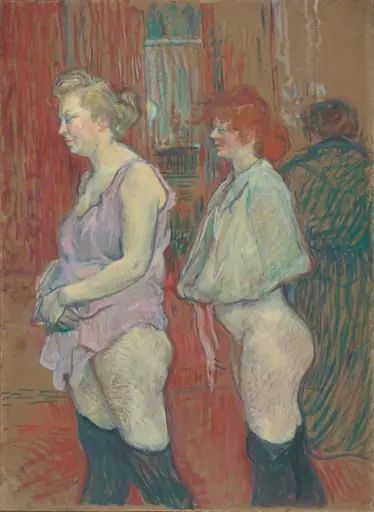
Elles is a series of ten color lithographs, plus a cover and frontispiece, commissioned by publisher Gustave Pellet in the early 1890s. Henri de Toulouse-Lautrec created the works after spending extended periods living in Parisian brothels, observing the women not as subjects of fantasy but as individuals in their daily routines. Though intended as commercial entertainment, the series rejected erotic clichés, instead presenting quiet, unvarnished moments of private life.
Subject & Meaning
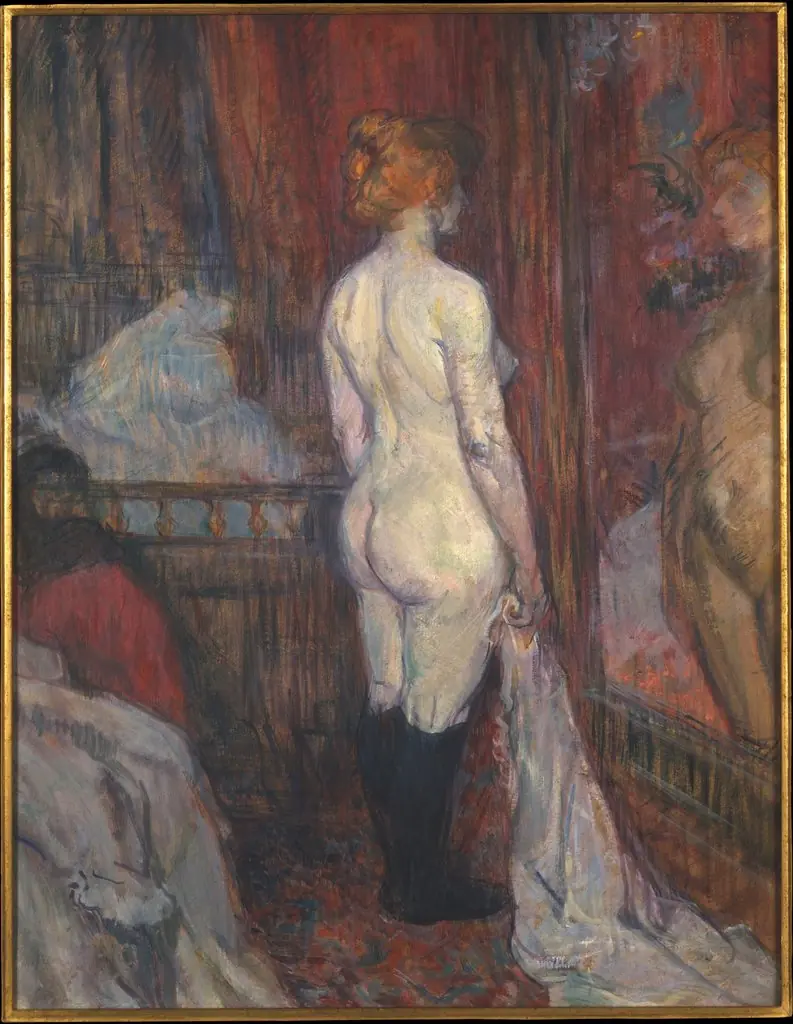
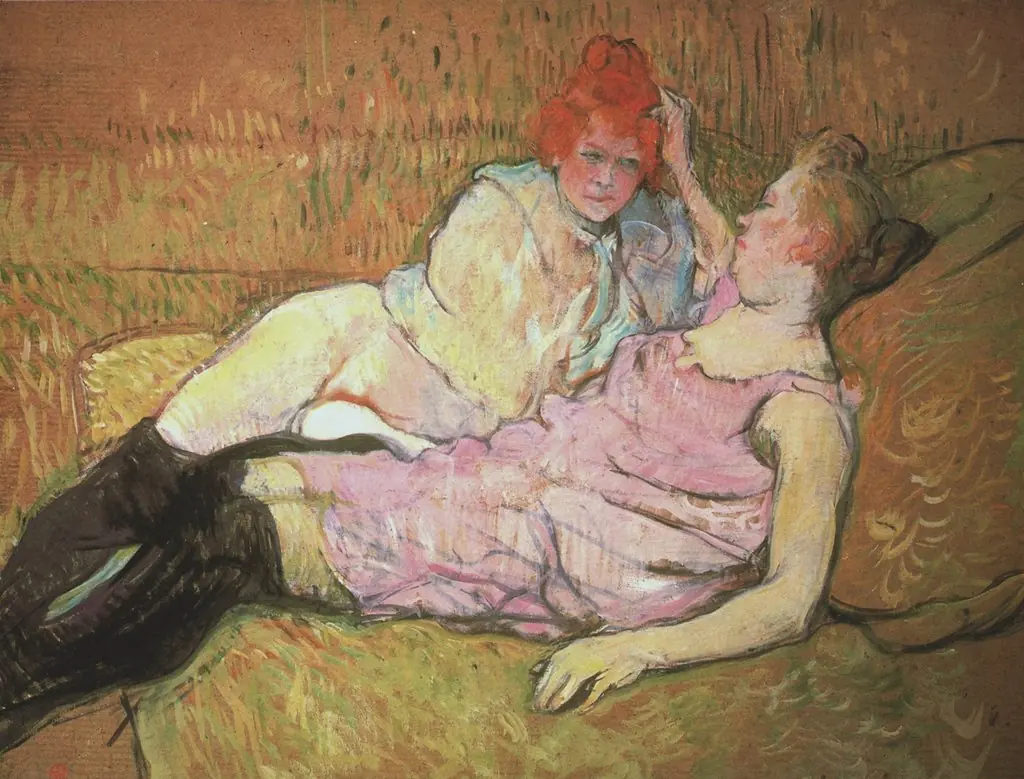
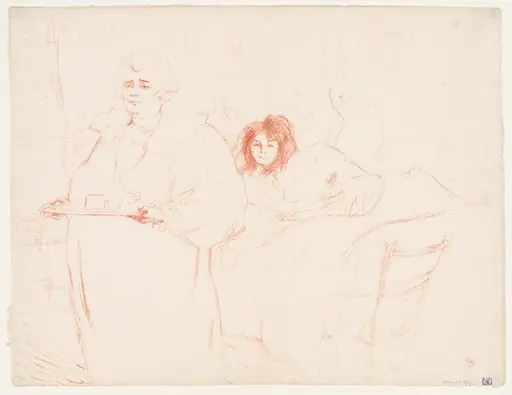
The prints focus on the unglamorous realities of sex workers’ lives: resting, bathing,梳头, or sharing quiet moments with one another. One image shows Juliette Baron, visibly aged by hardship, serving breakfast to her daughter. Lautrec avoided idealization, portraying exhaustion, solitude, and tenderness instead of allure. The absence of male figures and the women’s unawareness of the viewer emphasize their isolation and humanity, offering a quiet critique of societal neglect.
Technique & Style
Lautrec employed color lithography with restrained palettes and fluid, confident lines. His compositions are intimate and uncluttered, often centered on solitary figures in plain interiors. The lack of dramatic lighting or theatrical poses enhances the sense of realism. The prints’ simplicity and attention to posture and gesture reflect his deep familiarity with his subjects, achieved through prolonged, empathetic observation rather than fleeting sketches.
History & Provenance
Commissioned in 1892 and completed by 1895, the series was published in a limited edition but sold poorly, as audiences expected sensational imagery and found the scenes too ordinary. Lautrec’s choice to depict brothel life without moral judgment or eroticism alienated potential buyers. The prints remained obscure until later in the 20th century, when their psychological depth and technical mastery earned recognition among scholars and collectors.
Context
In late 19th-century Paris, prostitution was widespread but rarely portrayed with dignity in art. Popular media reduced sex workers to caricatures or temptresses. Lautrec’s approach diverged sharply, aligning instead with emerging realist traditions that valued authenticity over spectacle. His immersion in the brothel world—living among the women as a peer, not a client—gave his work an unusual intimacy absent from contemporary depictions.
Legacy
Elles reshaped perceptions of how marginalized women could be represented in art. Its influence extended beyond printmaking, contributing to broader shifts in modern art toward psychological realism and empathetic portraiture. Though initially dismissed, the series is now regarded as a pivotal work in the history of printmaking, admired for its quiet humanity and refusal to conform to prevailing visual norms.
Artist & collection
Artist
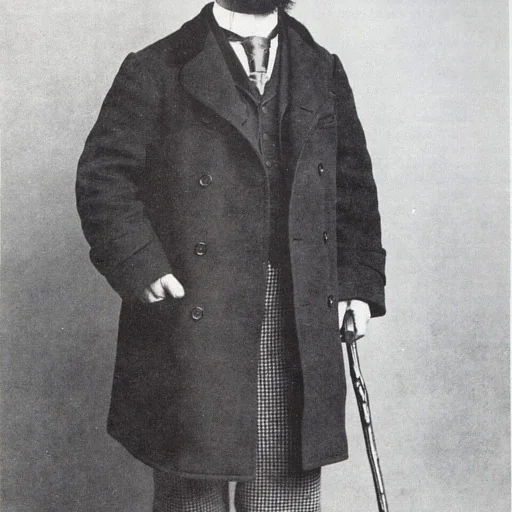
Comte Henri Marie Raymond de Toulouse-Lautrec-Montfa (24 November 1864 – 9 September 1901), known as Toulouse-Lautrec (French: ), was a French painter, printmaker, draughtsman, caricaturist, and illustrator.