Artwork
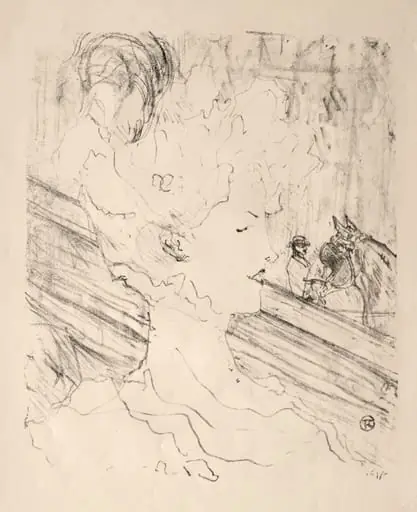
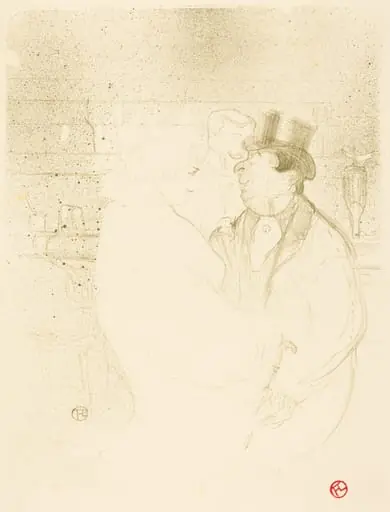
Ida Heath at the Bar
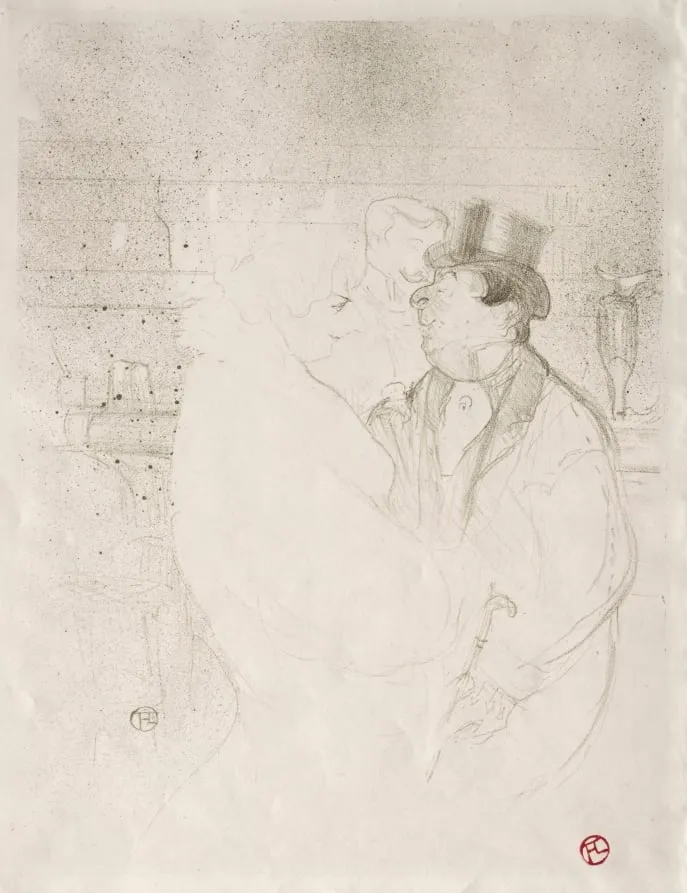
Ida Heath at the Bar is a print by the Impressionist artist Henri de Toulouse-Lautrec. It dates from 1894 and is held in the collection of the Cleveland Museum of Art.
About this work
Next, check out Henri de Toulouse-Lautrec (French, 1864–1901) for more sketches like this.
This sketch shows a woman leaning on a bar, wearing a fancy hat and a long coat. Her face is blurry, but you can see her holding a fan. The background is just a rough wall with a few dots—no extra details.
The artist left a lot of the lines loose, like quick pencil strokes. It feels like they were drawing fast, maybe catching a moment.
Next, check out Henri de Toulouse-Lautrec (French, 1864–1901) for more sketches like this.
Overview
Created in 1894, this ink and wash sketch by Henri de Toulouse-Lautrec captures a fleeting moment in a Parisian bar. It portrays Ida Heath, a performer known in the city’s entertainment circles, leaning at the counter. The work is part of a larger body of drawings documenting the nightlife Toulouse-Lautrec observed firsthand, rendered with immediacy and minimal detail to convey atmosphere over realism.
Subject & Meaning
Ida Heath, a cabaret singer and figure in Montmartre’s social scene, is depicted not as an idealized subject but as a solitary presence in a transient space. Her blurred face and formal attire contrast with the sparse surroundings, suggesting anonymity amid urban spectacle. The fan in her hand hints at performance and poise, yet the lack of context emphasizes isolation within the crowd.
Technique & Style
Toulouse-Lautrec employed rapid, fluid ink strokes and diluted washes to suggest form without definition. The background is reduced to indistinct smudges and dots, eliminating extraneous detail. His loose, gestural lines reflect the speed of observation, prioritizing emotional resonance and movement over polished finish. This approach aligns with his interest in capturing the ephemeral nature of nightlife.
History & Provenance
The drawing originated in Toulouse-Lautrec’s personal sketchbooks, compiled during his regular visits to Montmartre venues between 1890 and 1900. It remained in his possession until his death in 1901, after which it passed through private collections before entering a public museum’s holdings. Its survival as a standalone sheet reflects its status as a study rather than a finished work.
Context
In 1890s Paris, cabarets and bars served as spaces where class boundaries blurred, and performers like Ida Heath occupied a liminal social position. Toulouse-Lautrec, marginalized by his physical condition, found kinship in these communities. His sketches document not just individuals but the rhythms of a city where entertainment and identity intersected under gaslight and smoke.
Legacy
This sketch exemplifies Toulouse-Lautrec’s influence on modern graphic art, demonstrating how quick observation could convey psychological depth. His rejection of academic polish in favor of expressive line and candid subject matter paved the way for 20th-century illustrators and expressionist draftsmen. The work endures as a quiet record of urban life, unembellished and unromanticized.
Artist & collection
Artist
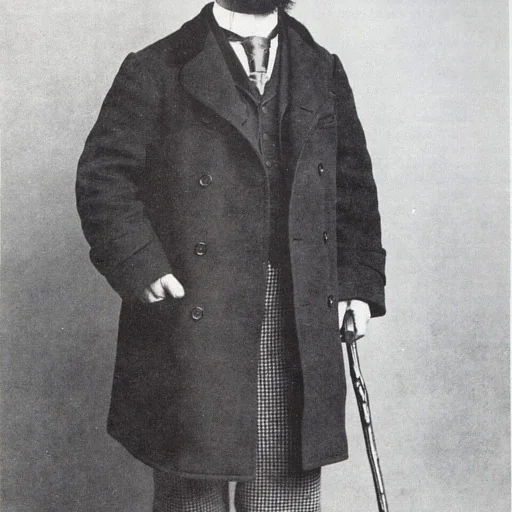
Comte Henri Marie Raymond de Toulouse-Lautrec-Montfa (24 November 1864 – 9 September 1901), known as Toulouse-Lautrec (French: ), was a French painter, printmaker, draughtsman, caricaturist, and illustrator.

 Emilienne d'Alençon
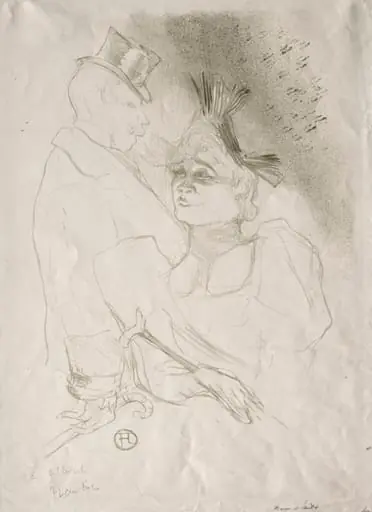 Lender and Baron
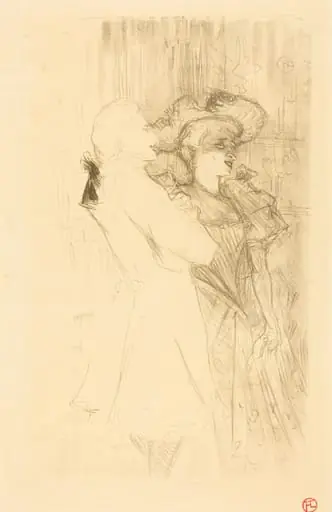 Lender and Auguez in "La chanson de fortunio" (Lender et Auguez dans "La chanson de fortunio")
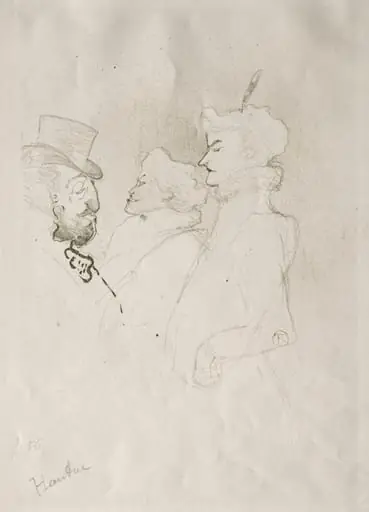 Why Not? Once Does Not Constitute a Habit
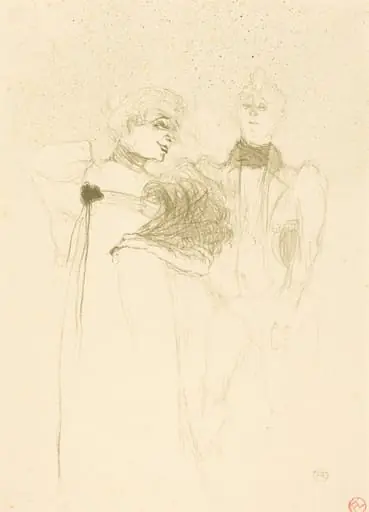 Mlle. Lender in "Madame Satan" (Mlle. Lender dans "Madame Satan")
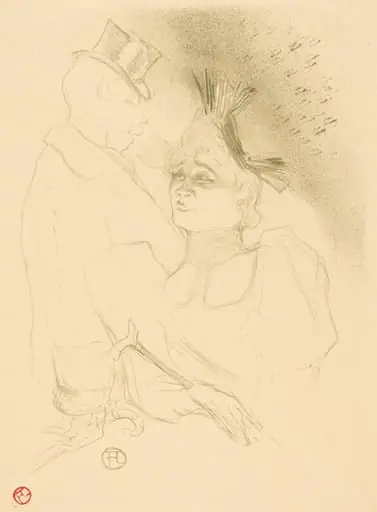 Mlle. Lender and Baron (Mlle. Lender et Baron)
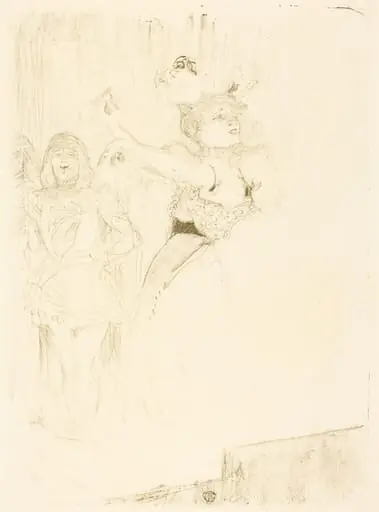 Lender Dancing the Bolero in "Chilperic" (Lender dansant le pas du boléro dans "Chilpéric")
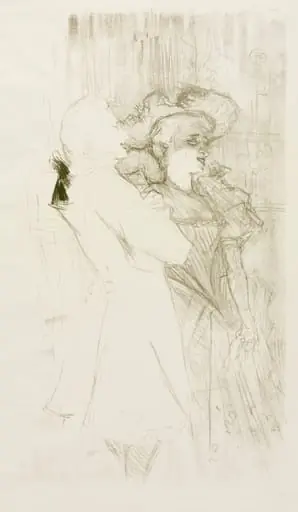 Lender and Auguez in "The Song of Fortune"
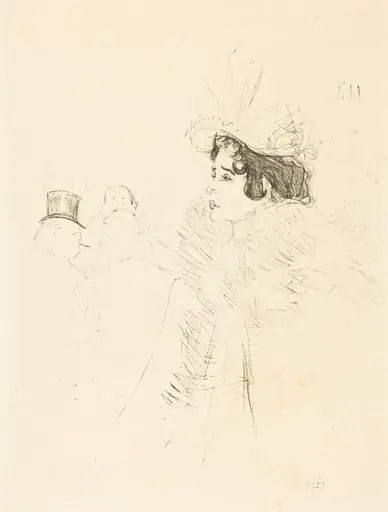 Miss May Belfort in the Irish and American Bar, rue Royale (Miss Belfort Belfort au Irish and American Bar, Rue Royale)
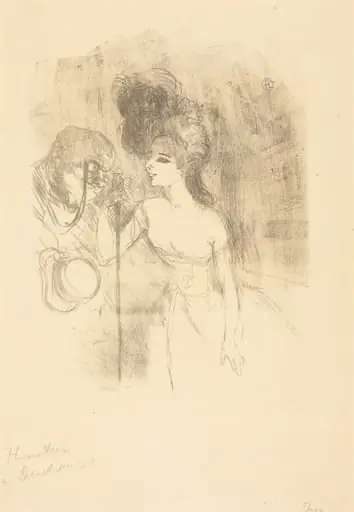 Anna Held and Baldy (Anna Held et Baldy)
 Au pied du Sinaï: Le Baron Moïse
 Ida Heath at the Bar (Ida Heath au bar)