Artwork
Two women dancing
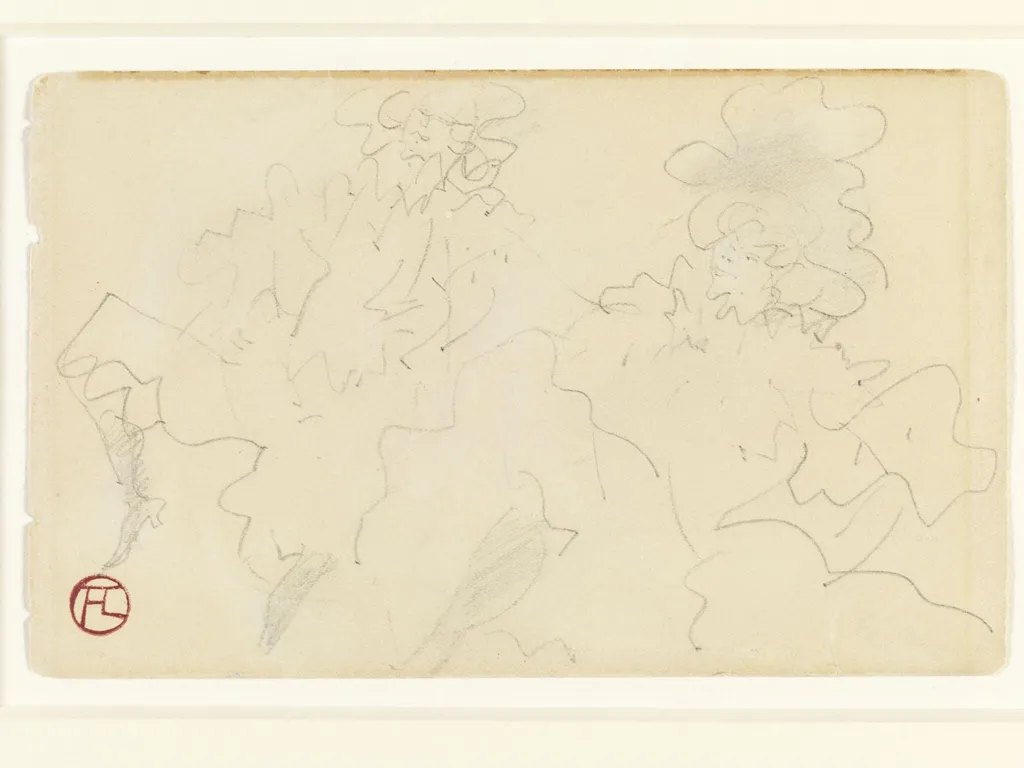
Two women dancing is a drawing by the Impressionist artist Henri de Toulouse-Lautrec. It dates from 1896 and is held in the collection of the Victoria and Albert Museum.
About this work
This is a quick drawing of two women dancing. It was made in 1896 by Henri de Toulouse-Lautrec. He’s the guy who made famous posters of Paris nightlife in the 1890s.
The women are part of a can-can dance group called Troupe de Mademoiselle Eglantine. This drawing helped him plan a poster. Posters were his big thing.
If you like this line of work, look up the technique called cross-hatching.
Overview
Executed in ink, it captures two dancers mid-motion, reflecting Lautrec’s methodical approach to poster design.
This 1896 drawing by Henri de Toulouse-Lautrec serves as a preparatory study for a poster depicting the Troupe de Mademoiselle Eglantine, a can-can dance ensemble. Executed in ink, it captures two dancers mid-motion, reflecting Lautrec’s methodical approach to poster design. Though modest in scale, the work is part of a broader series of sketches that refined his commercial compositions, bridging spontaneous observation and final graphic output.
Subject & Meaning
The two figures represent dancers from a popular Parisian cabaret troupe known for high-energy can-can performances. Lautrec focused on the physicality and rhythm of their movement, emphasizing posture and gesture over individual identity. The drawing conveys the vitality of nightlife entertainment in 1890s Paris, where such performances drew diverse audiences and became emblematic of the era’s cultural dynamism.
Technique & Style
Lautrec employed swift, confident ink lines to suggest motion and volume, using minimal shading and selective cross-hatching to define form and depth. His draftsmanship prioritizes economy and expression, capturing the dancers’ momentum without elaborate detail. This approach reflects his training in academic drawing, adapted to the demands of commercial lithography and the immediacy of urban spectacle.
History & Provenance
Created in 1896, the drawing belongs to a suite of studies Lautrec made for the poster commissioned by Mademoiselle Eglantine’s troupe. It remained in the artist’s possession until his death, later entering institutional collections through estate distribution. Its survival offers insight into his working process, contrasting with the mass-produced posters that brought him public recognition.
Context
In 1890s Paris, café-concerts and cabarets flourished as centers of popular entertainment, and Lautrec became a chronicler of their performers. His drawings like this one were integral to the rise of the modern poster as an art form, merging fine art techniques with advertising. The can-can, once scandalous, had become a normalized spectacle, and Lautrec’s work helped elevate its imagery into mainstream visual culture.
Legacy
Though overshadowed by the final poster, this study reveals Lautrec’s disciplined process and his commitment to capturing movement with precision. It influenced later illustrators and graphic designers who sought to blend spontaneity with commercial clarity. The drawing endures as a testament to the quiet labor behind celebrated public images, preserving the artist’s hand in an age of mechanical reproduction.
Artist & collection
Artist
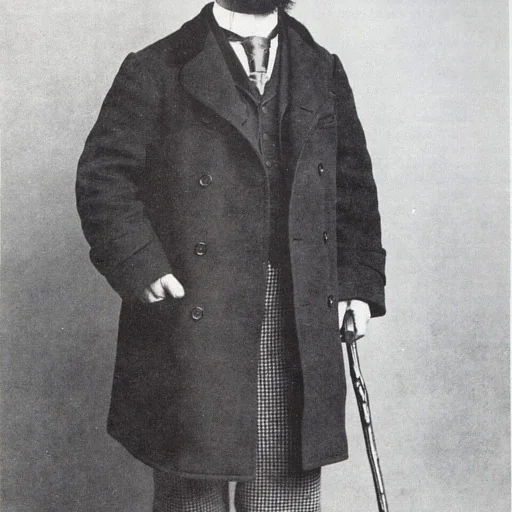
Comte Henri Marie Raymond de Toulouse-Lautrec-Montfa (24 November 1864 – 9 September 1901), known as Toulouse-Lautrec (French: ), was a French painter, printmaker, draughtsman, caricaturist, and illustrator.

![Study for "Shoeing Calvary Horses at the Front" [verso], by John Singer Sargent](https://artifactworldgallery.com/img/john-singer-sargent--study-for-shoeing-calvary-horses-at-the-front-verso--6f6d1a163e84e9ab-w320.webp) Study for "Shoeing Calvary Horses at the Front" [verso]
Study for "Shoeing Calvary Horses at the Front" [verso] Untitled
![Man on a Horse [verso], by Jean Honoré Fragonard](https://artifactworldgallery.com/img/jean-honore-fragonard--man-on-a-horse-verso--7bf78fe7013dcb54-w320.webp) Man on a Horse [verso]
Man on a Horse [verso] Figure Study
![Sheet of Studies [recto and verso], by John Flaxman](https://artifactworldgallery.com/img/john-flaxman--sheet-of-studies-recto-and-verso--af59e52d5279d768-w320.webp) Sheet of Studies [recto and verso]
Sheet of Studies [recto and verso]![Figure Studies [verso], by Thomas Sully](https://artifactworldgallery.com/img/thomas-sully--figure-studies-verso--951eb42592bb5e4f-w320.webp) Figure Studies [verso]
Figure Studies [verso]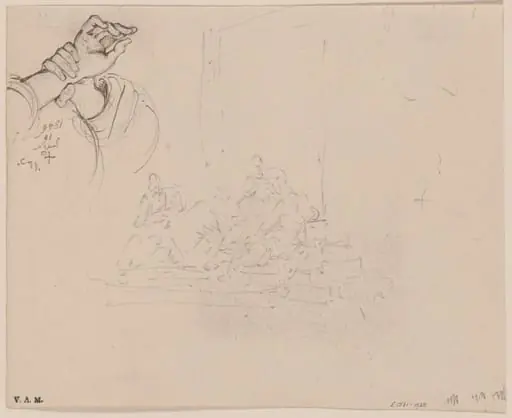 Clasped hands, and a sketch of Chinese figures
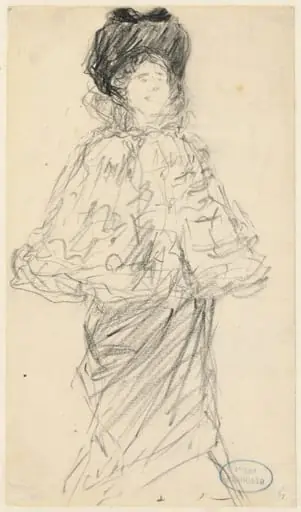 Standing Woman
![Sheet of Studies [recto and verso], by John Flaxman](https://artifactworldgallery.com/img/john-flaxman--sheet-of-studies-recto-and-verso--47b91b8b6f057ed6-w320.webp) Sheet of Studies [recto and verso]
Sheet of Studies [recto and verso]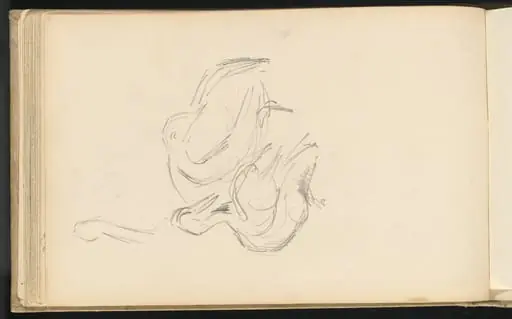 Pelicans
![Sheet of Studies [recto and verso], by John Flaxman](https://artifactworldgallery.com/img/john-flaxman--sheet-of-studies-recto-and-verso--acf1b2004c9fc50f-w320.webp) Sheet of Studies [recto and verso]
Sheet of Studies [recto and verso]![Figure on Horseback and Other Studies [verso], by Winslow Homer](https://artifactworldgallery.com/img/winslow-homer--figure-on-horseback-and-other-studies-verso--3909dbf700a8f786-w320.webp) Figure on Horseback and Other Studies [verso]
Figure on Horseback and Other Studies [verso]