Artwork
La Manifestation (The Demonstration)
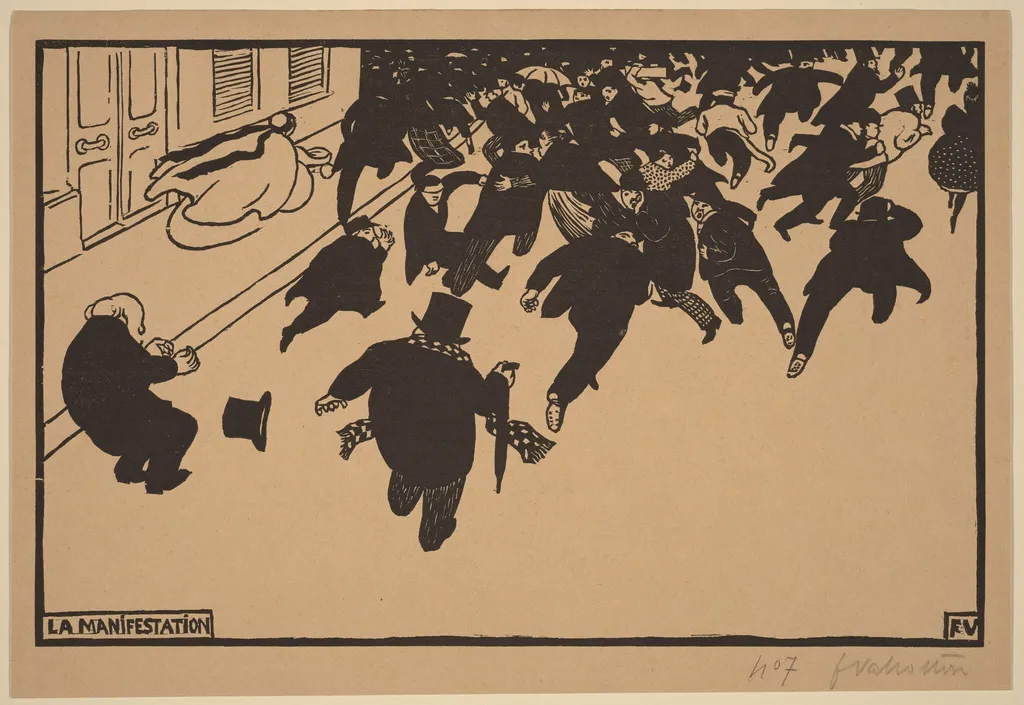
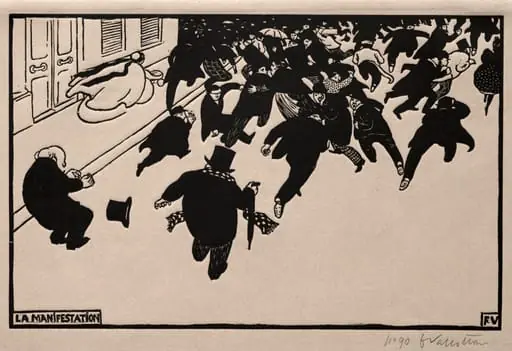
La Manifestation (The Demonstration) is an ink print by the Impressionist artist Félix Vallotton. It dates from 1893 and is held in the collection of the National Gallery of Art.
About this work
Overview
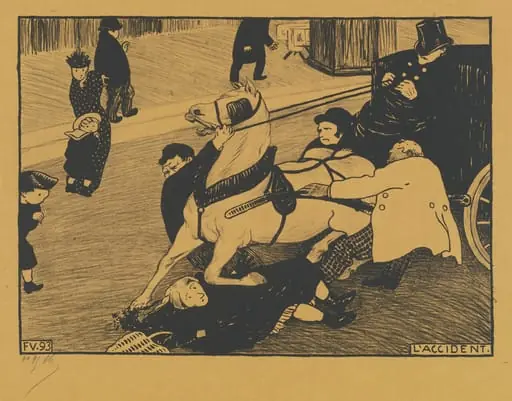
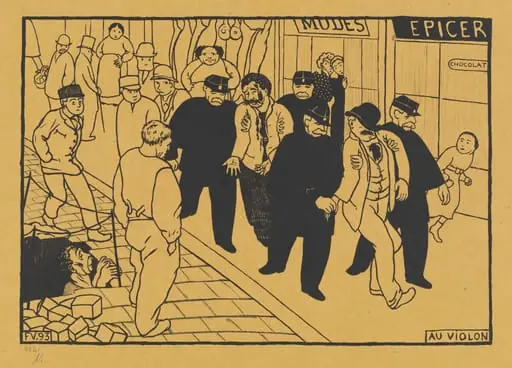
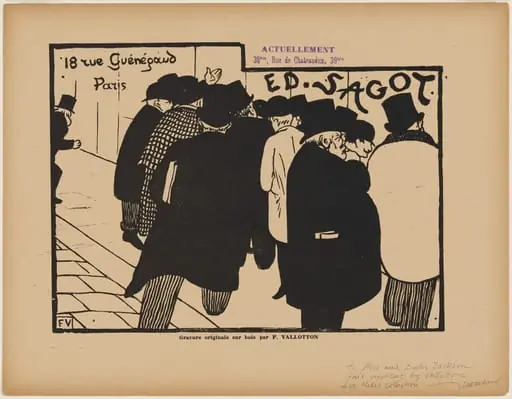
As a member of the Les Nabis group, Vallotton was known for his departure from naturalism, favoring stark contrasts and flattened forms.
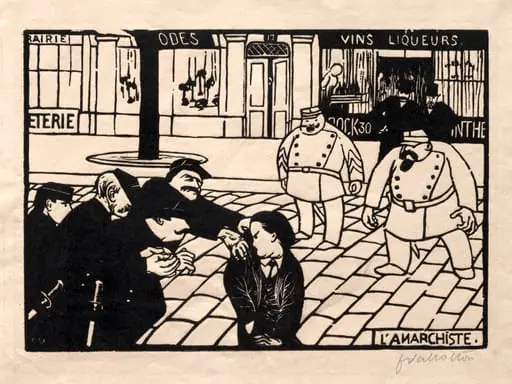
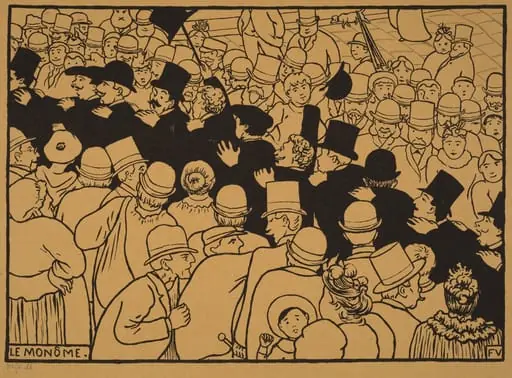
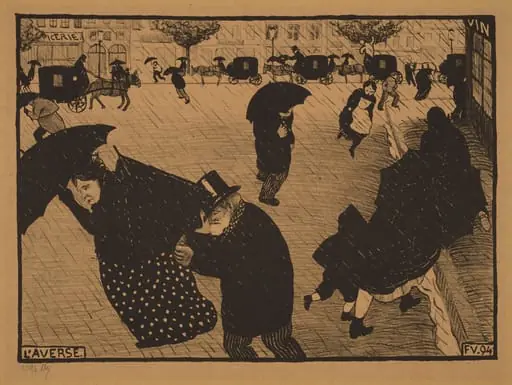
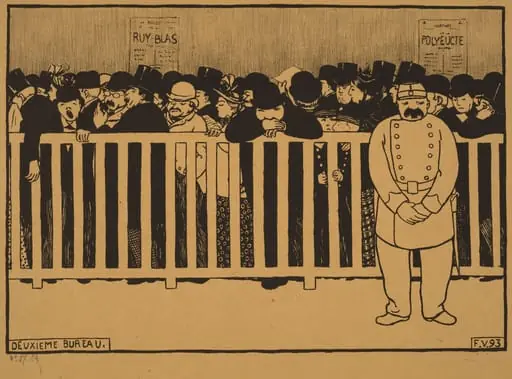
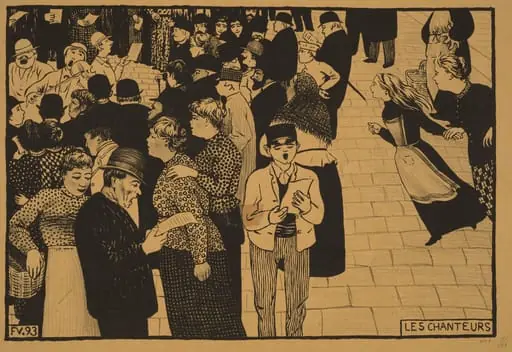
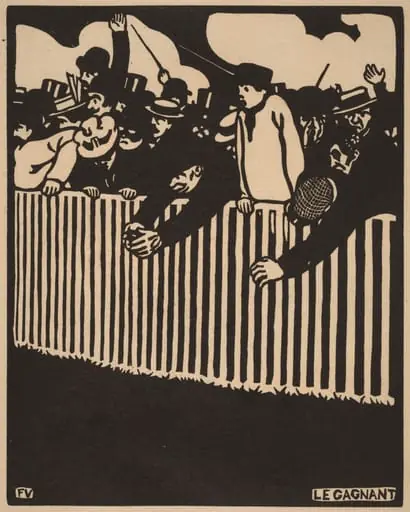
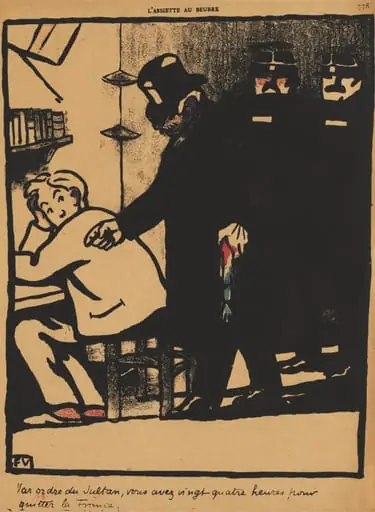
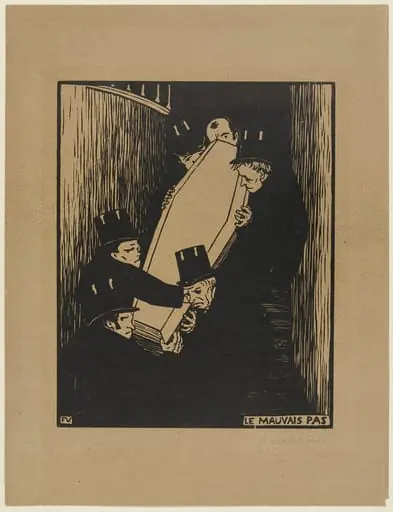
La Manifestation, created in 1893 by Swiss-French artist Félix Vallotton, is a woodcut print that captures a moment of urban unrest. As a member of the Les Nabis group, Vallotton was known for his departure from naturalism, favoring stark contrasts and flattened forms. This work exemplifies his interest in modern life and his innovative approach to printmaking, using the woodcut medium to convey tension and movement with minimal detail.
Subject & Meaning
The scene portrays a crowded street during a public disturbance, with figures in motion—some running, one falling from a window, another bent over with a cane. The lack of clear narrative cues leaves the event’s cause ambiguous, though the title suggests a protest or political gathering. Vallotton avoids moralizing, presenting the chaos as a detached observation, reflecting the impersonal nature of urban crowds in late 19th-century Europe.
Technique & Style
Vallotton employed the woodcut technique with precision, carving bold black lines and sharp tonal contrasts to define forms. He eliminated gradation, using flat planes of ink and negative space to suggest depth and motion. The composition is tightly packed, with overlapping figures and architectural elements creating a sense of claustrophobia. This stylized approach, influenced by Japanese prints, prioritizes graphic impact over realism.
History & Provenance
Created during Vallotton’s most prolific period in printmaking, La Manifestation was produced in Paris, where he had settled after studying in Switzerland. It was likely published in an art journal or as part of a portfolio, common for Nabis artists seeking to reach a broader audience. The work entered public collections in the early 20th century, reflecting growing interest in modern graphic art beyond traditional painting.
Context
In the 1890s, Paris experienced frequent public demonstrations, fueled by political unrest and labor movements. Vallotton, though not overtly political, absorbed the atmosphere of urban tension. His work aligns with contemporaries like Toulouse-Lautrec and Steinlen, who depicted modern life with psychological distance. The woodcut’s immediacy mirrored the rise of illustrated newspapers, making such images accessible to the middle class.
Legacy
La Manifestation contributed to the revival of woodcut as a serious artistic medium in Europe. Vallotton’s emphasis on structure and emotional restraint influenced later Expressionist printmakers and 20th-century graphic designers. The work remains a key example of how printmaking could capture the rhythm and unease of modern urban existence without relying on narrative detail or sentiment.
Own this work as a print
Artist & collection
Artist
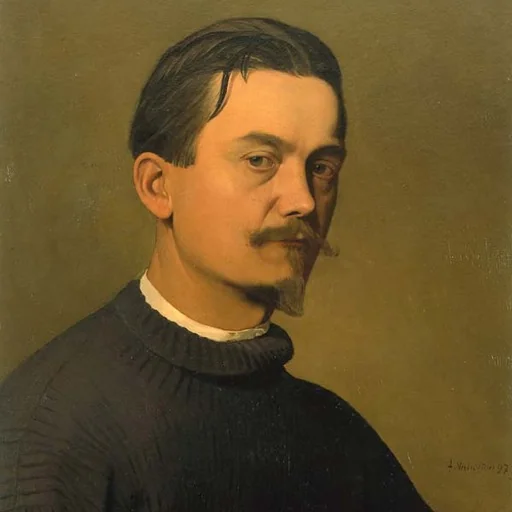
Félix Édouard Vallotton (French: ; December 28, 1865 – December 29, 1925) was a Swiss and French painter and printmaker associated with the group of artists known as Les Nabis.