Artwork
The Poulterer
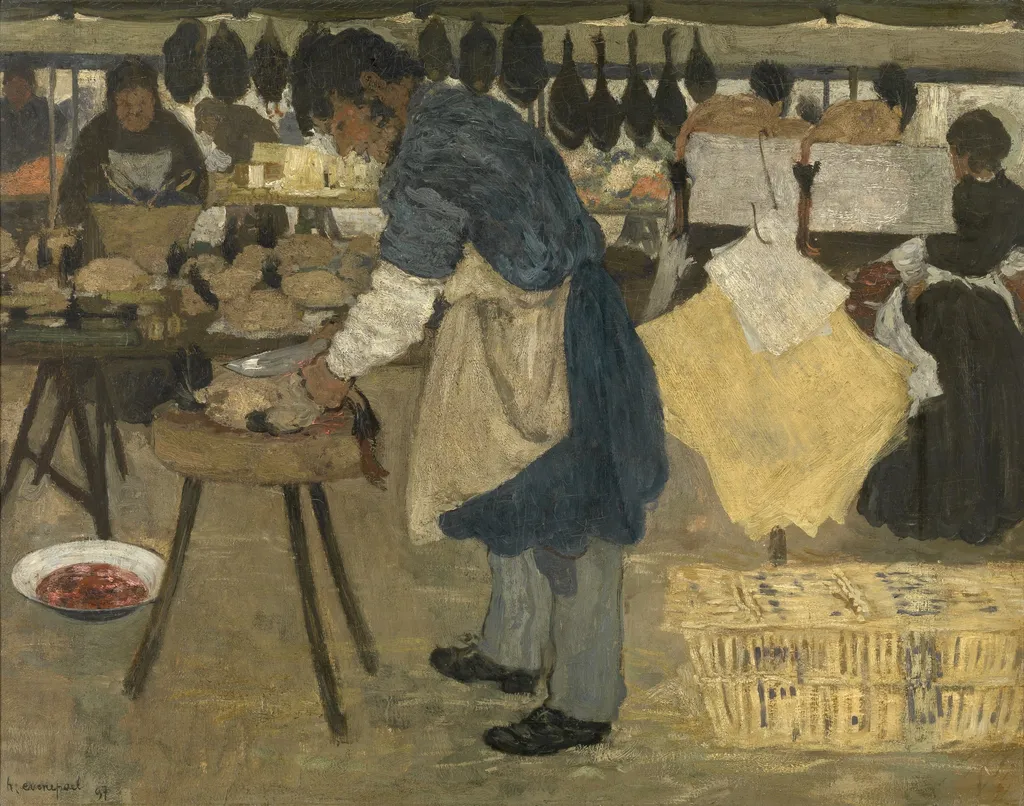
The Poulterer is an oil painting by the Post-Impressionist artist Henri Evenepoel. It dates from 1899 and is held in the collection of the Royal Museum of Fine Arts Antwerp.
About this work
Overview
Henri Evenepoel’s 1899 oil painting *The Poulterer* presents a domestic market scene rendered in a subdued palette. The work is part of the Royal Museum of Fine Arts Antwerp’s collection and exemplifies the artist’s late‑period focus on everyday labor.
Subject & Meaning
The composition centers on a meat‑cutting vendor, identifiable by his blue jacket and white apron, who is slicing meat beside a bowl of red liquid. Surrounding stalls and figures suggest a bustling market, emphasizing the routine of trade and the tactile reality of food preparation.
Technique & Style
Executed in oil, the painting employs earthy tones and modest brushwork characteristic of Post‑Impressionist concerns with color and form. Evenepoel’s handling of light on the butcher’s tools and the textured surfaces conveys a straightforward, almost documentary quality.
History & Provenance
Created the same year the artist died at twenty‑seven, *The Poulterer* entered the Royal Museum of Fine Arts Antwerp, where it remains on display. Its acquisition reflects the museum’s commitment to preserving works by Belgian painters of the turn of the century.
Context
Although Evenepoel is often linked to early Fauvist experiments, this piece aligns more closely with his interest in genre scenes and the representation of ordinary labor. The painting captures a moment of urban commerce typical of late‑19th‑century Belgian cities.
Own this work as a print
Artist & collection
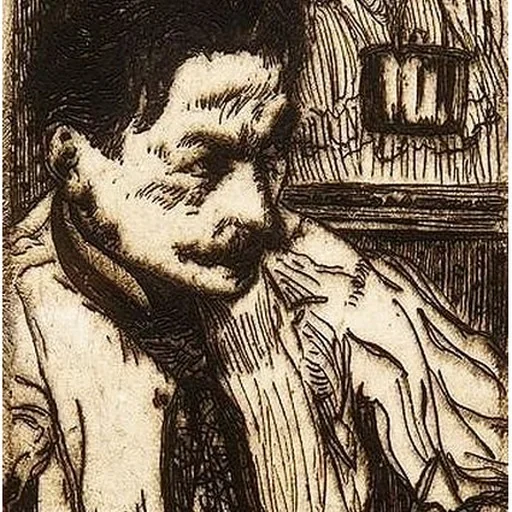
Artist
Henri-Jacques-Edouard Evenepoel (3 October 1872 – 27 December 1899) was a French-born Belgian artist whose most important works are associated with Fauvism.

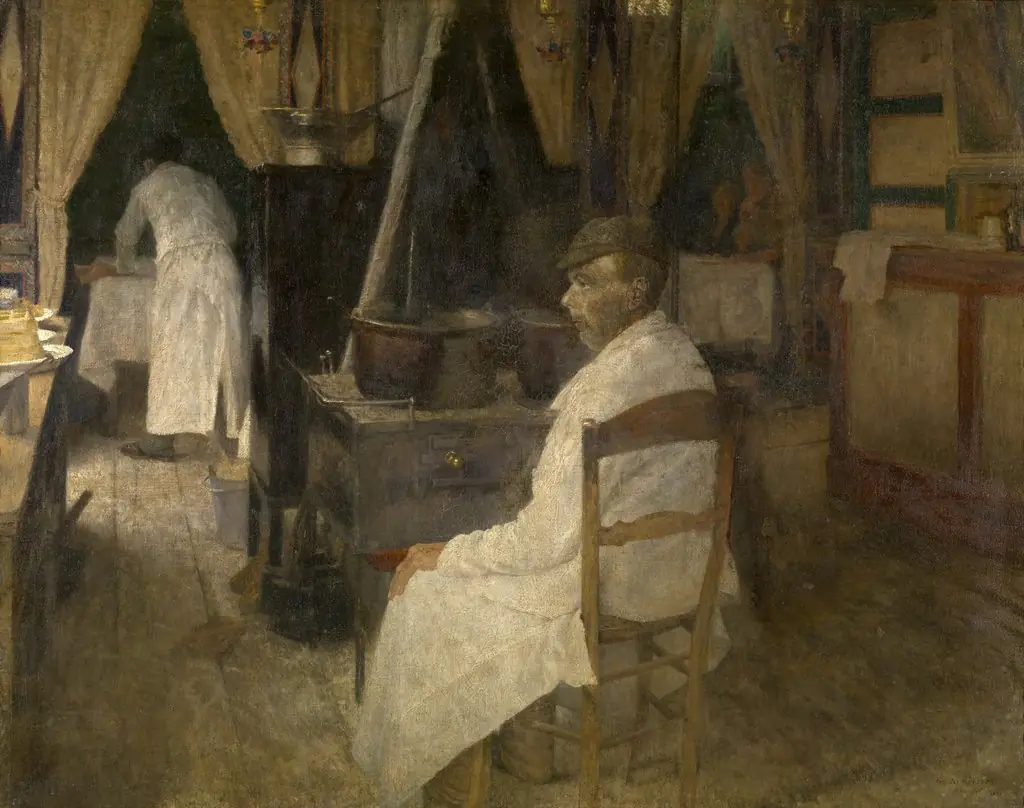 At the Waffle House
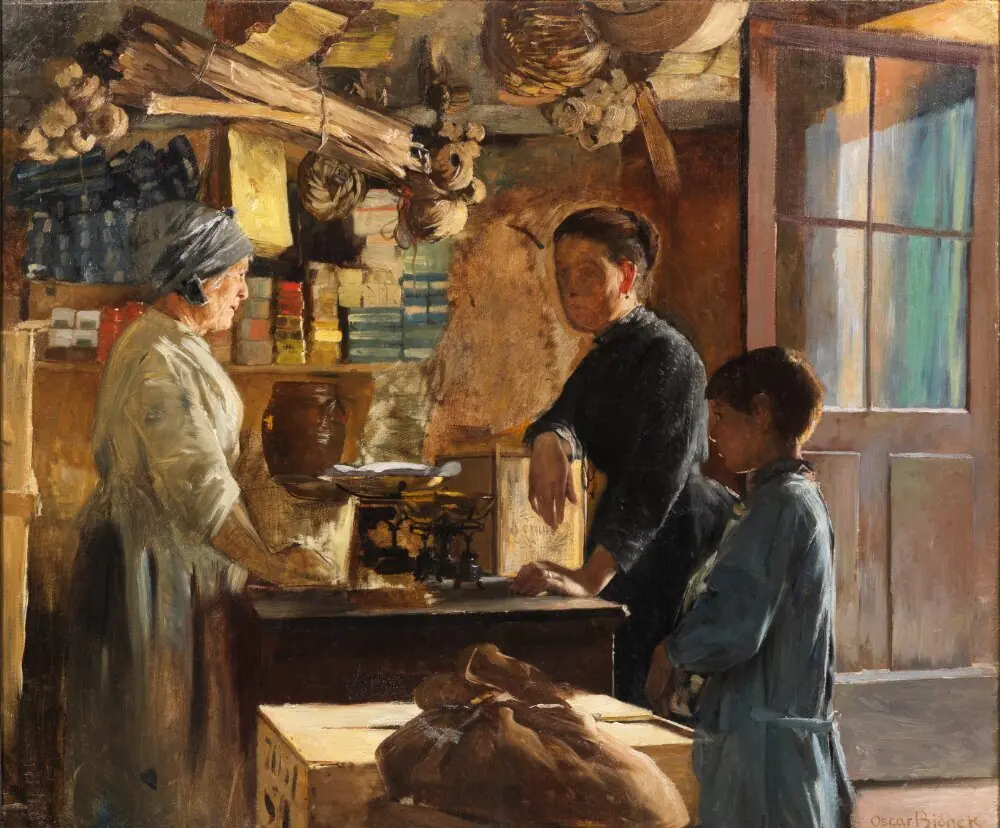 The Store in Grez-sur-Loing
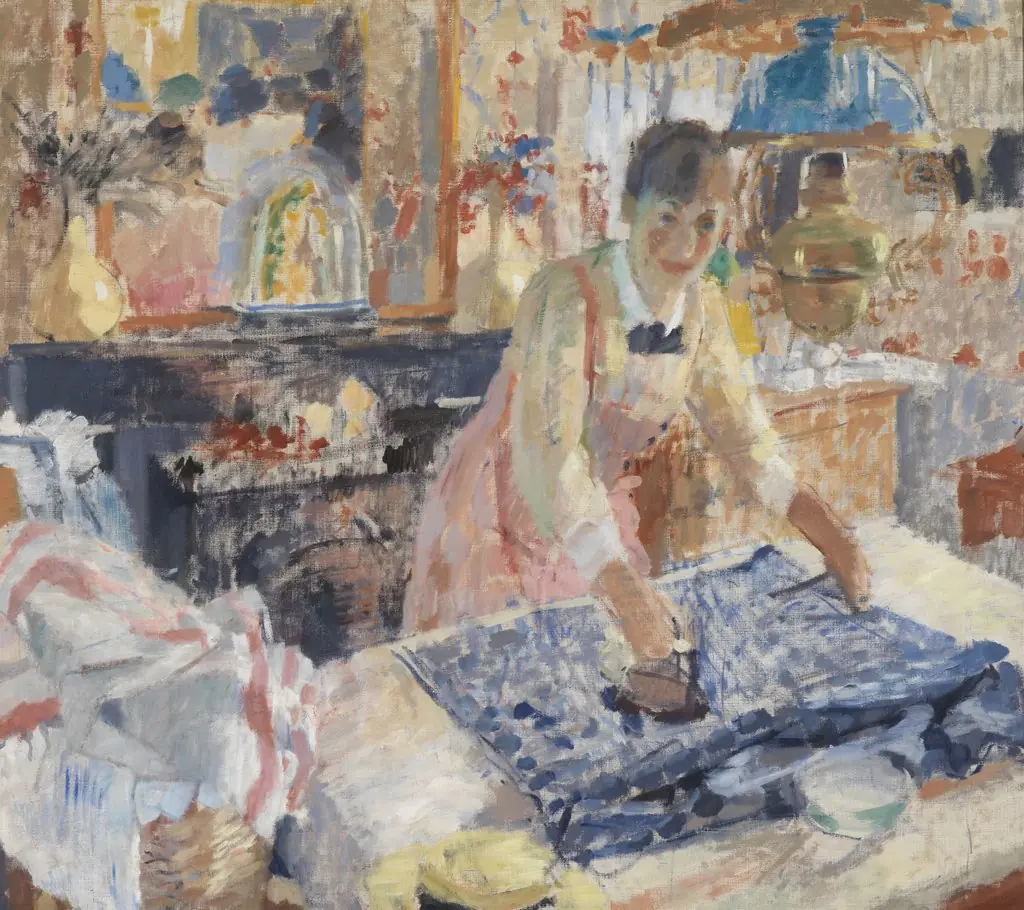 The Ironer
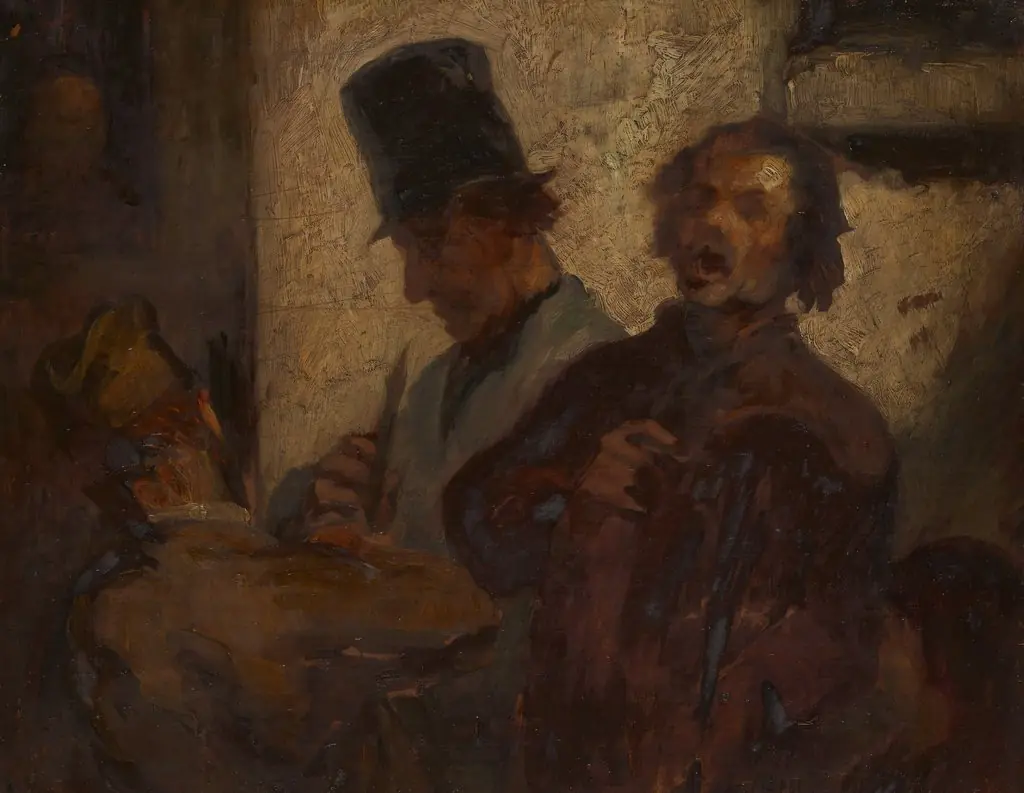 Street Musicians
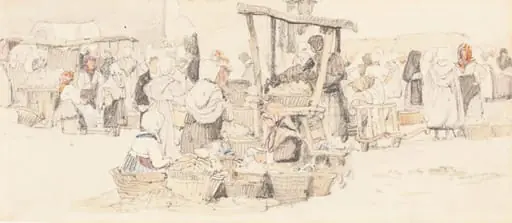 An Outdoor Market
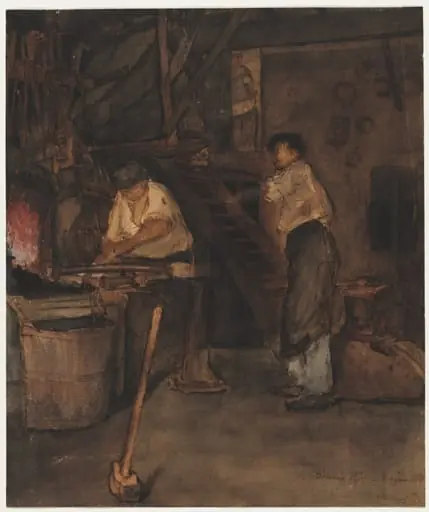 Study for The Blacksmith's Shop: Remembrance of Le Tréfort
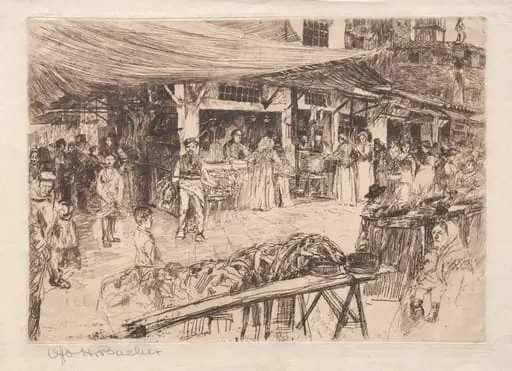 Old Market, Florence
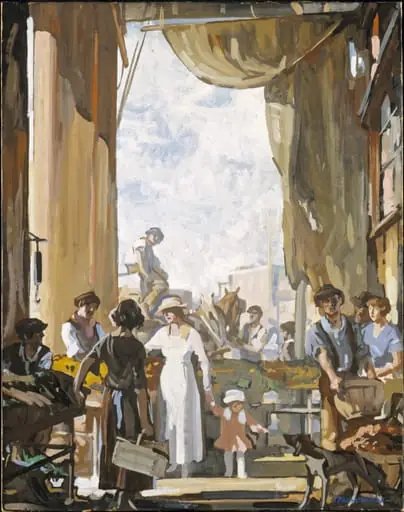 The Old Market, Cleveland
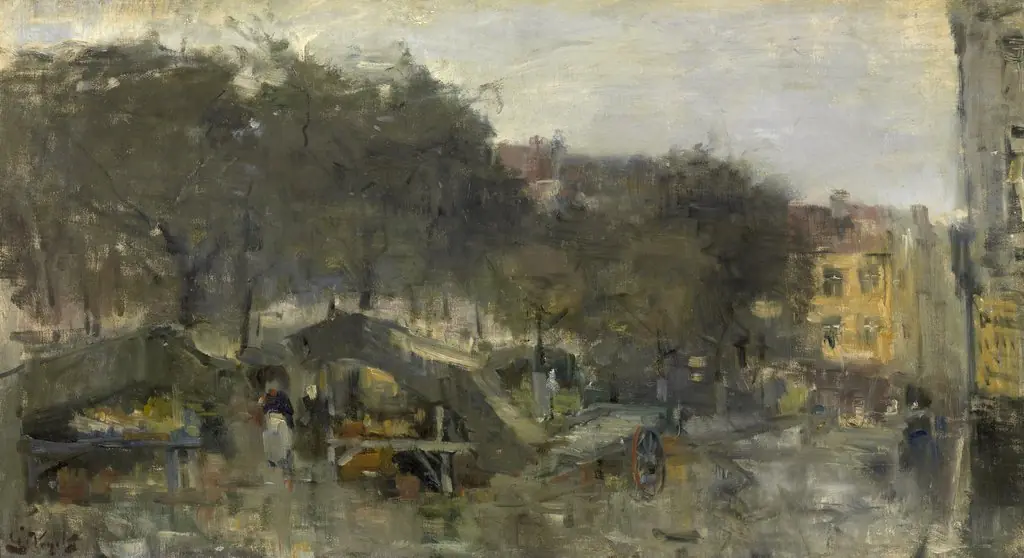 Wapenplein in Ostend
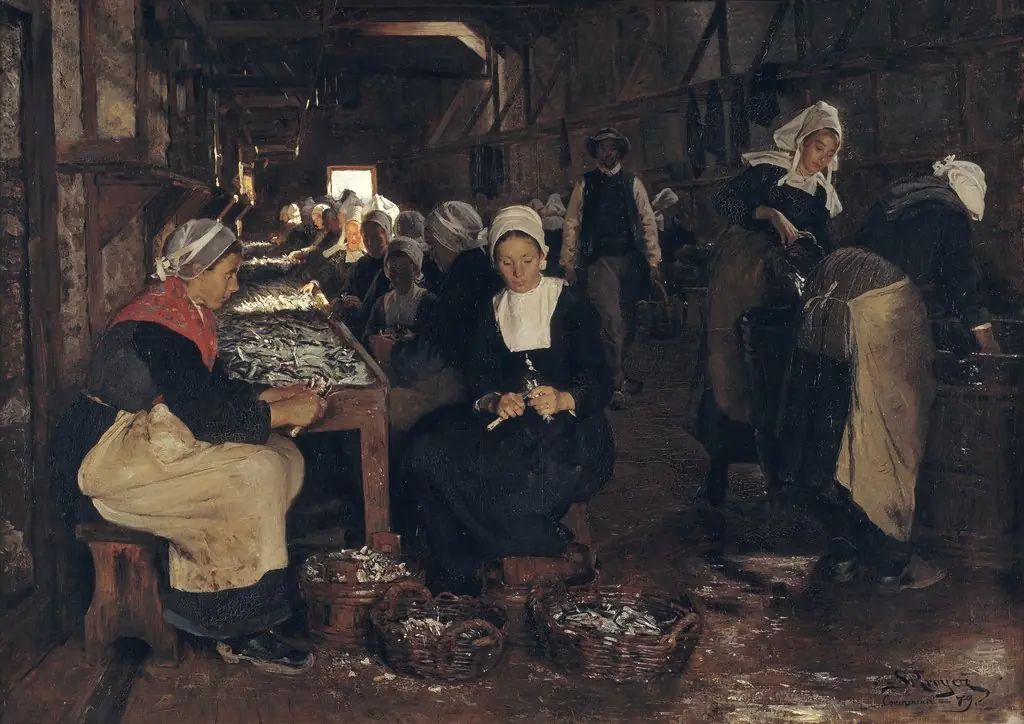 Et sardineri i Concarneau
 Market in Brest
 The Dozing Fishmonger (Le marchand de poissons endormie)