Artwork
An Outdoor Market
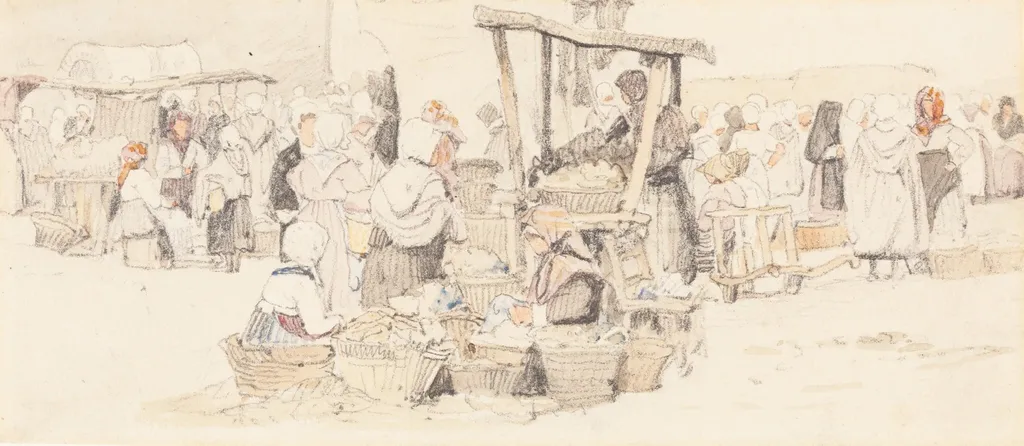
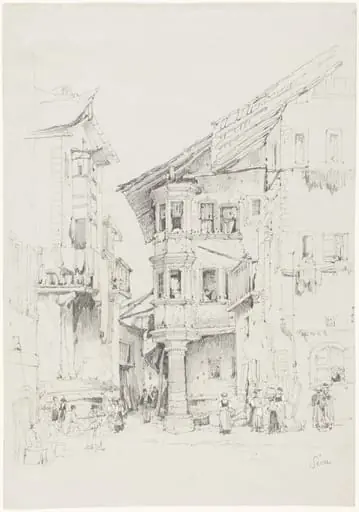
An Outdoor Market is a graphite drawing by the Romanticist artist Samuel Prout. It dates from 1818 and is held in the collection of the National Gallery of Art.
About this work
Overview
Created in 1818, this drawing by Samuel Prout combines graphite lines with delicate watercolor washes on wove paper.
Created in 1818, this drawing by Samuel Prout combines graphite lines with delicate watercolor washes on wove paper. It captures a bustling outdoor market, reflecting Prout’s sustained interest in urban life and architectural detail. As a British artist prominent in early 19th-century watercolor, he elevated everyday scenes into structured, atmospheric compositions that bridged topographical accuracy and poetic observation.
Subject & Meaning
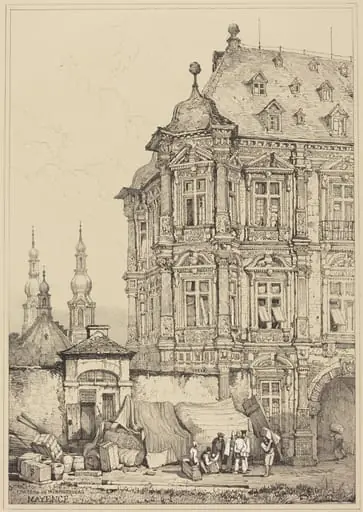
The scene depicts a lively street market, likely in a continental European town, with vendors, shoppers, and stalls arranged along narrow lanes. Figures move with casual purpose, suggesting daily commerce rather than ceremonial event. Prout’s focus on ordinary activity underscores a quiet celebration of public life, aligning with Romantic-era interests in authentic, unidealized human experience within built environments.
Technique & Style
Prout employed precise graphite outlines to define structures and figures, then layered translucent watercolor to suggest light, shadow, and texture without heavy modeling. The palette is restrained—soft browns, muted greens, and pale washes—enhancing the sense of atmosphere. His linear clarity and controlled color application reflect a methodical approach to capturing architectural rhythm and spatial depth.
History & Provenance
The work dates from Prout’s early period of continental travel, during which he produced numerous sketches of foreign cities that later informed finished watercolors exhibited in Britain. While its specific ownership history is not documented, it aligns with the body of work that established his reputation and led to his royal appointment as Painter in Water-Colours in Ordinary to George IV and later Victoria.
Context
In the 1810s, British watercolorists were expanding beyond landscape into urban subjects, influenced by travel and a growing public appetite for visual records of Europe. Prout’s market scenes contributed to this shift, offering viewers a sense of place through observed detail rather than idealized grandeur. His work stood apart from more romanticized depictions by emphasizing structure and quiet activity.
Legacy
Prout’s drawings like this one helped define a genre of British watercolor focused on architectural integrity and everyday urban life. His technique influenced later artists in the medium, particularly those interested in topographical precision and atmospheric tone. Though less celebrated today than his contemporaries, his contributions remain foundational to the evolution of 19th-century British drawing.
Artist & collection
Artist
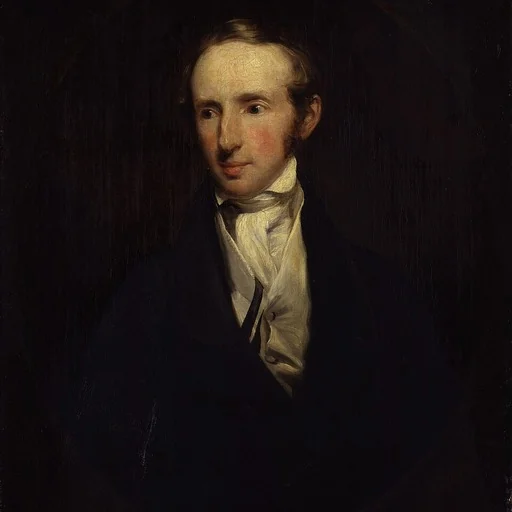
Samuel Prout (; 17 September 1783 – 10 February 1852) was a British watercolourist, and one of the masters of watercolour architectural painting, who largely invented the genre of the grand steet scene in British…

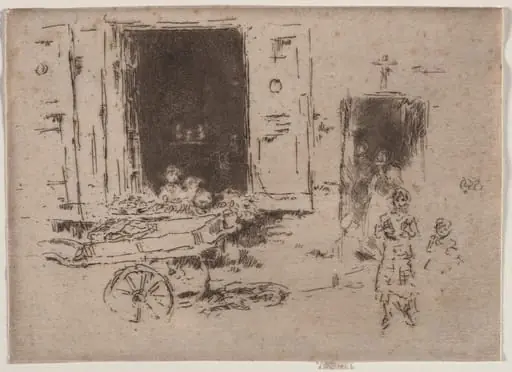 The Barrow - Quartier des Marolles, Brussels
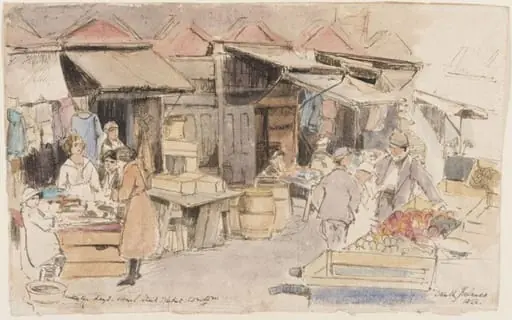 Winter days, Hessel Street Market, London
 Quai de Montebello
 A Station Buffet
 A beached Tanka boat adapted as a dwelling
 Little Court
 Reconquered Territory (recto)
 Vendors outside the Church of San Domingos, Macau
 Old-Clothes Shop, No.I
 Four Fishwives on the Beach
 Washerwoman
 In the Old Market