Artwork
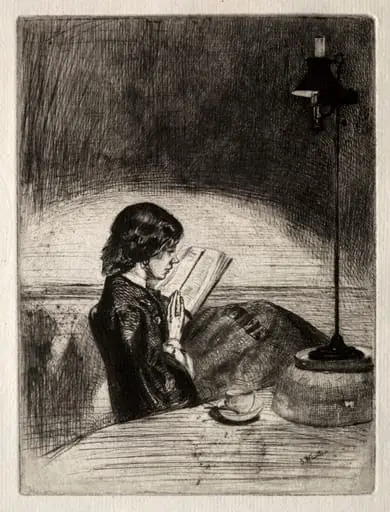
Reading: Portrait of the Artist's Sister
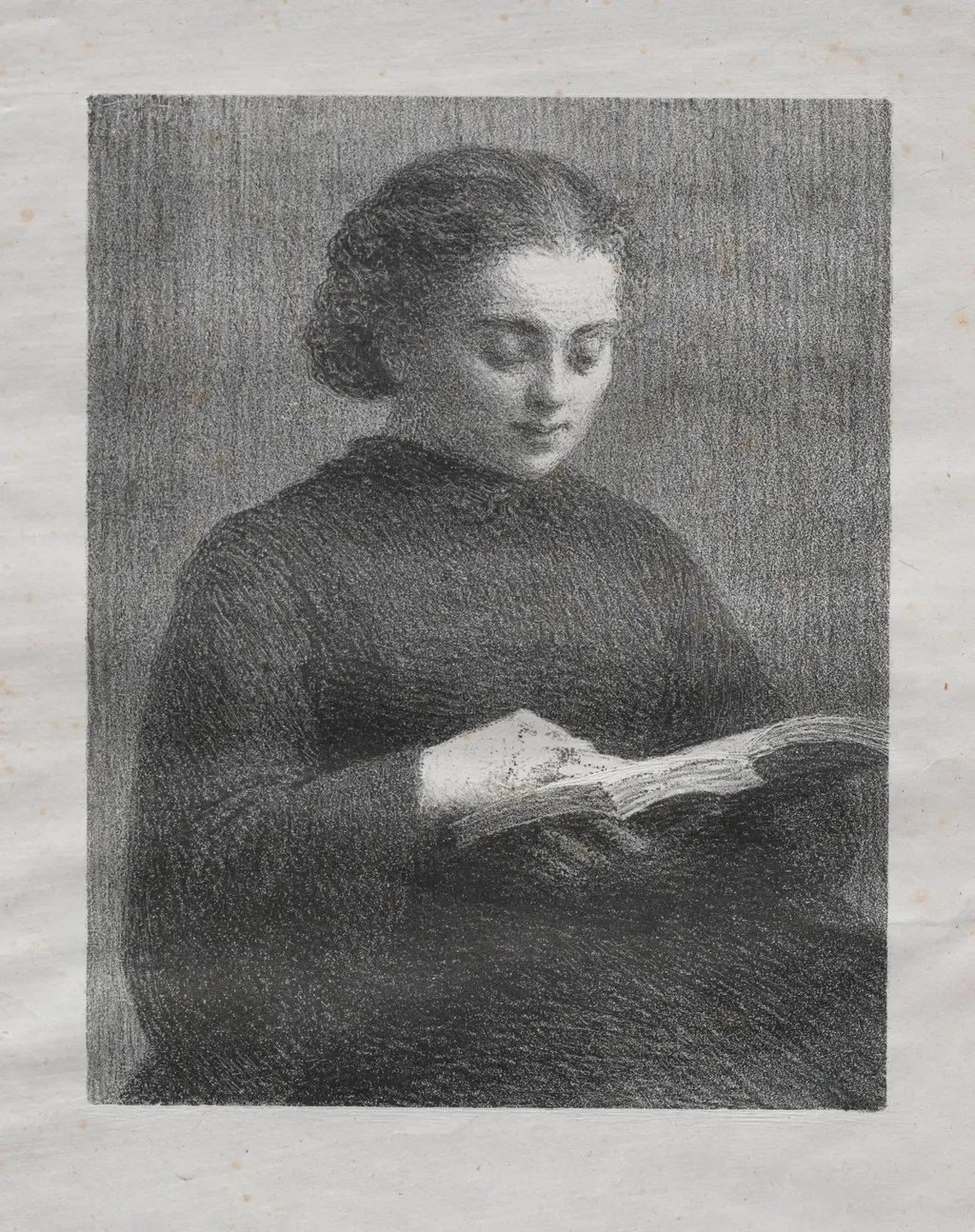
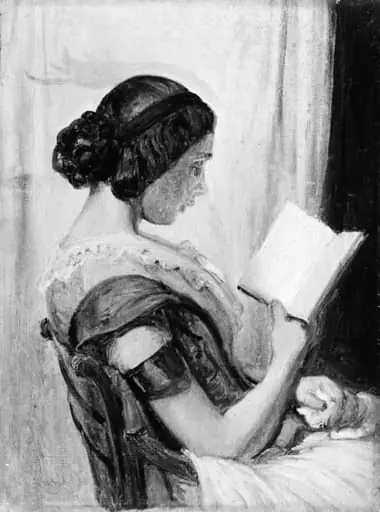
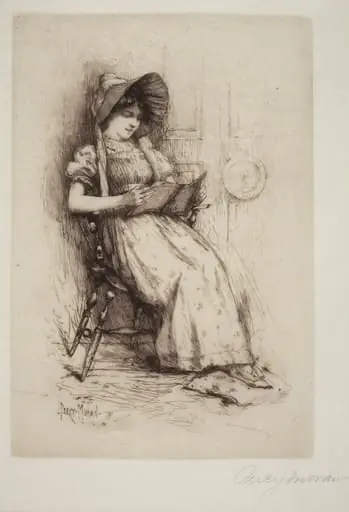
Reading: Portrait of the Artist's Sister is a print by the Impressionist artist Henri Fantin-Latour. It dates from 1897 and is held in the collection of the Cleveland Museum of Art.
About this work
This painting is interesting because it gives us a glimpse into everyday life in the 19th century.
The painting shows a woman reading a book.
She's sitting quietly, lost in thought.
The artist paid close attention to her calm expression and the soft lighting around her.
This painting is interesting because it gives us a glimpse into everyday life in the 19th century. The woman's simple clothes and quiet activity suggest a peaceful atmosphere.
You can learn more about this style by looking at the work of artist: Henri Fantin-Latour (French, 1836–1904)
Overview
Henri Fantin-Latour created this lithograph in 1897 as a quiet portrait of his sister absorbed in reading. Though he gained recognition for floral still lifes and group portraits of literary figures, this work reflects a more intimate, domestic subject. Executed in ink on paper, it belongs to the tradition of intimate portraiture, emphasizing stillness over narrative. The piece is part of the collection at The Cleveland Museum of Art.
Subject & Meaning
The subject is the artist’s sister, depicted in a moment of private contemplation. Her focused gaze and relaxed posture suggest an inner world shaped by literature, not performance. The absence of decorative elements or social context directs attention to her solitude. The image conveys a sense of intellectual calm, characteristic of late 19th-century ideals of feminine introspection and domestic quietude.
Technique & Style
Fantin-Latour employed fine, controlled linework typical of lithography, using subtle tonal gradations to model form and light. The soft shadows around the figure enhance the sense of stillness, while the plain clothing and unadorned setting avoid distraction. His approach favors restraint over drama, aligning with the aesthetic of realism and the influence of earlier Dutch and French genre painting traditions.
History & Provenance
Created near the end of Fantin-Latour’s career, the print reflects his enduring interest in familial subjects. It was likely produced for private circulation or as part of a limited edition, common for artists of his time. The work entered The Cleveland Museum of Art’s collection through documented acquisition, preserving its connection to the artist’s personal sphere and late-period output.
Context
In late 19th-century France, domestic scenes of reading were increasingly valued as expressions of moral and intellectual refinement. Women’s private engagement with literature was both a social norm and a cultural ideal. Fantin-Latour’s depiction aligns with this trend, offering a non-idealized view of interior life, distinct from the theatricality of academic painting.
Legacy
This print contributes to a broader understanding of Fantin-Latour’s range beyond his more famous group portraits and floral works. It exemplifies his sensitivity to quiet, personal moments and his skill in translating subtle emotion through linear precision. While not widely exhibited, it remains a key example of intimate portraiture in French printmaking of the period.
Artist & collection
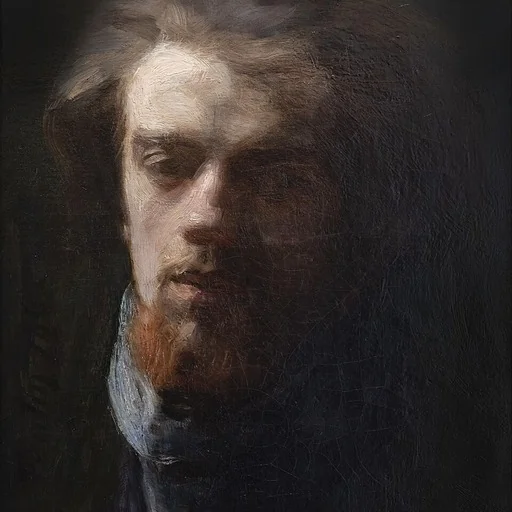
Artist
Ignace Henri Jean Theodore Fantin-Latour (French pronunciation: ; 14 January 1836 – 25 August 1904) was a French painter and lithographer best known for his flower paintings and group portraits of Parisian artists and writers.