Artwork
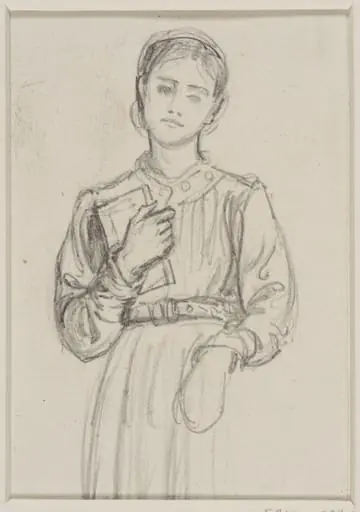
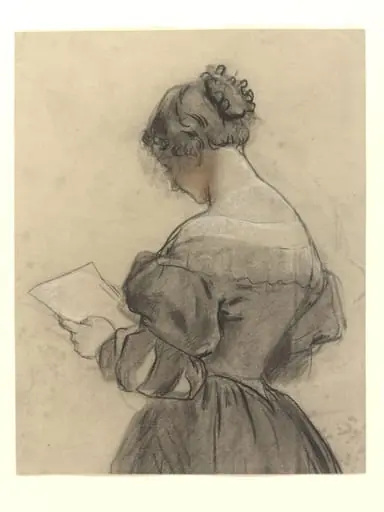
Study of a Girl Reading
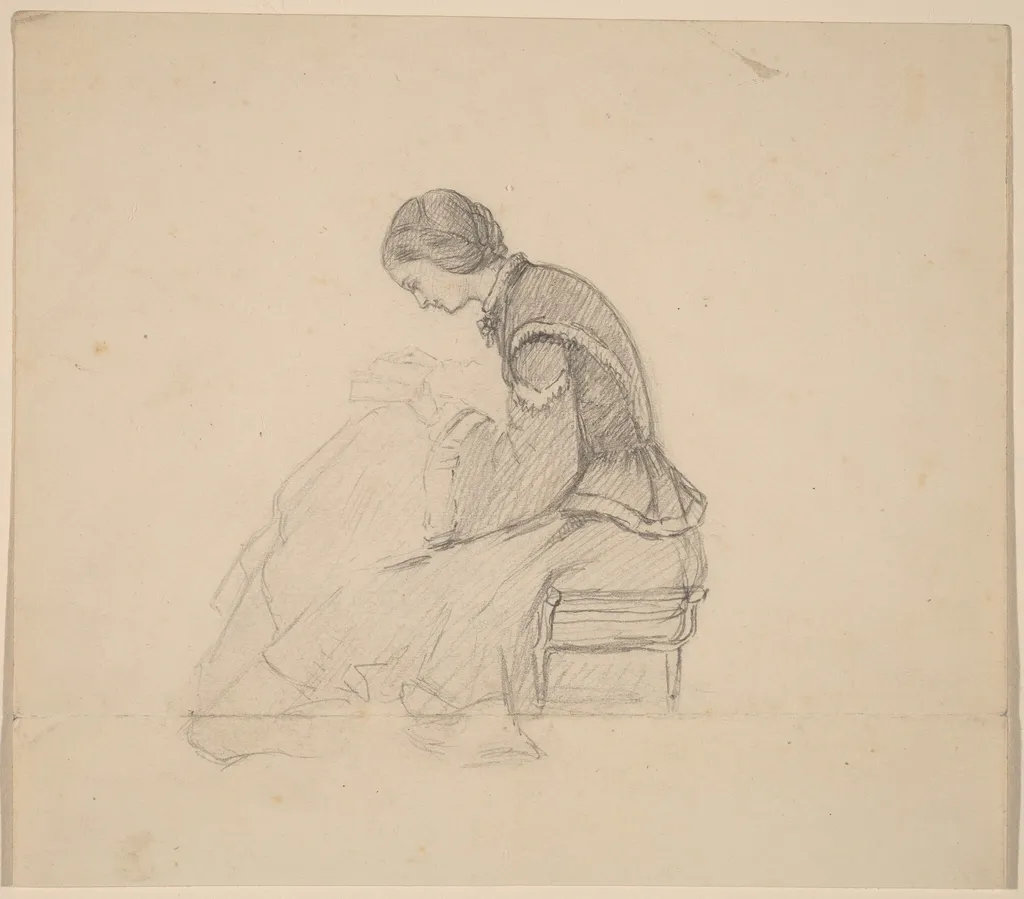
Study of a Girl Reading is a graphite drawing by the Impressionist artist Elihu Vedder. It dates from 1858 and is held in the collection of the National Gallery of Art.
About this work
Overview
Executed on plain wove paper, the work belongs to the artist’s early period, before his well-known illustrations for *The Rubaiyat of Omar Khayyam*.
Created circa 1858, this graphite drawing by Elihu Vedder captures a quiet moment of concentration. Executed on plain wove paper, the work belongs to the artist’s early period, before his well-known illustrations for *The Rubaiyat of Omar Khayyam*. Its modest scale and unadorned medium suggest it was made as a study rather than a finished piece, reflecting Vedder’s interest in observational drawing during his formative years.
Subject & Meaning
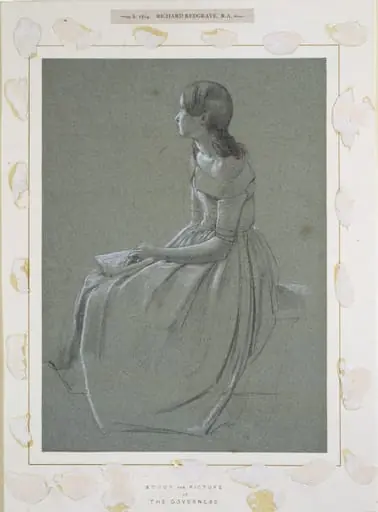
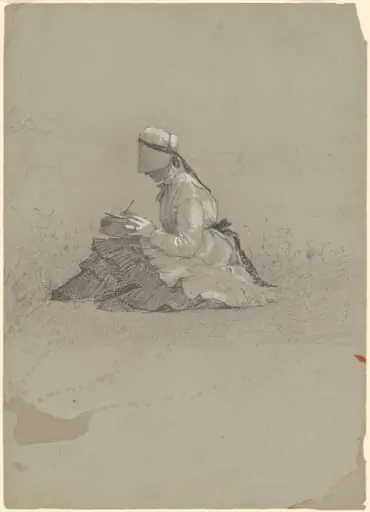
The subject is a young girl seated in a simple chair, deeply engaged with a book. Her posture—head lowered, hands resting on the pages—conveys quiet absorption. The high-collared dress and neatly pinned hair reflect modest, middle-class attire of the mid-nineteenth century. The image holds no narrative or symbolic intent beyond the act of reading, emphasizing introspection and the dignity of ordinary moments.
Technique & Style
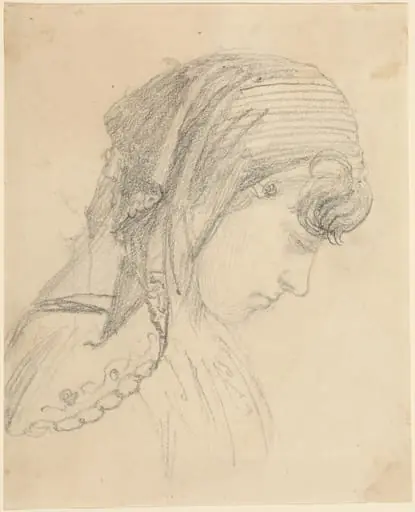
Vedder employed loose, fluid graphite strokes to suggest form and texture. Subtle shading defines the folds of fabric and the curve of the girl’s back, while minimal line work defines facial features and hair. The paper’s smooth surface allows for delicate tonal transitions, and the absence of background elements directs focus entirely to the figure and her clothing. The technique reveals an artist refining his ability to render light and volume through direct observation.
History & Provenance
The drawing originates from Vedder’s time in New York, prior to his extended stay in Europe. It likely dates from his early training or preparatory work, possibly made during life drawing sessions or as personal practice. No documented exhibition or ownership history is known prior to its inclusion in institutional collections, suggesting it remained in the artist’s private circle for much of its early life.
Context
In the 1850s, American artists increasingly turned to intimate, everyday scenes as alternatives to grand historical or mythological subjects. Vedder’s drawing aligns with this emerging trend, sharing affinities with the quiet realism of contemporaries like Winslow Homer. While not overtly political or sentimental, the work reflects a broader cultural interest in the private lives of individuals, particularly women and children.
Legacy
Though not among Vedder’s most recognized works, this study exemplifies his foundational skill in figure drawing and his sensitivity to quiet human behavior. It offers insight into the development of an artist who later became known for symbolic imagery, revealing how his early attention to naturalistic detail informed his later, more elaborate compositions.
Artist & collection

Artist
Elihu Vedder (26 February 1836 – 29 January 1923) was an American symbolist painter, book illustrator and poet from New York City.

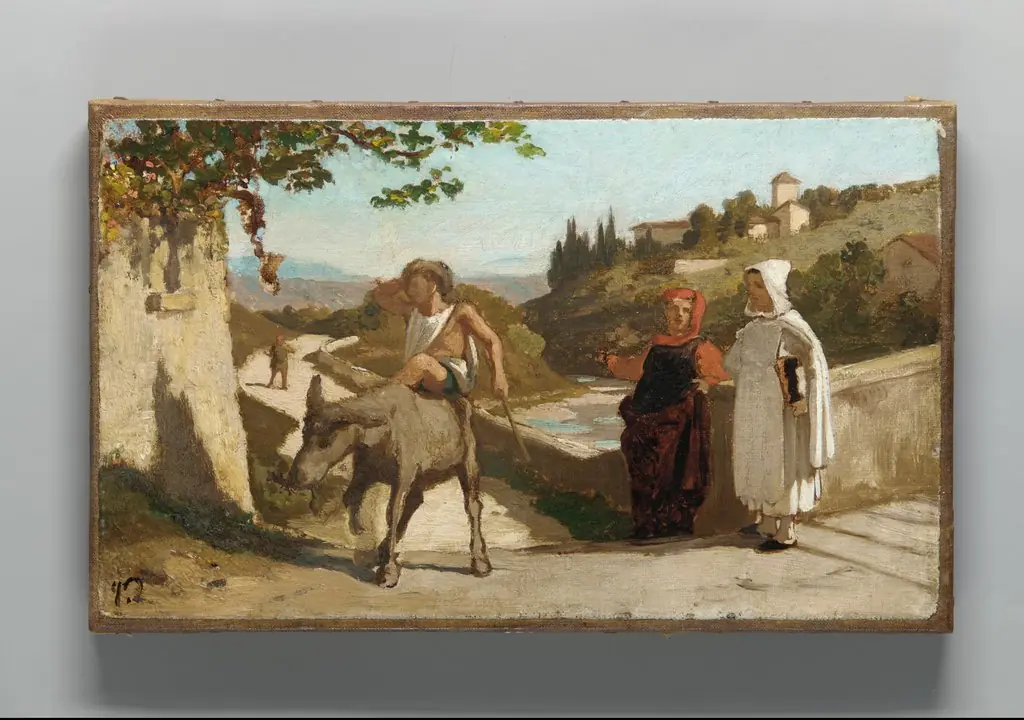 The Fable of the Miller, His Son, and the Donkey
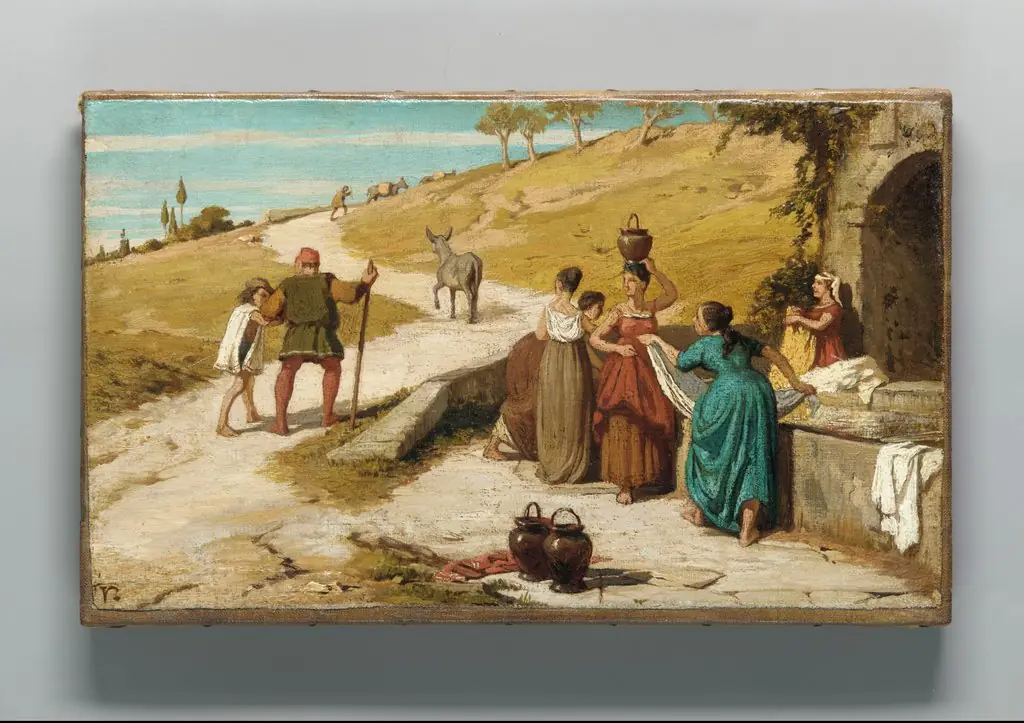 The Fable of the Miller, His Son, and the Donkey
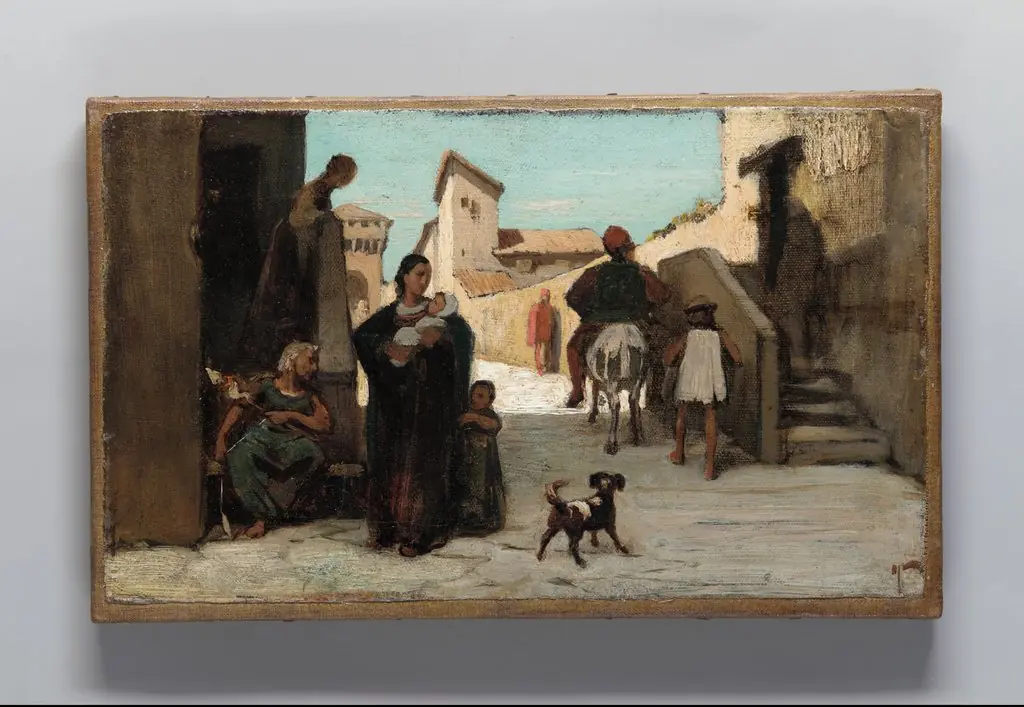 The Fable of the Miller, His Son, and the Donkey
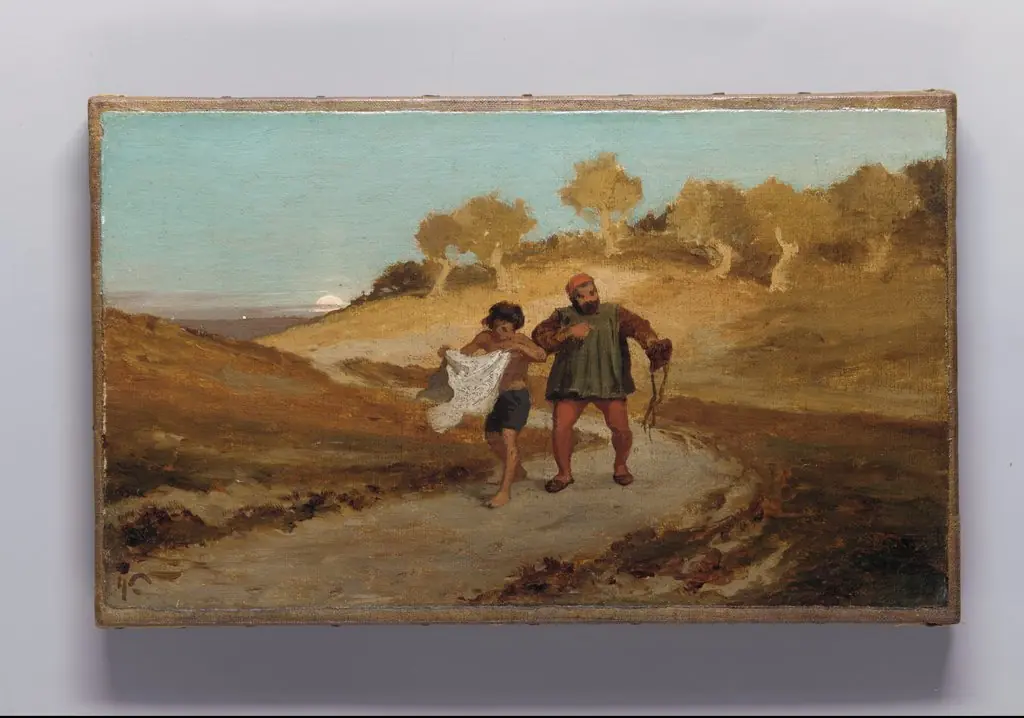 The Fable of the Miller, His Son, and the Donkey
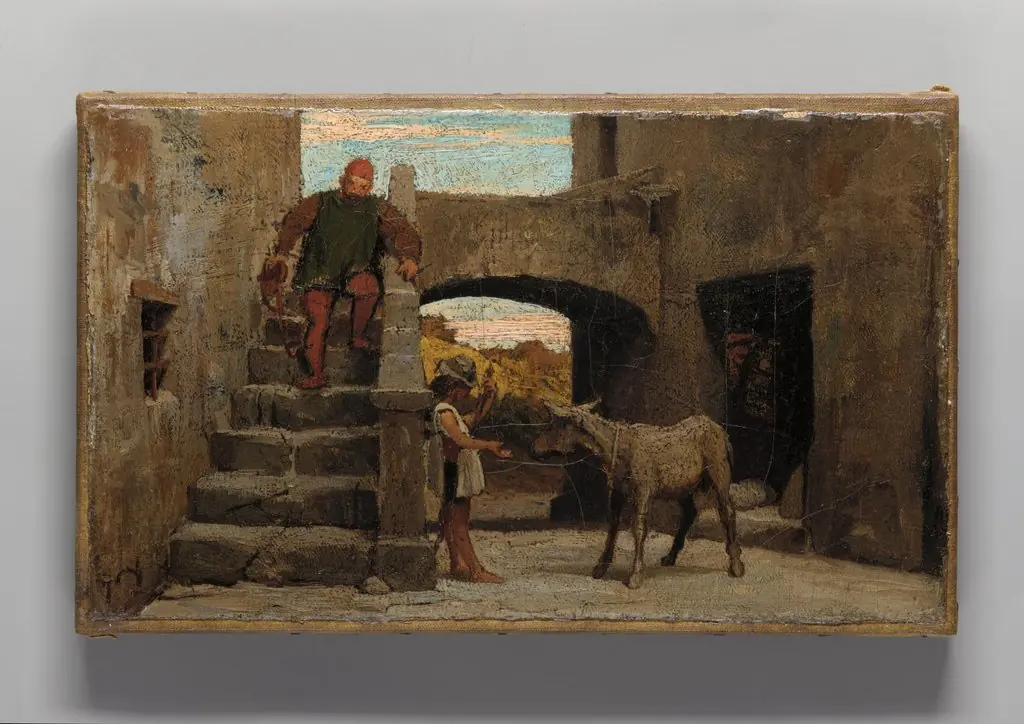 The Fable of the Miller, His Son, and the Donkey
 The African Sentinel
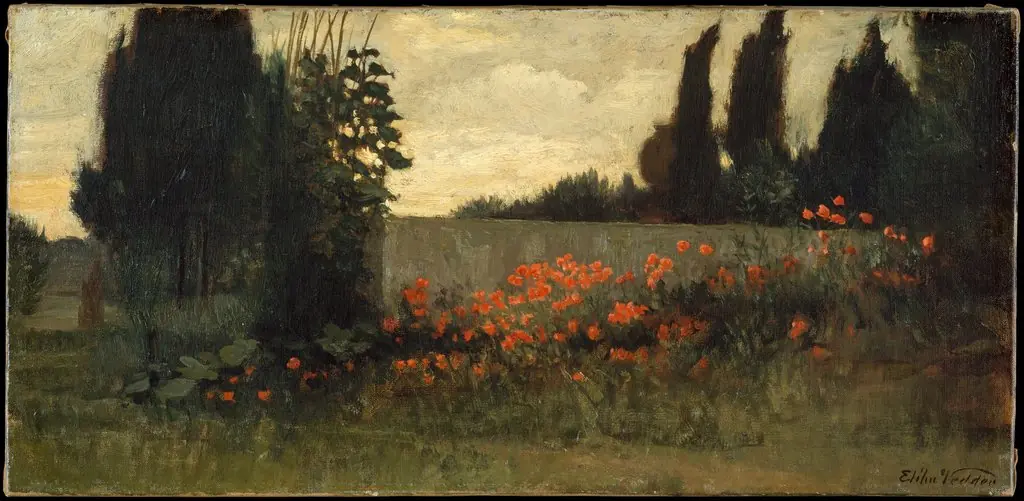 Cypress and Poppies
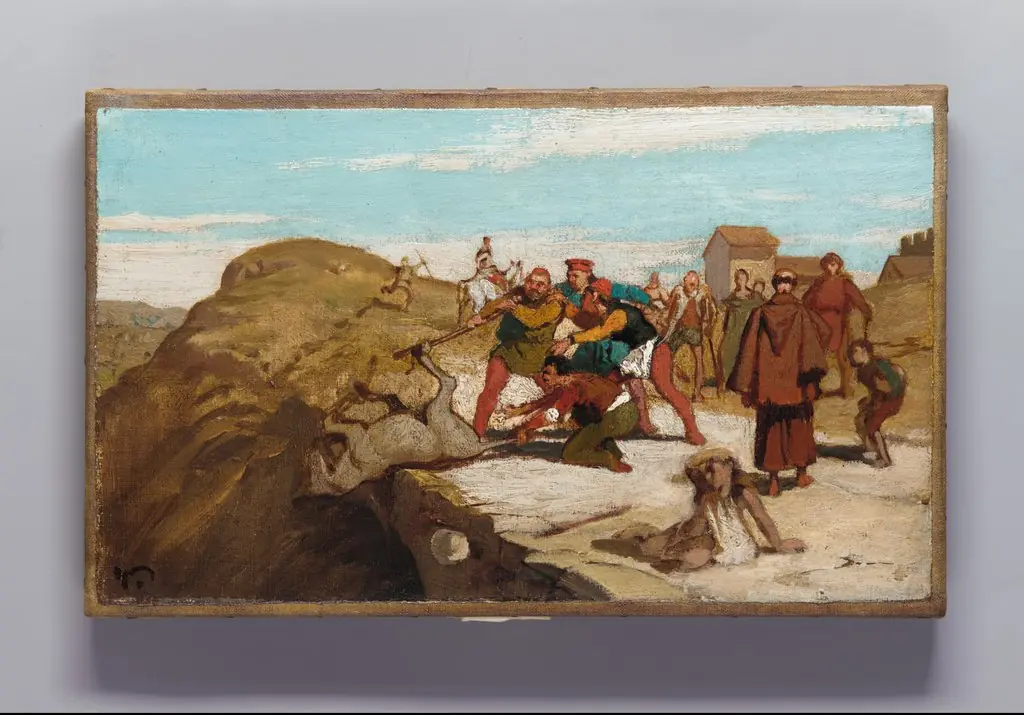 The Fable of the Miller, His Son, and the Donkey
![Young Woman, Florence [recto], by Seth Wells Cheney](https://artifactworldgallery.com/img/seth-wells-cheney--young-woman-florence-recto--05fb201b0cc35006-w320.webp)