Artwork
Politique des Femmes: Droit de visite
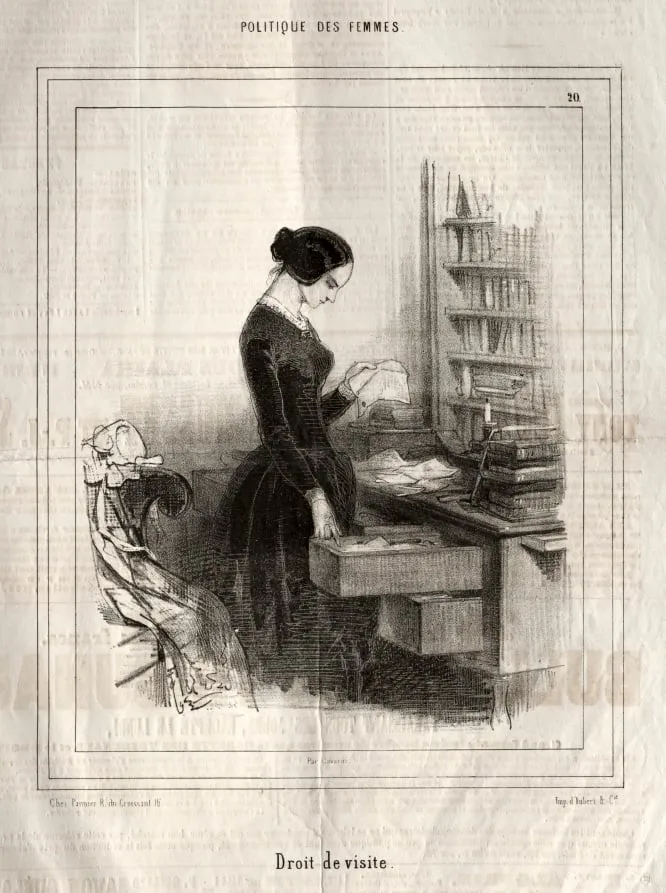
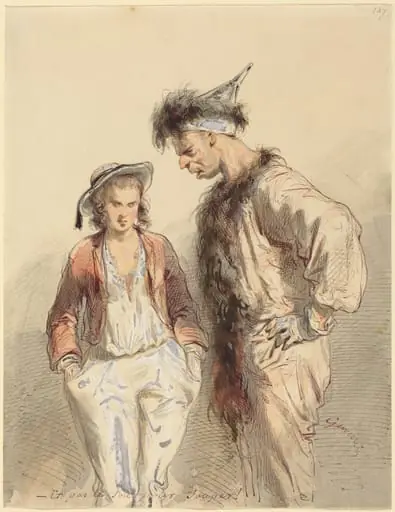
Politique des Femmes: Droit de visite is a print by the Romanticist artist Paul Gavarni. It dates from 1843 and is held in the collection of the Cleveland Museum of Art.
About this work
Overview
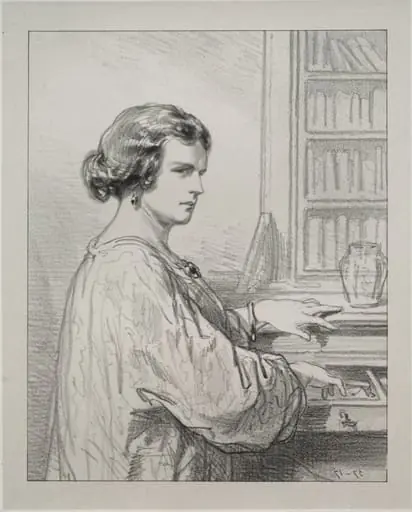
Paul Gavarni created this print in 1843 as part of a series addressing women’s roles in public life. The work is held in the collection of The Cleveland Museum of Art. It presents a solitary woman in a scholarly setting, engaging with documents in a space filled with books. The composition avoids theatricality, favoring restrained detail and quiet intensity to convey its theme.
Subject & Meaning
Her posture and the presence of papers suggest she is seeking recognition or permission—perhaps to study, work, or participate in civic affairs.
The image portrays a woman asserting access to intellectual and administrative spaces traditionally reserved for men. Her posture and the presence of papers suggest she is seeking recognition or permission—perhaps to study, work, or participate in civic affairs. The title, 'Droit de visite' (Right of Entry), frames her presence as a claim rather than an intrusion, subtly challenging gendered boundaries of knowledge and authority.
Technique & Style
Gavarni employed fine-line etching to render precise textures—fabric folds, book spines, wood grain—while maintaining a soft tonal range. The composition is tightly framed, focusing attention on the figure and her immediate surroundings. Shadows are used sparingly to model form without drama, aligning with the restrained realism common in mid-19th-century French graphic art rather than overt Romantic expression.
History & Provenance
The print was produced during a period of growing public debate over women’s education and civic participation in France. It circulated as part of Gavarni’s social commentary series, often published in journals. The Cleveland Museum of Art acquired it as part of a broader collection of 19th-century French prints, reflecting institutional interest in visual records of social change.
Context
In 1843, French women had no legal right to higher education or public office, yet intellectual salons and informal networks allowed some access to learning. Gavarni’s image reflects tensions between these emerging spaces and institutional exclusion. The quiet dignity of the figure mirrors contemporary writings by early feminist thinkers, who framed access to knowledge as a foundational right.
Legacy
Though not widely exhibited at the time, the print contributes to a visual archive of early feminist discourse in print culture. It anticipates later campaigns for women’s education and professional inclusion. Today, it serves as a historical document of how visual media subtly shaped perceptions of gender, authority, and intellectual legitimacy in 19th-century France.
Artist & collection

Artist
Paul Gavarni was the pen name of Sulpice Guillaume Chevalier (13 January 1804 – 24 November 1866), a French illustrator, born in Paris.