Artwork
Rienzi, Act V: Rienzi’s Prayer
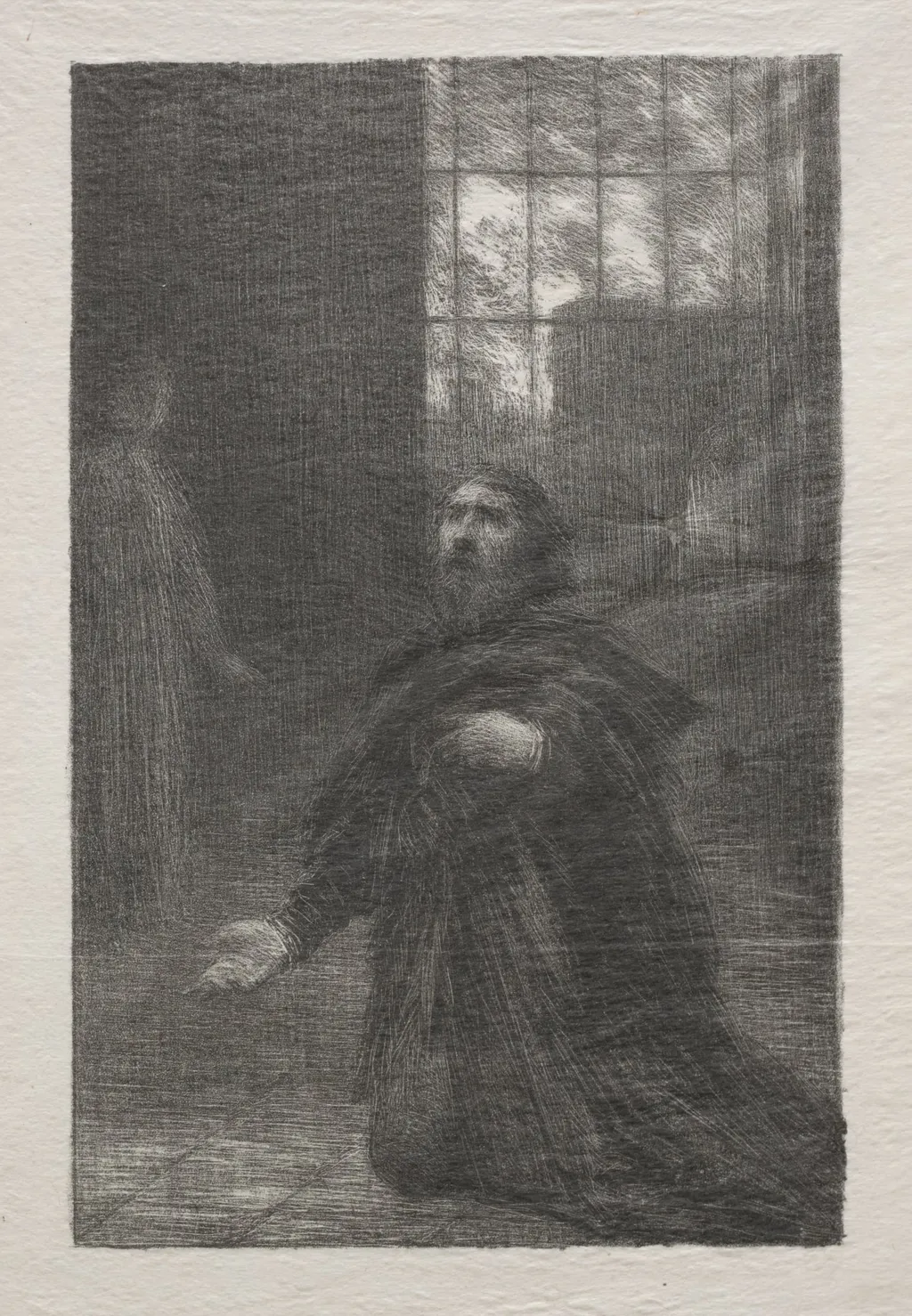
Rienzi, Act V: Rienzi’s Prayer is a print by the Impressionist artist Henri Fantin-Latour. It dates from 1886 and is held in the collection of the Cleveland Museum of Art.
About this work
Overview
The work reflects his engagement with music as a visual stimulus, translating theatrical intensity into a restrained, intimate format.
Henri Fantin-Latour produced this lithograph around 1886 as part of a series inspired by operatic narratives. Though best known for quiet domestic and artistic group scenes, he turned here to the grandeur of Wagner’s *Rienzi*, capturing a solitary moment of spiritual crisis. The work reflects his engagement with music as a visual stimulus, translating theatrical intensity into a restrained, intimate format.
Subject & Meaning
The figure is Rienzi, the 14th-century Roman tribune, at the climax of Act V, kneeling in despair after the collapse of his populist rule. His upward gaze and clasped hands suggest a plea for divine intervention amid personal ruin. The composition isolates him in vulnerability, stripping away spectacle to focus on inner turmoil — a departure from opera’s usual grandeur, emphasizing quiet desperation over public drama.
Technique & Style
Fantin-Latour employed chiaroscuro to heighten emotional tension, with a narrow beam of light illuminating the figure’s face and chest against a near-black background. The dark robe contrasts with the pale linen at his chest, guiding attention to his prayerful posture. Brushwork is controlled yet expressive, avoiding theatricality; the lithographic medium allows subtle gradations of tone, reinforcing the scene’s solemnity.
History & Provenance
Created in the final decades of Fantin-Latour’s career, this print emerged from his sustained interest in Wagner’s operas, which he attended in Paris. It entered The Cleveland Museum of Art’s collection in the 20th century, where it remains as part of a broader group of his literary-inspired works. Its provenance reflects late 19th-century European collectors’ fascination with music-inflected visual art.
Context
In the 1880s, French artists increasingly drew from music and literature to explore psychological depth. Fantin-Latour’s engagement with Wagner aligned with broader cultural currents that saw opera as a vehicle for emotional and philosophical expression. Unlike contemporaries who favored narrative clarity, he favored moments of stillness — turning spectacle into introspection.
Legacy
This print stands as a quiet testament to Fantin-Latour’s ability to translate musical drama into visual poetry without overt flourish. While less known than his still lifes, it reveals his versatility and sensitivity to emotional nuance. It remains a significant example of how 19th-century artists bridged auditory and visual realms, prioritizing mood over spectacle.
Artist & collection
Artist
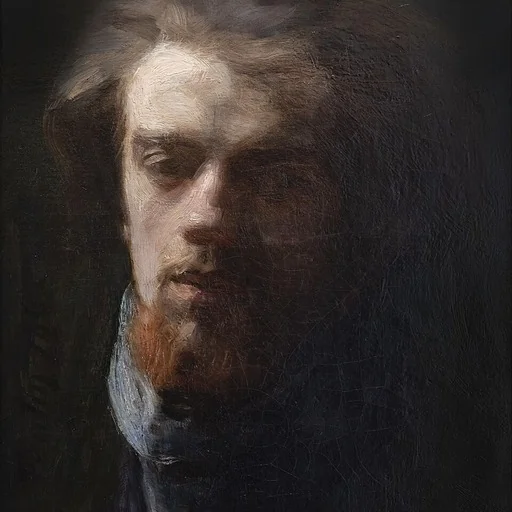
Ignace Henri Jean Theodore Fantin-Latour (French pronunciation: ; 14 January 1836 – 25 August 1904) was a French painter and lithographer best known for his flower paintings and group portraits of Parisian artists and writers.

 Untitled
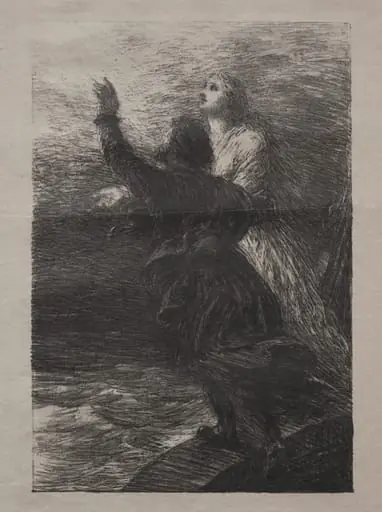 The Flying Dutchman: Act III, The Ecstasy of Senta and the Dutchman
 Drawing by Bernard Patridge
 Two Roman Women
 Keying Up: The Court Jester
 Le Voyageur à l'Abri
 The Russian Schube
 The Absinthe Drinker (Le buveur d'absinthe)
 A Blacksmith (Un Forgeron)
 The Evening Star
 Escalier sculpte rue Boutebrie
 Interior of a Church