Artwork
Two Boatmen in a Marsh near a Cluster of Trees
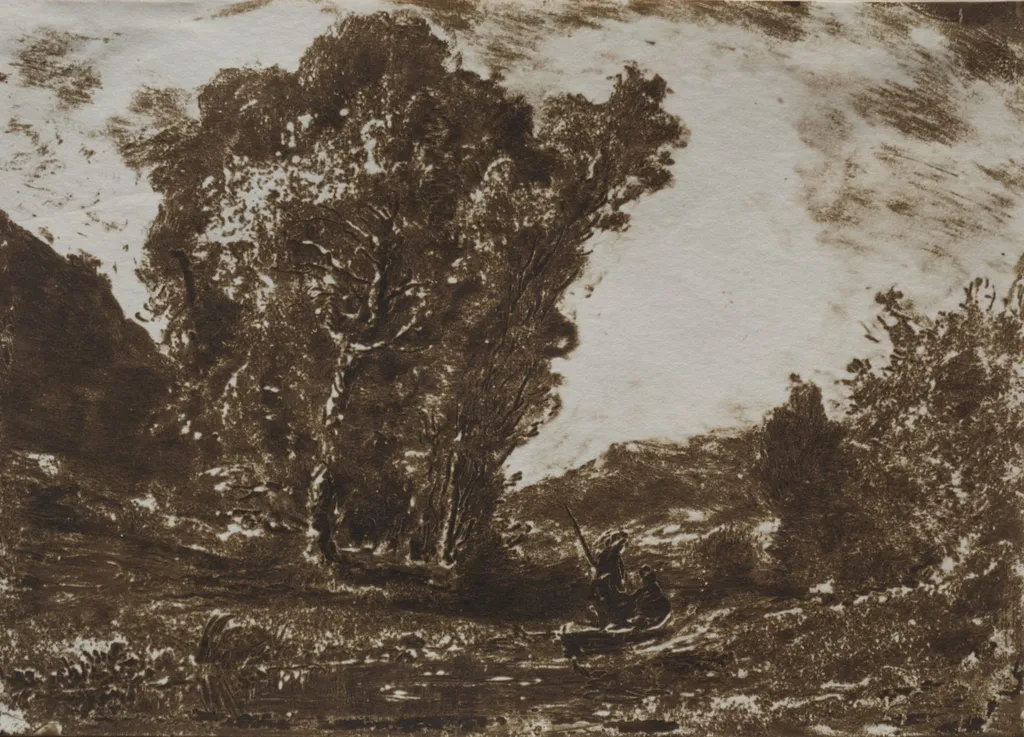
Two Boatmen in a Marsh near a Cluster of Trees is a print by the Impressionist artist Henri-Joseph-Constant Dutilleux. It dates from 1857 and is held in the collection of the Cleveland Museum of Art. This print is one of thirteen monochrome works by Dutilleux made using a photographic process on glass.
About this work
Overview
Unlike contemporaries who etched designs into opaque coatings, he applied pigment directly to the glass surface, producing subtle gradations of tone.
This print is one of thirteen monochrome works by Dutilleux made using a photographic process on glass. Unlike contemporaries who etched designs into opaque coatings, he applied pigment directly to the glass surface, producing subtle gradations of tone. The result resembles a photographic negative, emphasizing light and shadow over linear definition. The technique was experimental for its time, diverging from the dominant line-based approaches in the cliché-verre medium.
Subject & Meaning
The scene depicts two figures in a rowboat navigating a quiet marsh, surrounded by dense trees. There is no narrative drama or symbolic intent; the focus lies in the stillness of the environment and the quiet interaction between the boatmen and their surroundings. The composition invites contemplation of rural labor and the subtle rhythms of nature, rendered with restrained emotion and atmospheric precision.
Technique & Style
Dutilleux painted the image directly onto glass using opaque pigments, then exposed it to light to create a photographic print. This method allowed for nuanced tonal transitions, avoiding the sharp outlines typical of other cliché-verres. The resulting image leans into chiaroscuro effects, with soft transitions between light and dark areas that mimic the tonal range of early photographic processes rather than traditional drawing.
History & Provenance
Created in the mid-19th century, these works were part of Dutilleux’s personal exploration of photographic alternatives to painting. Few of his glass plates survive, and the prints made from them are rare. The technique was not widely adopted, and his contributions remained largely overlooked until later scholarly interest in non-traditional printmaking methods brought renewed attention to his work.
Context
Dutilleux worked alongside landscape painters influenced by Barbizon ideals, yet his approach to the cliché-verre diverged sharply from peers like Corot and Daubigny. While they favored linear etching to evoke poetic atmospheres, he pursued photographic realism through tonal painting. His work reflects broader 19th-century experiments in merging painting with emerging photographic technologies.
Legacy
Dutilleux’s method influenced later artists investigating the boundaries between photography and printmaking. Though his output was small and his name obscure during his lifetime, his technique is now recognized as an early example of direct image manipulation on glass—a precursor to photograms and alternative photographic processes. His works remain important for understanding the evolution of hybrid visual media in the 1800s.
Own this work as a print
Artist & collection
Artist
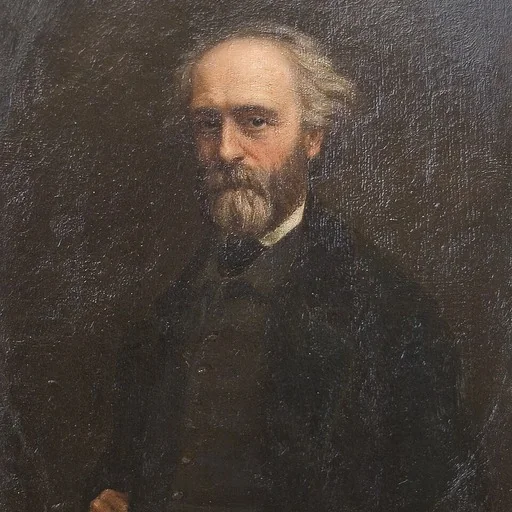
Henri-Joseph-Constant Dutilleux
Constant Dutilleux (5 October 1807 - 21 October 1865) was a 19th-century French painter, illustrator and engraver.

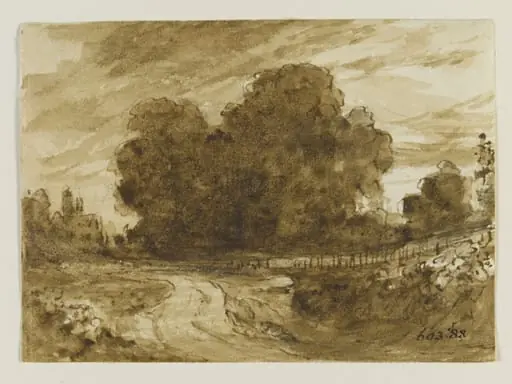 A country road with elm trees
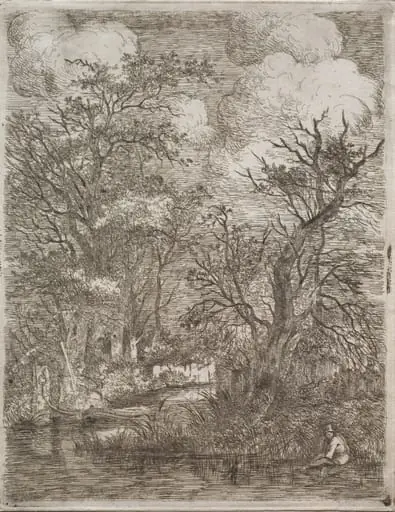 Back of the Mills
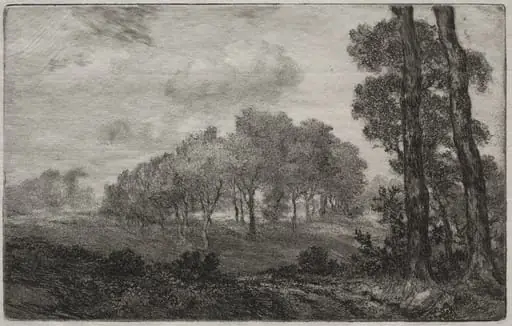 Landscape, after Français
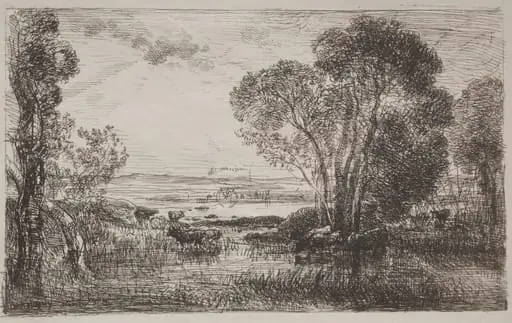 The Hydraulic Machine
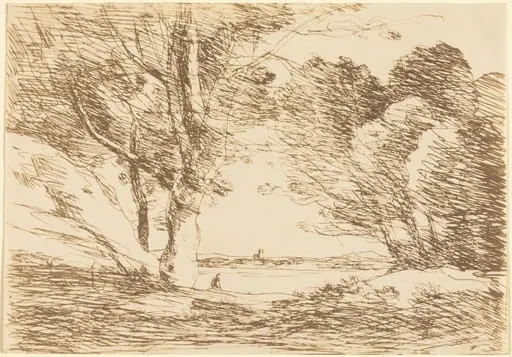 Tower on the Horizon of a Lake (Tour a l'horizon d'un lac)
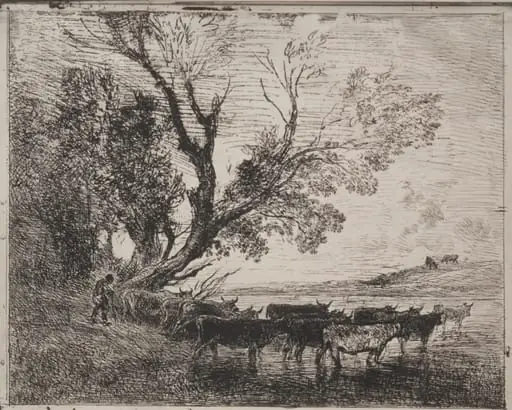 The Ford
 At Zelata (Alla Zelata)
 The Thicket
 A Forest Marsh with Travelers on a Bank (The Travelers)
 The Three Large Trees
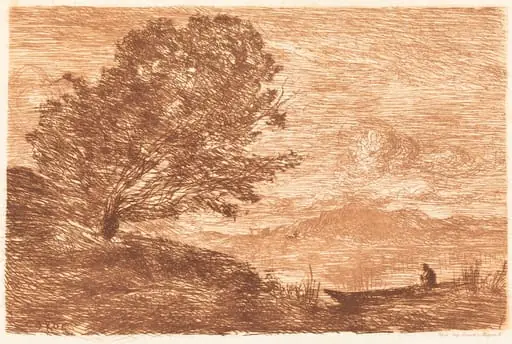 A Lake in the Tyrol (Un lac du Tyrol)
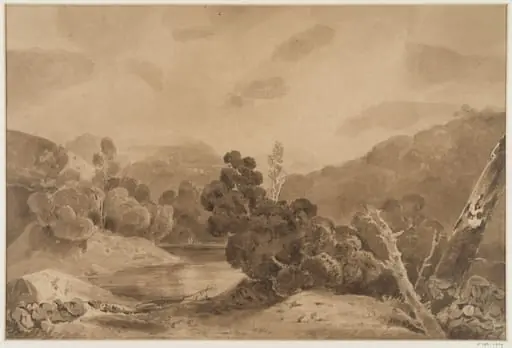 River scene with a temple or palace in the clouds