Artwork
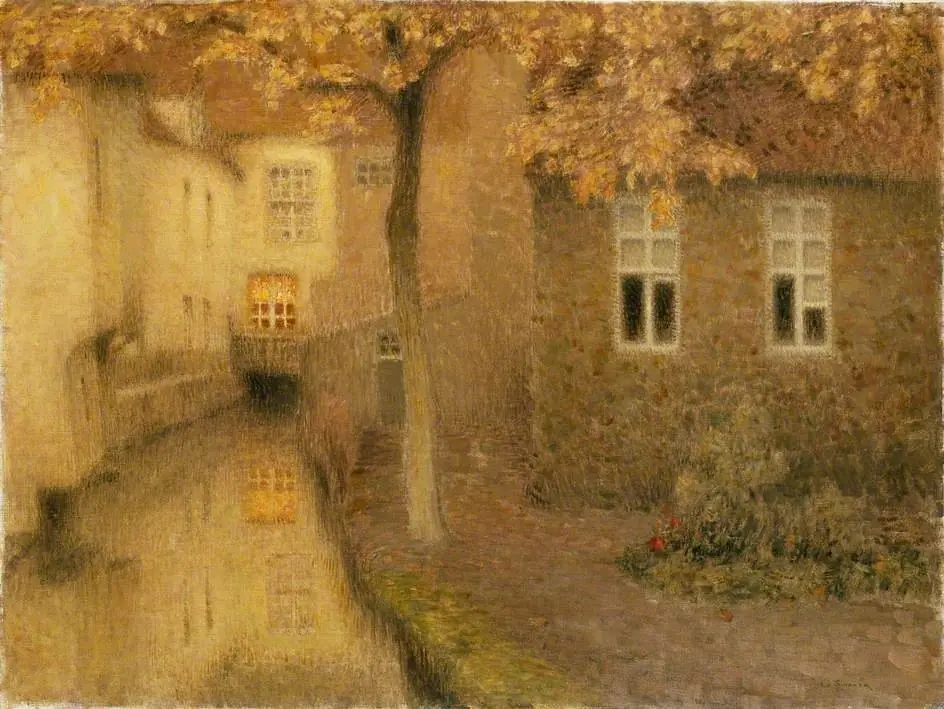
Canal in Autumn (Gisors)
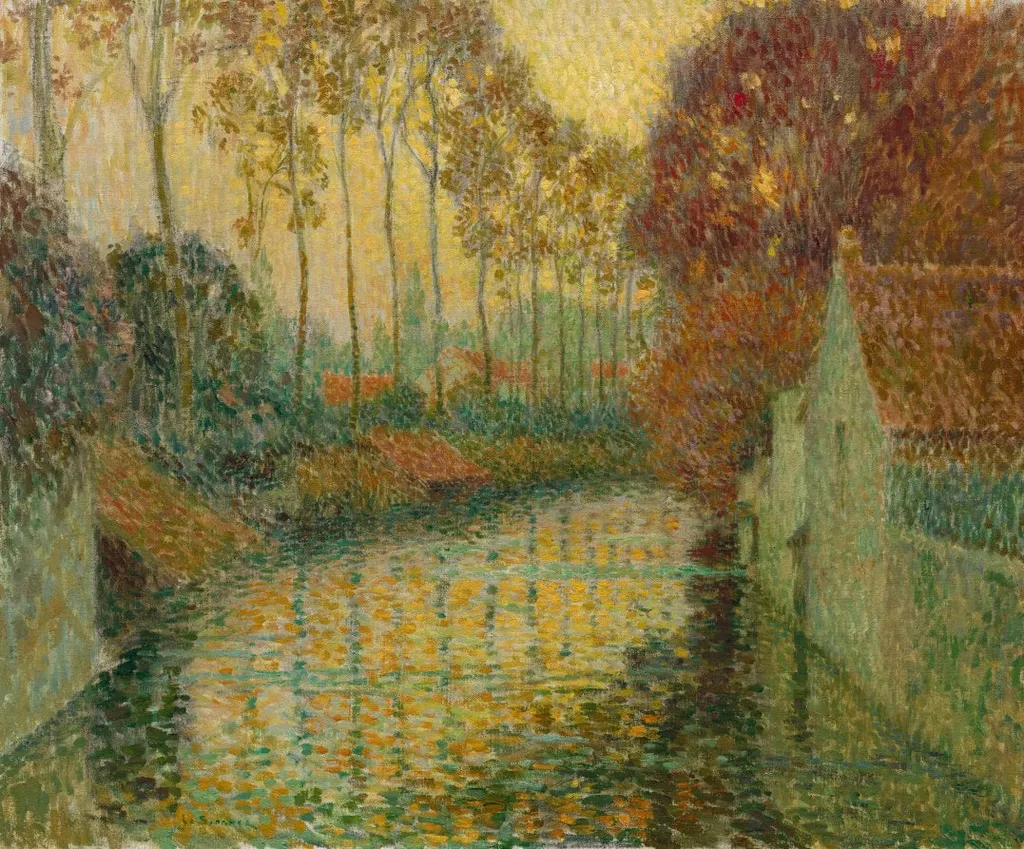
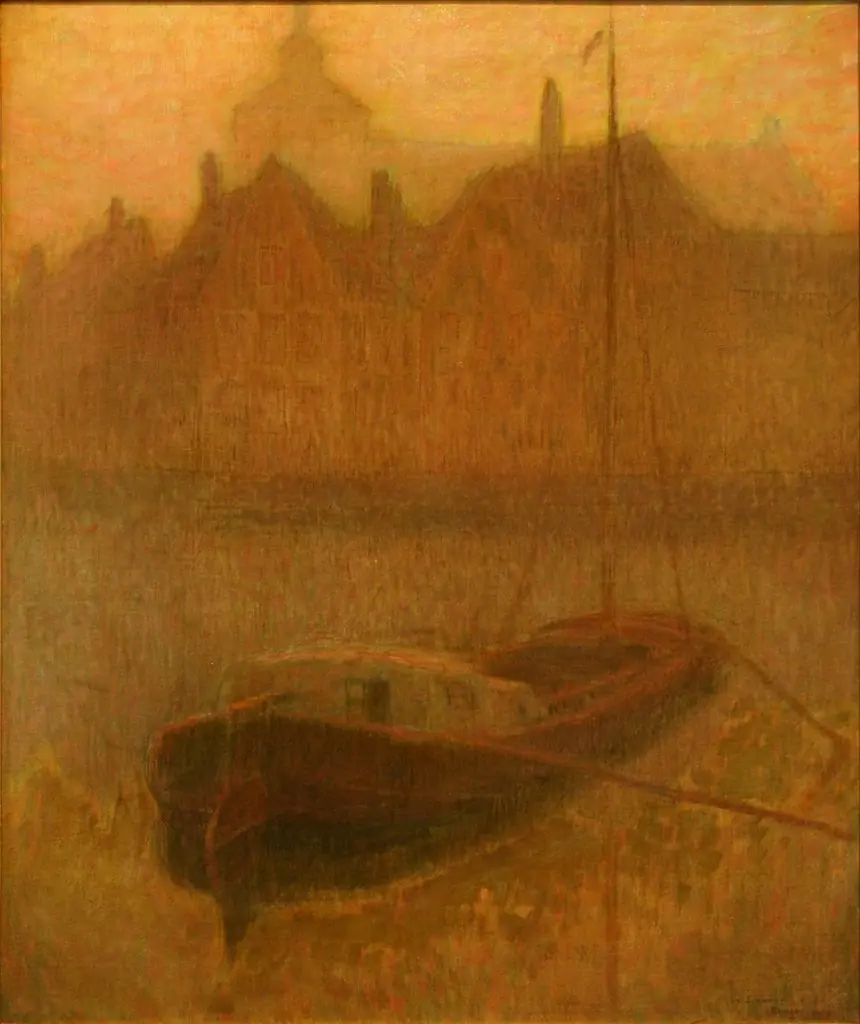
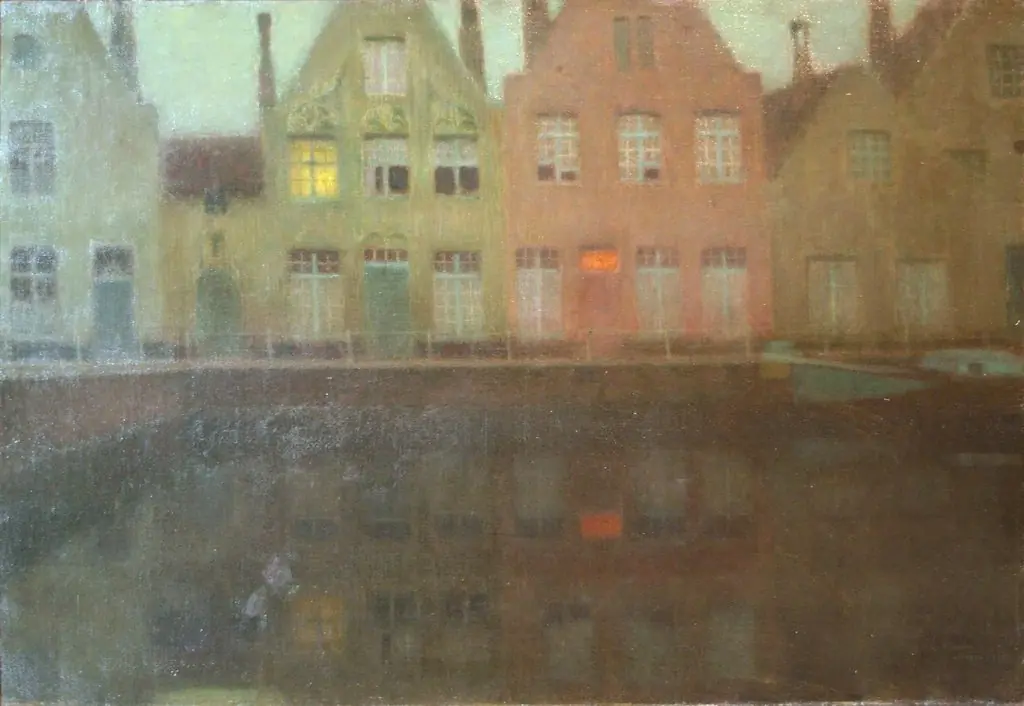
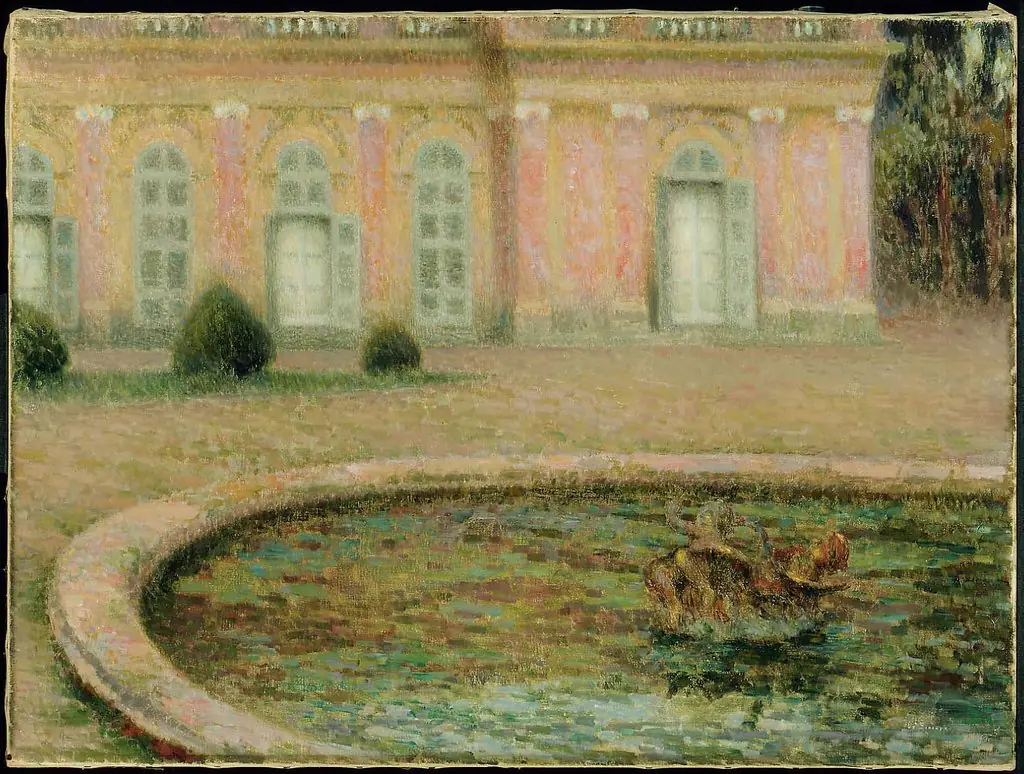
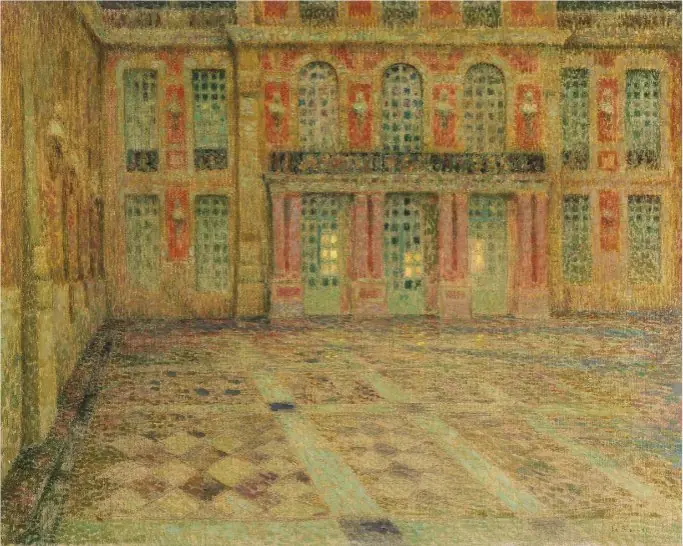
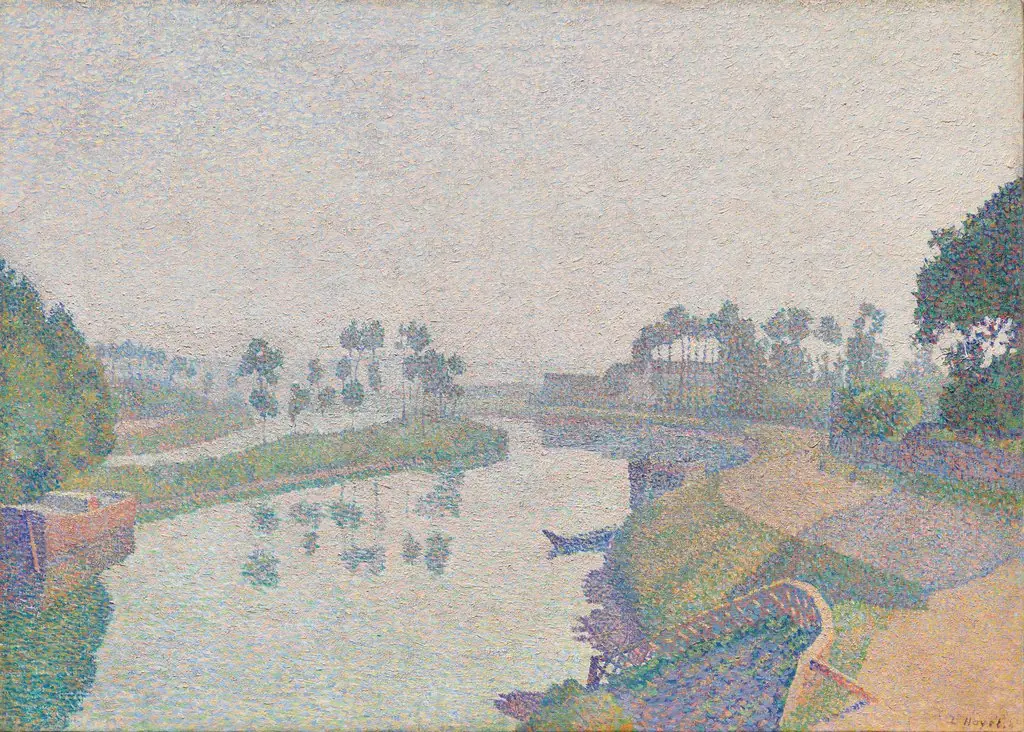
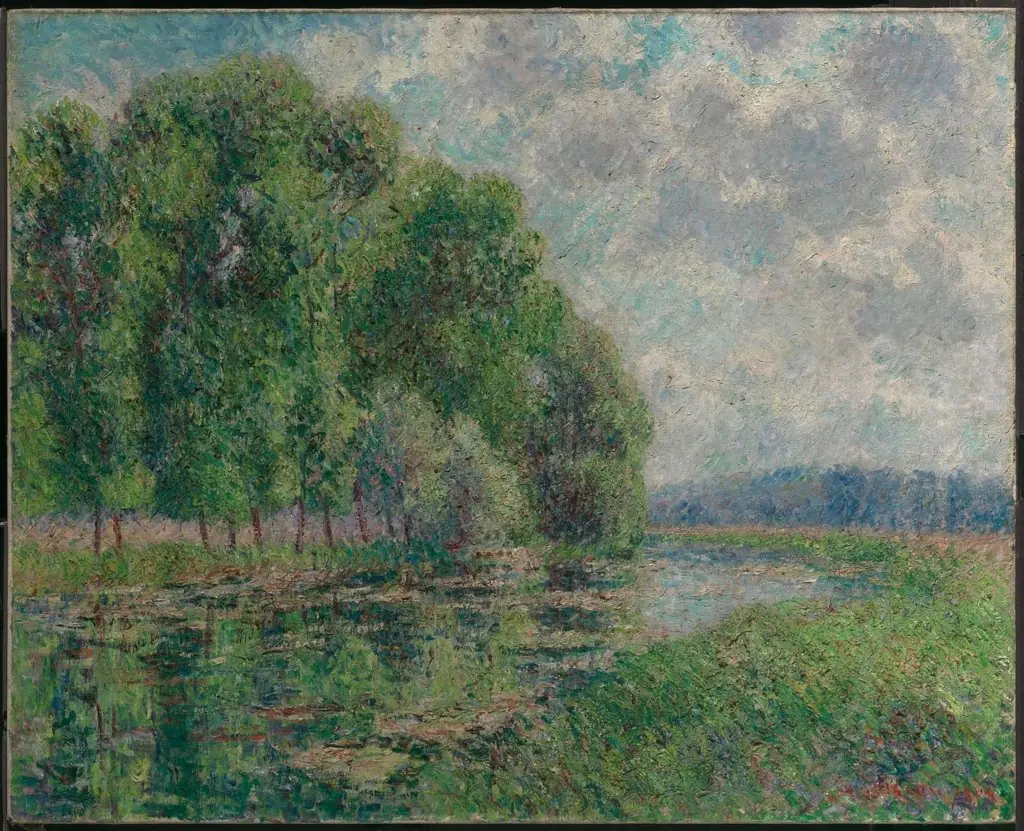
Canal in Autumn (Gisors) is an unspecified painting by the Post-Impressionist artist Henri Le Sidaner. It dates from 1913 and is held in the collection of the Cleveland Museum of Art.
About this work
Overview
Painted in the early 20th century, this work captures a quiet stretch of canal near Gisors, Normandy, a town northwest of Paris along the Epte River. The scene is rendered in twilight, with no human presence, emphasizing stillness and solitude. Le Sidaner returned to this location repeatedly, drawn to the subtle shifts of light at dusk, which softened forms and deepened atmospheric mood.
Subject & Meaning
The canal, flanked by bare trees and mirrored in still water, evokes a sense of quiet endurance. Absent of figures or activity, the scene suggests a world indifferent to human passage. The dim, fading light implies transition—not decay, but a gentle surrender to time. Le Sidaner’s focus on such liminal moments invites contemplation of nature’s rhythms beyond human perception.
Technique & Style
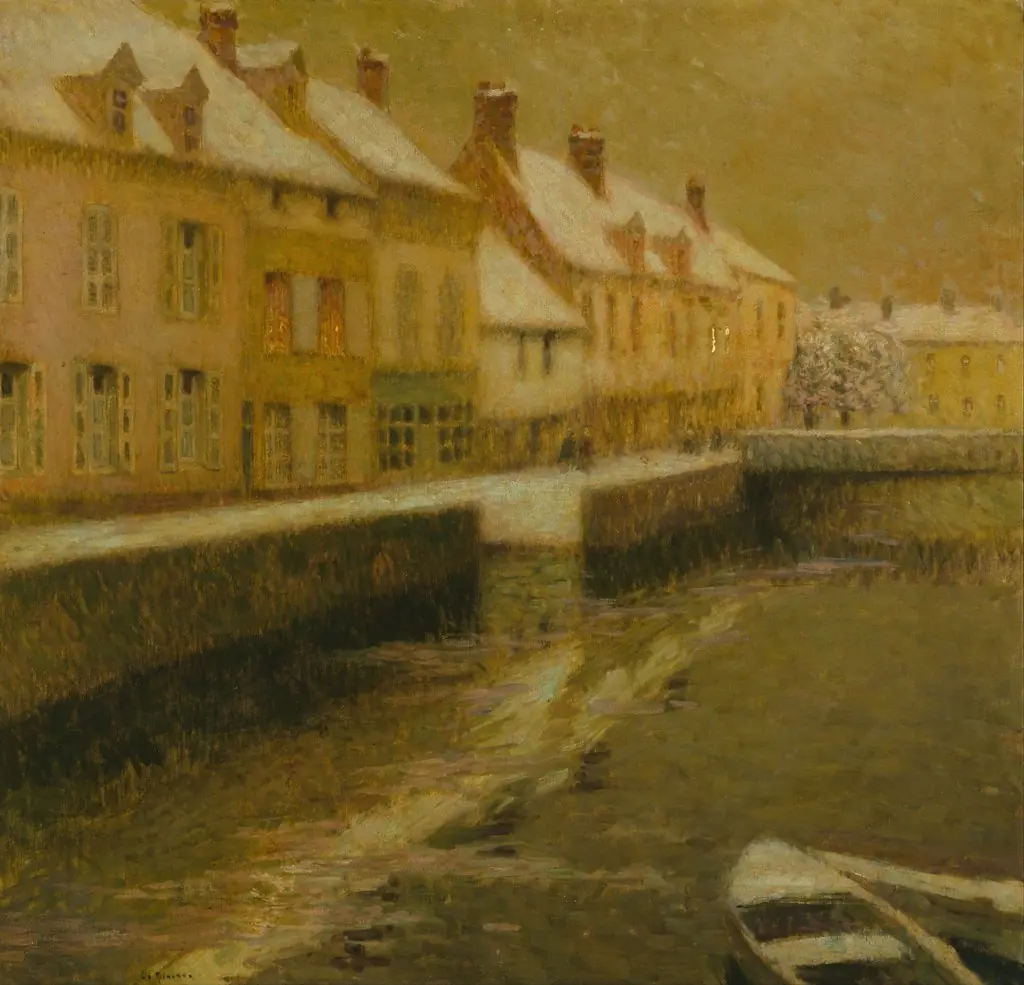
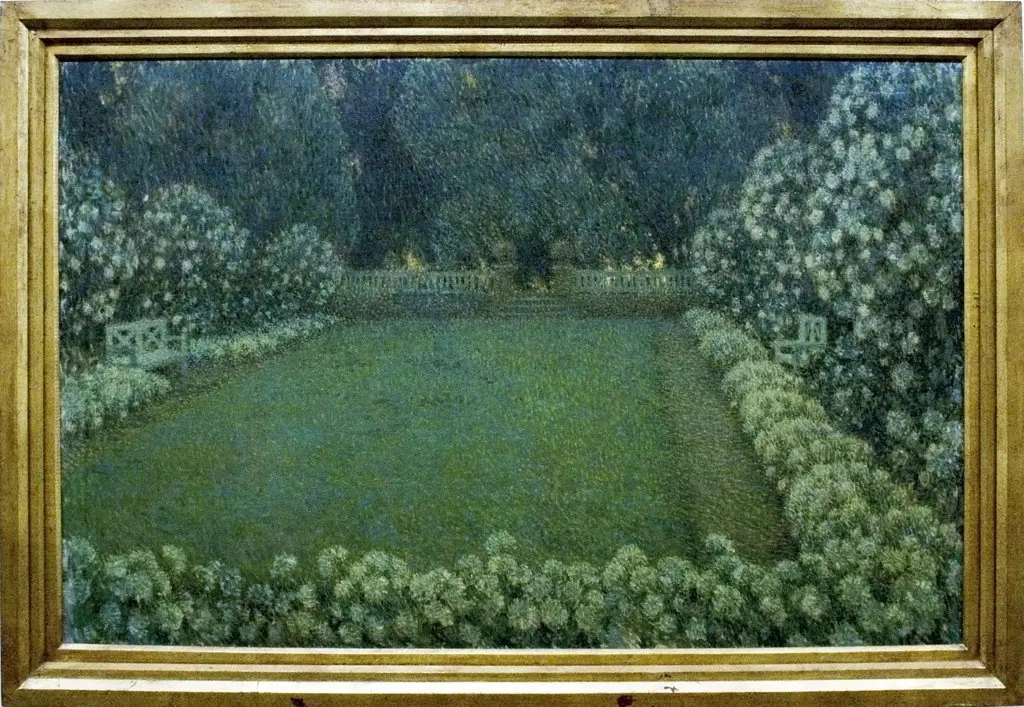
Le Sidaner applied pure, unmixed pigments in small, deliberate dabs, allowing colors to blend optically on the canvas rather than on the palette. This Divisionist method, paired with a muted tonal range, creates a luminous, hazy effect. The absence of sharp edges and the use of grayed neutrals enhance the sense of twilight’s ambiguity, making light appear to emanate from within the surface.
History & Provenance
Created during Le Sidaner’s mature period, the painting belongs to a series of canal views he produced between 1900 and 1920, primarily in northern France. These works were exhibited in Parisian salons and acquired by private collectors who favored poetic, introspective landscapes. The painting remained in French hands until the mid-20th century, when it entered a public collection.
Context
While contemporaries like the Impressionists celebrated bright daylight and bustling scenes, Le Sidaner turned to twilight and solitude. His approach aligned with Symbolist sensibilities, valuing mood over narrative. The quiet, repetitive subjects—canals, gardens, empty streets—reflected a broader cultural turn toward introspection and the ineffable in early modern French art.
Legacy
Le Sidaner’s twilight landscapes influenced later generations of painters interested in atmospheric tone and emotional restraint. Though less known today than his Impressionist peers, his method of using color to evoke silence and time continues to resonate in contemporary landscape traditions that prioritize mood over detail.
Artist & collection
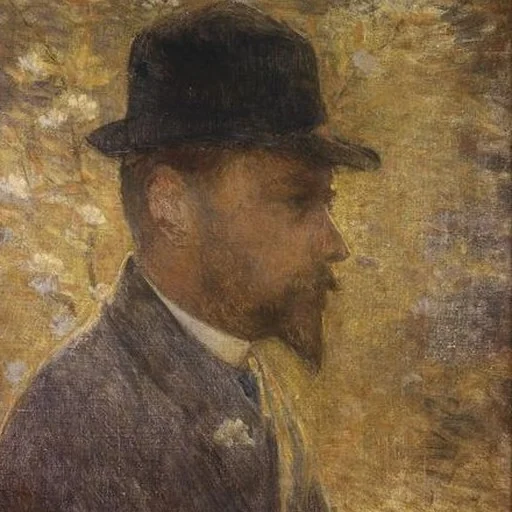
Artist
Henri Eugène Augustin Le Sidaner (7 August 1862 – 14 July 1939) was an intimist painter known for his paintings of domestic interiors and quiet street scenes.