Artwork
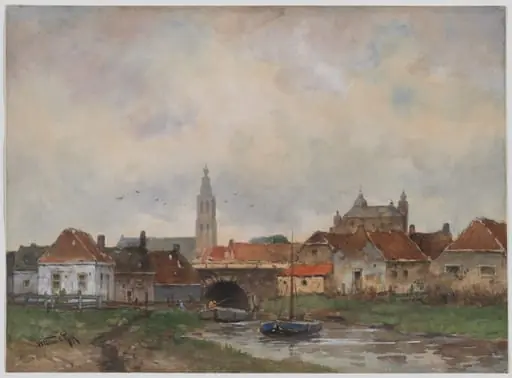
A Canal at Amersfoort
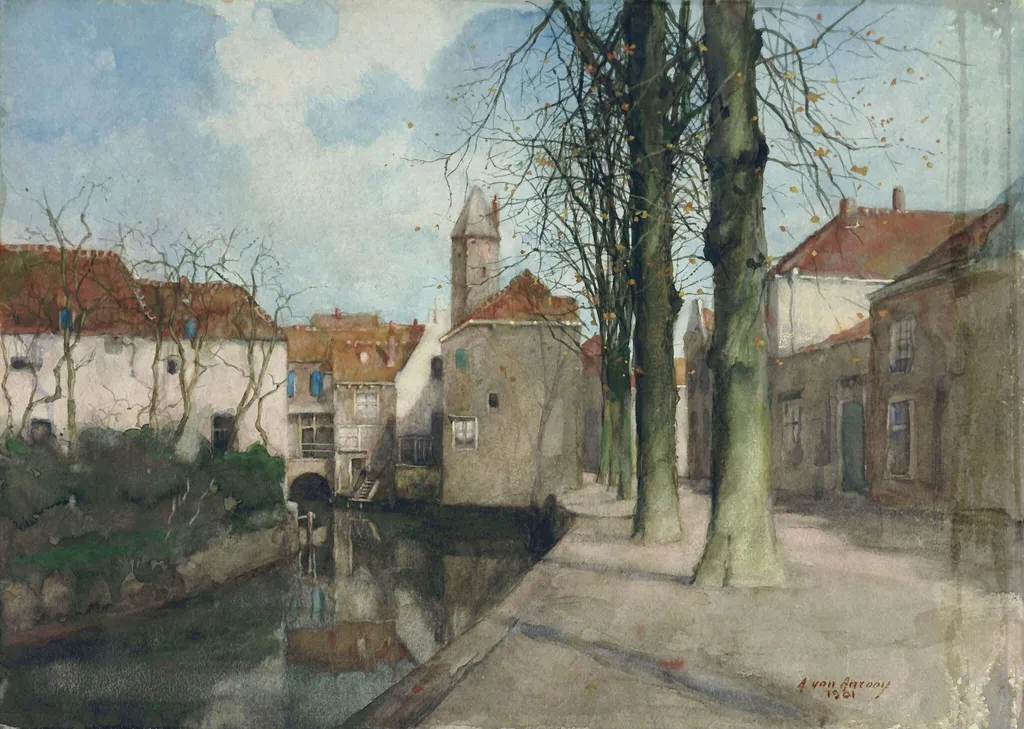
A Canal at Amersfoort is a watercolor work on paper by the Post-Impressionist artist Anton Abraham van Anrooy. It dates from 1901 and is held in the collection of the Victoria and Albert Museum.
About this work
Overview
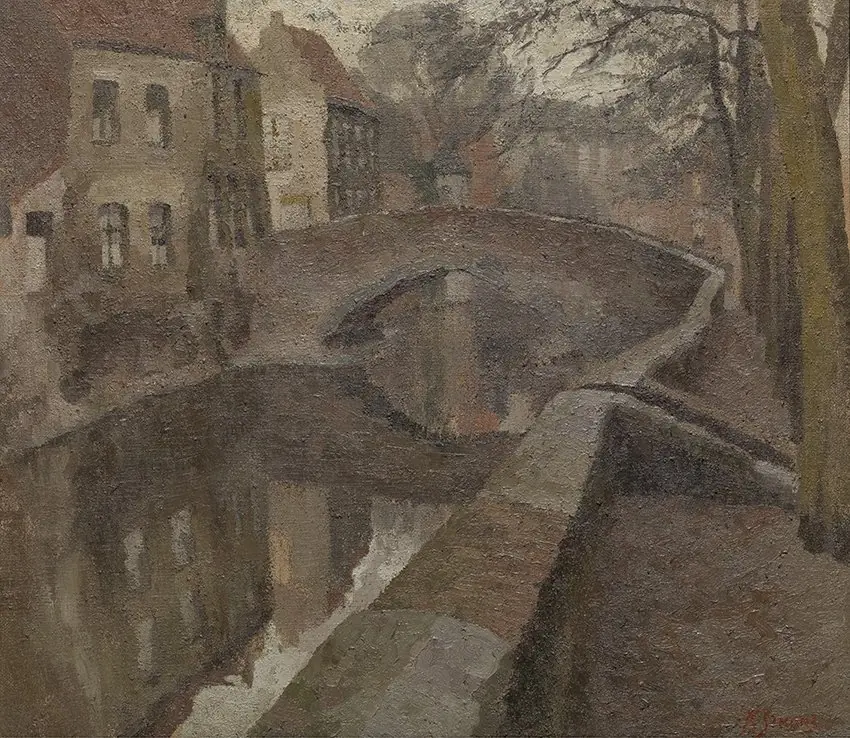
Painted in 1901 by Dutch artist Anton Abraham van Anrooy, this watercolour captures a quiet stretch of canal in Amersfoort. Signed and dated by the artist, the work is a modestly scaled study of everyday urban life, rendered with restrained tonal harmony. Its quiet composition avoids dramatic elements, focusing instead on the subtle interplay of light, architecture, and still water.
Subject & Meaning
The absence of figures and the stillness of the water suggest a pause in daily rhythm, evoking a sense of solitude rather than narrative.
The scene depicts a narrow canal flanked by modest, weathered houses with red-tiled roofs. A single bare tree on the right and a distant arched bridge anchor the composition. The absence of figures and the stillness of the water suggest a pause in daily rhythm, evoking a sense of solitude rather than narrative. The painting reflects a quiet appreciation for ordinary Dutch townscape, unembellished and unidealized.
Technique & Style
Van Anrooy employed soft, transparent watercolour washes to build subtle gradations of light and shadow. Edges are blurred, lines minimized, and colour applied thinly to suggest texture rather than define it. The pale walls and muted red roofs are rendered with delicate layering, while the reflective canal surface is achieved through careful reserve of paper tone. The technique prioritizes atmosphere over detail, aligning with late 19th-century Dutch watercolour traditions.
History & Provenance
The work was completed in 1901 and bears the artist’s signature and date. No public record of early ownership or exhibition history is widely documented. It remains a private or institutional holding, likely acquired shortly after its creation. Its survival as a single, unsigned sheet suggests it was not part of a larger series or commercial print run, but rather a personal study or sketch.
Context
In early 20th-century Netherlands, watercolour was increasingly used by artists for intimate, observational studies rather than grand narratives. Van Anrooy’s work aligns with a regional trend of documenting local landscapes with quiet precision. Amersfoort, a historic town with preserved medieval infrastructure, offered subjects that resonated with artists interested in continuity and modest beauty amid modernization.
Legacy
Though not widely exhibited or reproduced, the painting exemplifies a quiet strand of Dutch watercolour practice that valued restraint and observation over spectacle. It contributes to a broader understanding of how regional artists engaged with their immediate surroundings, preserving the character of small-town life through subtle, unassuming technique. Its endurance lies in its sincerity, not its fame.
Artist & collection
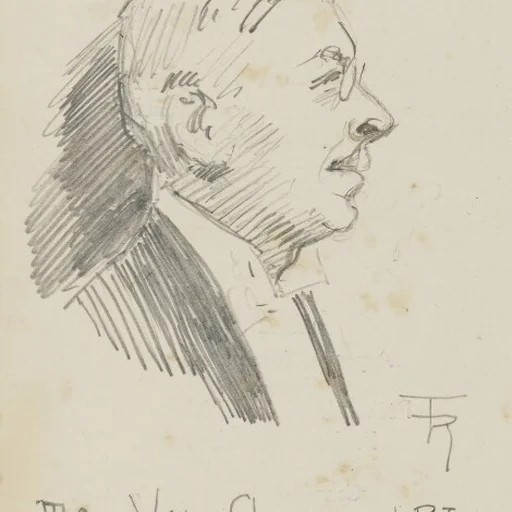
Artist
Anton Abraham van Anrooy (11 January 1870 – 13 February 1949) was a Dutch painter and illustrator, naturalised as British.