Artwork
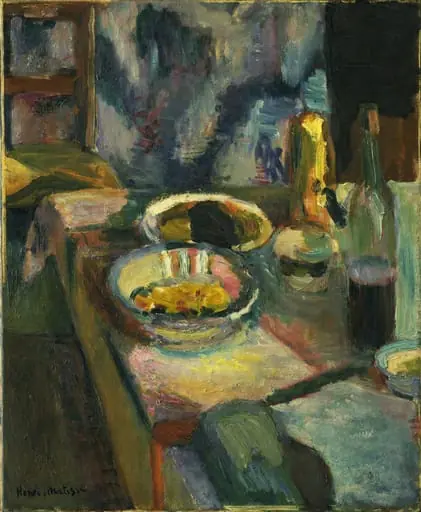
Crockery on a Table
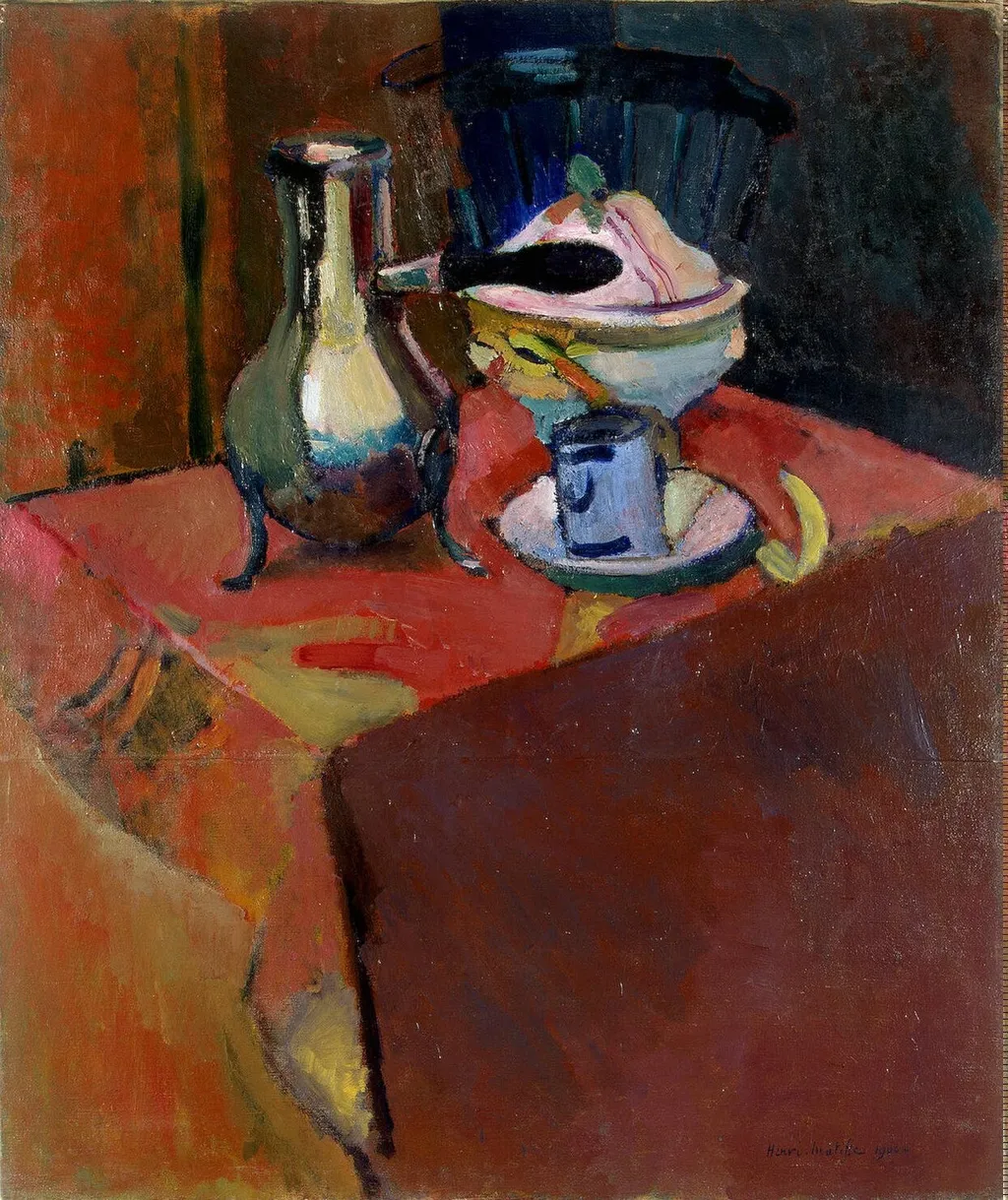
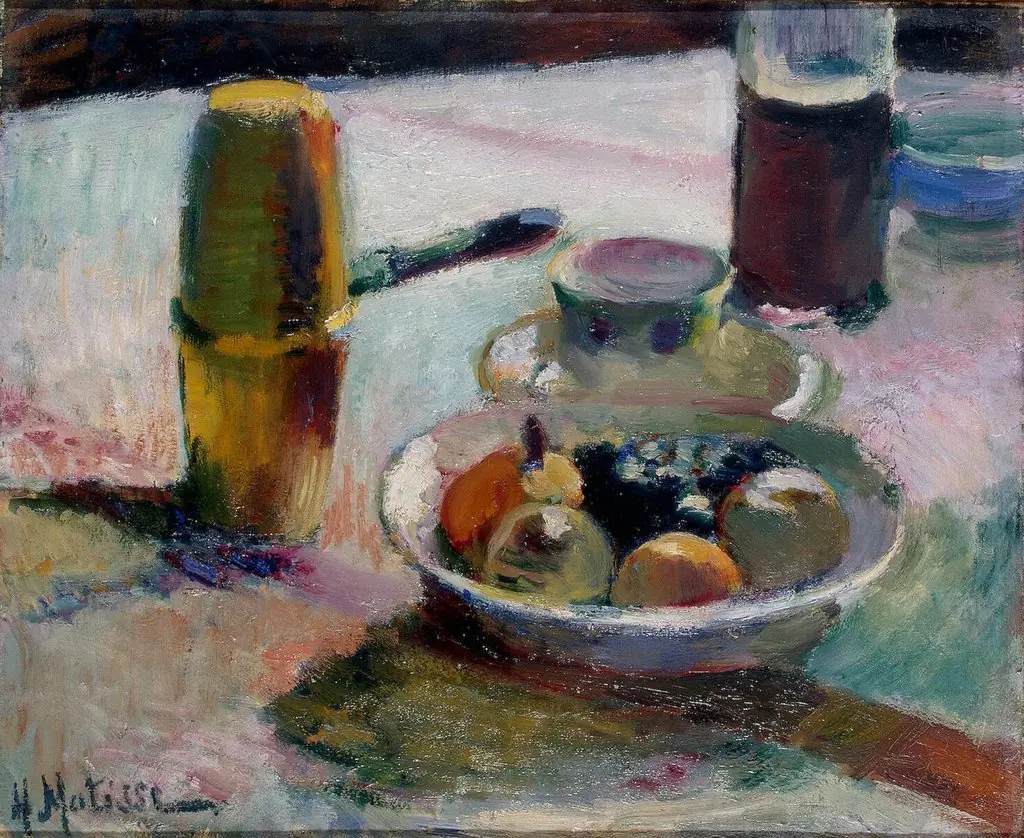
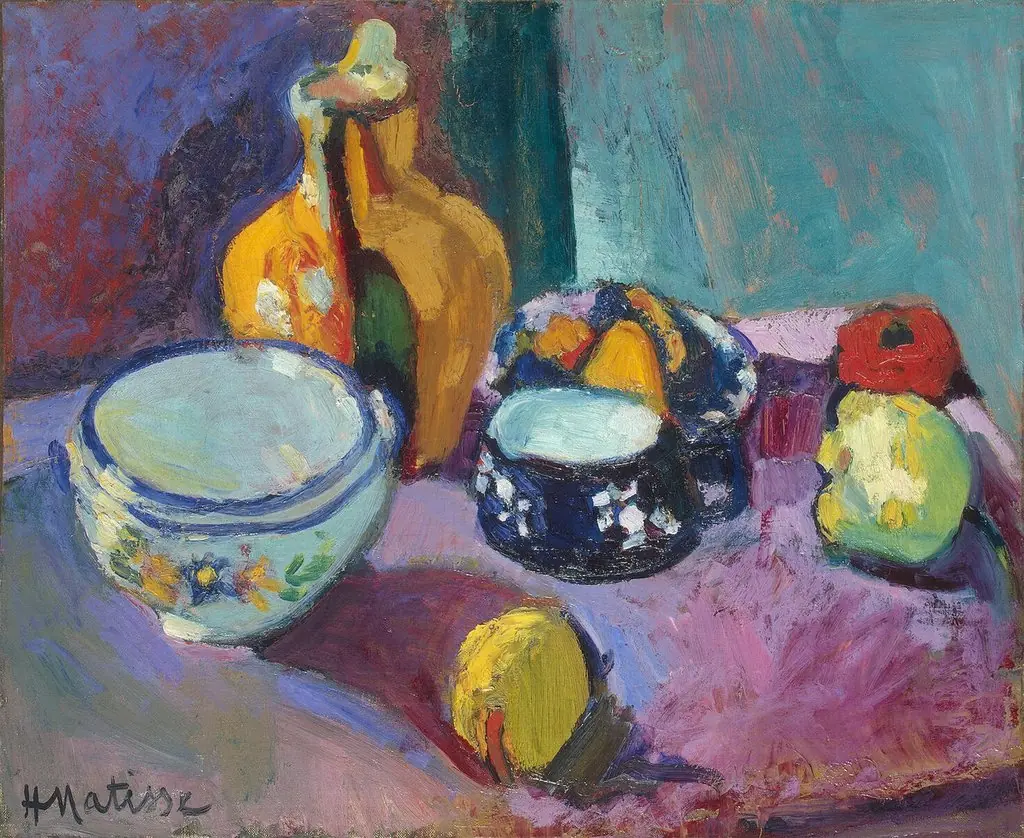
Crockery on a Table is an oil painting by the Post-Impressionist artist Henri Matisse. It dates from 1900 and is held in the collection of the Hermitage Museum.
About this work
Overview
Created in 1900, *Crockery on a Table* is an oil painting by Henri Matisse. Executed during the artist’s formative years, the work exemplifies his early investigations into colour relationships and compositional balance. It is part of the State Hermitage Museum’s collection and reflects the post‑Impressionist climate of experimentation that followed the Impressionist movement.
Subject & Meaning
The composition depicts a domestic tabletop covered with a red cloth, upon which a silver pitcher, a white bowl draped with a pink napkin, and a blue cup on a saucer are arranged. The objects are positioned toward the left, set against a darkened backdrop, inviting contemplation of everyday objects as subjects for formal exploration rather than narrative storytelling.
Technique & Style
Matisse employs vigorous brushwork and a saturated palette to render the scene. Contrasting hues—red, blue, pink, and metallic silver—are juxtaposed to generate visual tension, while the handling of light on the reflective surfaces suggests depth. The painter’s fluid line work and emphasis on colour over detailed modeling anticipate his later, more abstracted approach.
History & Provenance
After its completion, the painting entered the collection of the State Hermitage Museum in Saint Petersburg, where it remains on display. Its acquisition reflects the museum’s early 20th‑century interest in acquiring works by emerging modernists, situating Matisse among the institution’s broader holdings of post‑Impressionist art.
Artist & collection

Artist
Henri Émile Benoît Matisse (French: ; 31 December 1869 – 3 November 1954) was a French visual artist, known for both his use of colour and his fluid and original draughtsmanship.