Artwork
City Yard, Weybridge. Shepperton Church
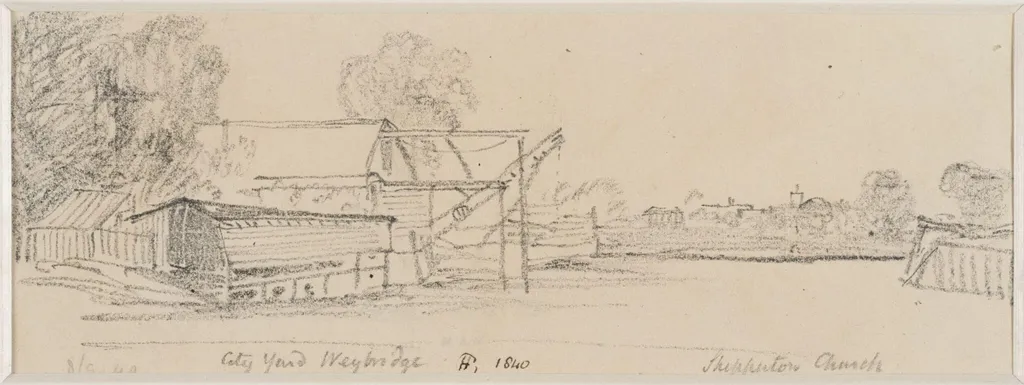
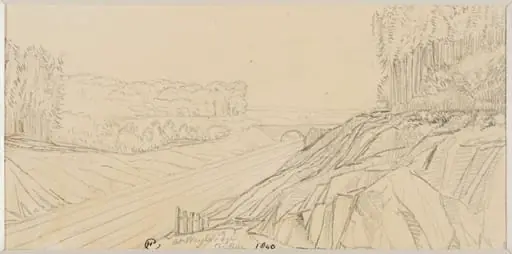
City Yard, Weybridge. Shepperton Church is a drawing by the Romanticist artist Henry Cole. It dates from 1840 and is held in the collection of the Victoria and Albert Museum.
About this work
This sketch shows a simple wooden bridge over a river, with a church in the distance. The lines are light and scratchy, like quick notes. Trees and bushes frame the scene, but they’re just rough shapes.
The drawing feels unfinished, almost like a quick sketch someone jotted down. The artist signed it “City Yard, Weybridge” and dated it 1840.
If you like this style, look up cross-hatching.
Overview
The work is signed with the artist’s monogram and clearly dated, suggesting it was intended as a personal record rather than a polished composition.
Created in 1840, this pencil drawing by Henry Cole captures a modest riverside scene in Weybridge, featuring a simple wooden bridge and the distant silhouette of Shepperton Church. The work is signed with the artist’s monogram and clearly dated, suggesting it was intended as a personal record rather than a polished composition. Its informal quality implies it was made on-site, possibly as a visual note or study.
Subject & Meaning
The drawing presents an unadorned view of a local landscape: a functional bridge crossing a river, with the church standing as a quiet landmark in the background. There is no narrative or symbolic emphasis—only the quiet presence of everyday rural infrastructure and architecture. The scene reflects a moment of ordinary life, valued for its familiarity rather than its grandeur.
Technique & Style
Cole employed light, sketchy pencil lines that suggest rapid observation rather than deliberate rendering. Forms are suggested with minimal detail—trees and foliage appear as loose, gestural shapes, and the bridge is defined by sparse contours. The absence of heavy shading or cross-hatching reinforces the immediacy of the sketch, prioritizing spontaneity over finish.
History & Provenance
The drawing remains a private work, likely created during Cole’s travels or local excursions. Its survival suggests it was retained by the artist or a close associate, though no public exhibition or ownership history is documented prior to its modern cataloging. It offers a rare glimpse into Cole’s observational habits outside his better-known professional projects.
Context
In 1840, England was undergoing rapid industrial and infrastructural change, yet this drawing focuses on quiet, unchanged rural elements. Cole, later known for his role in the Great Exhibition, here records a scene untouched by modernization. Such sketches were common among educated amateurs who used drawing as a means of recording the world around them.
Legacy
Though not widely exhibited, this drawing contributes to understanding Cole’s personal artistic practice. It exemplifies the value placed on informal, on-location sketching in 19th-century Britain, where such works served as visual diaries. Its modesty and immediacy continue to offer insight into how individuals engaged with their surroundings through drawing.
Artist & collection
Artist
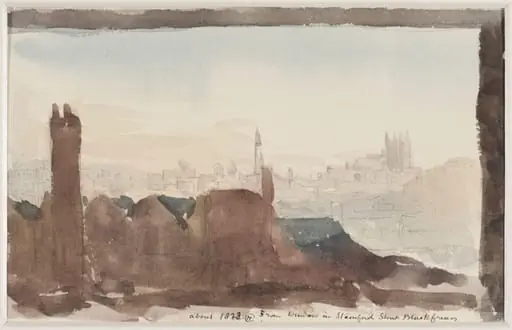
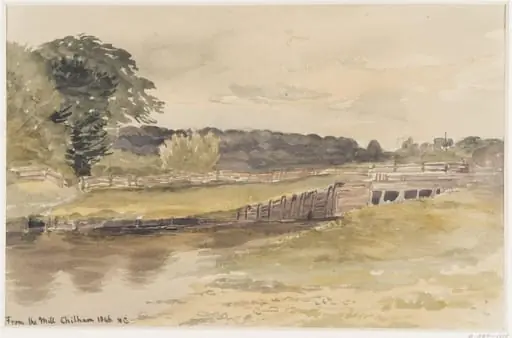
Henry Cole drew what he saw in mid-1800s Britain. Try his pencil sketch *From Window in Stamford Street, Blackfriars* (1828), a quiet city view over rooftops, or *From the Mill, Chilham* (1846), a riverside mill caught…

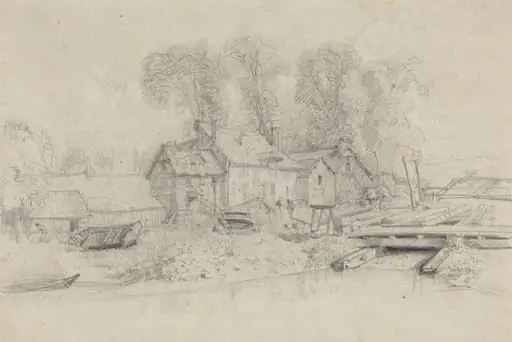 River Landscape with Buildings, Boats, and Figures
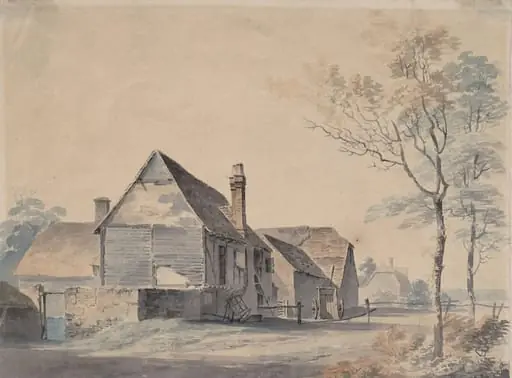 Landscape with Barn
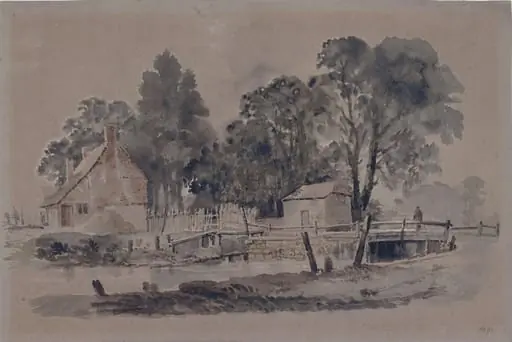 Stream with bridge and cottages
 Long Island, New York
 Landscape with Trees, Cottage, and Farm Wagon
 A village street
 A cottage set among trees
 Wimbledon Park
 Cattle grazing beside a lake
 Rooftops and Umbrella Pines
 The Ness, Shaldon, Devon
 At Weybridge Station