Artwork
Greenhithe
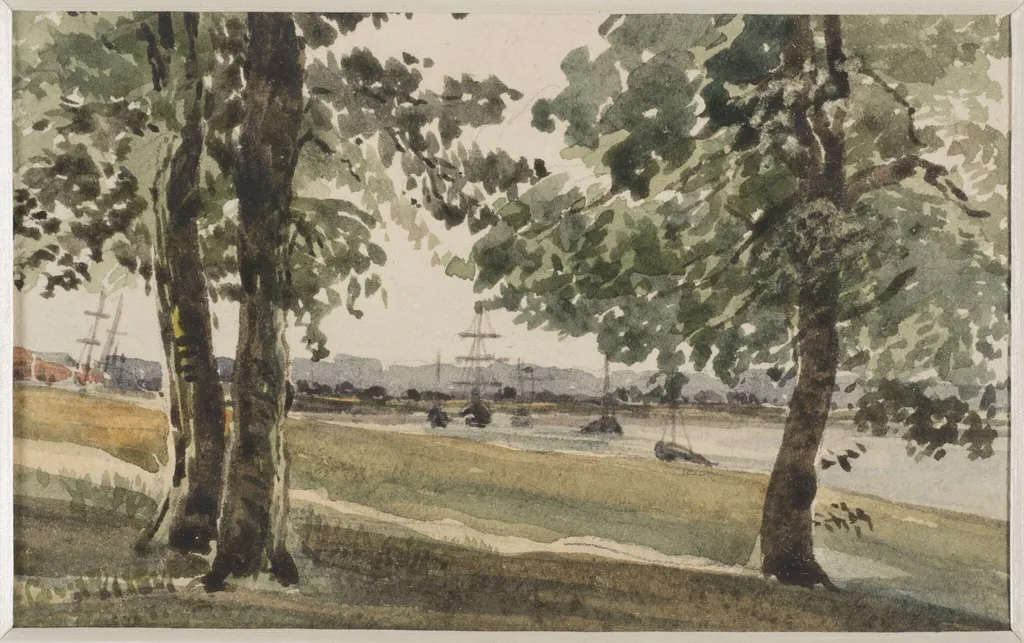
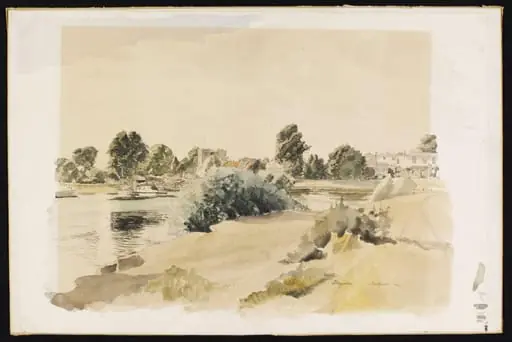
Greenhithe is a drawing by the Romanticist artist Henry Cole. It dates from 1836 and is held in the collection of the Victoria and Albert Museum.
About this work
Overview
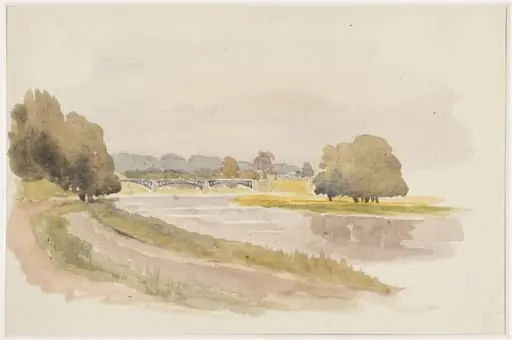
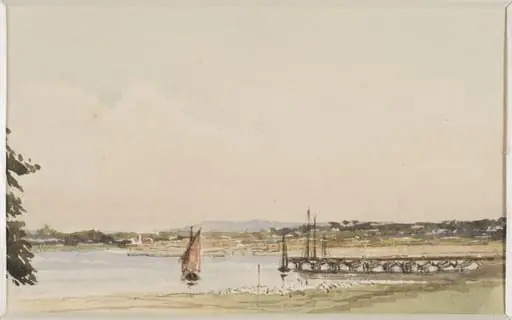
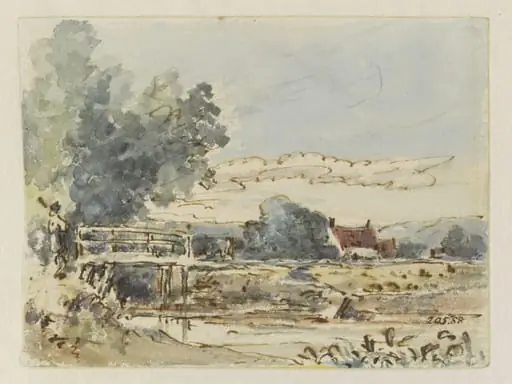
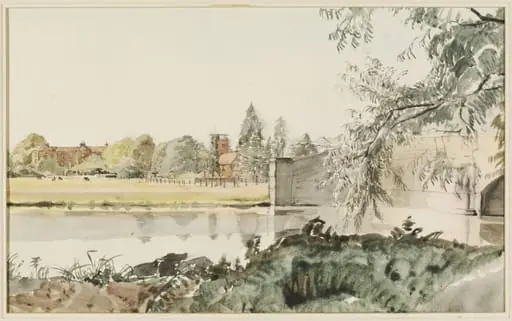
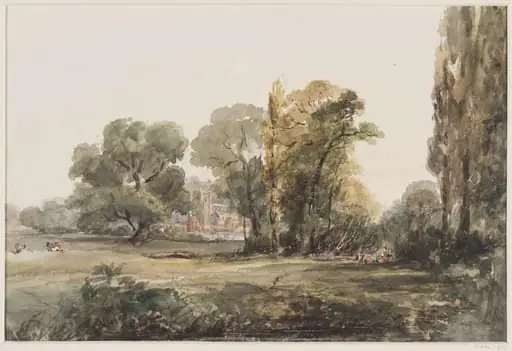
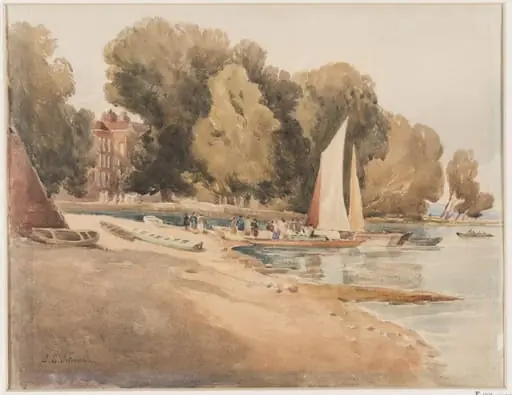
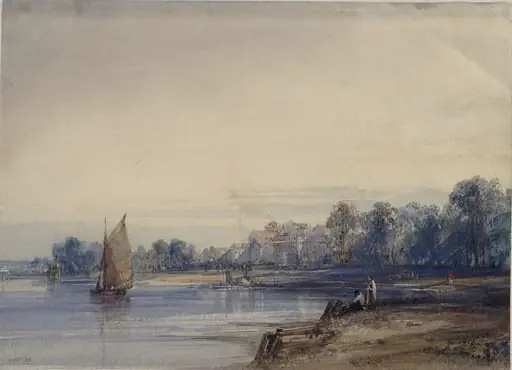
The work is a watercolor drawing dated 1836 that portrays the riverside town of Greenhithe in Kent. Executed on paper and signed on the reverse of its mount, the piece is attributed to the 19th‑century artist Henry Cole. It captures a tranquil scene along the Thames, with a modest stretch of water, a distant sailing vessel, and a modestly vegetated bank.
Subject & Meaning
The composition presents a calm stretch of river framed by two slender trees, their trunks guiding the viewer’s eye toward a ship anchored on the horizon. The muted sky and still water convey a sense of quietude, reflecting the everyday life of a small port town rather than dramatizing any particular event.
Technique & Style
Cole employs loose, rapid brushwork characteristic of watercolor, allowing light and shadow to emerge through suggestion rather than precise delineation. The softened edges and airy washes give the scene a fresh immediacy, while the limited palette and delicate handling of atmospheric effects hint at the Romantic interest in mood and natural beauty.
History & Provenance
Created in 1836, the drawing bears the artist’s signature on the back of its mounting board, confirming its attribution to Henry Cole. It has remained within private collections before entering the museum’s holdings, where it serves as a documentary visual record of Greenhithe’s 19th‑century riverside landscape.
Artist & collection
Artist
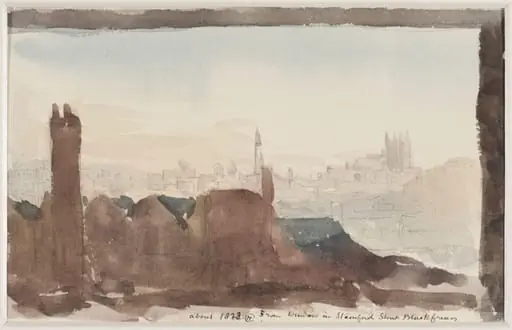
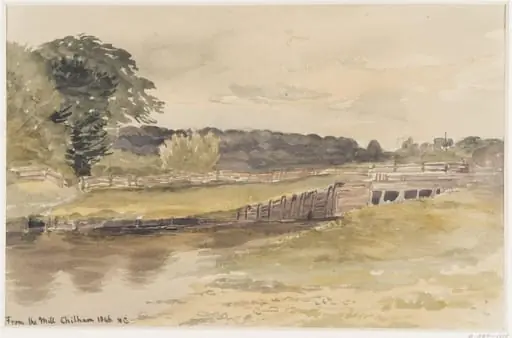
Henry Cole drew what he saw in mid-1800s Britain. Try his pencil sketch *From Window in Stamford Street, Blackfriars* (1828), a quiet city view over rooftops, or *From the Mill, Chilham* (1846), a riverside mill caught…