Artwork
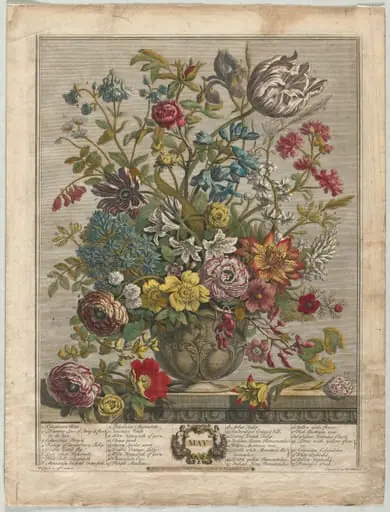
Twelve Months of Fruit: May
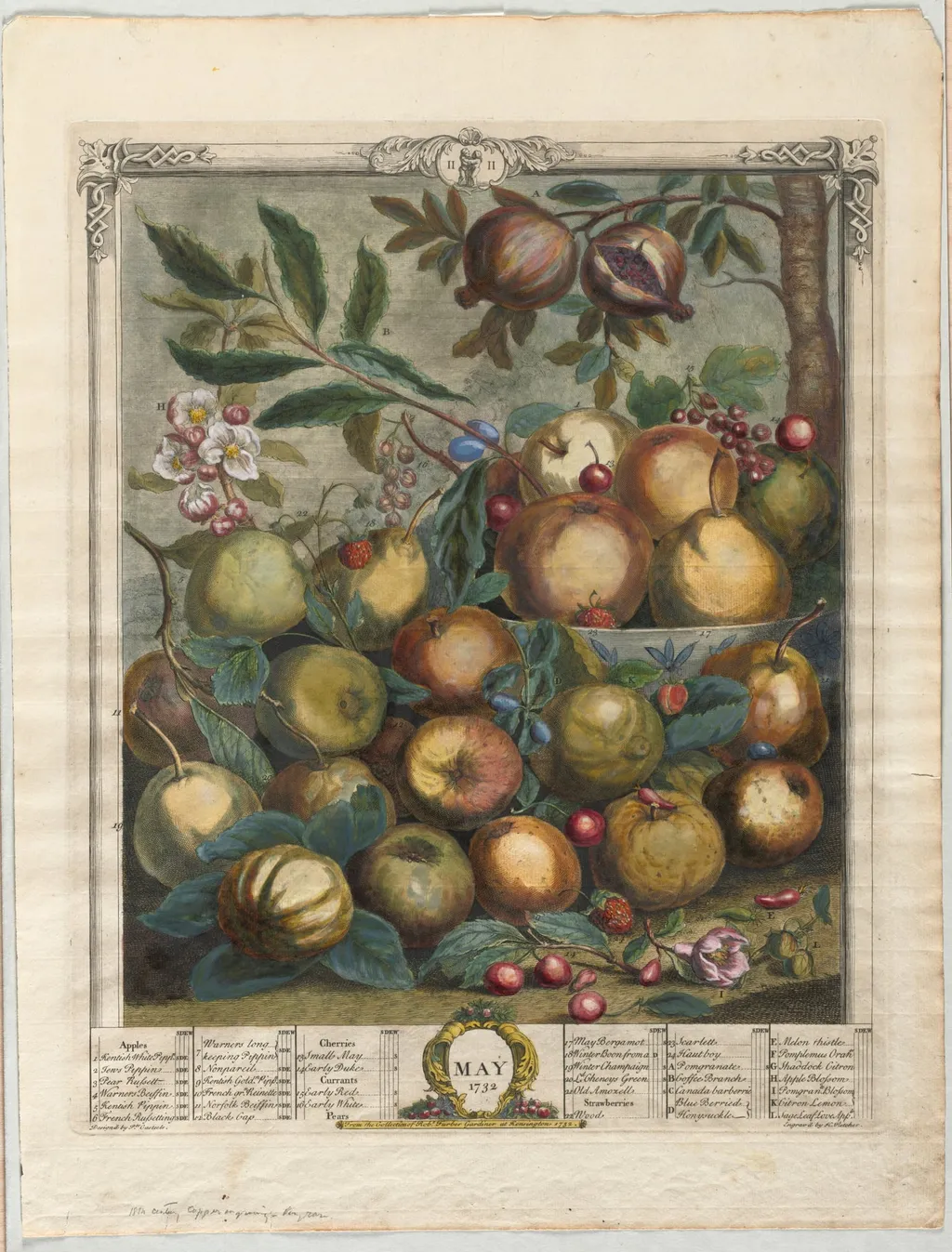
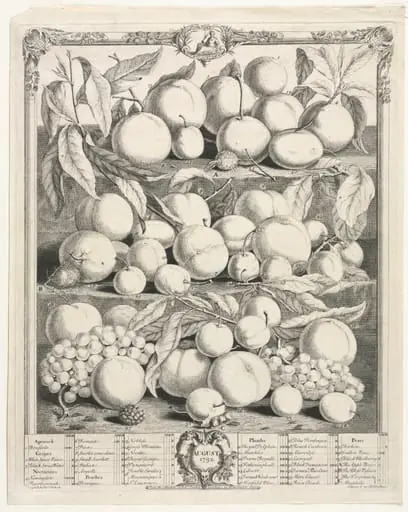
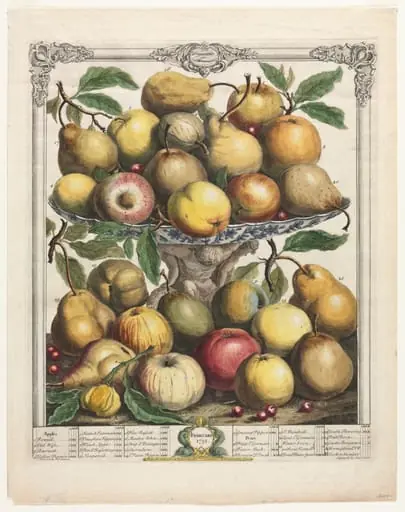
Twelve Months of Fruit: May is a print by the Baroque artist Henry Fletcher. It dates from 1732 and is held in the collection of the Cleveland Museum of Art.
About this work
Overview
The design was based on drawings by Pieter Casteels, originally published in 1730 by horticulturist Robert Furber.
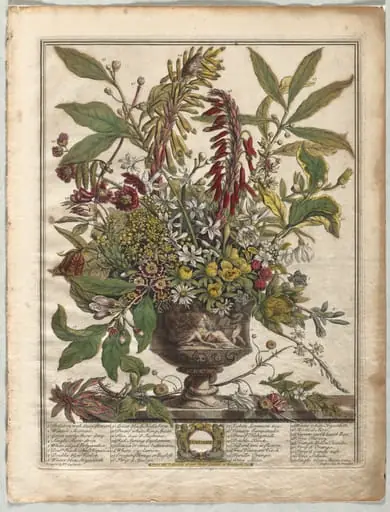
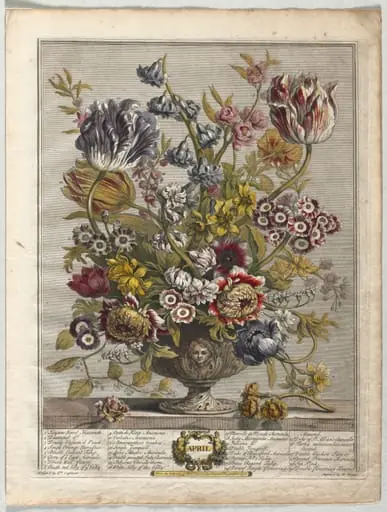
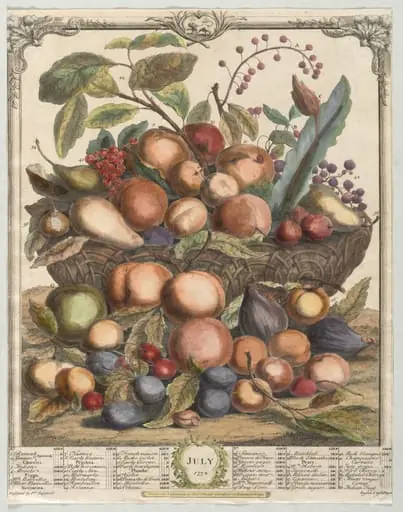
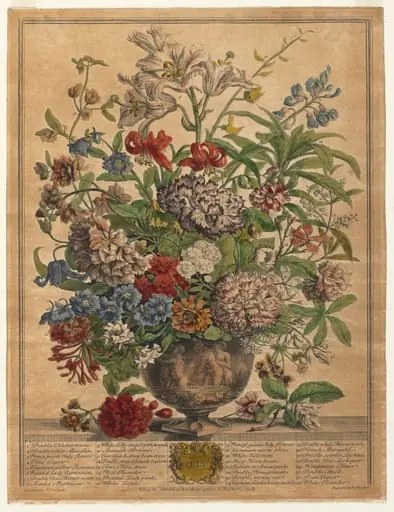
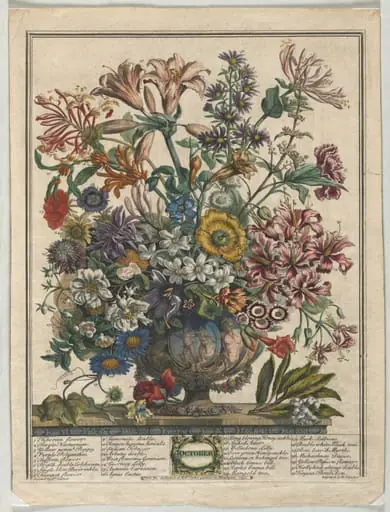
Created in 1732 by English engraver Henry Fletcher, *Twelve Months of Fruit: May* is one of twelve prints in a seasonal series illustrating fruits available each month. The design was based on drawings by Pieter Casteels, originally published in 1730 by horticulturist Robert Furber. Fletcher’s engraving translates Casteels’s naturalistic compositions into fine-line prints, serving both botanical record and decorative purpose within early 18th-century English gardening culture.
Subject & Meaning
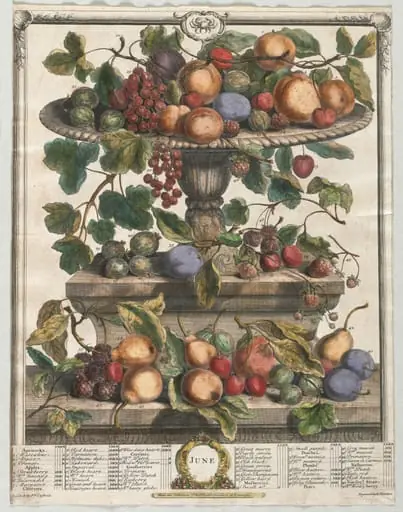
The print displays a dense arrangement of seasonal produce—pears, apples, cherries, and pomegranates—spilling from a woven basket, interwoven with leaves and blossoms. Each fruit is labeled with its variety, such as 'Early Duke Cherries' and 'Bergamot,' emphasizing precise horticultural knowledge. The composition functions as a visual calendar, aligning the abundance of May with the practical interests of gardeners and consumers seeking to identify and harvest fruits at peak season.
Technique & Style
Fletcher employed fine-line engraving to render texture and depth, capturing the sheen of fruit skin, the veining of leaves, and the delicate structure of blossoms. The composition is tightly packed yet orderly, avoiding theatricality in favor of clarity. Warm, muted tones—greens, russets, and soft reds—reflect natural observation rather than idealized color, consistent with the scientific intent of botanical illustration of the period.
History & Provenance
The print originated from Robert Furber’s 1730 publication *Twelve Months of Fruit*, a commercial gardening guide that paired illustrated plates with seasonal planting advice. Fletcher, known for his botanical engravings, was commissioned to translate Casteels’s watercolors into print. The series was widely circulated among English gardeners and landowners, reflecting the rising interest in cultivated horticulture during the early Georgian era.
Context
This work emerged during a period when English aristocracy and middle-class landowners increasingly invested in ornamental and productive gardens. Botanical illustration flourished as a bridge between science and aesthetics, with publications like Furber’s serving both educational and aspirational roles. The emphasis on seasonal accuracy aligns with broader Enlightenment values of classification and empirical observation in natural history.
Legacy
Fletcher’s engravings contributed to the standardization of visual references for fruit varieties in 18th-century Britain. While not widely exhibited as fine art, the series influenced later horticultural publications and remains a documented example of how commercial gardening intersected with print culture. The prints are preserved in institutional collections as artifacts of early botanical communication and domestic agricultural practice.
Artist & collection
Artist
Henry Fletcher (fl. 1710–1750), was an English engraver. Fletcher worked in London, and produced engravings possessing some merit. He most excelled as an engraver of flowers, notably The Twelve Months of Flowers and The…