Artwork
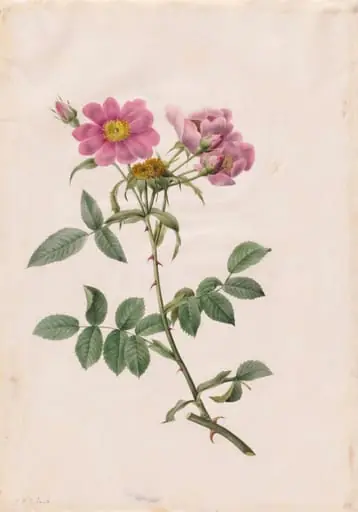
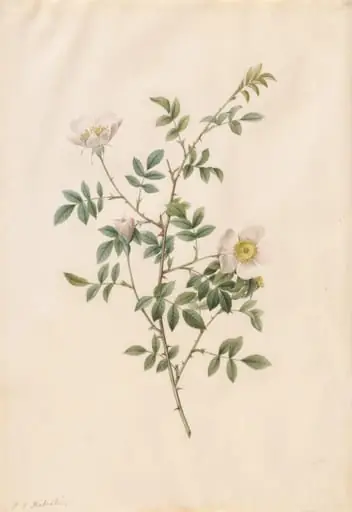
Brier Bush Rose or Dog Rose (Rosa Leucantha)
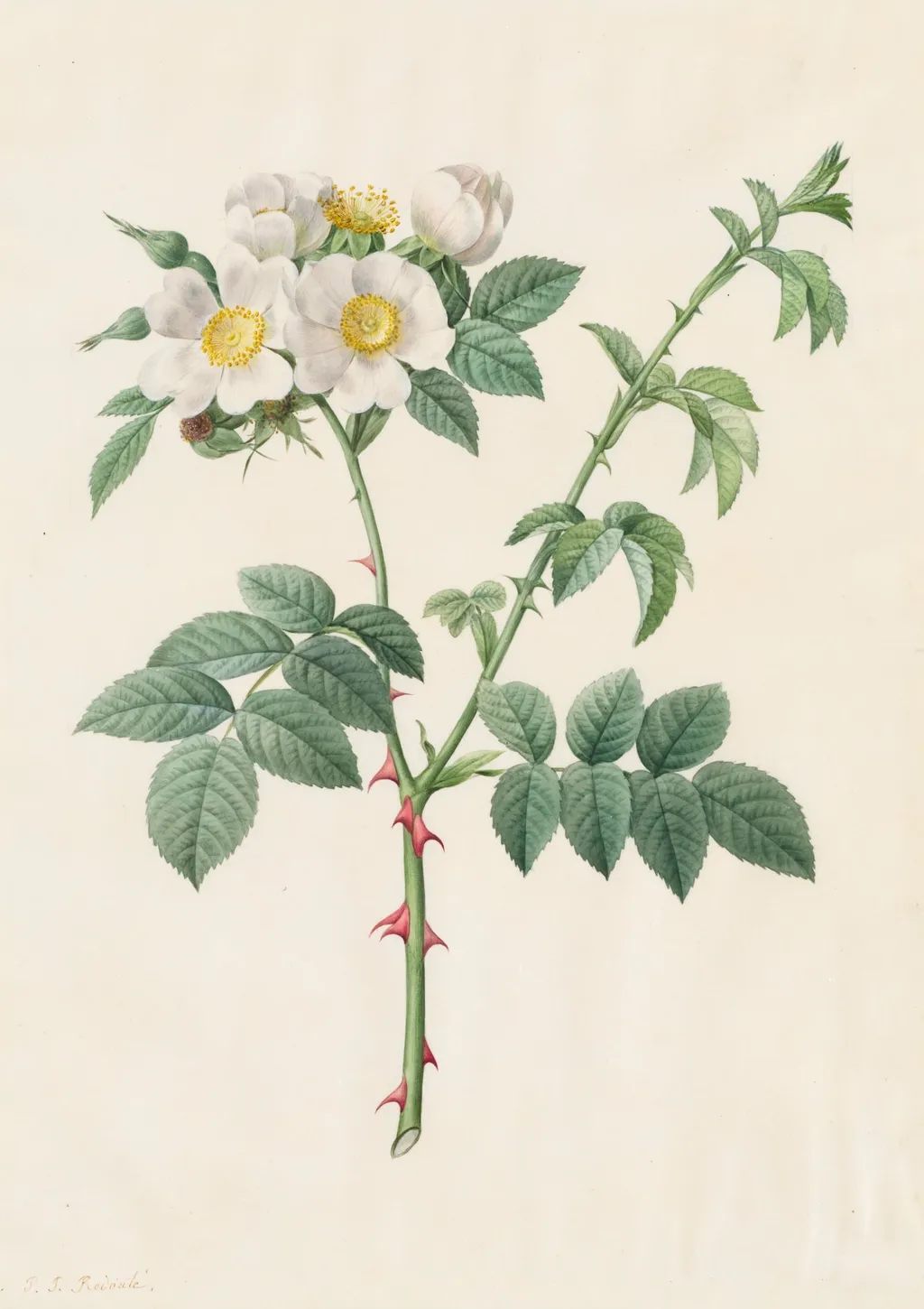
Brier Bush Rose or Dog Rose (Rosa Leucantha) is a drawing by the Romanticist artist Henry Joseph Redouté. It dates from 1820 and is held in the collection of the Cleveland Museum of Art.
About this work
Overview
It is currently held in the collection of The Cleveland Museum of Art, where it serves as an example of early 19th-century botanical documentation.
This botanical drawing, dated 1820, depicts Rosa leucantha, commonly known as the dog rose, rendered in precise detail by Henry Joseph Redouté. Executed on paper, the work is part of a broader tradition of scientific illustration that prioritized accuracy over ornamentation. It is currently held in the collection of The Cleveland Museum of Art, where it serves as an example of early 19th-century botanical documentation.
Subject & Meaning
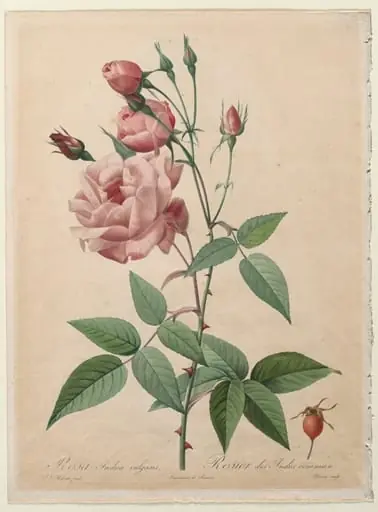
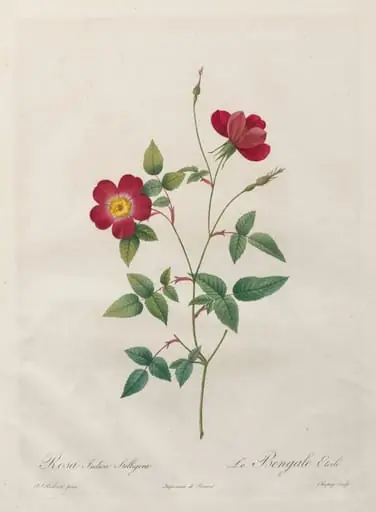
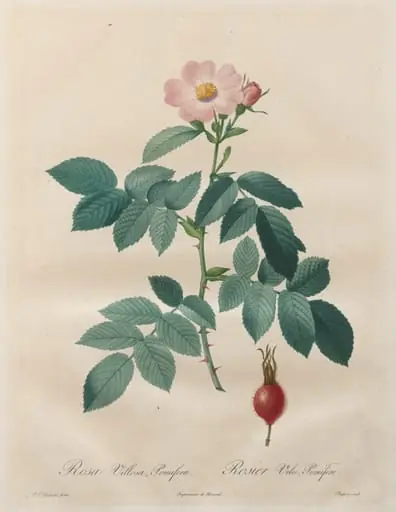
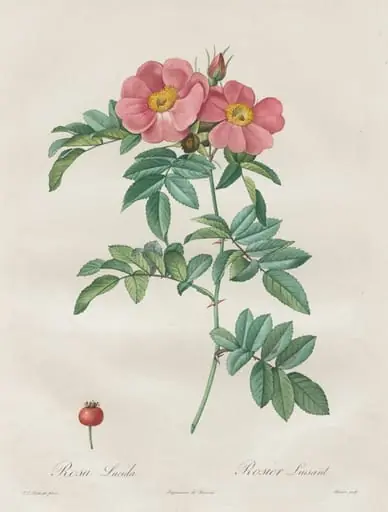
The drawing presents a single stem of dog rose in full growth, featuring open white blooms, unopened buds, and sharply defined thorns. The plant’s natural form is shown without idealization, emphasizing its wild character. The absence of a narrative or symbolic context reflects the scientific intent: to record the species’ morphology for botanical study rather than to convey metaphorical meaning.
Technique & Style
Redouté employed fine ink lines and subtle watercolor washes to capture the delicate structure of petals, veins in leaves, and the texture of thorns. The pale beige background isolates the subject, enhancing clarity. Each element is rendered with meticulous attention to anatomical detail, demonstrating a technique rooted in Enlightenment-era natural history practices, where precision was paramount.
History & Provenance
Created during Redouté’s later years, this drawing aligns with his extensive work documenting plant species for royal and scientific patrons. While the specific provenance prior to its acquisition by The Cleveland Museum of Art is not publicly detailed, it likely originated from one of his unpublished studies or private commissions, reflecting his lifelong dedication to botanical illustration.
Context
In the early 1800s, botanical illustration flourished as European institutions sought to classify global flora. Redouté, trained under the French royal court, contributed to this effort through collaborations with botanists. His work, including this piece, emerged in a period when visual accuracy was essential for scientific communication, especially before widespread photographic reproduction.
Legacy
Redouté’s drawings, including this one, remain valued for their fidelity to plant form and their role in advancing botanical science. Though not widely exhibited, such works underpin modern herbarium records and continue to inform botanical art education. His influence persists in the enduring standard of clarity and discipline within scientific illustration.
Artist & collection
Artist
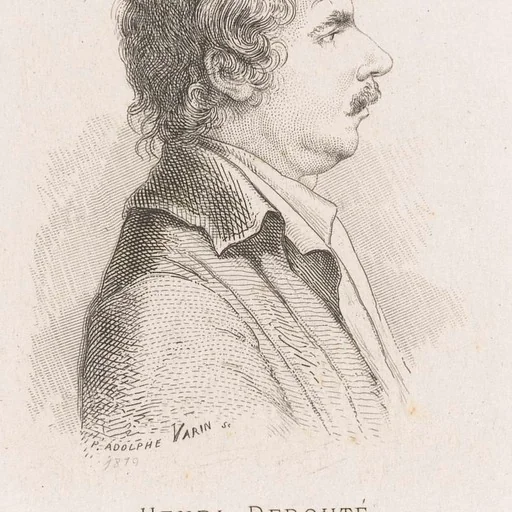
Henry Joseph Redouté (1766–1852) was a French artist, born in Saint-Hubert.