Artwork
Rosa Collina Monsoniana
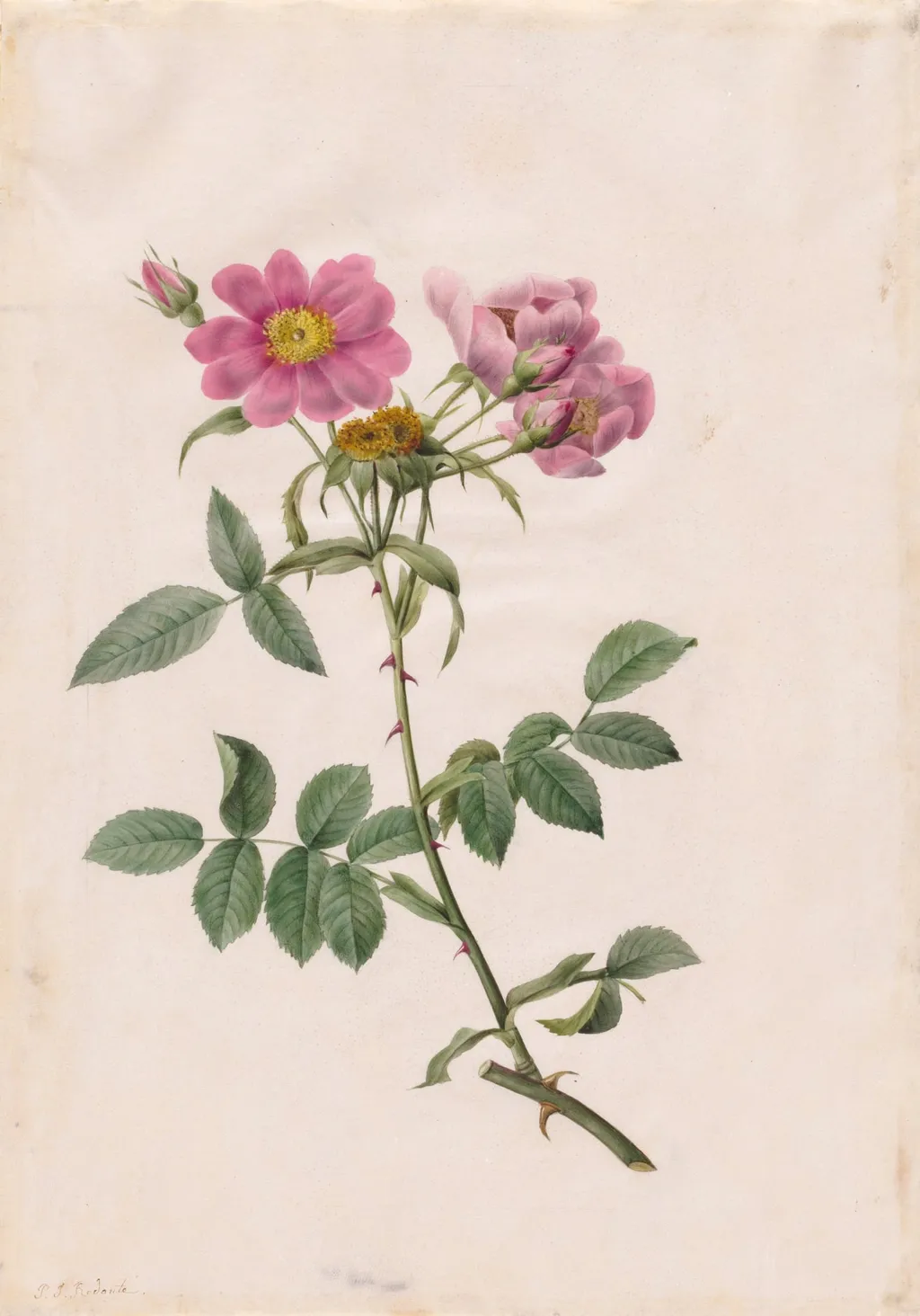
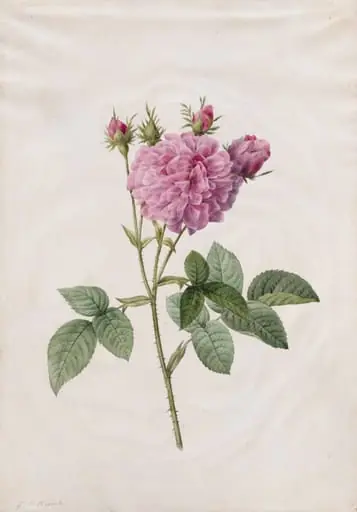
Rosa Collina Monsoniana is a drawing by the Romanticist artist Henry Joseph Redouté. It dates from 1820 and is held in the collection of the Cleveland Museum of Art.
About this work
Overview
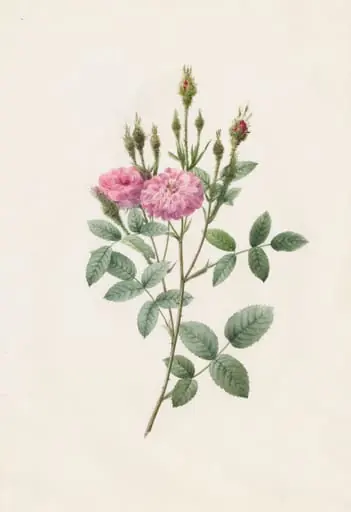
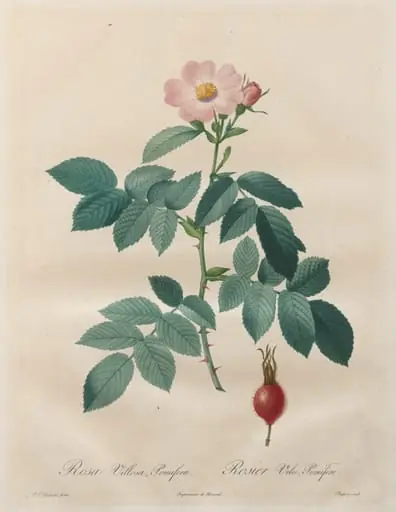
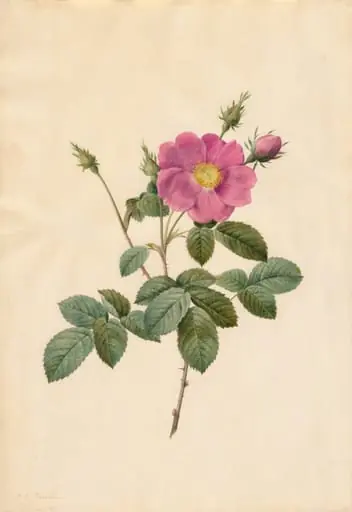
Rosa Collina Monsoniana is a botanical drawing executed in 1820 by the French artist Henry Joseph Redouté. The work is part of the collection of the Cleveland Museum of Art and presents a single pink rose in a naturalistic manner.
Subject & Meaning
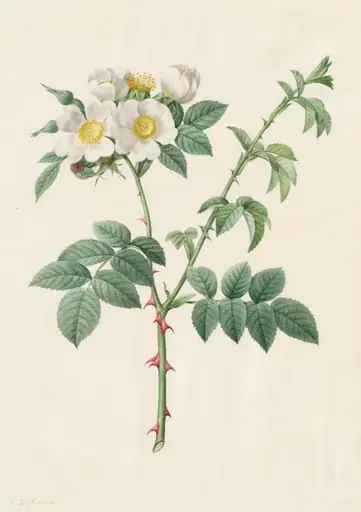
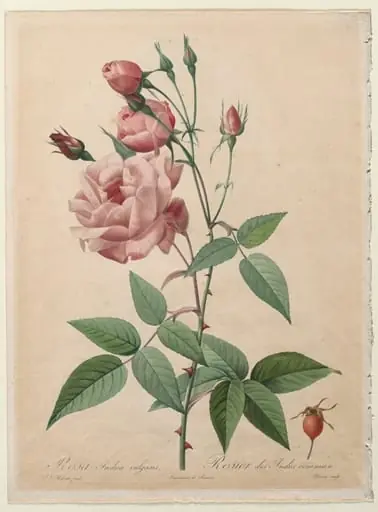
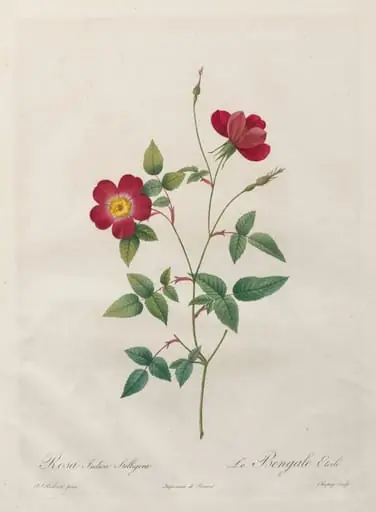
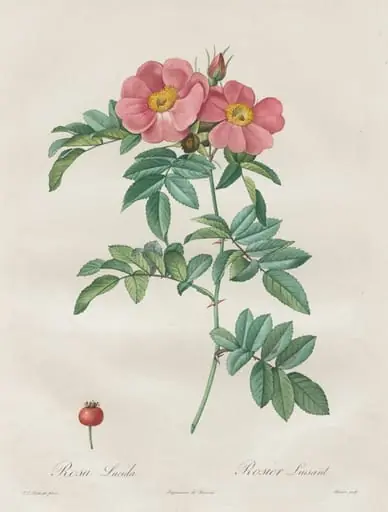
The image depicts a delicate rose with five soft pink petals surrounding a yellow centre, set upon a green stem bearing thorns, leaves, and a few additional buds. The composition emphasizes the flower’s form and structure, reflecting the scientific interest in accurate plant representation.
Technique & Style
Redouté employed fine, controlled lines and subtle washes of colour to render the rose’s texture and shading. The drawing balances precise botanical detail with a gentle, almost lyrical quality, characteristic of early‑19th‑century natural history illustration.
History & Provenance
Created in 1820, the piece entered the Cleveland Museum of Art’s holdings through acquisition (specific acquisition details are not recorded in the source). It remains an example of Redouté’s prolific output of plant studies during the Romantic period.
Own this work as a print
Artist & collection
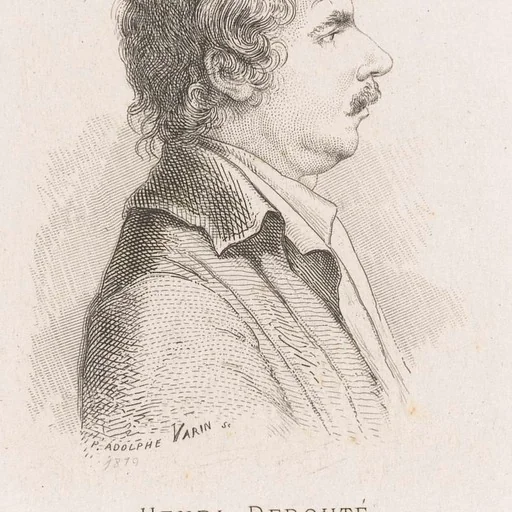
Artist
Henry Joseph Redouté (1766–1852) was a French artist, born in Saint-Hubert.